Nasa

What would life on Mars actually look like?

From our UK edition

Just as extreme altitudes have notable effects on the human body and mind, so too does extreme wealth seem to have a particular effect on psychology. Or at least that’s how it appears when you look at the shared ambition of two of the world’s most prominent billionaires, Elon Musk and Jeff Bezos. Both men are fixated on the idea that humanity’s future lies beyond Earth and are funnelling fortunes into the vision that we will soon have significant human settlements off-planet, whether on the moon, Mars or elsewhere. It’s an argument grounded not just in exploration and discovery, but in survival. If humanity’s future on Earth looks to be in doubt, is living off-world not the ultimate insurance policy for our species?

What exactly is the new space race all about?

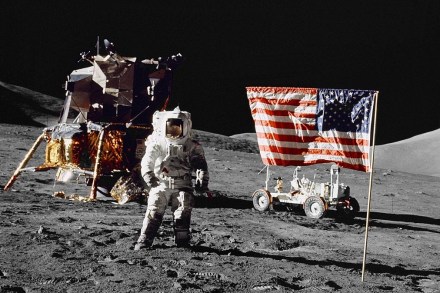
The recent spate of articles about attempts by different countries to land vehicles on the Moon make it clear that a new space race is on. Just last month, Russia launched its first mission there in forty-seven years. And although the automated Luna-25 spacecraft spun out of control and crashed at the last minute, India’s heavily-instrumented Chandrayaan-3 landed successfully just four days later. NASA itself aims to return humans to the lunar surface in 2025 with its Artemis program. Remarkably, more than eighty countries, including Israel and the United Arab Emirates, have thus far established some kind of presence in space.

space

Biden admin: OK, sure, we do want to ban your gas stoves

Sinema abandons ActBlue Arizona maverick Kyrsten Sinema has been ruffling feathers this week, after taking a scalpel to the caucus lunches she used to have to attend while a Democrat. “Old dudes are eating Jell-O, everyone is talking about how great they are,” the independent senator told a group of GOP lobbyists today, according to Politico magazine. “The Northerners and the Westerners put cool whip on their Jell-O, and the Southerners put cottage cheese.” A moderate Democratic colleague told the same reporter that Sinema is "the biggest egomaniac in the Senate." Some honor! Further proving her independent streak, Sinema has finally changed payment processors, from ActBlue to Anedot, a competitor used mostly by independents and Republicans.

gas stoves

When the moon brought America together

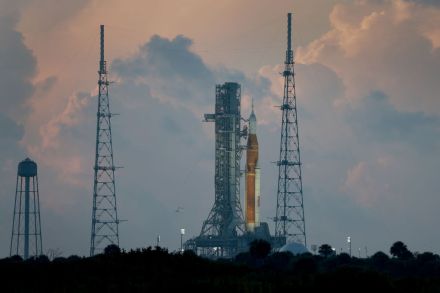
The Artemis rocket is back from the moon. Within a couple of years, if all goes to plan, it will bring men to the moon’s surface. It is a great loss that a bigger deal hasn’t been made of this expedition. I was only three when John F. Kennedy died, and his famous 1962 pronouncement that we would go to the moon not because it was easy but because it was hard was already history. The picture books I got on birthdays always included him in the history of space exploration. Those books made sure every kid knew how “we” were going to get to the moon. They changed us, and with us, America. We started with Mercury, baby steps mostly proving we could launch men into space. Then Gemini, a long proof-of-concept program to try out the technology of docking.

The culture war inside the space program

For many, the upcoming launch of NASA’s Artemis 1 (after a botched attempt earlier this week) undoubtedly seems the start of a new and exciting era in space exploration. Not only is the US finally planning to return to the Moon — this time to build a permanent outpost on the lunar surface — but in just a few months Elon Musk’s SpaceX will be sending its gigantic Starship, theoretically capable of carrying 100 astronauts, into Earth orbit. “Space is sexy again,” as astrophysicist Paul M. Sutter recently put it. “After the excitement of the initial Apollo missions dwindled into a subject only discussed by ultra-nerds, and the cool factor of the Space Shuttle gave way to the realization that it didn’t really do much, people generally lost interest in space.

Let’s ban the metaverse and colonize space

The way I see it, there are two options for the future: a transplanetary society or a transhuman one. What got me thinking about this was right-wing billionaire Peter Thiel’s recent interview with Mary Harrington, which she wrote up in UnHerd. As Harrington puts it, Thiel’s diagnosis of modern social ills is not that “progress is inevitably self-destructive,” but that we’ve been making the wrong kind of progress. "We’ve had continued progress in the world of computers, bits, internet, mobile internet, but it’s a narrow zone of progress. And it’s been more interior, atomizing and inward-focused,” Thiel said. Meanwhile, “there’s been limited progress in the world of atoms.” So far, so good. But then the interview took a strange turn.

NASA’s multi-billion dollar Mars reality TV show green-lit for another season

The American businessman and astronomer Percival Lowell first popularized the notion of life on Mars in 1906 when he described vast canals observed on the planet, some spanning the equivalent distance of Boston to San Francisco. He believed an intelligent Martian civilization was in peril, their world drying out and dying, and they had constructed as a planet-wide irrigation system to move water from Mars’s polar ice caps to the rest of the planet.American folklore has it that the idea of Martian intelligent life was so pervasive that a 1938 radio drama of H.G. Wells’s War of the Worlds, about a Martian invasion, ignited mass panic when millions of people believed it was a real newscast.

mars