Muslim

Britain’s reverse imperialism

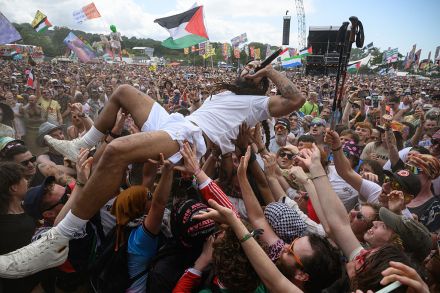
Britain’s post colonial reckoning can be summed up in a single sentence delivered last June at the Glastonbury music festival when rapper duo Bob Vylan shouted “You want your country back? You’re not getting it back!” to an overwhelmingly white, middle-class audience roaring its approval. The message was unmistakable: Britain has been colonized – and its dominant culture not only accepts, but celebrates, it. Britain’s transformation has been driven not by invasion, but by invitation. The country’s population, political culture and national cohesion has been radically reshaped by immigration – one wave in the 1950s, driven by post-World War Two labor shortages, and another following Brexit.

Bob Vylan

Will cops wearing Arabic badges serve and protect all?

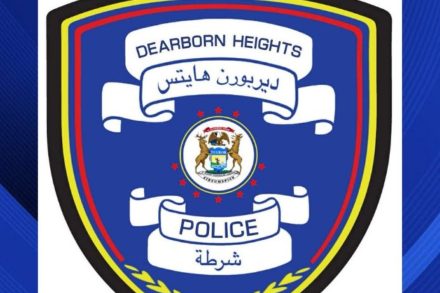
Last week, the Dearborn Heights Police Department revealed the nation’s first-ever officer uniform patch featuring Arabic script. It was designed by a policewoman named Emily Murdoch, and on first glance it might look like a gesture of inclusivity. But is this really progress – or it it, in fact, a sign of cultural fragmentation?As an Iraqi-American Muslim, I feel compelled to answer. I came to the United States after Iraq was swallowed by Iranian-backed militias and sectarian violence. I know exactly what happens when identity politics becomes the organizing principle of civic life. And the last thing I ever wanted to see in America is the export of that same toxic culture – one that thrives on division, preferential treatment and symbolic displays of power.

Dearborn

Will Pope Leo stand up to Islam?

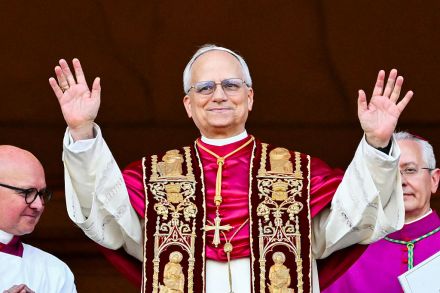
As Muslim migration roils Europe, some Catholic bishops are starting to notice. "For decades, the Islamization of Europe has been progressing through mass immigration,” Polish Bishop Antoni Długosz said July 13, adding that illegal immigrants “create serious problems in the countries they arrive in." Bishop Athanasius Schneider of Kazakhstan spoke more bluntly in March: "We're witnessing an invasion. They are not refugees. This is an invasion, a mass Islamization of Europe." Yet Pope Leo XIV lives in a different dimension. "In a world darkened by war and injustice . . . migrants and refugees stand as messengers of hope," Leo said July 25.

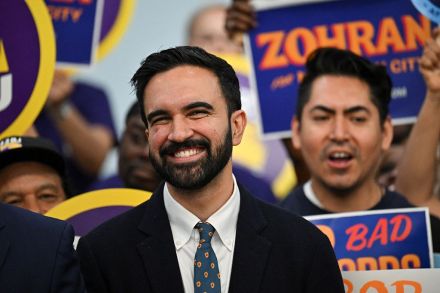
Zohran Mamdani wouldn’t mock his own faith

Zohran Mamdani is defensive about his faith and has maintained that his culture is “not a costume.” Why then, New Yorkers might wonder, does he not extend this courtesy to others? In December, he shared an Indian dance video about Hanukkah by comedy group the Geeta Brothers who performed behind a menorah, spinning dreidels, while singing Hey Hanukkah. The Punjabi track features lyrics: tera dreidel bara ghummay (your dreidel spins a lot), taazi roti kosher howay (let’s have fresh kosher bread), with a repeated chorus of mombatiyan, which means candles. Mamdani also wished his followers a merry Christmas using a video for the Geeta Brothers’ Jingle Bells track where the group woos a woman.

Zohran Mamdani

Waging war through poetry

Poetry is politics in the Yemen. When the last imam of Yemen, who was also the hereditary ruler, was deposed in a coup in 1962, it was a local poet who announced the change of regime on the radio, in verse of course. And the current al-Houthi regime in the north of the country, like all its predecessors, asserts its legitimacy, confounds its enemies and rallies its supporters through poetry. As an aspect of their cause, they have consciously avoided high-Arabic poetry — a literate, urban cultural form — and have made use of the zamil tradition, which immediately speaks not of the palaces of emirs and princes, but takes the listener to sit beside the farmers and Bedouin shepherds in the villages and hills.

poetry

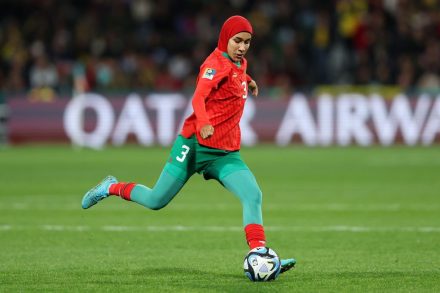
The hijab is not a feminist symbol

The Women’s World Cup has tied a bow around a summer of own goals in feminist ideology. Barbie — yes, that plastic blonde with impossible proportions — became the feminist icon of the summer, trans women silenced the voices of biological females and the story of Lia Thomas’s prowess remains etched in our minds. But for the grand finale of this summer's theater of the absurd? White Western women elevating the hijab onto the pedestal of feminist glory. For those who may not know, the hijab is a religious headscarf traditionally worn by Muslim women. While the practice dates as far back as the fourth century AD, the popularity of the hijab is actually quite new, with a stark rise beginning in just the 1970s.

hijab

Why I’m a Muslim

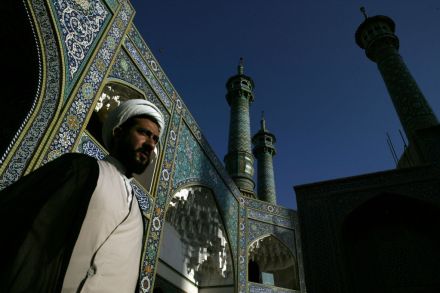
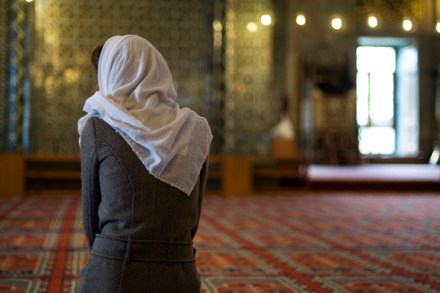
When Muslims make headlines, it’s invariably for the wrong reasons. The fuss over Boris Johnson’s burka joke is a case in point: he was making an argument in defence of Muslims, but was instead condemned for attacking us. Why the confusion? Because of how little our faith is understood. Let’s start with the burka. Islam makes various demands of its followers, but — despite what you might think from the headlines — covering our faces isn’t one of them. Based on the media’s fascination with these strange and oppressive garments, you might wonder why any modern woman would ever choose Islam. So here’s my answer. I’m a London-born doctor, raised in a Muslim family and now working in America.

muslim woman