Musicals

Swing for me

Lots of folks go to swingers’ parties; fewer go by accident. I achieved this distinction, once — and in my defense, I will plead only that my ignorance of the situation was so extreme, my credulity so extensive, that it took my asking one couple, in complete earnest, the most hilarious and incidentally incisive questions a person in my situation could ask — “How did you two meet?” and “How do you know the host?” — in order to set the record straight. To the first, the one said that the other’s husband had introduced them. The answer to the second was the old chestnut about “college roommates,” et voilà! At parties nowadays, I just ask people what they do for work.

company

Borderline soft porn but thrilling: Moulin Rouge! The Musical at Piccadilly Theatre reviewed

From our UK edition

Moulin Rouge wins no marks for its storyline. A struggling Parisian theatre is bought out by an evil financier who wants to marry the venue’s star, Satine, whose heart belongs elsewhere. The show opens like a pantomime with a bantering style and cheesy jokes. And there are passages of physical comedy that look weird amid the glamour of fin-de-siècle Paris. But the slapstick is crisply acted and well directed. And the comic scenes are balanced by full-throttle dance routines played by strutting hunks and twerking lovelies in black fishnet stockings. Every bodice is wound tight enough to ping open at any second. It’s borderline soft-porn but it’s delivered with thrilling doses of self-confidence and brio.

A story of reflection and self-discovery: Anaïs Mitchell’s new album reviewed

From our UK edition

Any artist who has habitually written or performed in character — from David Bowie to Lady Gaga — eventually arrives at their Mike Yarwood moment: ‘And this is me!’ With the release of her sixth solo record, Anaïs Mitchell has reached the point of personal revelation. ‘I’ve spent a lot of time trying to write in the voice of other characters,’ she says. ‘It felt like after so many years of working on telling other stories — now here are some of mine.’ In 2020 Mitchell was named one of Time magazine’s 100 most influential people. Nevertheless, she requires an introduction.

In praise of understudies

From our UK edition

The actor Ronald Fraser was famous for two things: his comic timing and his liking for a drink. On one occasion in the 1960s, he was happily sitting three sheets to the wind in a local hostelry, when he remembered that he was supposed to be on stage at a matinee. After walking unsteadily to the theatre, he stood in the wings and heard someone else in his role: the understudy, holding the audience in the palm of his hand. His name was Donald Sutherland, and he was revealing the quality that took him from bit parts on the London stage to worldwide stardom. The importance of understudies and covers has been elevated to new heights by the Covid pandemic. Leading men and ladies are dropping out the world over.

Why? Spielberg’s remake of West Side Story reviewed

From our UK edition

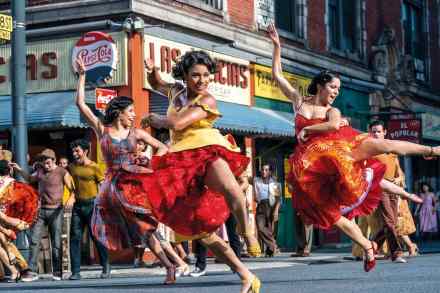
When you first hear that a remake of West Side Story is on the cards, it’s: God, why? Why would anyone look at West Side Story, which won ten Oscars in 1961, and think: that needs doing again? Who would do that? Steven Spielberg, that’s who, and as it had garnered mostly five-star reviews before I’d had a chance to watch, the question became: how? What wonders might he have brought to a film that was great and beautiful in the first instance? Not much. It is more authentic. The back stories are more substantial. The singing and dance numbers are bigger. There’s a part for Rita Moreno, which is neat. But in being more so it is also peculiarly less so. Plus there is an elephant in the room. Two, actually.

The forgotten story of the pioneering surgeon who healed disfigured airmen

From our UK edition

‘You’re inside an incinerator. The cockpit is on fire. You are burning. You can see bits of your body melting off. And you are struggling to get out.’ This is Andrew Doyle, the creator of Titania McGrath, describing to me the experience of an RAF pilot trying to escape from a stricken plane during the second world war. He explains that the injured airmen were treated by a New Zealand surgeon, Archibald McIndoe, who developed new methods for repairing skin damage at a specialist burns unit in the 1940s. And this is the subject that Doyle has chosen for a new musical. It may seem an odd departure for the anti-woke satirist but his passion for musical theatre is long-standing. He has written more than half a dozen song-and-dance shows with various collaborators.

guys and dolls

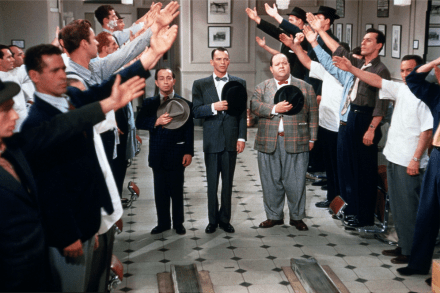
Meet the real-life gangsters who inspired Guys and Dolls

Guys and Dolls, the musical loosely based on the Broadway stories of Damon Runyon, premiered on Broadway 70 years ago on November 24, 1950. It ran for 1,200 performances and has been frequently revived ever since. The film version, starring Frank Sinatra as Nathan Detroit and Marlon Brando as Sky Masterson, appeared in 1955. Last year, entertainment-industry bible Variety reported that a remake is in the works from TriStar. Runyon’s world, and his characters, live on. Even on the page, never mind in 1950s Technicolor, Runyon’s characters can sometimes seem larger than life. But many of them are, in fact, based on real people that Runyon knew on the Broadway of the 1920s and 1930s.

Every MP must see this play: Value Engineering – Scenes from the Grenfell Inquiry reviewed

From our UK edition

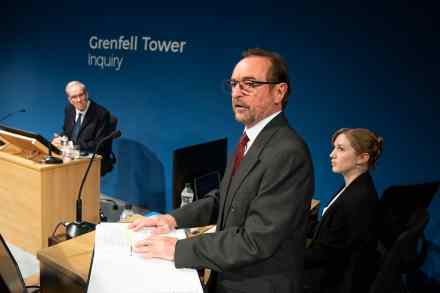
Scenes from the Grenfell Inquiry is a gripping, horrifying drama. Nicolas Kent and Richard Norton-Taylor have sifted through the public hearings and dramatised the most arresting exchanges. Ron Cook, often miscast as a comedian, is superb as the frosty and occasionally irascible inquisitor, Richard Millett. Early on, he asks the witnesses ‘not to indulge in a merry-go-round of buck-passing’. Later, he comments acidly, ‘That invitation has not been accepted.’ Every witness has something to hide and something to be ashamed of. A fireman searching for a child on the upper floors can’t explain why he didn’t rouse families from their flats and help them escape. A witness describes the inferno’s ghastly noise, ‘like sparklers’.

If it were any better, it would actually be a terrible pity: Diana – The Musical reviewed

From our UK edition

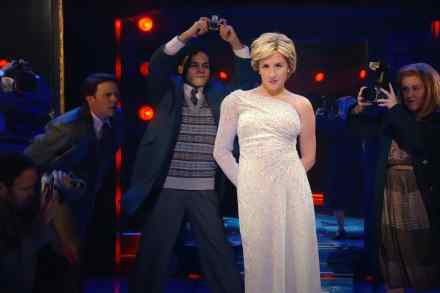
This week, an excellent film (Moving On) and a film that isn’t at all, but is entirely worth it as it’s one of the super bad ones that don’t come along too often. It’s the kind that, if it were any better, it would actually be a terrible pity. (See also: Cats.) It’s Diana: The Musical and it’s two hours of ‘whaaaaaat?’ and pinching yourself that this is really happening. (After two hours I was black and blue, with the pinching.) I don’t know what the best lyric is but ‘Harry, my ginger-haired son, you’ll always be second to none’ has to be up there. (Also: ‘It’s the Thrilla in Manila but with Diana and Camilla’ has to be in the game. The top spot is highly contested.

How the British musical conquered the world

From our UK edition

What do Henry VIII’s wives, a Rastafarian musical icon and a drag queen have in common? They are all the subjects of new stage shows that are heralding a golden age of the British musical. Let’s start with the court of Henry VIII. A pair of friends at Cambridge University, Toby Marlow and Lucy Moss, decided to write their own musical four years ago because the student theatre society couldn’t afford to pay the royalties for an existing one. They based it on the life stories of the six women who were unfortunate enough to marry Henry VIII. Six, as this debut effort came to be known, opens on Broadway this week, with huge advance ticket sales already achieved. ‘Historically, Britain was a place of Shakespeare, and new plays.

Sexist, classist and pro-global warming: Frozen, at Theatre Royal Drury Lane, reviewed

From our UK edition

Frozen the musical declares war on woke politics. The 2013 Disney movie has been turned into a song-and-dance show that openly celebrates sexism, classism and misogyny. Plus, it salutes the joys of global warming. It’s set in a Scandinavian realm ruled by a kindly monarch who lives in a castle attended by fawning servants. No sign of social mobility here. An impetuous young princess, Anna, falls in love with an eligible duke, Hans, but their betrothal annoys Anna’s sister, Princess Elsa. This is dangerous because Elsa has magical powers that she can’t control. She accidentally casts a spell on Anna, who falls to the ground with a terrible illness. Things get worse when a cold snap arrives from the north and plunges the entire kingdom into a new ice age.

The history of the Theatre Royal Drury Lane is the theatrical history of England

From our UK edition

Andrew Lloyd Webber has not been in the best of moods lately, largely thanks to all the Covid delays to his new musical Cinderella, now finally about to open — for the umpteenth announced time — at the Gillian Lynne Theatre. The bigger news, however, is that his theatre at the other end of Drury Lane, the grand old Theatre Royal, is finally finished after massive renovations. Lloyd Webber has spent an awesome £60 million on the rebirth of his Grade I-listed theatre, known to show folk as ‘the Lane’, with his wife Madeleine heavily involved and in cahoots with the heritage expert Simon Thurley and the great theatre architect Steve Tompkins. The result? Oh my goodness! The sheer elegance of its 1812 Greek revival design by Benjamin Wyatt is drop-dead.

Zips along with enormous vim: Malcolm Arnold’s The Dancing Master reviewed

From our UK edition

Malcolm Arnold composed his opera The Dancing Master in 1952 for BBC television. It never appeared, the problem being the source material — William Wycherley’s 1671 farce The Gentleman Dancing Master. Jokes about wedding nights and ‘scarlet foppery’ might have flown in the reign of Charles II but the New Elizabethans at Broadcasting House were altogether more shockable. ‘Too bawdy for family audiences,’ was Auntie’s official verdict, leaving The Dancing Master largely forgotten until a premiere recording late last year, and now — conducted by John Andrews and using almost the same cast — its first ever professional production, at the Buxton International Festival.

The best theatre podcasts

From our UK edition

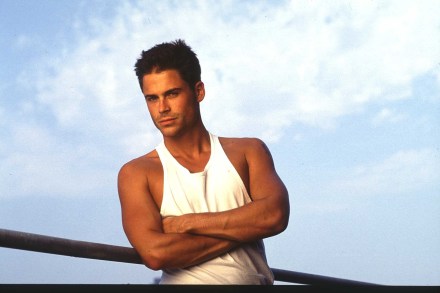
All the world’s on stage again so where to go to for insight into what to see and why? Podcasts, of course. Lowe’s ‘luck’ is that he happens to be friends, neighbours, or have starred, with everyone he interviews Let’s start with Literally! With Rob Lowe. An hour-long conversation between the most swoonable actor in the world who we’ve all forgotten, and everyone he knows and likes, from Alec Baldwin and Oprah Winfrey to St Elmo’s Fire co-star Demi Moore. It’s a wonderful and eye-opening listen. Lowe combines the enthusiasm and curiosity of the best interviewers with a knowledge and experience that makes conversation flow until the cup spilleth over.

There’s the kernel of a good show in this copycat Hamilton: Treason the Musical reviewed

From our UK edition

Copycat Hamiltons are everywhere. Lin-Manuel Miranda led the way by turning an unexamined corner of history into a smash-hit show. The latest antique subject to become a musical is the Gunpowder Plot of 1605. The script, by Ricky Allan and Kieran Lynn, ought to include those words in the title because they give vital data about the location, the historical period and some elements of the story. It’s a priceless asset. But they’ve tossed it aside and plumped instead for the vague, unsuggestive ‘Treason’. The best-known figure in the conspiracy, Guy Fawkes, gets a mention — as ‘Gwee-dough Forks’ — but doesn’t feature as a character. Another puzzling decision.

Even Adrian Lester’s sweetness, grace and nobility can’t rescue Almeida’s Hymn

From our UK edition

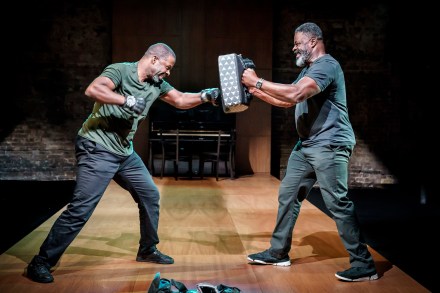
The Almeida is fighting back against lockdown with a sprawling family drama about two long-lost siblings. Adrian Lester plays Gilbert Jones, a successful entrepreneur, who runs a clothing business and a stationery shop in London. At his dad’s funeral he meets his half-brother, Benny (Danny Sapani), who was brought up in care but is now married with kids. The two bros become pals. They meet for salads at coffee shops where they swap news about each other’s families. They visit the gym and do stretching exercises while discussing their diets and their problems finding spaces to park. Benny, who appears to be a fitness coach, takes charge of these low-energy workouts. He holds up a scarlet cushion and Gilbert punches it feebly.

Finally a lockdown drama that will endure: James Graham’s Bubble reviewed

From our UK edition

Theatres can open if they want to. That’s the current position. The only factor keeping a playhouse dark is a lack of guts or imagination on the part of its leadership. A small pub in Vauxhall, The Eagle, is mounting new plays in its garden space to raise everyone’s morale. Punters must wear masks and sit in bubbles. ‘We’re adhering to the government guidelines,’ announced the artistic director before the start, ‘which are changing all the time.’ The show is a feelgood musical about drifters and dreamers in their twenties trying to make it in New York. Waverley wants to be an actress but her plans are blown off course by a tempting job offer from a law firm. What to do?

The jackboot zealotry of ushers is ruining theatre

From our UK edition

Southwark Playhouse has revived an American show, The Last Five Years, whose run was cancelled in March. In advance, I received an email outlining the theatre’s new rules, which appeared to exceed the minimum legal requirements. At the venue, I found that the main entrance had become the exit while the side door had become the main entrance. What for? Perhaps an unsubtle reminder that ‘everything’s changed now, pal, so get used to it’. The queue on the pavement moved at a turtle’s pace because the usher gave each playgoer a homily about the new regime before allowing them to pass through Checkpoint Charlie. Inside it was like an army hospital. Sentries in the corridors regulated our access to the loos.

An investor should snap up this weepy musical: Sleepless reviewed

From our UK edition

It has roughly the same proportions as Shakespeare’s Globe. The Roman Theatre in Verulamium (St Albans) is an atmospheric ruin with low flint walls, a banked rampart and a single stone column. Historians estimate that the circular space, measuring about 40 yards in diameter, would have enabled 7,000 spectators to watch plays, gladiatorial contests and executions. That figure seems too high. A capacity of 1,500 might be nearer the mark. These days the venue hosts outdoor theatre. Playgoers who sit at the edge of the auditorium can reach out and touch the ancient flint walls and run their fingers across the grain of the Roman concrete. During the August cold snap I watched The Taming of the Shrew, by Folksy Theatre, under an ominous grey sky.

From riveting Hitchockian melodrama to bigoted drivel: BBC’s Unprecedented reviewed

From our UK edition

Back to the West End at last. After a four- month lay-off, I grabbed the first available chance to catch a show in central London. I joined 20 enthusiasts at the ‘West End Musical — Silent Disco Walking Tour’, which convened outside a Fitzrovia pub. We were given a pink bracelet and a set of headphones that pumped musical hits into our ears. Our cheerleader, Sean, introduced us to his helpers, Tiny Tom and Sticky Vicky, who taught us a quick dance move. It transpired that we were the performers as well as the audience. We set off across the West End like a military convoy of unemployed choristers. At Old Compton Street we belted out ‘A Spoonful of Sugar’ from Mary Poppins.