Musicals

A flop: The Curious Case of Benjamin Button, at Ambassadors Theatre, reviewed

From our UK edition

The Curious Case of Benjamin Button carries a strap-line, ‘an unordinary musical’. Perhaps the word ‘extraordinary’ is simply too banal to capture the outstanding qualities of this unique show. The year is 1918 and a miraculous birth occurs in a remote Cornish fishing village. The newborn is not a baby but an adult pensioner, Benjamin, who emerges from the  womb wearing a three-piece suit, a pair of spectacles and a bowler hat. His shame-faced mother hastens away from the family home and takes a walk along the cliffs, which results in her death. Suicide, perhaps. And Benjamin’s angry father locks him in the attic and refuses to let him out. Benjamin escapes and visits the local pub where he enjoys a single pint of ale every Friday night for the next four years.

The late Quincy Jones, a man of many talents

The death of Quincy Jones, at the considerable age of ninety-one, represents not just the passing of a great American musical icon, but the departure of a truly remarkable man from the stage. The winner of an astounding twenty-eight Grammy awards, he excelled in so many different areas of music — from record production and film soundtrack composition to big band jazz and multi-instrumental playing — that it would not have been particularly surprising to discover that he had written operas or symphonies on his days off.

quincy jones

The unstoppable rise of stage amplification

From our UK edition

Recent acquisition of some insanely expensive hearing aids aimed at helping me out in cacophonous restaurants has set me thinking about the extent that modern life allows us to filter our intake of noise. This is big business. As sirens wail and Marvel blockbusters and rock concerts crash through legal decibel levels, controlling sound levels has become an increasingly sophisticated operation, abetted by everything from silicone pastilles and the volume-control knob to the wireless earbud.

Welcome back to London City Ballet – but can they please change their name?

From our UK edition

There’s sound thinking behind this summer’s resuscitation of London City Ballet – a medium-scale touring company popular in the 1980s that went bust in 1996. Given that larger institutions operating outside London such as Northern Ballet and Birmingham Royal Ballet are hamstrung by ever-tightening budgets that leave them increasingly risk-averse, there’s a crying need for something lighter on its feet and more adventurous in its repertory. This is what the new-form LCB under the direction of Christopher Marney sets out to provide, presenting new work alongside forays into the back catalogue.

An exclusive look at Graham Linehan’s Father Ted musical

From our UK edition

The tree-lined streets of Rotherhithe are an odd place to unveil a West End musical. But this is a suitably odd situation. Graham Linehan – lauded comedy writer turned culture warrior – is about to unveil what he calls ‘a musical that may never be seen’. For much of the past 30 years, the idea of turning Father Ted, cult sitcom of the 1990s, into a West End musical would have seemed a hot prospect – certainly to the legions of nerdy, largely male fans who still stream episodes decades later. Once upon a time, it looked destined for Shaftesbury Avenue, backed by one of the biggest names in theatre. Now it might be going nowhere.

Exhilarating: MJ the Musical reviewed

From our UK edition

If you’ve heard good reports about MJ the Musical, believe them all and multiply everything by a hundred. As a music-and-dance spectacular, the show is as exhilarating as any Jackson produced while he was alive. The sets, the costumes, the choreography and the live band deliver an amazing collective punch. When he removes his black trilby he looks like Rishi Sunak at a karaoke bar The script, by Lynn Nottage, takes us into Jackson’s twisted personal history. He was one of ten children raised in a four-room shack in Gary, Indiana, by weirdo parents. His mother was a Jehovah’s Witness who refused to celebrate birthdays or Christmas.

Spring’s hottest theatrical openings on Broadway

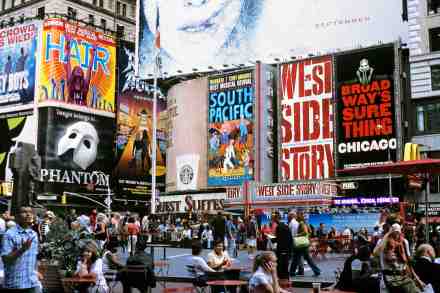
Since closing its doors during the pandemic in 2020, Broadway has struggled. The Phantom of the Opera lowered the curtain in April last year after more than thirty-five years. Andrew Lloyd Webber’s new musical, Bad Cinderella, shut in June, less than three months after it opened, and other musicals, such as the tortuously-named Britney Spears-inspired Once Upon a One More Time, have fared little better. Meanwhile, productions are still scrambling to get butts on seats: audience numbers are down 17 percent from their pre-pandemic highs. And yet, for theater aficionados, there is hope.

theater

Here We Are is in many ways confused

“I have always conscientiously tried not to do the same thing twice,” American composer and song-writing legend Stephen Sondheim once told the New York Times Magazine. In his final ever musical, conceived over a decade ago and executed after his death aged ninety-one in 2023, Sondheim has once again, like a magician, conjured surprise. Here We Are is many things and it isn’t always successful. But this maverick musical is wildly original — not least in suspending the songs themselves almost entirely for the second act.

The birth, death and rebirth of American Psycho: The Musical

American Psycho was never supposed to be a hit. Bret Easton Ellis thought Glamorama would be his big seller, and Psycho was just an odd interlude; an experiment with form that mocked the disconnection, inanity and opulent obliviousness of America’s new, young, hyper-materialist upper crust. It was also a cloaked reflection of repressed homosexuality, written by a gay author who once dated a closeted financier. It’s not even that violent. Most of it is just the interior monologue of this cold man listing the clothes and food and bad music that occupies his hollow mind. And it was intensely funny, but dryly, darkly so. In short, it wasn’t an obvious literary smash.

american psycho musical

Scherzinger is superb but why’s the set so dark and ugly? Sunset Boulevard, at the Savoy Theatre, reviewed

From our UK edition

Sunset Boulevard is a re-telling of the Oedipus story set in the cut-throat world of Hollywood. Pick a side in this tortured yarn. There’s Norma, a burned-out sex-goddess, who wants to make a comeback as a teenage ballerina in a dance epic. Or there’s Joe, a penniless scribbler, who becomes Norma’s reluctant toyboy while he works on her doomed screenplay (which stands for a stillborn child). Clinging to Joe is Betty, a drippy girlfriend who represents escape and artistic integrity. The final piece in the jigsaw is Norma’s discarded husband, Max, who stands for sadistic and destructive obsession. Each day he sends Norma a new batch of counterfeit love letters from non-existent fans.

Was Vera Brittain really this insufferable? Buxton Festival’s The Land of Might-Have-Been reviewed

From our UK edition

‘Ring out your bells for me, ivory keys! Weave out your spell for me, orchestra please!’ It’s lush stuff, the music of Ivor Novello, and when the Buxton International Festival announced a new musical ‘built around’ his songs, the heart took flight. Novello is one of those fringe passions that are, one suspects, a lot less marginal than fashion might suggest. If his great hit operettas of the 1930s and 1940s – The Dancing Years, King’s Rhapsody and the rest – really are unrevivable (and the jury is still out on that), a sympathetic, newly constructed showcase for his finest material in the manner of the Gershwin reboot Crazy For You might be the next best thing.

Like attending a joyous religious service: We Will Rock You, at the Coliseum, reviewed

From our UK edition

One of the earliest jukebox musicals has returned to the West End. When the show opened in 2002 the author, Ben Elton, plugged his production on TV chat shows with a wisecracking slogan: ‘We Will Rock You isn’t just a title… it’s a promise.’ The easy-listening storyline draws inspiration from the Old Testament and from Mad Max. We’re in a dystopian future world ruled by faceless corporations that sell mass-produced garbage to zombified youngsters addicted to their mobile phones. A tribe of exiles, the Bohemians, roam the underworld in search of the relics of a vanished culture known as ‘rock’n’roll’. The Bohemians meet a visionary outcast, Galileo, who recites song lyrics that the Bohemians recognise as vestiges of the ‘sacred texts’ that they worship.

Much better than the film: Mrs Doubtfire, at Shaftesbury Theatre, reviewed

From our UK edition

Mrs Doubtfire is a social comedy about divorce. We meet Miranda, a talentless, bitter mother, who tires of her caring but imperfect husband, Daniel, and kicks him out of the house on some footling pretext. When Miranda later discovers that Daniel’s loyalty to their children is an asset of inestimable value she invites him back. And he accepts her offer without a murmur of recrimination. The story is based on the cruel imbalances in family law that entitle a vengeful, heartless woman like Miranda to destroy the emotional wellbeing of her children and her husband, and to call her vandalism justice. In this story Daniel is a voiceover artist who impersonates an eccentric Scottish nanny, Mrs Doubtfire, and persuades Miranda to hire him as their kids’ carer. A neat set-up.

In defence of musicals

From our UK edition

You can always rely on theatreland to serve up drama off stage as well as on. Hopefully the spat between Lord Andrew Lloyd Webber and Sir David Hare over whether musicals are ‘killing’ theatre will run and run.  Writing in The Spectator last week, Hare moaned: ‘Musicals have become the leylandii of theatre, strangling everything in their path… are dramatists not writing enough good plays which can attract 800 people a night? Will well-known actors not appear in them? Or did producers mislay their balls during lockdown?

A tremendous show that will attract serious attention from the West End: Rehab – The Musical reviewed

From our UK edition

Rehab: The Musical opens with a boyband star, Kid Pop, getting busted for possession of cocaine. The judge sentences him to a course of treatment at the Glade which he attends with great reluctance. Giving up marching powder is the last thing on his mind. ‘I said no to drugs but they just wouldn’t listen.’ His sharky agent, Malcolm Stone, wants to prolong Kid Pop’s notoriety by sending an undercover ‘addict’ to the Glade to spy on him and leak stories to the press. Stone hires a luscious sex bomb, Lucy, to take on the job, and it’s obvious that Kid Pop will seduce her and their affair will end in redemption for both parties. Predictable enough, perhaps, but the couple’s journey is a joy to experience.

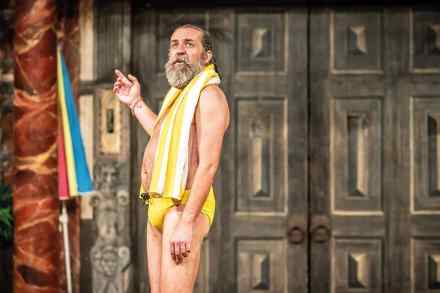
The show works a treat: Globe’s The Tempest reviewed

From our UK edition

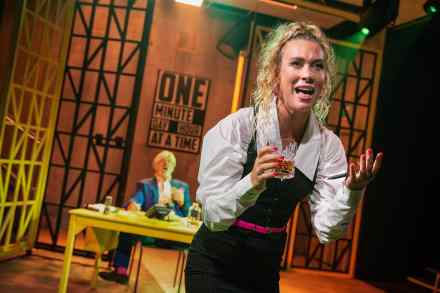
Southwark Playhouse has a reputation for small musicals with big ambitions. Tasting Notes is set in a wine bar run by a reckless entrepreneur, LJ, whose business bears her name. In real life, LJ’s bar would go bust within weeks. It serves vintage wines to a clientele of wealthy tipplers who chug back large tureens of Malbec and claret but who eat no food. The staff help themselves to free champers and Burgundy whenever they choose, and the boss fusses around like a mother hen making sure her brood are safe and content. Bad punctuality is never punished and the staff improvise each shift as they go along. But the emotional atmosphere of LJ’s feels right.

An electrifying, immersive thrill: Scottish Opera’s Candide reviewed

From our UK edition

The first part of the adventure was getting there. Out of the subway, past the tower blocks and under the motorway flyover. A quick glance at Google Maps and into a patch of litter-blown scrub. Someone bustles up alongside me: ‘Are you looking for the opera?’ I am, yes: and my guess is that the cluster of clipboard-y types in high-vis tabards next to that warehouse probably marks the entrance. We’re waved in: ‘Big Cock’ proclaims a graffiti-covered wall.

I can’t recommend this Cole Porter musical highly enough: Anything Goes, at the Barbican, reviewed

From our UK edition

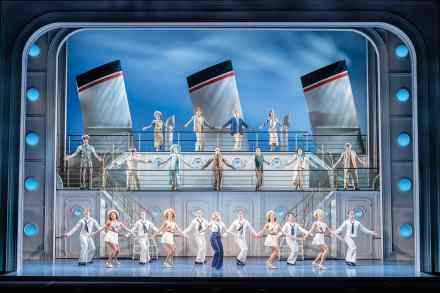
The Barbican’s big summer show is billed on the website as ‘the sold-out musical sensation, Anything Goes’. The term ‘sold-out’ is a strange way to describe a production that’s keen to get your business. You’d be forgiven for clicking away and hunting for a show with seats available. What the Barbican means is that this is a revival of an earlier production that did great business. And that may explain why tickets aplenty are available even on a busy Friday night. This version stars Kerry Ellis as the showgirl, Reno, who falls in love on a transatlantic cruise ship. Virtually every number is a classic. If you read any couplet from the title song you’ll be humming the melody all day. https://www.youtube.com/watch?

Hard to believe this rambling apprentice-piece ever made it to the stage: Almeida’s The House of Shades reviewed

From our UK edition

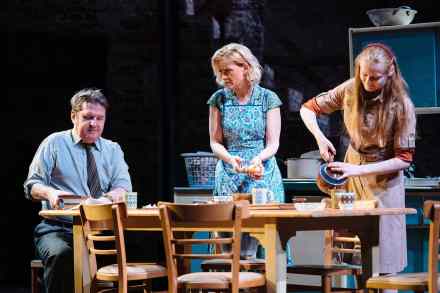
The House of Shades is a state-of-the nation play that covers the past six decades of grinding poverty in Nottingham. The action opens in 1965 with a corpse being sponged down by an amusingly saucy mortician. The dead man, Alistair, sits up and walks into the kitchen where he natters with his prickly, loud-mouthed wife, Constance (Anne-Marie Duff). They seem to live in the city’s most dangerous dwelling. People keep dying. Then they come back to life to make a speech or two. Constance’s pregnant daughter doesn’t survive a back-room abortion and she shows up half a dozen times in a skirt dripping with blood. Alistair expires again and returns to life to tell us what it’s like to die. How the writer, Beth Steel, researched this experience isn’t clear.

A beautiful, frustrating bore: Florian Zeller’s The Forest, at Hampstead Theatre, reviewed

From our UK edition

The Forest is the latest thriller from the French dramatist Florian Zeller, translated by Oscar winner Christopher Hampton. It’s a well-worn yarn of adultery, betrayal and vengeance set among the yuppie classes. The action is located in France but the actors speak in Home Counties accents. (In theory, at least. Some are better at imitating BBC newsreaders than others.) Zeller makes his story deliberately arty and obscure. Man 1, also known as Pierre, is a wealthy doctor whose wife, or ‘The Wife’, is played by Gina McKee. Pierre has a hysterical girlfriend, known as ‘The Girlfriend’, who threatens to reveal their affair and destroy Pierre’s marriage. The Girlfriend dies bloodily in their love nest. But was this suicide?