Musicals

The Trainspotting musical is made for cruise ships

From our UK edition

Plenty of critics have mocked Trainspotting – the musical (with lyrics and music by Irvine Welsh and Stephen McGuinness, respectively) but the producers know their audience’s mind. They want to see live theatre without taking the risk of a new play, which might be gruesome, and they prefer a dead-safe replica of a glamorous movie to something by Chekhov or Pinter. Reviewers admire novelty and inventiveness so they tend to punish theatre-makers who reheat leftovers. The show follows the book more closely than the film, where Renton was the central figure, and here he blends in with the community of wasters and criminals who mope around Edinburgh trying to raise cash for smack. The characters are reduced to simplistic gestures, as easy to read as hand signals. Begbie is a cocky thug.

A Sound of Music with brains as well as heart

From our UK edition

If you’re interested in how words work with music, the collected lyrics of Stephen Sondheim are an investment you’ll never regret. But Sondheim isn’t infallible, and when he writes about his mentor Oscar Hammerstein II he’s often plain wrong. Sondheim mocks one particular lyric from The Sound of Music: ‘Like a lark that is learning to pray.’ ‘Wait a minute – a lark praying?’ he snarks. But the character who sings those words is a devout young Austrian woman with a head full of Schubert and folksongs. Hammerstein is writing as Maria, not himself. It’s an art that Sondheim never quite mastered, which is why his characters – whether Swedish aristocrats or East End cannibals – all sound like New Yorkers in therapy.

This J. Edgar Hoover musical is destined for Broadway

From our UK edition

Here Comes J. Edgar! has a brash poster featuring a cross-dressing FBI agent in fishnet tights with his thighs splayed aggressively towards the viewer. He points a warning finger as if to say, ‘Enjoy this show or go to jail.’ The abrasive imagery aligns with the arrogant tone of most LGBTQ+ advertising but the show itself has a more humane and playful temper. Harry Shearer and Tom Leopold have written a superb tragicomedy about a powerful homosexual who wants to conceal his love life while hunting down America’s most notorious criminals. We first meet Hoover as he lies in a hospital bed flanked by two chain-smoking nurses who discuss his health while filling the room with tobacco fumes. This quietly amusing scene sets the mood.

A Sinatra musical for hardcore fans

From our UK edition

Sinatra: The Musical dramatises the star’s career during a minor wobble in the early 1950s. After falling from grace, Sinatra stages a comeback and becomes an Oscar-winning film actor. Joe DiPietro’s script gives the impression that Sinatra’s world is ruled by wise, powerful and well-connected women. Billie Holiday teaches him how to sing with feeling: ‘Bend the notes at the end of the phrases.’ His mother explains the secret of a happy marriage: ‘One talks, the other doesn’t.’ When Sinatra punches and injures a photographer, his wife tries to restore his image by ordering him to play a priest in The Miracle of the Bells. Sinatra obeys. The film bombs so badly that his press agent, George, severs all contact with him.

Michelle Terry is ferocious in Brecht’s simplistic tutorial

Bertolt Brecht’s classic, Mother Courage, is about a female war profiteer who drags a wagon of supplies through no man’s land and sells them to bedraggled soldiers. During the story, she loses both her children and she discovers that war is not as marvelous as she previously thought. This spiritual journey evidently mattered to Brecht, who was born in 1898 in Augsburg, and who greeted the outbreak of World War One with enthusiasm only to become disillusioned by the mechanized slaughter of the trenches. His play is aimed at wrong-headed militaristic numbskulls who believe that war is good rather than bad. If you already hold pacifist views, you may find his tutorial a little simplistic.

bertolt brecht michelle terry

Michelle Terry is ferocious in Brecht’s simplistic tutorial

Bertolt Brecht’s classic, Mother Courage, is about a female war profiteer who drags a wagon of supplies through no man’s land and sells them to bedraggled soldiers. During the story, she loses both her children and she discovers that war is not as marvellous as she previously thought. This spiritual journey evidently mattered to Brecht, who was born in 1898 in Augsburg, and who greeted the outbreak of the first world war with enthusiasm only to become disillusioned by the mechanised slaughter of the trenches. His play is aimed at wrong-headed militaristic numbskulls who believe that war is good rather than bad. If you already hold pacifist views, you may find his tutorial a little simplistic.

Are we ready for the truth about Judy Garland?

From our UK edition

End of the Rainbow feels like a prison drama set in London in 1969. Judy Garland is about to give a string of solo shows in the West End and she’s preparing at the Ritz under the supervision of her cruel boyfriend, Mickey Deans, who doubles as her publicist and drug dealer. Her British pianist, a friendly queen named Anthony, tries to protect her from Mickey’s manipulative bullying. Judy, the captive, forfeits our sympathy straight away by complaining about everything. Her suite is too poky. She’s desperate for liquor to improve her mood. And she reacts with outrage when the Ritz manager asks for payment in advance so she forces him to back down by threatening to commit suicide. She rehearses the stunt by standing on a balcony and daring herself to dive into the street.

Dead Outlaw

Dead Outlaw is sharp-witted and irreverent

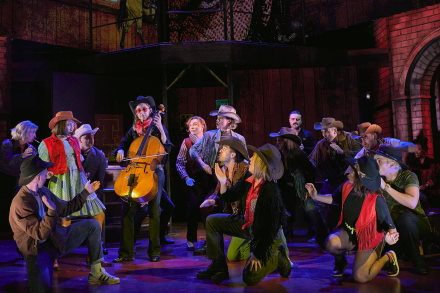
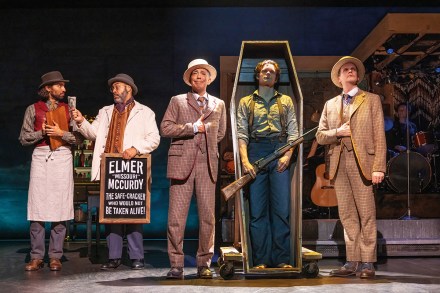
In 1976, the TV series The Six Million Dollar Man arrived to shoot at an amusement park in California. A central attraction was the funhouse ride, where screaming thrillseekers hurtled past a red mannequin hanging garishly from a noose. It was only when a crew member touched the body – and an arm fell off, revealing bone – that they realized the mannequin was, in fact, a corpse. Painted in phosphorus and slathered in wax, it had been suspended, unnoticed, for years. So began a frenzied investigation into who this mystery cadaver was. An autopsy revealed that the man had died from a bullet wound. His jaw was wired shut; inside his mouth were ticket stubs to a crime museum and a penny dating back to 1924. He had been preserved using arsenic.

Self Esteem is the star of this David Hare musical

From our UK edition

Teeth ’ n’ Smiles is not quite a musical. David Hare’s 1975 play about rock’n’roll includes a handful of tunes performed by a group of failing musicians. It feels like several dramas rammed together. One strand concerns the aimless witter of instrumentalists who lounge around backstage discussing drugs and groupies. Another strand follows the lead singer, Maggie, and her destructive appetites for booze and casual sex. The third element concerns the band’s manager, Saraffian (Phil Daniels), who knows nothing about showbusiness and seems keen to advertise his ignorance to the world. Saraffian is a Dickensian figure who talks like Fagin and believes that pop stars should resemble school prefects.

Marvellously conservative: Cable Street reviewed

From our UK edition

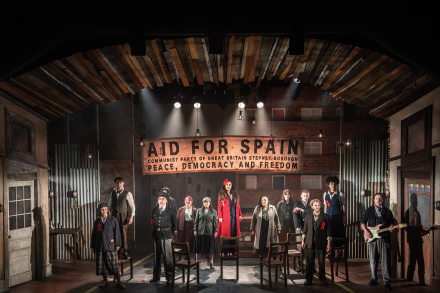
Cable Street is a musical that premièred last year at the Southwark Playhouse and has now migrated to the Marylebone Theatre. Fans of beautiful staging will be instantly smitten by the amazing achievement of the designer, Yoav Segal. The script by Tim Gilvin and Adam Kanefsky tells the story of a violent stand-off in October 1936 between cockney activists and Oswald Mosley’s British Union of Fascists. The authors treat the East End during the depression as a panto or a moral fairy tale. It’s good vs evil. The socialists are hard-working, golden-hearted heroes who rise up against the wicked landlords and their cruel rent hikes. The fascists are angry, misshapen losers led by a waddling baldie in a stick-on moustache. The socioeconomic background is hard to decipher.

Paddington – The Musical is sensational

From our UK edition

Who doesn’t love Paddington? The winsome marmalade junkie has arrived at the Savoy Theatre in a musical version of the 2014 movie. First of all, the show is sensational. Absolute box-office gold, full of joy, mirth and spectacle. It’s also quite pricey but never mind. Sceptics who feel indifferent to children’s fiction will be relieved to learn that the dyspraxic Peruvian asylum seeker doesn’t feature much in the story. Paddington’s main attribute is his physical clumsiness and once he succeeds in destroying the crockery and furniture at the Browns’ family home, he runs out of narrative possibilities. His fur is invitingly combustible. Could someone set him on fire? Not quite.

One of the best plays about the 1980s ever staged

From our UK edition

Alan Hollinghurst’s The Line of Beauty has been turned into a stage show directed by Michael Grandage. We’re in the early 1980s and Nick has just left Oxford with a literature degree. He lodges with his wealthy friend, Toby Fedden, in their family home and he offers to keep an eye on Toby’s troubled sister, Cat, who suffers from depression. Despite her disorder, Cat is a rebellious type who quizzes Nick about the intimate details of his casual flings with men. Her father, Gerald, wins a safe Tory seat and persuades Mrs Thatcher to attend a ball at their mansion in the country. The prime minister’s arrival throws the Feddens into a panic but Nick saves the day by smoothly asking Mrs Thatcher for a dance. ‘Do you know,’ she says, ‘I would like that very much.

Violin concertos from two Broadway legends

From our UK edition

Grade: B+ The 20th century, eh? What a lark that was. Vladimir Dukelsky studied in Kiev under Glière and looked set to be one of the smarter Russian composers of his generation. He even wrote a ballet for Diaghilev. Then communism happened and Dukelsky ended up in the USA where to the bemusement of his friend Prokofiev he reinvented himself as Vernon Duke, Broadway songsmith. ‘Autumn in New York’ and ‘Taking a Chance on Love’ are both by Duke; classic Americana by way of Tsarist Ukraine.  Duke’s Violin Concerto (1943) is recorded here alongside the 1941 concerto by Robert Russell Bennett – better known as the king of Broadway orchestrators; the man who clothed Oklahoma! and My Fair Lady in silken strings.

My new show with Andrew Lloyd Webber

From our UK edition

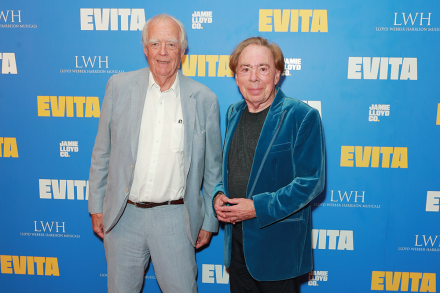
The week of my cricket team’s annual tour of Cornwall. I formed Heartaches CC in 1973 and 765 games later it is still going strong. Not that I am a key component of the side these days, if I ever was, despite my seven wickets against Mullion in 1991. When I suffered my fourth injury in three of the past four seasons (and one of them occurred when I was minding my own business umpiring) I saw the writing on the scoreboard. I just hope I’m not injured as a spectator this year. For some reason 2025 has been an extraordinarily hectic year, musicals wise. Annoyingly hectic in fact. I know I should be grateful for continued interest in past work but, in my 81st year, I should have spent more days at Lord’s or the Oval than in theatres.

A Brigadoon better than most of us ever hoped to see

From our UK edition

The village of Brigadoon rises from the Scotch mists once every 100 years, and revivals of Lerner and Loewe’s musical are only slightly more frequent. The last major London production closed in 1989; and if you know Brigadoon at all it’s probably through the lush 1954 movie. The new staging at Regent’s Park takes a very different approach. The songs, the basic story and the heather (lots of it, pink and looking only slightly artificial) are all still there, but the director Rona Munro has rewritten the book, backdating the action to the second world war and turning Lerner and Loewe’s American tourists into a pair of shot-down bomber pilots. The music swings, the park supplies the scenery and the downpour only added to the fun It's a bold stroke, and it pays off.

Wonderfully corny: Burlesque, at the Savoy, reviewed

From our UK edition

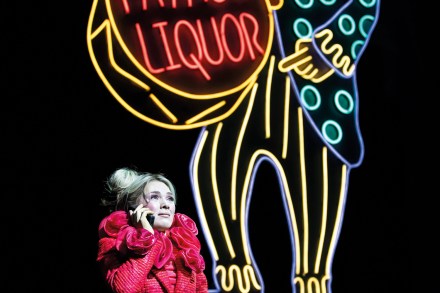
Inter Alia, a new play from the creators of Prima Facie, follows the hectic double life of Jess, a crown court judge, played by Rosamund Pike. As a high-flying lawyer with a family to care for, she knows that ‘having it all’ means ‘doing it all’. When not in court, she skivvies non-stop for her indolent husband and her useless son, who telephones her at work to ask why his Hawaiian shirt isn’t in the fridge where he left it. She races home, finds the shirt, irons it back and front, and then starts to prepare supper for eight guests. Husband and son pretend to help by Frisbeeing the dinner plates around the kitchen and tossing pots of taramasalata to each other. A spillage of gunk lands on the kitchen floor and Jess promptly kneels down and wipes it clean.

Irresistible: Clueless, at the Trafalgar Theatre, reviewed

From our UK edition

Cher Horowitz, the central character in Clueless, is one of the most irritating heroines in the history of movies. She’s a rich, slim, beautiful Beverly Hills princess obsessed with parties, boys and clothing brands. According to her, the world’s problems can easily be settled by using the solutions she applied to the seating plan at her dad’s birthday dinner. But Cher is also a creation of genius because she draws us into her life and makes us understand the raw, damaged reality that lies behind her superficial perfection. She’s not a privileged brat. She’s all of us. At the start of this musical remake, Cher takes us on a tour of her luxury home. ‘The Greek columns date all the way back to 1975,’ she says.

A treat for nostalgic wrinklies: Punk Off!, at the Dominion Theatre, reviewed

From our UK edition

Punk rock, packaged, parcelled, and boxed up as a treat for nostalgic wrinklies. That’s the deal with Punk Off!, a touring show that recently completed a lap of the country at the Dominion Theatre. Most of the audience were there to recall their rebellious heyday. ‘It’s about to get really, really loud,’ announced the compère, Kevin Kennedy, as the four-piece band hammered out ‘Sheena Is A Punk Rocker’ ‘and ‘If the Kids Are United’. Both hits sounded eerily unfamiliar. Why? Those raucous, pulsing rhythms can’t be turned into elevator jingles or a background drone at a shopping mall – so we rarely hear them. Just as well. Kennedy rattled through the major turning points in the movement’s history.

Stylish facsimile of Carol Reed’s film: Oliver!, at the Gielgud Theatre, reviewed

From our UK edition

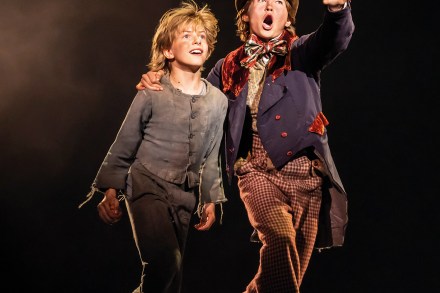
Oliver! directed by Matthew Bourne is billed as a ‘fully reconceived’ version of Lionel Bart’s musical. Very little seems to have been reconceived. This stylish and dynamic show develops like an unblemished copy of Carol Reed’s film. Fair enough. Punters want comfort, not novelty when they go to see a 65-year-old musical. Billy Jenkins, as the Artful Dodger, captures every heart in the auditorium. But of course he does. It’s no slur on Jenkins to point out that the ‘Dodger’ is one of the greatest acting gigs in all musical theatre. Has it ever been done badly? The Oliver I saw, Raphael Korniets (one of three sharing the role), is a slender youngster with a huge singing voice.

Elton John’s The Devil Wears Prada is sumptuous but unmemorable

From our UK edition

The Devil Wears Prada is a fairy tale about an aspiring female novelist, Andy, who receives a job offer from Runway, the nastiest and most influential fashion magazine in America. Miranda, the editor, is a Botoxed uber-bitch who doesn’t really want to hire Andy, but does anyway. And Andy doesn’t really want to work in fashion, but does anyway. Slightly odd. Visually, the show is a sumptuous treat that offers Olympic-standard costumes, set and lighting designs Andy is like Paul Pennyfeather in Decline and Fall, a bland but trustworthy cipher who bears witness to a fascinating world of excess and corruption. She’s barely a character, more a device. The best lines are delivered by others. Miranda (Vanessa Williams) specialises in toxic putdowns.