Musical theater

Rolling Thunder falls flat

April this year marked the 50th anniversary of the end of the Vietnam War. Celebrating this milestone – or perhaps cashing in on it – is Rolling Thunder, an off-Broadway musical imported from Australia now playing at the New World Stages.  Marketed as “part rock concert, part documentary,” Rolling Thunder is all cliché – and not in a good way. The two-hour jukebox musical uses a razor-thin plot and woefully undeveloped characters to connect various popular songs of the era, from “Born to Be Wild” to “We Gotta Get Out of This Place” and "Bridge over Troubled Water," supported on stage by a five-piece band.

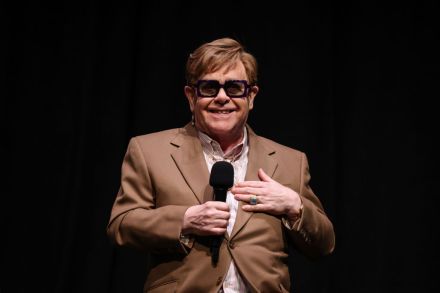
What will Elton John learn from Tammy Faye’s flop on Broadway?

Amid much hype and excitement last year, Sir Elton John, that most consistently busy of rock ’n’ roll stars, announced that he was going to retire from touring so that he could spend more time with his young children. Yet John has been nothing if not productive — and his definition of “retirement” has been more elastic than most seventy-seven-year-olds. In the last year alone, since he played his final full concert in Stockholm on July 8, 2023, he has participated in a major documentary, Elton John: Never Too Late, for which he has written a new song, performed at a high-profile international business event at St. Paul’s Cathedral in London last month and now has seen his latest musical, Tammy Faye, transfer to Broadway.

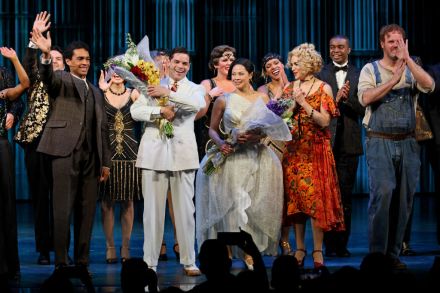
A new adaptation of The Great Gatsby is enrapturing and impressive

In F. Scott Fitzgerald’s classic 1925 novel The Great Gatsby, Daisy Fay is a mercurial character. The popular rich girl from Louisiana — married to Tom Buchanan, an adulterous brute — is ravishing and entrancing and, at times, cruel. It is her voice that most draws Jay Gatsby to her years after their initial fling when he was a poor officer, as he longs for her across the bay. As Fitzgerald describes it, Daisy’s is a voice that rises in dramatic swells and falls to intimate murmurs, coaxing its listeners to draw closer. Gatsby, the nouveau-riche rumored bootlegger from an impoverished farming family, is obsessed with Daisy: her class, her beauty, her unattainability, her voice. It is a voice, he tells the book’s narrator Nick Carraway, that is “full of money.

Gatsby

The birth, death and rebirth of American Psycho: The Musical

American Psycho was never supposed to be a hit. Bret Easton Ellis thought Glamorama would be his big seller, and Psycho was just an odd interlude; an experiment with form that mocked the disconnection, inanity and opulent obliviousness of America’s new, young, hyper-materialist upper crust. It was also a cloaked reflection of repressed homosexuality, written by a gay author who once dated a closeted financier. It’s not even that violent. Most of it is just the interior monologue of this cold man listing the clothes and food and bad music that occupies his hollow mind. And it was intensely funny, but dryly, darkly so. In short, it wasn’t an obvious literary smash.

american psycho musical

Once Upon a One More Time is pat, prepackaged feminism

Britney Spears has always been mired in narrative, created by her managers, fans and the media as much as by herself. She has been, at different times, a virgin pop princess; a mega-stadium pop queen; a “cheating” girlfriend (on Justin Timberlake, no less — a falsehood drummed up by the tabloids); a girl gone off the rails; a mother; a “bad” mother suffering a mental health crisis. More recently, as interest in Spears has grown following her emergence from a thirteen-year legal conservatorship, the story is simpler: she was lost and now she is found. A victim and a hero. This summer another label got added to the list: feminist cultural icon with a legacy to protect.

spears

Here Lies Love is too scared to be serious

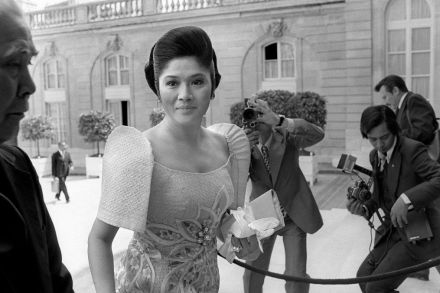
Imelda Marcos allegedly wants three words inscribed on her tombstone: Here Lies Love. It’s a poetic expression made grimly baleful by the reality of the Marcos regime: Imelda and her husband Ferdinand ruled the Philippines with an increasingly iron fist from 1965-86, committing countless human rights abuses as they robbed the country’s coffers. Yet the phrase has been borrowed by David Byrne and Fatboy Slim as the title of their musical about the Marcoses, Here Lies Love, now playing on Broadway (it premiered off-Broadway in 2013). Whether the phrase is used in earnest or irony is never quite clear in a show that apparently positions itself as a fun and fabulous karaoke dance party.

Here Lies Love

Taking in Good Night, Oscar and New York, New York

Mental illness is horrifying and hilarious, like politics or killer clowns. And unlike those two subjects, it can be staged without tackiness or gimmicks. King Lear’s all the more tragic for losing his marbles and out-fooling the Fool. I was nevertheless surprised to see a show exploit the premise as heartily as Good Night, Oscar does, for laughs and gasps alike. The new play about the mid-century pianist, actor, comedian, and all-around firecracker Oscar Levant gets more mileage out of old-school “mental-health struggles” — alcoholism, drug addiction, schizophrenia, OCD, wifebeating, electroshock therapy — in a taut hundred minutes than Dr. Phil could in a whole season.

Oscar

Bringing back Stephen Sondheim and enduring a new Andrew Lloyd Webber

On Sunday April 16, the curtain went down on Andrew Lloyd Webber’s Phantom of the Opera for the last of 13,981 performances on Broadway, a titanic thirty-five-year run grossing north of $1.3 billion. The end of an era? Not quite — dating back to the 1979 opening of Evita, Lloyd Webber musicals have run continuously on the Great White Way for forty-four years. That streak is now hitched to the fortunes of Bad Cinderella, which opened just weeks before Phantom closed. The show gets a lift from a lush score and some winning numbers, as well as sumptuous set design. The whole premise, however, turns out to be a pumpkin, and it may spell midnight for the composer’s magical run within the year.

Lloyd webber

Broadway brings back Bob Fosse’s Dancin’

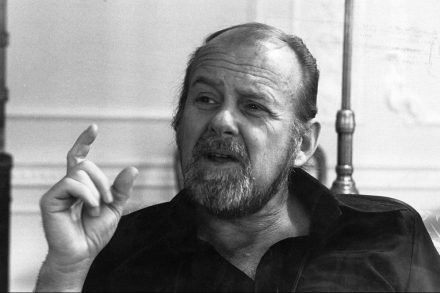
To kick off the new revival of Bob Fosse’s Dancin’, a lone performer comes onstage to inform us that, per the recommendation of the WHO, the CDC, the US Surgeon General and sundry others, the evening’s proceedings will not include any plot, message, or moral. I pinched myself. Wearing Fosse’s signature bowler hat, the speaker, played by Manuel Herrera, promises nothing but “dancing, some singing... and more dancing” — and for the most part, this dazzling two-and-a-half-hour musical revue lives up to that promise. Directed and staged by Wayne Cilento, who danced in the original production, the first revival of Dancin’ on Broadway is a treasure trove for Fosse fanatics, a smart introduction for the unfamiliar and a delight for everyone between.

bob fosse

The Some Like It Hot revival is cream-puff theater

The new Some Like It Hot on Broadway has bass player Jerry (J. Harrison Ghee), disguised among Big Sue’s Society Syncopators as “Daphne” to hide from the Chicago mob, decide to embrace the drag lifestyle and elope with his elderly suitor Osgood (Kevin Del Aguila) by the show’s end. (The 1959 film closes with Jerry straining to extract himself from Osgood’s clutches.) Many theatergoers will not expect this update, setting up a bit of dramatic irony too delicious to be unintentional. What’s a drag show, after all, without a few surprises? To my knowledge, this irony has gone entirely uncapitalized by headline-writers across the nation. Some Like a Hot Dog! Speakeasy, Don’t Tell! Billy, but Wilder! Jack’s Lemon!

some like it hot

An ingloriously dumb adaptation

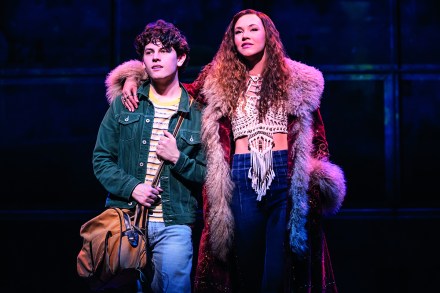
There’s always been a market for nostalgia. Keats, the huckster of Greek glories, put it best: “Heard melodies are sweet, but those unheard are sweeter.” But the peculiar achievement of Lester Bangs, the cantankerous rock critic played by Philip Seymour Hoffman in the film Almost Famous (2000), is to sell us some self-confessedly unsweet music. True rock and roll, the Bangs character tells us, is “gloriously and righteously dumb” and could suffer no worse fate than to become an “industry of cool.” Of course, by his lights, the golden age has passed; all that remains is “the death rattle, the last gasp, the last grope.” If nostalgia is a drug, he has mainlined the stuff. What are you on, man, and where can I get some?

almost famous

Michael Jackson on Broadway

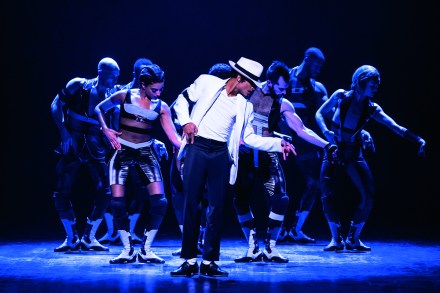
Michael Jackson has a claim to being the most famous man in history. He is certainly the most widely seen and heard. His career straddled five decades and the heydays of radio and television. His Thriller is the best-selling album of all time. He went from playing nightclubs and The Ed Sullivan Show with the Jackson 5 to solo tours that each attracted more than four million fans. For musical celebrity, there is no comparison. The Beatles? MJ owned them, literally: he bought their entire catalogue in 1985. Elvis Presley? Lisa Marie was the King of Rock and Roll’s only daughter, but it took marrying the King of Pop to make her a star.

Jackson