Music

We’ve got to hold on…

From our UK edition

Hats off to the Duke of Cambridge for joining Jon Bon Jovi and Taylor Swift on stage at Kensington Palace last night for a sing-along of 'Livin' On A Prayer'. The Winter Whites Gala was raising money for Centrepoint homeless charity. It's the taking part that counts.

Old England died in 1963

From our UK edition

There is no better measure of the pivotal importance of 1963 than to recall what Britain was like in the early 1950s, as we slowly emerged from the shadows of the second world war. The great Labour experiment of 1945 had petered out in a grim slog through years of austerity and rationing. With Winston Churchill back in No. 10, life had begun to crawl back to ‘normality’. Conservative values ruled: respect for tradition, discipline and authority. The old class structure still stood. No extramarital sex or homosexuality. In the cinema we were entertained by cosy Ealing comedies and films portraying the ‘stiff upper lip’ spirit which had won the war. Pop music, hardly ever allowed on the BBC, centred on crooners such as Frankie Laine and adaptations of folk songs.

The PM’s musical tin-ear

From our UK edition

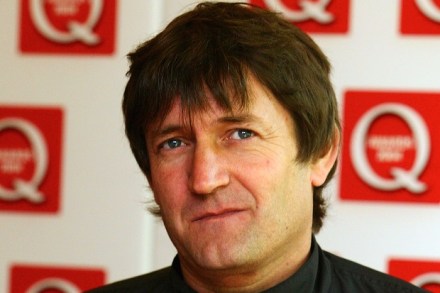
The news that Hull has been crowned the UK’s City of Culture for 2017 was discussed at PMQs. The PM extolled the virtues of the city, and made special mention of native eighties alt rockers The Housemartins. However, with a crashing sense of inevitability, the band’s founder, Paul Heaton, was unhappy with the endorsement: ‘Well, apparently David Cameron likes ‘London 0 Hull 4’. Which part of the attack on his policies and rich friends did he like best???’  The poor wee lamb ranted for a while about Thatcherism, and then concluded: ‘Cameron has ruined my day.’ My heart bleeds. Still, you would have thought that Cameron might have learned his music lesson by now.

One Great Thing gets embarrassing for the Yes campaign in Scotland

From our UK edition

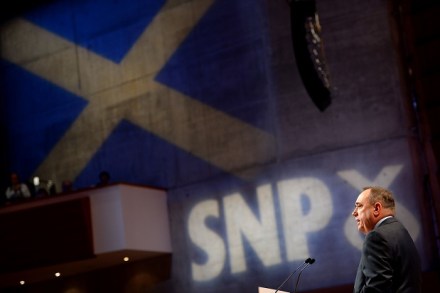
Big Country's song ‘One Great Thing’ is an anthem for the Scottish Yes campaign: it was soaring in the background during an item recorded at a ‘Yes’ rally on the Today programme the other day. And since Big Country's bagpipe-sounding guitars were one of the joys of my adolescence and I've been partial to a check shirt ever since, my heart soared along with it. ‘Yes,’ said Jim Lafferty from the Yes campaign's communications office, appropriately enough, when I rang to ask how it had come about. ‘It was suggested by Jim Downie and Will Atkinson of the creative team.’ I understood that they had not, however, spoken to the band, having gone straight through to the record company about the rights.

Did Leonard Bernstein do too much to be a great artist?

From our UK edition

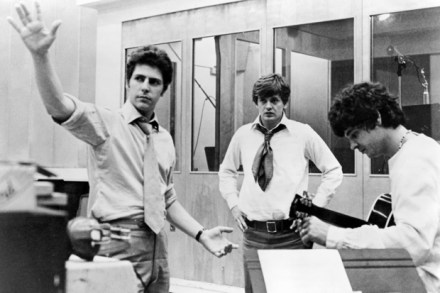
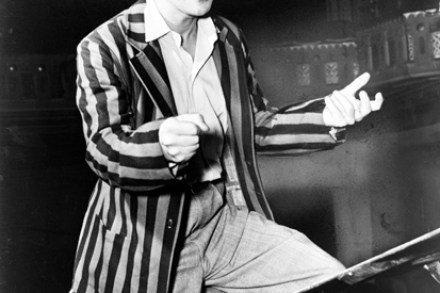
Nigel Simeone’s title for his edition of Leonard Bernstein’s correspondence rings compellingly, novellistically, through the force of the definite article, as in The Aspern Papers, or The Scarlet Letter. The reality, though, is more diffuse. Bernstein was a man of enormous endowments. One correspondent, after listing his talents as a composer, orchestrator, pianist, conductor, lecturer and general all-round musical functionary, ends by enquiring ironically, ‘Can you cook?’ The list might have been extended. It could have included a wild diversity of sexual activity, a seemingly limitless gift for affection and friendship, an inexhaustible capacity for work, and a genius for self-promotion. What it could hardly have included was focus.

Political philosophy, Harry-style

From our UK edition

Boy-band super-hero Harry Styles proclaimed on Twitter earlier today: ‘All social change comes from the passion of individuals.’ His shrieking fans were enthused by this insight. Some even asked if they could quote him in their exams. How sweet. Mr S is pleased to see little Harry channelling American anthropologist Margaret Mead. She is alleged to have said (although I can't discover where and when she said it), 'Never ever depend on governments or institutions to solve any major problems. All social change comes from the passion of individuals.' Clever lady, that. But what could all this philosophising from Styles, a self-confessed Labour supporter, mean? Mr S has a theory.

‘If I can barely speak, then I shall surely sing’

From our UK edition

A few weeks ago, I was wandering with a friend around West London when our conversation turned to the reliable and inexhaustible topic of Morrissey. We were discussing his gestures, in particular when he augments the percussive spondee that opens ‘Sheila Take a Bow’ with two magnificent jabs of his right elbow. So back we went to my friend’s flat to study it again. In goes the DVD; bang go the drums; jab goes the elbow, and my dear friend gives a small cheer of delight, dancing his dance of Rumpelstiltskin glee. ‘Genius!,’ he declares. And he is right. It is a small moment, one of those preposterously arcane details beloved of a devotee of the Smiths, but it somehow seems to say everything about our artistic hero.

Help! | 15 October 2013

From our UK edition

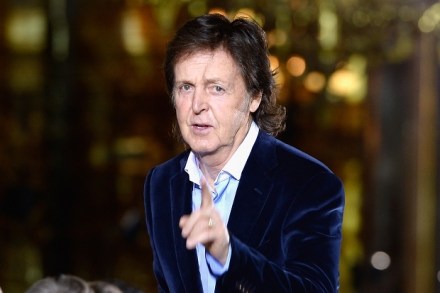
When did Sir Paul McCartney become so shifty? The ‘National Treasure’ has been on Sky News promoting his latest album. There were more than a few awkward, if not downright embarrassing, moments. Take when he was talking about young talent today. ‘I think these bands are great. I like One Direction,’ the former Beatle said. ‘They’re young beautiful boys and that’s the big attraction, but they can sing and they make good records.’ Leaning in, he added: ‘so that’s what I would see in common [with the Beatles], you know, that girls love them and you can fantasise that you’re going to marry them…or whatever.’ Macca's trademark cheeky look worked when he was a young man. But in a 71 year old?

Welcome to the Randy Newman Hate Club

From our UK edition

There was a line in Randy Newman’s very funny song 'Short People'  that I couldn’t quite work out, so I looked up the lyrics online. There were some observations about the song posted below the lyrics – I thought I’d share a selection with you.  'This song is just really f****d up... freedom of speech doesn't protect you from honest criticism or boycotts. People are allowed to express their disdain for stuff like this and even choose to not support it monetarily'. ‘because of that one song...it made my life and a lot of others harder than it should have been. it should have not been released....i am 4 ft. 9 inches and proud of it...i've been waiting for years to say this to him....

Music at Mass is theological warfare by other means

From our UK edition

How many battles have been fought over sacred music throughout history? The noise you make when you worship is a big deal: those who control it can shape everything from clerical hierarchy to intimate spirituality. And there are patterns. Deep suspicion of music is the mark of the puritan. Fundamentalist Sunni Muslims teach that all music except for chanted Koranic passages is forbidden; instruments in particular encourage lust. Strict Calvinists take a similar line. Even the Catholic Church considered banning original compositions during services after the Council of Trent. Legend has it that polyphony was saved only by Palestrina’s Missa Papae Marcelli of 1567, which demonstrated that rich harmony could also highlight the words of the text.

Ban the word ‘twerk’

From our UK edition

Jesse Norman MP, who used to lead the Prime Minister’s policy forum, is using his spare time to write for ConservativeHome. About twerking. For those of you who have missed this craze, the Oxford English Dictionary, in a shameless PR stunt, added the term to their latest edition: ‘To dance to popular music in a sexually provocative manner involving thrusting hip movements and a low, squatting stance.’ Turning to Jesse’s piece, apparently ‘the press have started to scrutinise’ Norman’s ‘public remarks with all the fervent enthusiasm of a group of Miley Cyrus fans at a twerking convention.’ How could we not?

Spectator Play: The highs and the lows of what’s going on in arts this week | 13 September 2013

From our UK edition

As the new artistic director of the Royal Shakespeare Company, Gregory Doran might be expected to lie low as he settles into his new role. But on the contrary – Doran is full of ideas about how to develop the company, as Robert Gore-Langton finds when he interviews him in this week’s Spectator. As well as a plan ‘to stage every play Shakespeare wrote over the next six years’ – that is between now and 2018 – he has also banned Shakespeare from Stratford’s Swan theatre, deciding instead to put on plays ‘by his contemporaries’. Top actors and top ideas are all part of his plan – which you can read more of in the full interview, here. How do you know when you're a real fan of a band?

Immigrant songs: Radio 2’s My Country, My Music

From our UK edition

Five women, five very different stories of arriving in the UK, often unwillingly and always alone. How did they cope with the loneliness, the poverty, the loss of everything they once knew? What do they now think of the country that has become their adopted home? Jeremy Vine talks to them next week in a new lunchtime series on Radio 2. In My Country, My Music (produced by Chris Walsh-Heron) Vine and his five guests try to work out which country they now belong to, not through work, beliefs, hobbies or family but through the music they listen to. By putting music centre-stage, as the focus, the heart of the conversation, some unusual perspectives and unexpected connections emerge. Prepare for some surprises.

Roger Scruton’s diary: Finding Scrutopia in the Czech Republic

From our UK edition

Hay-making was easy this year, and over in good time for a holiday. I am opposed to holidays, having worked all my life to build a sovereign territory from which departure will be a guaranteed disappointment. However, the children have yet to be convinced of the futility of human hopes, and therefore must be taken for a week or so to places that renew their trust in Scrutopia, as the only reliable refuge from an alien world. As always we choose the Czech Republic; and as always it disproves my point. I don’t know what it is about Brno, but I am as home there as I can be anywhere. And Sophie and the children feel the same. We borrow the old cottage in the Moravian Sudetenland from which to explore a landscape wiped away by war.

The week in books | 19 July 2013

From our UK edition

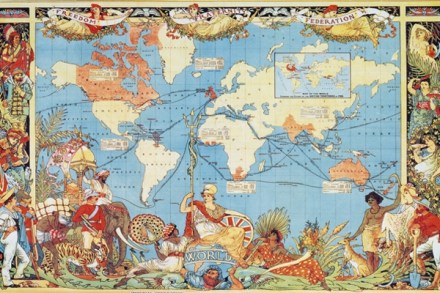
The best way to weather the heat wave is to head for the shade with a copy of the new issue of the Spectator, in which you will you find some diverting book reviews to while away an hour or two. Here is a selection: Philip Hensher treads carefully around Winston Churchill’s imperialism, the subject of Lawrence James’ Churchill and Empire: Portrait of an Imperialist. Hensher writes: ‘It is important for historians to make an effort to understand individuals by the standards of their own day, and not ours. There is a dismal school that finds it rewarding to debate whether Napoleon was homophobic or not, but for the most part we have to try to understand where a figure’s standards of judgment and thought stood in relation to the spectrum of opinion of his own day.

Philip Blond for Mayor of London?

From our UK edition

While David Cameron, assisted by a trio of pyjama-clad children and the Chancellor, was entertaining the ladies and gentleman of Her Majesty’s Loyal Press Corps in No. 10, right-wing elements of the Conservative Party were carousing by the river in Chelsea. IDS, Welsh Secretary David Jones and venerable right-wingers Sir Gerald Howarth and Graham Brady joined former Tory head of press Nick Wood and his cohort from Media Intelligence Partners for a rabble-rouse. Unlike the Downing Street soiree in the Rose Garden, this was not a champagne free-zone. Ûber-wonk Philip Blond was overheard discussing his plans to run for Mayor of London. And as the evening wore on, Blond began to try to recruit campaign staff.

Clive James – laughing and loving

From our UK edition

Clive James was a recurring presence in last weekend’s literary press. There was, I regret to say, a valedictory feel to the coverage. Robert McCrum, of the Guardian, was not so much suggestive as openly morbid: ‘If word of his death has been exaggerated, there's no question, on meeting him, that he's into injury time, with a nagging cough that punctuates our conversation.’ If those words and others like them made little impact on the reader, then the photograph of James that illustrates McCrum’s interview might. Old age looks no fun; serious illness even less so. But, James’ spirit does not seem to have been shaken by the indignities visited upon his flesh.

Music & Monarchy, by David Starkey – review

From our UK edition

British royalty, considered from a purely mechanistic angle, cannot function adequately without music. Deprived of marching bands, trumpeters and choristers or even of those ever so well-mannered regimental ensembles which dispense selections from favourite musicals at an investiture or a garden party, the royal performance would lose much of its authenticity. Playing the king in this country has always depended on being able to do the whole shtick to the right tunes. If, from time to time, a genuinely gifted or truly inspired composer should become available, so much the better. Dash and panache for parties and parades, decorous gloom for funerals and the occasional wedding anthem or victory Te Deum sound more like the real thing when knocked off by a Purcell, a Handel or an Elgar.

Down with the Glasto smugfest

From our UK edition

I suppose this will seem churlish, but I’d just like to add my support to the grime rapper Wiley who, upon arriving at the Glastonbury festival, tweeted to Michael Eavis: ‘Fuck you and your farm.’ I’m not sure what motivated this annoyance but credit where it’s due, it’s roughly what I’ve felt about this bloated middle class smugfest for the last fifteen years. If it persuades the badger-strangling but otherwise impeccably PC post-hippy Eavis to call it a day, so much the better. Why in Christ’s name would anyone wish to attend a music festival in which the headline acts are almost double the ages of the cabinet (and slightly further to the right)?

Spectator Play: The highs and the lows of what’s going on in arts this week | 21 June 2013

From our UK edition

In this week’s lead feature in the Arts section, Tom Rosenthal explains just why he thinks the Lowry retrospective at Tate Britain is so long overdue. Lowry is one of our most popular artists – and it is exactly this that has been his downfall. ‘Can one disapprove of someone merely because he popular? Clearly one can’, writes Rosenthal. The lack of Lowry in London only highlights ‘the fashionable dislike of Lowry’s art’. But, finally, Lowry has made it to the walls of Tate Britain. Should his work be there? Andrew Lambirth will be reviewing the exhibition in a future issue of The Spectator, but for now you can make your own minds up.