Music

Why I’m stepping down after 28 years as The Spectator pop critic

From our UK edition

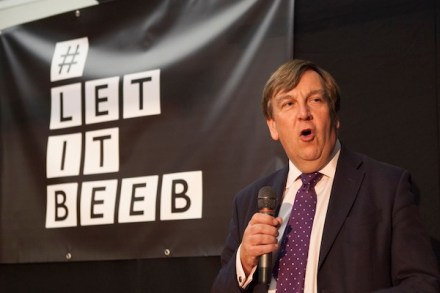
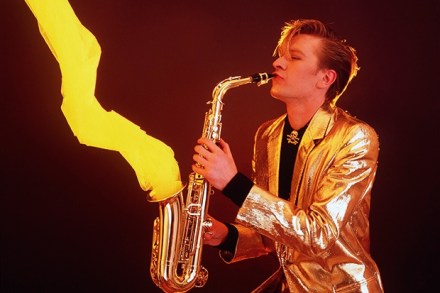
This is my 345th and last monthly column about pop music for The Spectator. I believe I might be the third-longest continuously serving columnist here, after Taki and Peter Phillips. Others have been writing for the magazine for longer, but have occasionally been given time off for good behaviour. You may be astounded to learn that I have not been fired. I, certainly, am astounded. I have been waiting for the tap on the shoulder, or maybe the firm but regretful email, since my first column in May 1987. Eventually I came to realise that the less the editor of the time was interested in my subject, the safer I was.

It may have a meagre script and no plot but Farinelli and the King is still a major work of art

From our UK edition

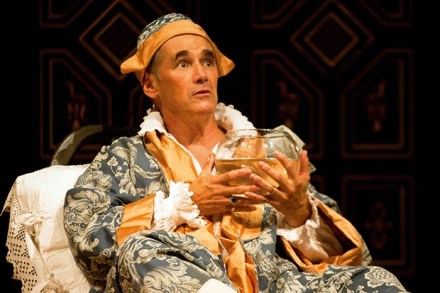
Philippe V was a Bourbon prince who secured the throne of Spain using his family connections. Claire van Kampen is a writer who relied on the same method to secure a West End opening for her play about Philippe. It stars Mark van Kampen (aka Mark Rylance) as the charmingly dotty Frenchman. Philippe was a manic depressive who regarded his Spanish subjects as a puzzling inconvenience. He had no interest in governing them and preferred to laze around the countryside, looking at stars, listening to music and indulging his eccentricities. We first meet him in bed trying to hook a fish supper from a goldfish bowl. Courtiers secretly plot to oust him while the queen scours Europe for a singer capable of cheering him up.

Women are to blame for the big Glastonbury sell-out

From our UK edition

I suppose you can look at it two ways. Glastonbury, and rock festivals generally, were once patronised by music obsessives; largely male and probably some distance along the autistic spectrum, in many cases. People like me, in other words, when I was younger. Oh yes – and that’s another thing. Age. They used to be for the young. But the defining difference with today was that people once went for the music. I note that next year’s Glastonbury has sold out – without anybody knowing who is actually playing. I blame women. In general they have a different approach to music. They like the experience of being somewhere people are making a lot of noise, without worrying about the name of the bass guitarist. It’s probably a healthier way to enjoy music, I suppose.

Hitler’s émigrés

From our UK edition

Next week Frank Auerbach will be honoured by the British art establishment with a one-man show at Tate Britain. It’s a fitting tribute for an artist who’s widely (and quite rightly) regarded as Britain’s greatest living painter. Yet although Auerbach has spent almost all his life in Britain, what’s striking about his paintings is how Germanic they seem. Born in Berlin in 1931, Auerbach was only seven when he came to England (his parents subsequently perished in the Holocaust). By rights, he should stand alongside British artists such as Peter Blake and David Hockney, yet his work feels far closer to German painters like Georg Baselitz or Anselm Kiefer. Auerbach is a one-off, a unique painter with a unique vision.

Lady killer

From our UK edition

‘Kiss me, Sergei! Kiss me hard! Kiss me until the icons fall and split!’ sings Katerina Ismailova, adulterous antiheroine of Lady Macbeth of Mtsensk. Stalin was not amused by Shostakovich’s bleak black comedy but our culture would be poorer without bored wives like Katerina. Perhaps all that Emma Bovary, Anna Karenina and Laura Jesson needed was a proper kiss — the sort that mutes the white noise of disappointment. But a kiss is never enough in these cautionary tales of bourgeois bed-hopping. One thing leads to another and before you know it you’re knocking back the arsenic, throwing yourself in front of a train or back home listening to the wireless with poor dear Fred, a man whose kisses were never that hot.

Barometer | 24 September 2015

From our UK edition

Available for parties Labour deputy leader Tom Watson said that leaving his party to join the Liberal Democrats would be like ‘leaving the Beatles to join a Bananarama tribute band’. Is there such a thing? Bananaruma is a Leicester-based band led by the head of arts at a local secondary school. They advertise an hour-long show, for which they bring their own professional PA system with full lighting show. So far they have had one booking, at the Stamford Arms in Groby on 25 July. Tickets cost £20, including a three-course meal, with a bottle of bubbly thrown in for tables of six who booked before 1 July. Sporting chances The chief medical officer for World Rugby suggested that the game’s rules might have to be changed to reduce the risk of serious injury.

The truth about me, Dave and the drugs

From our UK edition

[audioplayer src="http://rss.acast.com/viewfrom22/thegreatbritishkowtow/media.mp3" title="Rod Liddle and James Delingpole debate if all right wing people have bad music tastes" startat=700] Listen [/audioplayer]This week I woke up shocked to find myself on the front page of the Daily Mail. Apparently I’m the first person in history to have gone on the record about taking drugs with a British prime minister. But it’s really no big deal is it? Had I thought so, I’d never have spilled the beans. In fact, I think it’s one of those perfect non-scandal scandals in which all parties benefit. Dave acquires an extra bit of hinterland and is revealed to have been a normal young man. I get 100 more Twitter followers and a couple of columns.

Does Elton John genuinely believe he can change Putin’s attitude to gays?

From our UK edition

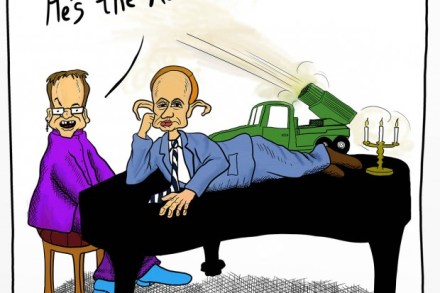
I've never been an Elton John fan. Never owned an album. Never added one of his tunes to my playlist of favourite tracks. Never really understood the appeal of pith helmets, spectacles, coat tails, and twitchy eyebrows. Yet it's because I'm immune to his charm that it would be easy for me to mock Elton for falling for the scam arranged by two pranksters who convinced him that he was speaking with the Russian president, Vladimir Putin. It would be easy but it would also be unfair because what happened to Elton wasn't a prank. A prank contains some clue that gives the victim a chance to escape the net. There should always be the moment when you cry 'how could they not see through that?

Eastern airs

From our UK edition

On Private Passions this week the writer Amitav Ghosh gave us a refreshingly different version of what has become a Radio 3 staple. No Mozart, Mendelssohn or Monteverdi for Ghosh, who speaks five languages including Arabic and Bengali, was born in Calcutta and has lived in Delhi, Oxford, Alexandria, Brooklyn and Goa. Instead, his musical choices were all about fusion and cultural exchange. Perhaps most surprising was an ‘Oriental Miscellany’ from the late 18th century, played on the harpsichord and sounding initially quite baroque until you realised that the fingering was much more complex, more layered, infinitely more interesting. The composer William Hamilton Bird had for the first time given Hindustani folk tunes a Western notation.

Deadlier than the male | 17 September 2015

From our UK edition

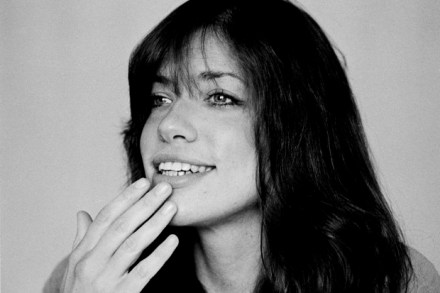
Last week a 17-year-old girl forced the Edexcel exam board to change its A-level music syllabus to include the work of women composers. Jessy McCabe, a sixth former at Twyford Church of England High School in London, started a petition after studying gender inequality. Good for her, you might think. But is it good for A-level students? A delicate question lies at the heart of the subject of female composers, and it’s not ‘Why are they so criminally underrepresented in the classical canon?’ It’s ‘How good is their music compared with that of male composers?’ Ms McCabe told the press that ‘I’d quite like to learn about the music of Clara Schumann.’ OK, let’s start there.

There’s a good reason why there are no great female composers

From our UK edition

Last week a 17-year-old girl forced the Edexcel exam board to change its A-level music syllabus to include the work of women composers. Jessy McCabe, a sixth former at Twyford Church of England High School in London, started a petition after studying gender inequality. Good for her, you might think. But is it good for A-level students? A delicate question lies at the heart of the subject of female composers, and it’s not ‘Why are they so criminally underrepresented in the classical canon?’ It’s ‘How good is their music compared with that of male composers?’ Ms McCabe told the press that ‘I’d quite like to learn about the music of Clara Schumann.’ OK, let’s start there.

Going for a song | 10 September 2015

From our UK edition

This column does like a bargain. Indeed, it not only esteems and relishes a bargain, it has also worked long and hard to prove Milton Friedman wrong. Sometimes there really is such a thing as a free lunch. And for those of us still wedded to the notion of owning music on some kind of solid, tangible medium (vinyl, CD, dusty box of cassettes at back of cupboard), these are great, cheapskate-friendly years in which to be alive. Almost every song ever recorded can be bought for a song. And still we mothwallets can claim the moral high ground, because we’re not actually stealing it, unlike everyone under 40. As Fagin once sang, ‘In this life, one thing counts. In the bank, large amounts.

Bad conduct

From our UK edition

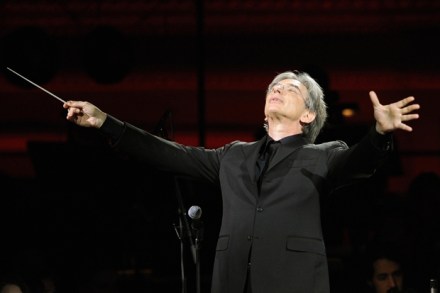
To be honest, my friendship with Michael Tilson Thomas hasn’t gone quite as I had hoped. It started in February 1990, when he chose a Tallis Scholars track for one of his desert island discs. This was a movement from a mass by Josquin des Prez, that he said (apparently impromptu) was music which ‘completely comforts me and brings me into a state of tranquillity’. I thought I might have found a new messiah. For many years now I have had the hope of meeting an orchestral conductor who is prepared to take on the challenges of performing a major work from the unaccompanied choral repertoire. Of course there have always been those who have included choral society-type singing in their symphony programmes.

Why is the Home Office giving in to illiberal youth by banning rappers like Tyler, The Creator?

From our UK edition

In a 2012 interview on Newsnight, foul-mouthed LA rapper Tyler, The Creator told a churlish Stephen Smith that the point of his music was to ‘piss old white people off like you’. Now, the old white people at the Home Office seem to have proved him right, by banning the rapper – real name Tyler Okonma – from entering the UK for the next three to five years. Okonma’s manager, Christian Clancy, wrote in a blog post that he received a letter stating that the rapper would not receive a visa because his work ‘encourages violence and intolerance of homosexuality’ and ‘fosters hatred with views that seek to provoke others to terrorist acts’.

The BBC’s music man

From our UK edition

To Radio 2 to meet Bob Shennan, controller of the BBC’s most popular radio station (the station attracts one third of all listening hours) and now also head of the newish monolith that is BBC Music. Why corral all of the Corporation’s music output on radio and TV into one enormous sub-division (on a par with BBC News, BBC Drama and BBC Sport)? Isn’t this just another cost-cutting compromise, a way of saving money by smoothing out the BBC’s output (its first production was that weird mish-mash of God Only Knows by a constellation of stars)? How will specialist stations like Radio 3 and BBC4 survive if swallowed up in what is essentially a bureaucratic creative exercise, victims of corporate branding?

Cuban comet

From our UK edition

By chance, my first night in Havana in 1987 was the night the clubs went dark to mark the death of Enrique Jorrin, the inventor of the cha-cha-cha, whose rhythmic brainstorm had gone global. My grandparents used to dance cha-cha-cha at Latin nights at the Grand Hotel in Leicester in the 1950s. Rubén Gonzalez, Jorrin’s pianist, thought that his death spelled ‘the end of the old music’ and went into retirement, his piano destroyed by termites in the tropical humidity. Another contemporary who didn’t quite make his mark was Ibrahim Ferrer — he’d been in a moderately successful band Los Bucucos. Ibrahim retired at about the same time, for similar reasons to Rubén — the work had dried up.

Selective memory

From our UK edition

It’s 70 years since the bombs were dropped on Hiroshima and Nagasaki and yet there has been no rush to commemorate this anniversary. It’s perhaps not surprising. Who would choose to recall the events of 6 August 1945 when the world first witnessed the effects of nuclear warfare? Yet the absence of date-setting, the annual forgetting, makes it appear that we’re much less keen to remember something that might make us feel uncomfortable or discredit us. One exception was on Radio 4 on Monday morning, when, in Under the Mushroom Cloud, Shuntaro Hida, a 98-year-old survivor of Hiroshima, told us frankly and without sentiment his memories of that day in August 1945.

Music to write books by

From our UK edition

I have been writing a book this summer, in the usual mad tearing hurry. (Much as I admire those who take four or five years to write one, I have to ask, how do you eat? This isn’t by any means a sensible way of making a living.) Intense workload, though, means music, and lots of it. Many writers simply cannot work with tunes blaring out of nearby speakers; I cannot work without them. Music masks my tinnitus and distracts the part of my brain that would otherwise be trying to distract me from my work. You know, the Facebook part. The videos-of-cats part. The Marks & Spencers chocolate-covered shortbread part.

I wish the cult of Frank Sinatra would end

From our UK edition

Walking around central London, I’ve been struck by how many shows Frank Sinatra has been performing in town recently. He played a string of concerts in July at the Royal Albert Hall (which as any schoolboy knows was actually named after Sinatra’s middle name), and he is currently performing an extended summer season at the London Palladium. Quite how Frank is going to cope this Friday evening, when this eternal Sinatra séance requires his spirit to put in an appearance as his life and music is celebrated at the Proms, at the same time as he gigs at the Palladium, I’m not sure.

Slash at 50: why is this rock god so underappreciated?

From our UK edition

Saul Hudson, more commonly known by his childhood nickname 'Slash', turns 50 today. It is safe to say that the next 50 years of his life are unlikely to be quite as hectic as the first. The heroin-addicted lead guitarist of Guns 'n’ Roses has settled into a routine of philanthropy and Angry Birds. He is always mentioned in magazines as one of the greatest guitarists of all time. The opening to 'Sweet Child o’ Mine' is routinely voted the best guitar riff ever. But the true extent of his genius — which stretches far beyond his ability to produce a nice tune — is still not fully recognised. Many in fact think he's overrated.