Music

Glamming it up

From our UK edition

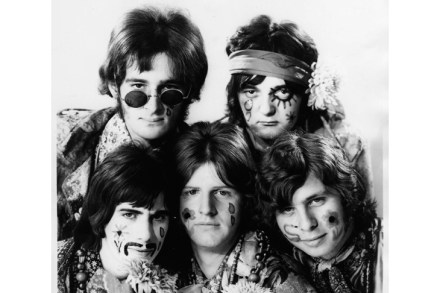
Late on the Friday afternoon of The Great Escape — the annual three-day event for which the London music industry decamps to Brighton to spend three days drinking and trying to get into tiny venues to see new bands — two very young men stood outside a pub, making quite the impression. One, with bleached blond hair, yellow tinted sunglasses and livid red lipstick, wearing a black string vest, clutched a bottle of Mexican lager. The other, made up with huge rouge smears on his cheeks and heavy eyeshadow, wore a beret, a green faux-military tunic, and — naturally — an Elizabethan-styled ruff. You knew they were in a band; you could tell from their armbands, which bore the legend HMLTD.

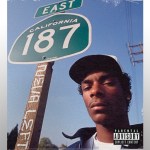
Snoop Dogg: Neva Left

From our UK edition

The problem Calvin Broadus has is persuading the rest of us that he still a baaaad muthafucka. Snoop is now 45 and a rather avuncular figure in the US, with his own reality TV show in which he comes across as, God help us, likeable. Those days of running with the Crips in Los Angeles are long behind him, a testament to the redemptive power of huge amounts of money. Is he still of the streets? Neva Left is the defiant response, his best collection for many years. Snoop has immersed himself in a studio with a collection of artists who broke through at about the same time as he did. So this is kinda trad rap, much as Kenny Ball used to dotrad jazz. But none the worse for it — the album is richly melodic (Snoop always had an ear for a good tune) and the rhythms hugely sophisticated.

White-knuckle ride

From our UK edition

Playing in an orchestra that disintegrates mid-concert is not an experience you forget. One moment everything’s motoring along nicely. Suddenly a harmony doesn’t quite fit, the soloist enters on the wrong beat: it doesn’t matter, because before you can work out what to do next the confusion spreads, the conductor signals frantically and with a pit-of-the-stomach lurch the floor drops out of the music and you’re all sat there facing the audience amid the one sound that no one present has paid to hear: mortified silence. The Aurora Orchestra has worked out a way to monetise that sensation. Well, maybe that’s putting it a bit cynically.

The rise of toytown pop

From our UK edition

Pop’s counterfactuals tend to be built on questioning mortality: what if Jimi Hendrix had lived? Or Buddy Holly? Rarely does geopolitics enter into the speculation. Nevertheless, there’s a case for arguing that the landscape of British pop would have been markedly different had Harold Wilson acceded to the wishes of President Lyndon Johnson and sent British forces to Vietnam. That’s worth contemplating now, ahead of the latest reissue — deluxe and expanded and remastered, as these things always are — of Sgt. Pepper’s Lonely Hearts Club Band, released last week for the 50th anniversary of the original album.

Music matters | 1 June 2017

From our UK edition

The ancient Greeks had a word for it —katabasis, descending into the depths, to the underworld itself, in search of answers. To cross the threshold between life and death, innocence and knowledge, the everyday and what lies beyond, is an act woven through art, resurfacing in each generation. For Orpheus, and for Monteverdi, the journey may be a literal one, but for Bartok’s Bluebeard, imagined in the age of Freud and Jung, hell is not found outside, or even in other people, but within the darkest recesses of our own selves. When we speak of Orpheus it is of music, of birds and beasts beguiled, and men and women drawn into dance.

In defence of Mahan Esfahani

From our UK edition

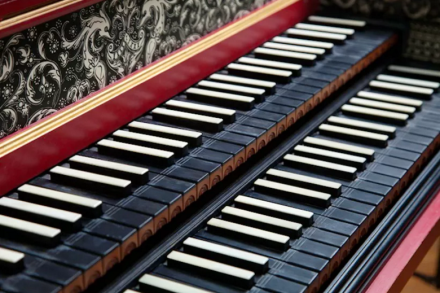
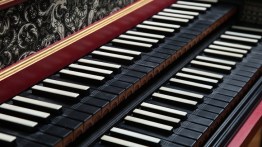
Seven years ago I ripped the CD off the front of a music magazine and found myself in the thick of a Poulenc concerto that was being played as if life depended on it. Now Poulenc is the acme of laid-back and the solo instrument, the harpsichord, had been consigned to the junkshop before young Brahms was running errands for ladies of the Reeperbahn. This recording was, for me, an act of instrumental resurrection. So I tracked down the harpsichordist, Mahan Esfahani, by name, and took him to breakfast. He turned out to be young, gay, Iranian, Presbyterian, Stanford-educated, restlessly intellectual and altogether full-on. What’s not to like?

PWR BTTM: Pageant

From our UK edition

How about some queercore garage punk? PWR BTTM — the name means something empowering to do with buggery — are a young, gay, two-piece band from New York State who live apparently hectic lives. Their new album, Pageant, was released last week and a couple of days later they were kicked off their record label and current tour after allegations of sexual predation were made against the pantomimely camp singer, Ben Hopkins. The greatest surprise was that the complaints came from a woman. Their career is now in limbo. Hopkins denies the allegations, of course, claiming that he is a consensual and democratic kind of chap. But it’s all rather a shame because Pageant is a thrilling album: tuneful, frenetic and funny. Forget the garage punk tag.

Around the horn

From our UK edition

The concert began with a flourish and a honk. Well, of course it did. Telemann wrote his last Ouverture-Suite in F major for the Landgrave of Darmstadt. The Landgrave loved hunting, and in the 18th century hunting meant horns. And horns mean honks. If you’ve ever played the horn — applied 12 feet of coiled metal tube to your face and tried, through a combination of lip muscles and willpower, to make the damn thing sing — you’ll know that no amount of hoping, praying or practice can prevent the occasional squawk. The two excellent players in Florilegium’s concert at St John’s Smith Square, moreover, were using 18th century-style horns — without the valves and additional plumbing that render the modern beast just about controllable.

Crime and punishment | 25 May 2017

From our UK edition

‘Hell is better than what I personally witnessed,’ says Ben Ferencz, who was one of the American troops sent in to the Nazi death camps to collect vital evidence. ‘Dead bodies mingled with those alive. Piles of bones waiting to be buried. The smell of burning flesh. Those who were still alive pleading with their eyes.’ All of which we have heard many times before, perhaps too many times. But then Ferencz added, ‘SS men trying to flee, running away, and the inmates, those who could still walk, trying to chase them, grabbing at them.’ It was an unusual, vivid detail that captured the attention. Ferencz was talking to Emma Barnett in her slot Eye of the Storm on Radio Five Live last week. Not that Barnett had much chance to say anything.

Period drama

From our UK edition

Harpsichordists are supposed to make love, not war: Sir Thomas Beecham famously compared the sound they make to ‘two skeletons copulating on a tin roof’. But now two masters of the instrument, the Iranian-American Mahan Esfahani and the German Andreas Staier, are locked in mortal combat. For connoisseurs of finely tuned insults, it’s riveting stuff. For their colleagues it’s a wretched business, because one of the two musicians is setting fire to his own reputation. Also, a third harpsichordist — a gifted young Frenchman, Jean Rondeau — has been cruelly dragged into the feud. It goes without saying in period instrument circles that Esfahani picked the fight.

Coffee, mist and brilliance: Sky Atlantic’s new series of Twin Peaks reviewed

From our UK edition

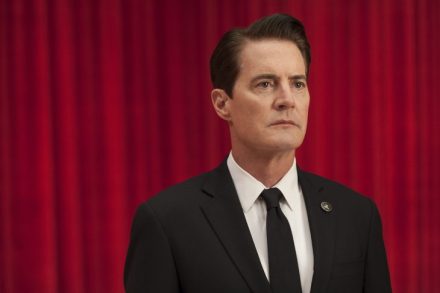
So much coffee. Just like in the original, the characters in the new series of Twin Peaks get through so much coffee. Major characters huddle around it in diners. Background characters raise mugs to their lips. Entire scenes revolve around the stuff. There’s just so much coffee. And, I’m proud to say, I played my part too. I knocked off an entire cafetière so that I’d be awake for the two-part opening to the series, which aired at 2am this morning on Sky Atlantic. And I finished another cafetière to write this post. This is not an occasion I was going to miss. Not only is the return of Twin Peaks, after an absence of 26 years, a big deal in itself; it’s also happening at just the right time.

Mild things

From our UK edition

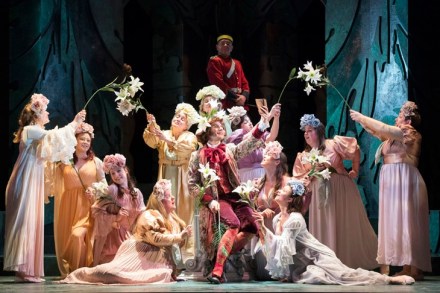
English Touring Opera is playing safe this spring, with Tosca and Patience, and was rewarded, in Cambridge at least, with full houses. Its Tosca has been moderately reviewed, and that is about what it deserves. There is only one set, designed primarily with the tableau of chorus and soloists at the end of Act One in mind. Not at all atmospheric, it has to conjure up for us a church, a room in a palace, and dawn at the Castel Sant’Angelo, but scarcely succeeds with any of them. The soloists have a heavy weight of responsibility, which only the Tosca of Paula Sides fully managed. She is fine-looking, slim, good at acting temperamentally, and a powerful singer, though a slightly short-breathed one.

Stand and deliver

From our UK edition

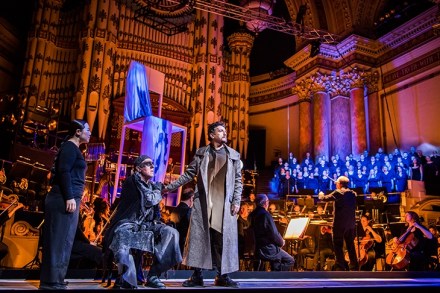
Some opera-lovers prefer concert performances to full stagings. I don’t. It’s that whole Gesamtkunstwerk thing: opera needs to be seen as well as heard. There’ll always be circumstances in which concert performances are welcome — to rescue a neglected score, say, or if a symphony orchestra wants to stretch itself. But when a major company presents standard repertoire in concert, it feels like an admission of defeat. Opera North recently mounted a magnificent concert version of Wagner’s Ring — but for all the brave talk about a ‘radically stripped-back’ production, who seriously doubts that, if funds had allowed, it’d rather have gone the whole way? Now it’s doing Turandot in concert.

Cover stories

From our UK edition

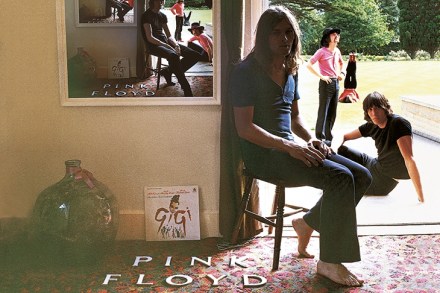
These days, Aubrey Powell is a genial 70-year-old who can be found most mornings having breakfast at his local Knightsbridge café. But in the late 1970s, he did something that surely no other human being has done before or since. He photographed a sheep lying on a psychiatrist’s couch on a beach in Hawaii. Its coat had been treated with Vidal Sassoon products, and it was sedated with Valium because it was scared of waves. So what on earth was he up to? The answer — as anybody who recognises Powell’s name will guess — was creating one of the 373 album covers that his company Hipgnosis designed back when LPs ruled the world. (In this case, for 10cc’s Look Hear?

Ray Davies: Americana

From our UK edition

There is some surprise that after all these years Ray Davies has turned his attention to America. He is the most quintessentially English of pop musicians, a witty and acute observer of the British way of life whose best tunes were drawn from music hall and calypso — even while, with his brother Dave, he was inventing that most doggedly, turgidly, horribly English of genres, heavy metal. And yet The Kinks most famous hit, ‘Lola’, had a real American swagger about it, in the wonderful rolling rhythm, as Davies expressed his profound confusion at meeting a transgendered lady in a Soho bar. It was the first record I ever bought, at the age of ten, much to my parents’ disgust and consternation.

Mission impossible?

From our UK edition

Just before Peter Donohoe played the last of Alexander Scriabin’s ten piano sonatas at the Guildhall’s Milton Court on Sunday, the autograph score of the piece was beamed on to the wall behind him. It was just a glimpse —- but enough to show us that Scriabin had the most beautiful musical calligraphy of any composer since Bach. On the face of it, that’s surprising. You would expect the Cantor of St Thomas’s to inscribe neatly — and indeed baroque musicians often play Bach straight from his own manuscripts, preening as they do so. But Scriabin is often regarded as a messy composer, in thrall to the mystical fads of pre-revolutionary Russia. So you might envisage a scrawl covered in ink blots and frenzied crossings-out.

A square dance in Heaven

From our UK edition

It’s 500 years since Martin Luther pinned his 95 Theses to the door of the Castle Church in Wittenberg, sparking what would come to be known as the Protestant Reformation. His superficial complaint was against the corrupt practice of indulgences, the Catholic Church teasing money out of the gullible and persuading them that they could buy their way into Heaven. But what Luther, a professor of theology, really wanted was for God to be made accessible to everyone and for worship to be more intimate, more direct, and in the vernacular, not Latin. We think of him now as a man of the text, who believed that faith was so important its meaning should not be withheld by the priesthood or clouded by that ‘dead’ language.

Passion indeed

From our UK edition

‘The dripping blood our only drink/ The bloody flesh our only food…/ Again, in spite of that, we call this Friday good.’ In spite of that. Anglo-Catholic convert T.S. Eliot knew a thing or two about Easter. The Passion story might end with resurrection and redemption, but it’s a celebration that we achieve in spite of agony, torture and abandonment, a tale whose root lies in the Latin ‘passio’, meaning suffering. Musical Passion settings are no different — or shouldn’t be. A performance of Bach’s St John or St Matthew Passion should disquiet, even distress, as much as it consoles.

Take a bow

From our UK edition

Monteverdi 450 — the Monteverdi Choir and English Baroque Soloists’ tour of his three operas to 33 cities across two continents — began with his penultimate work Il ritorno d’Ulisse in patria, at Bristol’s Colston Hall. It was a marvellous occasion, uplifting and entertaining. I hadn’t been to the Colston Hall before, and was most impressed by its acoustics. Apparently it is due to have a £48 million makeover next year (call that £75 million) but it seemed new and with agreeably hard seats which counteracted any tendency the hall’s tropical heat might have to induce drowsiness. The opera was performed in a semi-concert version, which I am more and more inclined to hope is opera-in-general’s way forward.

A passion for vinyl

From our UK edition

Every year at this time, as trees come into bud and flowers bloom, middle-aged men (and a few women) sleep overnight on pavements to ensure they don’t miss the year’s crop of Record Store Day releases; April may indeed be the cruellest month if one fails to acquire that limited 12” picture disc of Toto’s ‘Africa’. It is with such dedicated individuals that Magnus Mills’s new novel is concerned, memory, desire and vinyl being the constituent parts not only of Record Store Day on 22 April but also this authentically square book. The Forensic Records Society has been printed to look like a collectable 7” single, complete with die-cut dust jacket resembling a vintage paper sleeve.