Museums

In praise of the Acropolis Museum Café and Restaurant

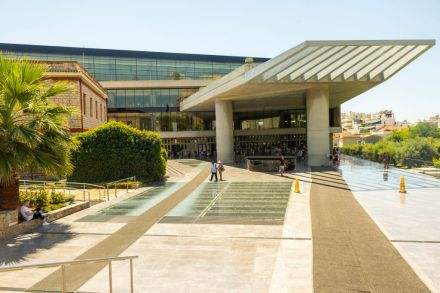
In the global poker game of cultural repatriation – otherwise known as who nicked what from whom – the Greeks seriously upped the ante with the opening of the Acropolis Museum in 2009. This lavish display of archaeological treasures in a light-filled building designed by the Swiss architect Bernard Tschumi is, alongside the recently opened Grand Egyptian Museum in Cairo, an exemplar of such a building’s mission to educate and inspire. In the tradition of polemic buildings, it is also a $200 million plea to return the Elgin Marbles from the British Museum to Greece.

Acropolis

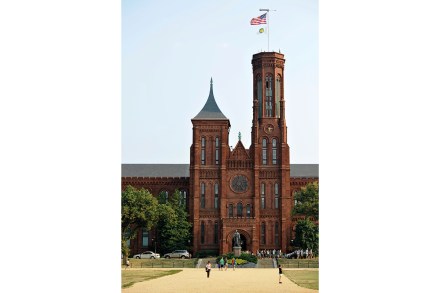
Trump is right to take on the Smithsonian

The last time Republicans were this mad at the Smithsonian Institution was in 1991. Then as now, America’s national museum system was gearing up to celebrate a major date: in that case, the quincentenary of the discovery of the Americas by Christopher Columbus. Senators threatened spending cuts, accusing Smithsonian officials of having a “political agenda” with their representations of race and immigration in exhibitions. Thirty-four years later, on the eve of the semiquincentennial of the Declaration of Independence, Republicans are saying the same things. Donald Trump reworded his predecessors’ criticisms in his own style, suggesting on Truth Social that the Smithsonian museums focus too much on the negative, too little on the positive.

Smithsonian

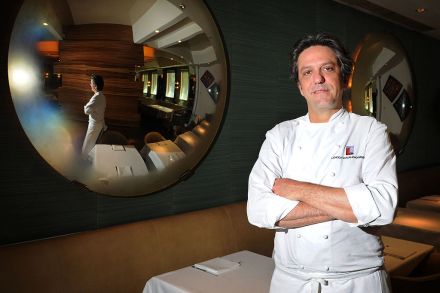
Locatelli has entered the premier league of museum dining

Does your museum feel tired and run down? Is the entrance unwelcoming? The bookshop shabby? The restaurant a mere café? If so, call Annabelle Selldorf, the German-American architect whose talent and sensitivity have made her the go-to person for reviving weary museums. Her recent transformation of the Frick in New York has been widely acclaimed and she will soon start work on the Wallace Collection in London. But the latest masterwork has seen Selldorf sprinkle her fairy dust on the Sainsbury Wing of London’s National Gallery. Those with long architectural memories will recall how in 1984, the then Prince of Wales christened the proposed new wing of the Gallery “a monstrous carbuncle on the face of a much-loved and elegant friend.

Locatelli

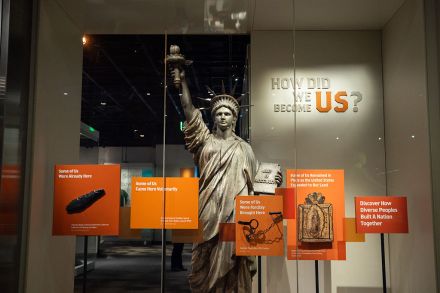
Trump is liberating the Smithsonians from ‘Woke’

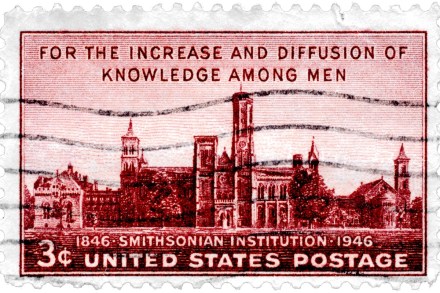
Back in March, Donald Trump issued an executive order called “Restoring Truth And Sanity To American History.” Its aim was to counter the “revisionist movement” in our cultural institutions that sought “to rewrite our Nation’s history, replacing objective facts with a distorted narrative driven by ideology rather than truth.”   Exhibit number one was the Smithsonian Institution, the sprawling agglomeration of museums, libraries, historical landmarks and assorted educational centers in and around Washington DC with affiliate institutions in 47 states.  Founded in 1846, the Smithsonian was the culmination of an earlier movement, supported by such luminaries as Thomas Jefferson, James Madison and John Quincy Adams, to “promote science and the useful arts.

Smithsonian (Getty)

How museums can promote diversity without demonizing tradition

The resignation of Jim Ryan as president of the University of Virginia in June marks the growing momentum of the Trump administration’s efforts to dismantle diversity, equity and inclusion initiatives within US universities. The Department of Justice deemed Ryan’s resignation a step toward resolving its inquiry into UVA’s compliance with the administration’s new policies. Conservatives may be encouraged by news of major institutions like UVA and Harvard rolling back heavy-handed DEI programming. But pure reactionary animus to the excesses of progressive ideology has often gotten conservatives into trouble – not just in education, but in the arts.

Museums

The death of the American museum

It starts with the promise of skipping school — always an illicit thrill at nine years old. My son and I, seasoned truants, hop the early train to downtown Chicago for what I’ve convinced him is a real education. The day’s agenda: two of the city’s iconic museums — grand, intimidating and, up until recently, somewhat sacred. These sprawling neoclassical behemoths, both originally constructed for the 1893 World’s Columbian Exposition, dot the waterfront like ancient ruins. They once felt like temples to knowledge, where wonder and learning collided, where static displays ignited curiosity. But as we step inside, I can’t shake the feeling that maybe, just maybe, their magic has faded. Can museums as we know them survive my lifetime?

museum

There’s more to Bordeaux than fine wine

In the seminal Casablanca, there is a classic moment when the Humphrey Bogart character is asked how he ended up there. Bogie, doing laconic and world-weary as only he could, replies, “My health. I came to Casablanca for the waters.” When Claude Rains’s iconic Captain Renault purrs, “Waters? What waters? We’re in the desert!” Bogart’s response is simple. “I was misinformed.” This exchange occurred to me when I recently visited Bordeaux, a city with awe-inspiringly beautiful architecture, some of France’s most stylish places to shop and eat, situated teasingly close to the beaches of the Atlantic coast. Yet if you attempted to tell anyone that you’d come to Bordeaux for history, couture or coastline, you’d get the Bordeaux version of “What waters?

Bordeaux

A cultural summer in the city

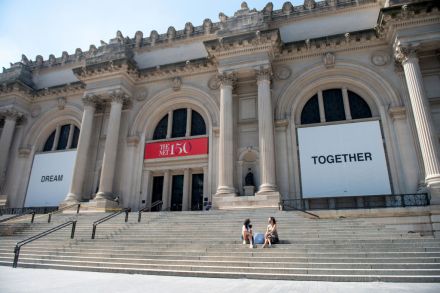
New York is gilded in beguiling art. It has an excess of riches and though summer is one of the best times to visit, quenching your cultural thirst can be difficult, as the arts patrons decamp to the Hamptons and watering holes ending in -an. From museums to galleries to street art at subway stations or parks, each borough is a canvas, so much so that it is often an afterthought against a landscape of pavement and honking cars. Will you be uptown for the first Monday in May? While the performances on the Met Gala’s red carpet are an art form in themselves, the exhibit the gala underwrites offers plenty to check out uptown as the tulips bloom on Park Avenue.

New York

The divine Dalí and his ‘Christ’

I arrived in the city of Figueres early one January morning to visit one of the most popular, and bizarre, art museums in the world, the Teatre-Museu Gala Salvador Dalí. It houses a dreamlike picture that, for the first time since it left over seventy years ago, has made a temporary return journey to Spain. Originally simply titled “The Christ,” the 1951 canvas depicting the giant figure of a man on a cross, shown at an overhead angle hovering over a moody seascape, was painted by the most famous son of Figueres, Salvador Dalí. Through April 30, it forms the centerpiece of a show exploring its creation, history, local connections and symbolism.

Dalí

Understanding museum theft with best-selling author Kirk Wallace Johnson

The recent events at the British Museum in London will probably prove to be the museum scandal of the year, if not the decade. It was revealed over the summer that hundreds, perhaps thousands, of items had gone missing from its collections in storage, with suspicion directed toward a now-former member of staff. We still don’t know exactly what was stolen, and no one has been formally charged — authorities are still investigating. Nevertheless, the British Museum’s director has stepped down and the press has had a field day generating outrage, albeit with coverage based largely upon speculation and opinion. Amid all the finger-pointing, however, no one seems to be asking why someone would even consider taking property from a museum in the first place.

museum

What museums can learn from contemporary technology

"I grew up wanting to be an astronaut,” Robert Stein, the National Gallery of Art’s recently appointed chief information officer, tells me. “I studied electrical engineering, and I got a job doing high-performance computing. And then one day, I did a project with an art museum, and I thought, ‘Wait a second, this is an area of the world that needs more technology in order to connect more people together.’ And the rest was kind of downhill from there.” The National Gallery of Art in Washington, DC — the NGA — is now ranked the most popular art museum in America.

museums
mob

Las Vegas’s Mob Museum revels in the city’s gritty past

A generation or two is usually enough time for a family whose fortune may have been built upon a crime to bury its heritage. Not Las Vegas. It’s proud of its inglorious past. Housed in a four-story former federal courthouse and US post office in downtown Las Vegas, the Mob Museum revels in Sin City’s storied, unconventional and very criminal past. The building’s basement, for example, has been converted into an immersive exhibit redolent of the Prohibition era, complete with a fully operational speakeasy featuring a menu of 1920s-style cocktails. Gin-based Bee’s Knees and other drinks are served, and a traditional whiskey Old-Fashioned will be delivered hidden in a book. You’ll be invited to tour an onsite distillery where 100-proof corn moonshine is made.

Behind closed doors

Katy Hays’s involving, well-tuned debut novel takes its name from a real museum in New York, the Cloisters. Built by a Rockefeller, it resembles a medieval monastery and brims with glorious treasures. Ann, our provincial heroine (from Walla Walla, where she worked a menial job in order to fund college), would have preferred the Met, but when she’s serendipitously hired for a summer role, she finds herself swiftly pulled into the institution’s inner workings and the nefarious machinations of its well-heeled staff. The cutthroat nature of the museum is placed under the spotlight.

J.P. Morgan and our gilded age

John Pierpont Morgan is the glowering face of the Gilded Age. He may have glowered at pesky men with cameras because he was too busy to sit still, but he was also self-conscious because his nose was deformed from rhinophyma. He liked beautiful things, and he was not beautiful. Born into banking family, Morgan rose to become the greatest financier of his time, building much of his empire on railroads. But he was far more than a shrewd businessman. Fluent in French and German and holding a degree in art history, he became a prodigious collector of books and art, a large portion of which were kept at his house on Madison Avenue and 36th Street — what is now the Morgan Library & Museum.

john pierpont morgan library

Abolishing museums serves nobody

Museums used to be such comfortable spaces. Peaceful. Places of remembered somnolent plodding on school outings or rainy Sunday afternoons; somewhere to eat a lunchtime sandwich or sneak a quiet doze in front of a favorite painting, somewhere you maybe never actually went but were vaguely pleased to have around, like a respectable elderly relation. Museums existed in a rarefied (if somewhat dusty) realm beyond the exigencies of daily life, where voices were lowered and visitors emerged with a gratifying sense of being hallowed by contact with Culture. However, museums across the world currently find themselves on the front line of that hardiest of perennial abstract conflicts, the culture wars.

museums

Good riddance to the Newseum

The Newseum is officially closing its doors today after 11 years of operation in the nation’s capital and you won’t find me shedding a tear.Some journalists hailed the First Amendment-focused museum as a beacon of hope during a time when the media was facing dangerous attacks in America, like being called 'fake news' or only being allowed to ask one question during a press conference.But the Newseum was hardly the tribute to press freedom that it purported to be; rather, it was a money-hemorrhaging, unfocused building of stuff with a severe identity crisis.The most dynamic and engaging exhibit at the Newseum was arguably the lineup of front pages from the country’s most storied newspapers that sat just outside the front entrance.

newseum