Mothers

Mumfluencers and the return of the cottage industry

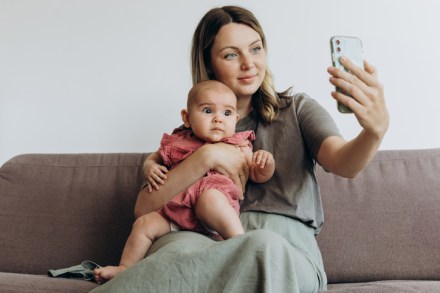
Soon, social media may be banned for under-16s. But the real addicts are mums. I was a sitting duck for the doomscroll as I fed my baby through the day and night. I was firmly pulled into the orbit of the ‘mumfluencers’: content created by and for mothers. Instagram has been a faithful companion through my whole pregnancy, birth and post-partum period. The algorithmic gods sent me helpful videos for late-pregnancy back pain, which were sorely needed, and less helpful videos of eight-week-olds sleeping through the night, which sent me into despair. At every stage, mumfluencers offer an endless loop of advice, warning and encouragement — difficult to resist when you are tired, isolated and up at 3am.

Is the rest of the world still working from home?

Scout’s honour Thousands of teenagers were evacuated from the World Scout Jamboree in South Korea as flooding, a heatwave and then the threat of a typhoon affected the event. What exactly is a ‘jamboree’? – Lord Baden-Powell adopted the word for the first gathering of scouts at Kensington Olympia in 1920. But the word itself can be traced back to the mid-19th-century American West, when it was used for a drunken revel – presumably not what Baden-Powell nor subsequent heads of the scouting movement would encourage. – The first documentary evidence for use of the word is in the report of a murder trial in the New York Herald in 1868, when two of the accused were described as indulging in a  jamboree before the crime was committed.

Confessions of the mommy groupchat

From our US edition

As I approach my daughter’s first birthday this month, I’m reflecting on what it’s been like to become a mom so late in the game — and the thousands of lessons I’ve learned. A lot of people have carried me through pregnancy and the first year: my husband, for one, has been a rock. His mother and stepfather. My aunt and uncle. They’ve all shown up for us in ways we didn’t even know we would need, with home-cooked meals when I was in the newborn bubble, with baby care so we could work or sleep or unwind. However, nothing has carried me quite like the groupchat a friend started in my first trimester. This friend had her second child on the way and realized three of us were pregnant all within months of one another, so she started the chat.

grumpy

M3gan is a tale of millennial mothering

From our US edition

If horror films today are largely read as political satires or commentaries, then the “moral” of Gerard Johnstone’s M3gan, about a sentient robot doll unwisely invited into the family home, is clear enough. Playing on our fears of the AI technology increasingly being used as “labor-saving devices,” M3gan is a tale of bad mothering and the price to be paid by career-oriented millennial women if they try to “have it all.” This may make it catnip for trolls and conservative commentators who love to chide women for any parenting style that doesn’t involve frilly aprons and a plastered-on smile. But you need to squint a bit to see this latent message. If you do, you’re missing a more complex (and more horrifying) story.

Why are dads left out of the abortion debate?

From our US edition

It’s ironic that the fieriest era yet in America’s abortion fight comes amid Mother's Day and Father's Day. Just weeks after the Supreme Court draft decision to overturn Roe v. Wade was leaked to the public, we collectively put it aside to nationally celebrate the mothers who chose to give us life. Now, with the decision about to be formally handed down, we celebrate fathers, those so often absent from the abortion decision and process all together. Pro-abortion groups are having a field day trying to convince Americans that access to abortion “opens the door to fulfilling educational and career goals” and the sustainment of one’s “bodily autonomy.” Rarely do you hear from men, specifically those who are thankful for unexpected fatherhood.

father dad

Biden’s tax credit won’t convince women to have more kids

From our US edition

President Biden’s proposed federal budget includes a permanent expansion of the child tax credit that would cost $556 billion by 2025. Putting between $250 and $300 in the pockets of almost every American family every month sounds like a dream come true, both for those eager to alleviate child poverty and for pro-natalists. The latter group, though, should temper its enthusiasm. As my colleague Matt Purple argued in the American Conservative earlier this year, sending checks to parents would probably put a huge dent in child poverty. It might even be worth doing for that reason. But as country after country has learned, it won’t necessarily bring births back above replacement rate. For that, we’ll need a change in culture.

antiracist baby children

The word ‘mother’ isn’t offensive. The Catholic church should say so

I’m used to waiting for the Catholic church to make sense. I’m a convert to Catholicism, and Catholic ideas sometimes take a while to become clear. I start from a position of suspicious distaste, but if I sit tight, I’ve found, the strangest things come right. It’s in this spirit of patient confusion that, since the beginning of the year, I’ve been waiting for the Catholic bishops of England and Wales to speak out in defence of the word ‘mother’, and to state the simple, unremarkable fact that only biological women give birth. Out of America, out of universities, from the HR department of every big business has come this push against ‘gendered language’.

The many contradictions of modern motherhood

There are few certainties in life. Death and taxes are the ones regularly trotted out. However, there is another that rarely gets mentioned: the fact that every single human who has ever existed has come out of a woman’s body. This act of creation, while being a marvel, has also become banal. In Motherhood, Eliane Glaser deftly juggles the wonder and boredom, the joy and pain and the many profound contradictions that attend modern motherhood. Philosophers, child psychologists and anthropologists from Jean-Jacques Rousseau to Donald Winnicott and Margaret Mead provide cultural and social contexts for how our attitudes towards motherhood have changed throughout history.

Let’s applaud mothers — the real key workers

Our daughter Clementine, 5, has just decided what she wants to be when she grows up. ‘A cleaner .... and a mother,’ she says, in that order. Her mother, my wife Taffeta, winces at Clemmie’s ambition. Middle-class rules dictate that we should try to knock such traditional notions out of little girls’ brains. It’s not feminist and therefore bad. But why? If this health crisis has taught us anything, it is that cleaning is one of the most important things human beings can do. And even in our horridly secular age, we all know deep down that motherhood is sacred. We need mothers now more than ever. The most key workers of all are parents — and mothers especially It’s odd.