Moscow

Secrets of the Kremlin

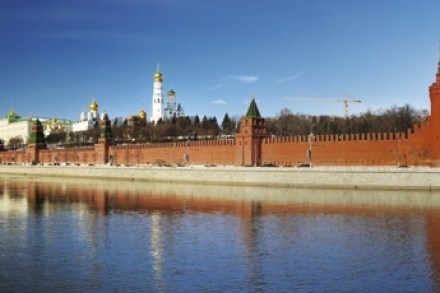
A building bearing testimony to the power of eternal Russia; a timeless symbol of the Russian state; a monument to Russian sovereignty. To the modern eye, the Kremlin fortress seems as if it had always been there, as if it had never changed and never will. All of which is utter nonsense, as Catherine Merridale’s fascinating history reveals: the story of this famous compound is not one of continuity, but of construction, destruction and reconstruction. Every reincarnation of the Russian state over the centuries — and there have been many — has been accompanied by a corresponding reincarnation of the Kremlin. Its history is thus a metaphorical history of Russia, as Merridale understands very well.
Hitler didn’t start indiscriminate bombings — Churchill did 

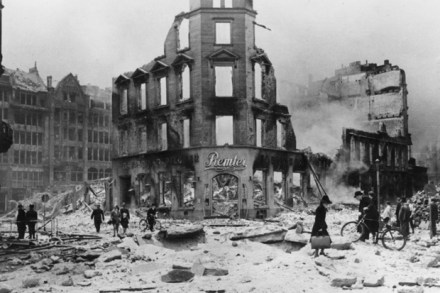
‘I cannot describe to you what a curious note of brutality a bomb has,’ said one woman who lived through the initial German raids on London during the second world war. This woman’s ambivalent reaction to having a bomb rip through her bedroom typified the shocking reality of a different type of war to any that had ever been fought before. For as Richard Overy makes eminently clear in his extraordinary and far-reaching history of Europe’s bombing war, this was the first time civilians actually became a part of the front line. The cause of this was the advent of aerial bombardment, which, Overy says, exposed ‘the democratic nature of total war, which insisted that all citizens had a part to play.

One Night in Winter, by Simon Sebag Montefiore – review

Simon Sebag Montefiore’s One Night in Winter begins in the hours immediately following the solemn victory parade that marked the Soviet Union’s victory over Nazi Germany — probably the high point of Stalinism. Two teenagers, dressed in 19th- century costume and members of a secret literary club called, aptly as it turns out, the Fatal Romantics, have chosen this moment, of all moments, to re-enact a duel from Pushkin’s Onegin on a bridge beneath the very walls of the Kremlin. Needless to say, when the duel goes fatally wrong and the dead boy and girl are revealed to be the offspring of members of the Soviet leader’s inner circle, we know there will be consequences for the families and friends they’ve left behind.

The Black Russian, by Vladimir Alexandrov – review

‘Unabashed luxury, elaborate displays of rich fabrics, gilt, soaring ceilings, glittering chandeliers...’ Thus does Vladimir Alexandrov describe what Moscow’s elite demanded of Maxim, the 1912 nightclub helmed by The Black Russian’s unlikely subject, the American Frederick Bruce Thomas. He was ‘the black man with a broad Russian nature’ who reinvented himself as celebrity nightclub impresario Fyodor Fyodorovich Tomas. Alexandrov’s sense of spectacle is no less keen. The Black Russian vaults breathlessly from set-piece to set-piece as it traces the journey of its hero from rural Mississippi to the opulent cabarets of Moscow, to Bolshevik-occupied Odessa and, finally, to a debtors’ prison in postwar Constantinople.