Mortgages

Home truths: the crushing reality of the mortgage crisis

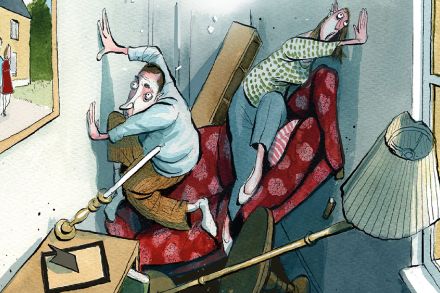
In December Jeremy Hunt hosted a mortgage summit, attended by lenders and the Financial Conduct Authority, to discuss rate woes. At the time, the numbers were at least moving in the right direction. During Liz Truss’s 49-day premiership, the FCA expected interest rates to rise to 5.5 per cent, an increase which was forecast to put 570,000 people into mortgage payment difficulty. Once Rishi Sunak and Hunt undid Truss’s mini-Budget, things looked calmer: a 4.5 per cent peak was expected, and 356,000 people were due to be in difficulty. Hunt was still struck by the figure. Horribly high, he thought. The Chancellor used the meeting to lay the foundation for regulatory changes that could be used in the future to help struggling mortgage-holders.
The last banking crisis and its architects, Dodd and Frank

From our US edition

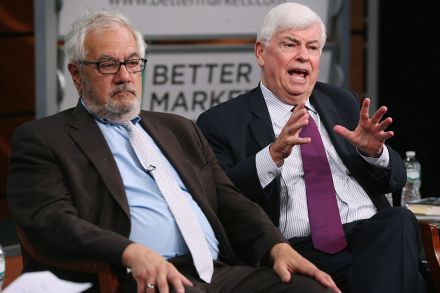
The Dodd-Frank law, enacted in 2010 following the financial crisis of 2007-08, was named for two of its chief architects, Senator Chris Dodd, Democrat of Connecticut, and Representative Barney Frank, Democrat of Massachusetts. It's ironic that both had been involved, politically or personally, in exactly what had caused the financial crisis in the first place. In the 1930s, only about 10 percent of American non-farm families owned their own homes. But that began to change with the New Deal. The Federal Housing Administration was established in 1934 to guarantee mortgages, making banks much more willing to initiate them.

The next real estate crisis could come from China

From our US edition

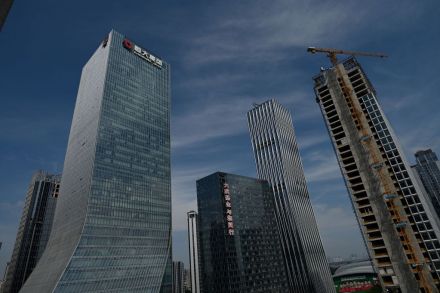
Debt is as much a part of the real estate business as bricks and mortar. And as the great New York builder William Zeckendorf once famously remarked, 'it’s better to be alive at 20 percent than dead at the prime rate.' But the Evergrande Group, the second largest real estate company in China, has taken corporate debt to new heights, with liabilities of a staggering $310 billion, to finance its breakneck growth. In 2010, it had revenues of $7.3 billion and assets totaling $16.7 billion. In 2020, the figures were $81 billion and $368 billion. To be sure, it is a huge company, with 1,300 projects in more than 240 cities in China and 200,000 employees. This year alone, it began 77 new projects.

evergrande