Monarchy

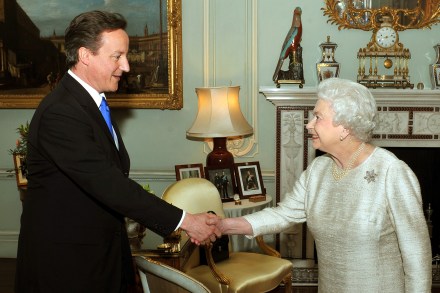
Cameron takes it to the councils

From our UK edition

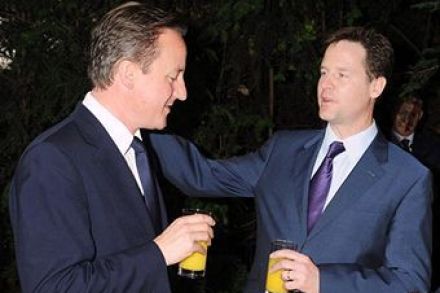
Ignore what your council is telling you. So says no less a personage than the Prime Minister of our country, speaking at one of his freewheelin' roadshow events this afternoon. Cameron may have been referring specifically to the red tape being wrapped around Royal Wedding street parties, but it's still a pretty pugnacious point for a PM to make. Here's the full quotation, courtesy of the superb PoliticsHome: “I hope people are able to join in and celebrate and I am very much saying today that if people want to have a street party, don't listen to people who say 'it is all bureaucracy and health and safety and you cant do it.

A princely problem

From our UK edition

Tonight’s Six o’clock news had a long package on Prince Andrew that ended with Laura Kuenssberg reporting from Downing Street on the government’s attitude to the prince. The fact that the government is now so much part of this story is due to an unforced error on its part.   It was the briefing yesterday about how if more came out then Andrew would have to resign as trade envoy that pushed the government right into the middle of this sorry story. This set journalistic hares running and had everyone demanding to know what the government’s position was. The government, which had got involved in this story more through cock-up than anything else, quickly rowed back on Sunday's lines.

The politics of Prince Andrew

From our UK edition

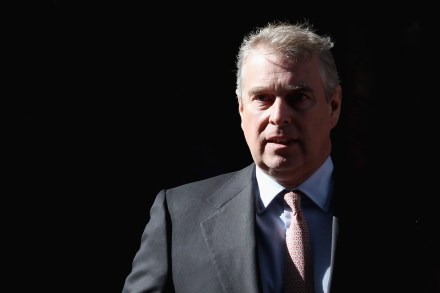
Uh-oh, the Prime Minster has "full confidence" in Prince Andrew as a UK trade envoy – the sort of endorsement that often means the direct opposite. In this case, though, I suspect that the line is more a hasty attempt to defuse some of the tension that has been building on this matter over the past few days. Only this morning, a Downing Street source told the Beeb that the Prince could be ejected from the role should any more revelations surface. Another suggested that "there won't be many tears shed if he resigns." And then there's the senior Tory putting it about that "there appears to be no discernible mental activity," on Prince Andrew's part. It has been – and continues to be – a right royal rumpus, to say the least.

David Cameron arranged Prince William’s Wedding to Distract Attention from his Plan to RAPE Britain

From our UK edition

Oh dear. That is to say, three cheers for this comedy post by the New Statesman's Laurie Penny. It turns out there is scarcely any limit to David Cameron's deviousness. I mean, consider all this: Over the next two and a half years, a full calendar of bread and circuses has been scheduled to keep the British public happy and obedient while the government puts its economic shock doctrine into effect. This year, it's the Wedding of Mass Distraction; next year it's the Diamond Jubilee and after that the Olympics. The timing is a gift for any government attempting to push through punitive and unpopular reforms - the chance to smother dissent with a dampened commemorative tea towel of pomp and circumstance.

Princes and politics don’t mix

From our UK edition

Max Hasting’s essay in the Daily Mail about the dangers for the monarchy of Prince Charles becoming king is an important moment. Hastings, who is very much part of the establishment, is reflecting a view that many hold in private: that Prince Charles’s desire to advance his political views is incompatible with a modern constitutional monarchy. As Hastings puts it, ‘he is so set in his ways, so accustomed to not being contradicted — because those who argue with him are swiftly expelled from his counsels — that I am convinced that if he becomes King he will persist in trying to save the world, and thus precipitate a crisis.

From the archives: The Royal Marriage Question

From our UK edition

Like father, like son. Prince William took his time to propose to Kate Middleton, almost as long as his father took to take the plunge in 1981. The press brayed on both occasions. Here’s what Auberon Waugh made of the Prince of Wales’ dithering over Diana. It was tragically prescient. The Royal marriage question, The Spectator, 10 January 1981. In the death of Princess Alice of Athlone at 97 last Saturday the Queen lost not only first cousin twice removed but also a great aunt by marriage. Under the circumstances, it might seem humane to allow a period of time to elapse for her to get over this double shock before petitioning her to turn her mind to the Royal Marriage Question.

How to pay for the Royal wedding? Simple: public subscription

From our UK edition

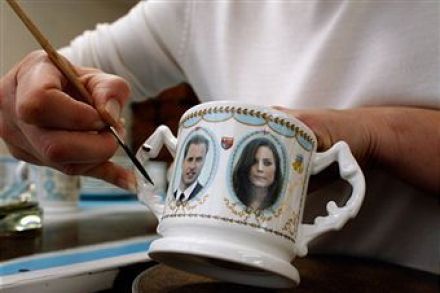
Now that we have a date in the diary, we can begin the traditional rites and customs on the path to the Royal Wedding. These traditions stretch back to Queen Victoria – street parties, pageants, commemorative china, bunting and flags, and an almighty row about how much it’s all costing. The cost of the monarchy is a perpetual controversy, given new impetus by any major monarchical occasion. Already, David Cameron’s decree that the date will be a public holiday is causing disquiet among some business leaders, who will lose a day’s trade. As Guido Fawkes points out, the additional day-off, coupled with Good Friday and Easter Monday, will make for a miserable year-end for many businesses.

Who will benefit from the Royal wedding?

From our UK edition

David Cameron is playing down the effect the Royal Wedding will have on the 5th May elections, especially the AV referendum. Fleet Street’s having none of it however. On the one hand, Benedict Brogan can already hear the pops of champagne corks in the No to AV campaign offices. He reasons: ‘One consequence of the Royal wedding will be to make it even more difficult for AV supporters to get their campaign motoring in time for the referendum.’ On the other, Alex Barker makes the case for the Lib Dems’ Yes to AV campaign. He has a three point-plan, centring on low turnout following reduced campaign time. This, he thinks, will benefit those concerned about the injustice of the current system, rather than its die-hard defenders.

A Royal Holiday

From our UK edition

Kate Middleton and Prince William will marry on Friday 29th April at Westminster Abbey. I can scarcely contain my indifference, even at this early stage; but congratulations to them all the same. Number 10 has confirmed that the occasion will be marked by a public holiday. There is, you see, nothing like a right Royal bash and the darling buds of May to dispel the privations of austerity ahead of awkward elections and a referendum on 5th May. Then again, an Arctic breeze and intermittent hail will have the opposite effect.

Monarchy is Better Than Republicanism, Part CXVI

From our UK edition

Meanwhile, elsewhere in whimsy the nice folks at Foreign Policy asked me to write a piece about Prince William's engagement. Somehow this ended up with another modest proposal: the United States should ditch the Presidency, join the Commonwealth and become a parliamentary democracy. You know, like Canada. They have the trappings of royalty already, but none of the benefits: Last year, Peggy Noonan, the American conservative commentator and former presidential speechwriter, complained that President Barack Obama lacked some of the presence that a good head of state requires.

Ride on in majesty

From our UK edition

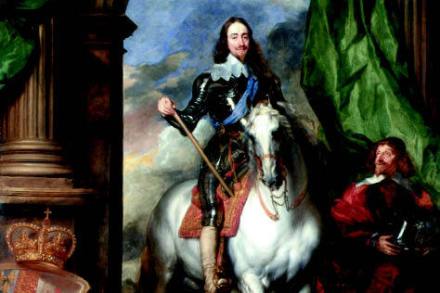
Governments in early modern England, having no standing army nor a civil service to speak of, required the consent of the governed. Authority had to be ‘culturally constructed’. That is the starting-point for Kevin Sharpe’s monumental investigation into royal branding in the age of the Tudors and Stuarts. In the first volume of a projected trilogy, Selling the Tudor Monarchy, he argued that the Tudors made the person of the monarch more important than administrative procedures in establishing royal authority. Elizabeth, in particular, fixed in the national memory by her portraits, played down political divisions and ‘privileged her image over actions and events’, making the sovereign the sacred ‘unifying embodiment of the nation’.

The match that sparked the Civil War

From our UK edition

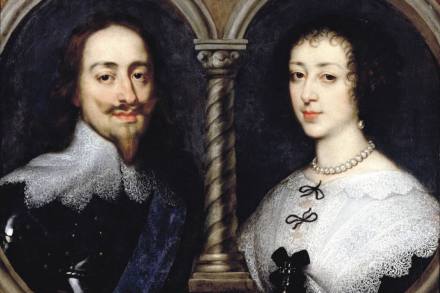
There are turbulent marriages. And then there are turbulent marriages in which the husband ends up getting beheaded on a stage. This book describes the latter. One doesn’t normally need to encourage publishers to hyperbole, but in the case of Katie Whitaker’s subtitle, there might have been a case for giving it a bit more welly. The story begins with a prissy 15-year-old French princess being taken to England, to a husband whom she’d never seen. It ends with that husband losing his crown and his head to Oliver Cromwell’s Parliamentarian taleban. The sad coda is the princess living out her days back in France, estranged from most of her children: older, wiser, but not much happier.

Cameron, Villa and the succession

From our UK edition

The Prime Minister is, as we know an Aston Villa fan. So we can expect him to be disappointed at Martin O’Neill’s departure. On his trip to Birmingham the other week, Cameron’s support for Villa caused the PM to, as the phrase has it, misspeak. He told the Birmingham Post that with “the Governor of the Bank of England as a supporter, the next King of England and the current Prime Minister, [Aston Villa] got a good set” of fans in high places. But his reference to the next King of England being a Villa fan will raise a few eyebrows as it is Prince William — not Prince Charles — who is the Royal Villain. Now it is obvious that Cameron just slipped up and that he didn’t mean to impart any information about the succession.

Barring Griffin was an error, Your Majesty

From our UK edition

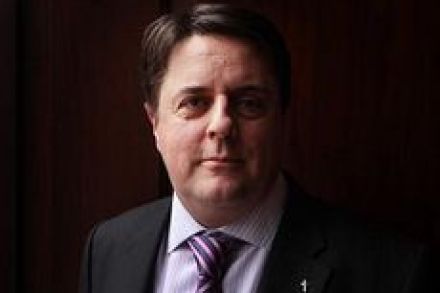
I sympathise with the Palace, who were put in a tight position by Nick Griffin’s attendance at a Garden Party in his capacity as an MEP. But he should not have been barred unless he had broken the law or was gratuitously offensive, which he has not been on this occasion.   Griffin’s attendance at anything always becomes a party political matter, such is the loathing felt for him and his politics, and his ability to use that loathing to his advantage. So, the leader of the BNP appears on GMTV this morning, telling all of his pride at being an MEP and his invitation to Buckingham Palace. The Palace defines that as an attempt to ‘blatantly politicise attendance’. Griffin is far too subtle an operator for anything so obvious.

More than a painter of Queens

From our UK edition

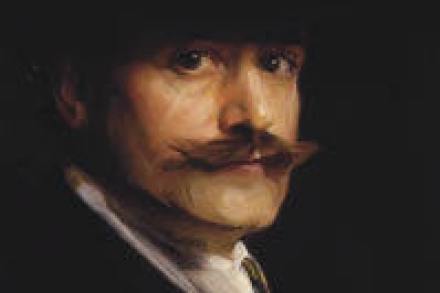
The last words of Hungarian-born portraitist Philip de László, spoken to his nurse, were apparently, ‘It is a pity, because there is so much still to do.’ As Duff Hart-Davis’s biography amply demonstrates, for de László, art — which he regarded as ‘work’ as much as an aesthetic vocation — was both the purpose and the substance of his life. The last words of Hungarian-born portraitist Philip de László, spoken to his nurse, were apparently, ‘It is a pity, because there is so much still to do.

A rather orthodox doxy

From our UK edition

‘His cursed concubine.’ That was the imperial ambassador Eustace Chapuys’ judgment on Henry VIII’s second wife, Anne Boleyn. ‘His cursed concubine.’ That was the imperial ambassador Eustace Chapuys’ judgment on Henry VIII’s second wife, Anne Boleyn. And that was mild. The abbot of Whitby called Anne a ‘common stud whore’. The judge Sir John Spelman noted during her trial that ‘there never was such a whore in the realm’. And, of course, Henry VIII beheaded her. Anne, rather like our own Diana, caught some heavy flak for having a sexy reputation.

Not our finest hour

From our UK edition

Ever since Edward II’s deposition and grisly murder in the dungeons of Berkeley Castle in 1327, his reign has always been regarded as a particularly embarrassing interlude in English history. Ever since Edward II’s deposition and grisly murder in the dungeons of Berkeley Castle in 1327, his reign has always been regarded as a particularly embarrassing interlude in English history. In 1908, when there was still some pretence that such subjects had a place in the classroom, teachers were advised that the period should be ‘passed over in discreet silence’. Not only was it one of fruitless civil war; Edward was also thought to have been a homosexual, who doted on favourites and was killed by a red-hot poker thrust into his anus.

Royal Family Update

From our UK edition

I'm a monarchist- and much more keenly so than I was as a young chap - but the way this Daily Mail story is written is so ghastly and gawd-help-us that it almost makes one doubt the sense of having a non-elected head of state... Prince Philip has been spotted doing his bit for the environment - by clearing up litter at Sandringham. The Duke of Edinburgh prince surprised onlookers by bending down to pick up a discarded coffee cup and its plastic lid after church on the Royal estate in Norfolk. The 88-year-old prince did his good deed while walking back to Sandringham House after the traditional morning service at St Mary Magdalene Church on Sunday. Some spectators gasped when they saw him suddenly lurch forward and feared that he was about to take a fall.

Strong family feelings

From our UK edition

Mary Kenny’s survey of Ireland’s relations with the British monarchy is characteristically breezy, racy and insightful, with a salty strain of anecdote. Mary Kenny’s survey of Ireland’s relations with the British monarchy is characteristically breezy, racy and insightful, with a salty strain of anecdote. This reflects the secret affection of the Irish bourgeoisie for the royal soap opera, even when this addiction has to be concealed as carefully as a taste for alcohol in a fundamentalist Muslim state. Oddly, her account of secret suburban Catholic covens, communing with royal weddings and jubilees via television, rather trumps my memories of royalist interests among the Protestant (though emphatically not Anglo-Irish) circles of my youth.