Monarchy

The Duchess of Cambridge’s dignity

From our UK edition

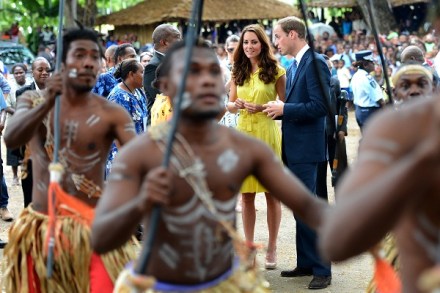
Mr Steerpike is no Middleton fan, but it has to be said that the Duchess of Cambridge has maintained her composure remarkably well in the wake of topless photos of her appearing in the foreign press. Keeping her chin up while continuing the royal couple’s tour of the South Pacific, she even managed to keep smiling when greeted with open arms by a topless women in the Solomon Islands. This would have been prime gaffe territory for Prince Phillip, but there wasn’t even a hint of an a joke despite the unfortunate timing. For shame!

Pippa Middleton cashes in

From our UK edition

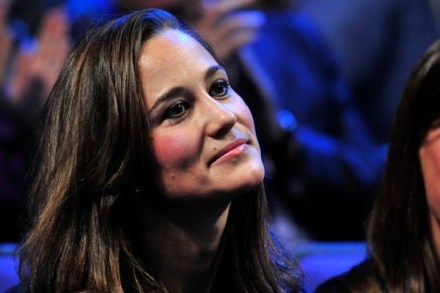
Mr Steerpike was overcome with joy when he read the press release from Pippa Middleton’s publishers. It told him that her forthcoming book Celebrate will be a 'useful, practical and inspiring journey into British-themed occasions, focusing on tradition.’ Well, thank goodness for that. What a treat. Over to the sister-in-waiting: ‘This book is designed to be a comprehensive guide to home entertaining, based on my experience in my family's party business, Party Pieces, and work for London-based events company, Table Talk.’ Two plugs in one sentence. Not bad. ‘I hope it offers welcome inspiration and ideas, most of which needn't leave you alarmingly out of pocket.

Compromised by not compromising

From our UK edition

‘In a relationship, when does the art of compromise become compromising?’ Thus spoke Carrie Bradshaw. Such knowledge suggests that I have passed her tipping point; my compromises have compromised me. But, then again, one can’t dissent from Robert Louis Stevenson’s view that ‘compromise is the best and cheapest lawyer’, especially when it comes to relationships. There are worse fates than having to do the washing-up occasionally to a backing of unwanted telly. Yesterday evening, I had hoped to watch highlights of England’s humiliation at the hands of the South African cricket team, but, alas, was forced to settle for Eastenders. Such is life. In fact, Eastenders wasn’t all that bad. It certainly wasn’t dull.

A question for Martin McGuinness

From our UK edition

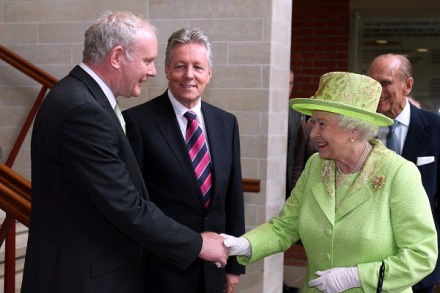
‘God speed’ was apparently what Martin McGuinness said to the Queen when they met a short time ago. I wonder what she, and the Duke of Edinburgh, would have liked to say to him? Of all the things that the Queen should be asked to do in her Jubilee year, perhaps the most cruel has been to expect her to shake the hand of the former IRA commander and now deputy first minister of Northern Ireland. Many people bereaved by the Troubles have made gestures of almost super-human forgiveness, but few can have been so pushed towards doing so. And McGuinness is a particularly difficult case.

A Jubilee moment of historic significance

From our UK edition

Martin McGuiness will meet Her Majesty the Queen and shake her hand in Northern Ireland. This is a seminal moment. It does not change McGuiness’s commitment to a united Ireland, but it is a strong statement from the Republican side that bygones are bygones. It is also a sign, perhaps, that the sacrifices Britain made over the Bloody Sunday Inquiry where worthwhile, because McGuiness is making a brave sacrifice by doing this: there will be those who condemn him for it. It is also significant that the Palace has achieved this. The conflict in Northern Ireland and the dark historical relations between Britain and Ireland are causes close to the Queen’s heart; and she has made peace and reconciliation a mission of her reign.

Vivat Regina

From our UK edition

This article appears in the latest issue of Spectator Australia. We thought that CoffeeHousers would like to read it. The trick to monarchy is not queening it. In The Radetzky March, Joseph Roth’s great novel of the Habsburg twilight, the Emperor Franz Joseph has it down to a tee:  ‘At times he feigned ignorance and was delighted when someone gave him a longwinded explanation about things he knew thoroughly… He was delighted at their vanity in proving to themselves that they were smarter than he …for it does not behoove an emperor to be as smart as his advisers.

Why the Jubilee Coverage was so bad

From our UK edition

One of my objections to monarchy is that it is a vulgar institution that encourages verbosity, prurience, sycophancy and banality. I was not therefore surprised that the BBC’s jubilee coverage was vulgar, verbose, prurient, sycophantic and banal. Others were, however, and the papers are full of condemnations of the corporation. You should always remember that the BBC’s rivals have a commercial interest in doing it down, just as the BBC has a commercial interest in doing down News Corporation at the Leveson Inquiry. No journalists are as compromised as writers who write about their employer’s rivals. As a rule, you should never believe a word they say.     That said, no one can deny that the BBC offered itself as a target to its enemies.

Inside our Jubilee Special

From our UK edition

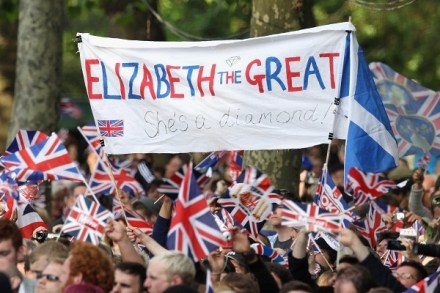
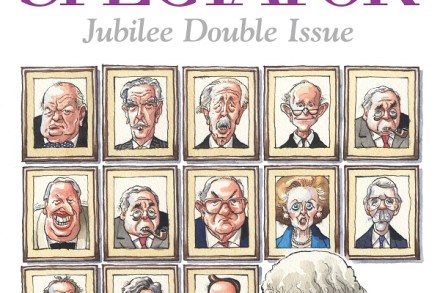
The rain makes today's Jubilee celebrations a truly British event. We didn’t want any of this continental sun, anyway. The flotilla is making its way through the drizzle, and as we have to celebrate indoors due to the weather then there's the perfect accompaniment: the new Spectator double issue, out today, which is overflowing with holiday reading. We have Robert Hardman saying how – policing aside – the bill for these four days of celebrations has been £1 million which works out as half an Olympic volleyball pitch. The queen is remarkable value. At my church this morning, we heard from a parishioner a little older than the Queen who was involved in making the dress for her coronation.

Rain and royalty

From our UK edition

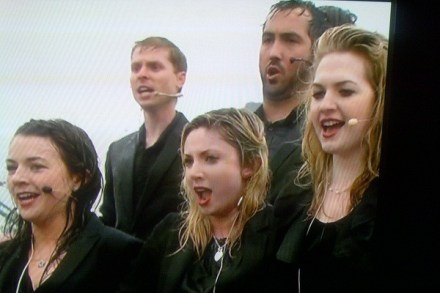
This picture, to me, sums up today’s Jubilee flotilla: drenched Royal College of Music students cheerfully singing Land of Hope and Glory at the end of a spectacle attended by over a million people. The rain, far from ruining the event, made it even more memorable and didn’t seem to deter the crowds. As the choir’s conductor put it: 'freezing cold, wind, and rain but euphoric and unforgettable'. Sky News captured the spirit by covering its real source: the onlookers. 'Even on the train down, people were talking to each other,' a member of the public said. 'It’s been amazing seeing the princess and the queen, I loved it,' said a four year old. Sky seemed to have mobilized its entire staff, from every point on the Thames to street parties in (sunny) Devon.

The Queen Does Not Inspire; That’s a Feature Not a Bug

From our UK edition

Can't republicans do better than this? If keeping quiet and cutting ribbons is all we can expect of our head of state then perhaps we can agree she's done well -- but surely we can expect more. As a national figurehead and leading public figure the queen has utterly failed to do anything of note or worth. After 60 years who can quote a famous speech or point to a moment of crisis or celebration when the queen offered leadership and inspiration? For all the failures of the monarchy -- in principle, practice and in political terms -- the queen and the institution offer little in return but an empty chair where an inspiring national figure could have stood.  That's Graham Smith, Chief Neep at Republic, writing for CNN.

The Queen’s Speech: full text | 9 May 2012

From our UK edition

My Government’s legislative programme will focus on economic growth, justice and constitutional reform.   My Ministers’ first priority will be to reduce the deficit and restore economic stability. Legislation will be introduced to reduce burdens on business by repealing unnecessary legislation and to limit state inspection of businesses. My Government will introduce legislation to reform competition law to promote enterprise and fair markets. My Government will introduce legislation to establish a Green Investment Bank. Measures will be brought forward to further strengthen regulation of the financial services sector and implement the recommendations of the Independent Commission on Banking.

From the archives: Britain’s new Queen

From our UK edition

To mark the 60th anniversary of Queen Elizabeth II's ascension to the throne in 1952, here is the leader that appeared sixty years ago on our front cover. It was written under the editorship of Wilson Harris, who had been in the position nearly 20 years. Queen and Nation, 15 February 1952 The slow days are dragging their sad length along to the climax, when the mortal remains of King George VI will be laid, where so many of his forbears have preceded him, in the historic St. George's Chapel at Windsor.

Queen of sorrows

From our UK edition

She was the ill-educated younger child of the Duke of York; a mere female, she was sickly and not expected to survive, let alone become Queen. But, as this monumental and long overdue reappraisal shows, it was a mistake to underestimate Anne Stuart. She had always been ambitious and had great tenacity. She had no qualms about putting her beloved Church of England above loyalty to her father and King, the Catholic James II. Indeed, she was a key player in the Revolution of 1688. Legislation declaring that the monarch could not be Catholic or married to a Catholic meant that the question of her Catholic half brother’s legitimacy and his right to the throne was never an issue for Anne.

The greatest show on earth | 10 December 2011

From our UK edition

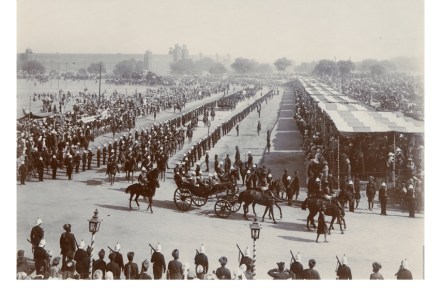
Jessica Douglas-Home’s aptly titled book is based on the diaries of her grandmother Lilah Wingfield, who attended the Delhi Durbar in 1911 and then spent some weeks touring India. It is a glimpse of Empire from a privileged position since Lilah was the daughter of a viscount and the grand-daughter of an earl, brought up at Powerscourt Castle in Ireland and spending her summers at Holkham Hall in Norfolk. She sat in the grandstand for ‘Distinguished Spectators’ at the Durbar and was the guest of several Indian rulers during her tour. She did not, however, ‘share the assumption of superiority that afflicted many of the officials of the Raj’, her granddaughter writes. ‘She was too Irish for that.

The woman in black | 3 December 2011

From our UK edition

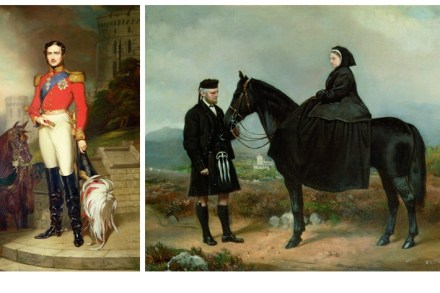
The history of the royal family is punctuated by dramatic, premature deaths which plunge the monarchy into crisis. The most disastrous of these — historically more significant by far than the death of Princess Diana — was the death of Prince Albert in 1861. By the time he died, aged 42, this minor German prince, the second son of the obscure and dissipated Duke of Coburg, had taken over the entire public work of the monarchy. After 21 years of marriage, his wife Victoria had become deskilled and emotionally dependent upon him. His death left the monarchy in tatters and condemned Queen Victoria to a lifetime of black dresses. Helen Rappaport, who is best known as a writer about the Romanovs, has chosen an excellent subject.

The Diamond Queen by Andrew Marr

From our UK edition

‘Of making many books there is no end’, particularly when the subject is Queen Elizabeth II. It is less than ten years since Ben Pimlott and Sarah Bradford independently produced authoritative and excellent biography-centred books on the Queen. Since then a fair number of minor studies have appeared. Can enough have happened in the meantime, can enough new information have been revealed, to justify two new books? The answer, rather surprisingly, is a cautious ‘yes’. Both Andrew Marr and Robert Hardman are serious students of their subject. Both write well and thoughtfully.

The building of our history

From our UK edition

Athens, for all its current woes, still has the Parthenon. Rome has the Colosseum, Paris the Louvre, Berlin the Reichstag, Beijing the forbidden city, Moscow the Kremlin and Washington the White House. But where in London is there a structure that sums up and encapsulates the sweep of  English History from 1066 and all that, to the Second World War and beyond? The answer is certainly obvious to the 2-3 million mainly overseas visitors who flock to the Tower of London every year, making it easily Britain's top tourist attraction.

Reigning for dummies

From our UK edition

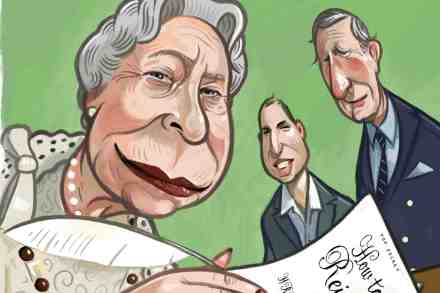
  What is the Queen’s secret? She seems to defy political gravity. Right now, an English monarch is in Australia being feted by her subjects, who seem delighted by this very un-modern constitutional arrangement. Paul Keating, the former Prime Minister of Australia, recounts in The Times today the time he advised the monarch to let go. “I told the Queen as politely and gently as I could that I believed that majority of Australians felt the monarchy was now an anachronism; that it had gently drifted into obsolescence.” This was 18 years ago. There is no such sign of this now, with just 34 per cent of Australians being in favour of dumping Her Majesty – the lowest figure for 20 years. Why?