Military

The advent of AI-piloted planes

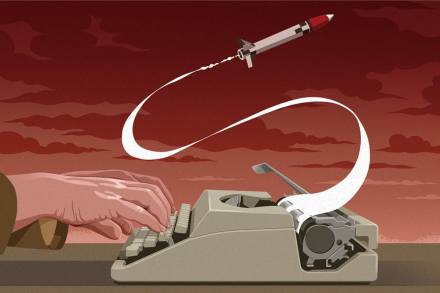
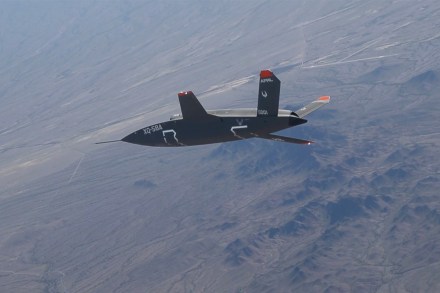
The US Air Force conducted the first flight test of the XQ-58A Valkyrie drone, from Kratos Defense and Security Solutions, piloted by artificial intelligence, on July 25. The test was part of a years-long effort headed up by the Air Force Research Lab designed to integrate advanced technology into the Air Force’s arsenal. The lessons learned and data gathered from the test will be applied to the Collaborative Combat Aircraft program, which seeks to procure an unmanned combat drone capable of working — collaborating — with manned systems, like a traditional fighter jet.  Bringing AI into the fold offers numerous benefits to the modern warfighter.

The Kratos XQ-58 Valkyrie ai drones

How to solve the military recruitment crisis

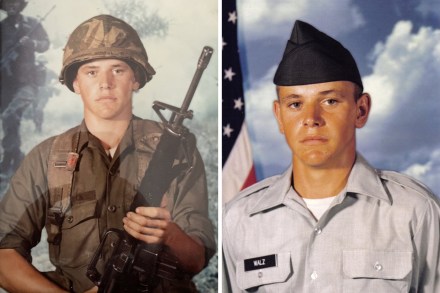
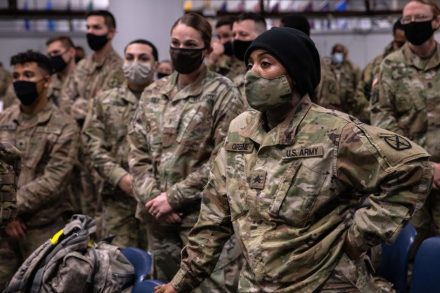
Our military is facing the worst recruiting crisis in the history of our fifty-year-old All-Volunteer Force (AVF). Contrary to what you may have read elsewhere, there is no single explanation for this urgent problem. Rather, this crisis is the product of a number of factors: a strong civilian labor market, the effects of COVID, a shrinking pool of American youth eligible to serve in the military, and — of greatest concern — a reduced interest in joining the military, fed by a lack of knowledge, a declining sense of service, false and negative messaging about the forces, and the activist politicization of the force. Today, there are about 1.3 million active-duty military members; they are its greatest asset.

military recruitment

Is the US Navy the new Bud Light?

Cockburn spotted a news story this morning that had him spitting out his breakfast cocktail of bourbon and vicodin (difficult to do these days). He read that the US Navy has appointed a nonbinary drag queen, "Harpy Daniels" as a “digital ambassador” charged with recruiting new members to the military. Cockburn's brief time in Navy Yard means that he knows sailors have unorthodox tastes, but come on. Surely, this must be the handiwork of some rogue underling with access to the Navy’s TikTok password — although isn’t TikTok banned on official military devices? In the wake of the Dylan Mulvaney backlash, which has seen Bud Light stock plummet 17 percent since partnering with the trans activist, could this really have been an edict from the Navy’s top brass?

us navy harpy daniels

The military recruitment drought is a national security crisis

“Leave no one behind” has been the American warrior’s ethos for decades. It is ingrained in the Army Ranger’s Creed: “Leave no fallen comrade behind.” It is the reason they searched so desperately for Navy Seal Marcus Luttrell, the Lone Survivor, and so many others throughout our country’s history who have been separated from the team in the heat of battle. As a midshipman at the United States Naval Academy, the Marines who trained us beat accountability into us to ensure we take care of our own — always.  These are the core values service members carry with them, and these are the values that attract young Americans to join the armed forces. That is, until Joe Biden became commander-in-chief.

military recruitment drought

Is it too late to save America?

Regular readers may recall how fond I am of a mot from the British diplomat, author and art collector Edgar Vincent, the first (and, as it happened, the last) Viscount d’Abernon: “An Englishman’s mind works best when it is almost too late.” When I first encountered Lord D’Abernon’s saying, I was impressed by its slightly disabused cheerfulness. “Whew,” I thought. “As usual, some impending disaster was neatly avoided at the last moment by the wit and pluck of the doughty Brits.” The drama of the near-escape added to the sweetness of relief. Surely we Yankees — most of whom, until recently, were basically displaced Brits — could also be counted on to display the requisite derring-do at the critical moment. Could we though? “Almost too late.

america

One year of war in Ukraine: six experts predict what will happen next

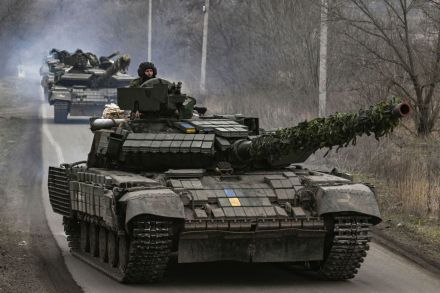
As the war in Ukraine enters its second year, today seems as a good time as any to reflect on its first, and see what the future might hold. Six foreign policy experts from across the spectrum of opinion offered their thoughts to The Spectator. As the war in Ukraine enters its second year, how do you foresee the conflict ending? Ted Carpenter: There are several possible outcomes, but the most likely is a ceasefire without a formal peace accord. That move would end the bloodshed, but it would leave the underlying disputes unresolved. Such an outcome would be similar to the armistice that ended the Korean War. It also would create the world’s largest and most dangerous “frozen conflict.

ukraine war nato

Germany’s broken promise to rebuild its military

Germany has a new defense minister. The funny thing is that nobody really knows who he is, what he stands for, and whether he’s capable of doing his job. Boris Pistorius will take over the ministry from Christine Lambrecht, whose one-year tenure was about as embarrassing and gaffe-prone as the Bundeswehr itself. There are too many blemishes on her record to examine in a single post — we would be here all day. But one of the more notable misfires was her tone-deaf New Year’s Eve video, where she reminded viewers that a war was going on in Europe as a fireworks display went off behind her. For many in the German defense establishment, Lambrecht’s departure can be summed up in two words: good riddance. Not much is known about her replacement.

Poland is Europe’s next great military power

As Russia’s war in Ukraine rages into its eleventh month, there is one country that can truly be said to have learned its lesson: Poland. By the mid-2030s, when the majority of its equipment purchases have been delivered, Warsaw will command one of the most modern, well-equipped armies in Europe. It’s not cheap, but Poland is taking decisive action to be able to face the threats of tomorrow. Poland's $20.5 billion 2023 defense budget is a huge increase over the previous year, and is over 3 percent of gross domestic product (well above the NATO-suggested 2 percent). Aside from equipment, this money will be used to help expand the manpower that Poland can bring to bear, upping its active-duty forces from 140,000 to 300,000 troops.

America’s military isn’t ready for a war with China

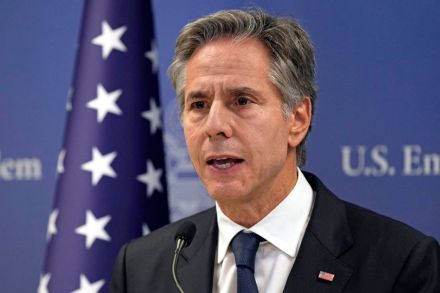
China’s 20th Party Congress concluded on October 23, and President Xi Jinping secured a norm-breaking third term as leader of the Chinese Communist Party (CCP). With the Politburo Standing Committee stacked with close confidants and dissent virtually wiped out, Xi is the strongest he has ever been. Xi has also redoubled the Party’s commitment to taking the island of Taiwan, by force if necessary. Secretary of State Antony Blinken recently said that China “was determined to pursue reunification on a much faster timeline.” The alarm has been repeatedly sounded by American military officials, with speculation that a Chinese invasion of Taiwan could occur as soon as 2023.

America and Russia are finally talking to each other again

Defense Secretary Lloyd Austin and Russian Defense Minister Sergei Shoigu haven’t really been on speaking terms. That is, until last weekend, when the two defense chiefs conversed with each other twice in three days. The readouts released by the Defense Department are about as brief as brief can get. They don’t tell us much about what was said, other than the general observation that Austin, a former four-star army general, swatted away Moscow’s explanations for the war in Ukraine. What the conversations illustrate more than anything is just how rare they've been. Indeed, the reason why so many news outlets wrote about the Austin-Shoigu calls was because they were extraordinary.

Europe is more bark than bite on Ukraine

Last Friday, President Biden signed a spending bill that will keep the government’s lights on until December 16, when lawmakers will have to cobble together a funding resolution to avert a shutdown. Tucked into that law was another tranche of security and economic assistance to Ukraine, to the tune of $12.3 billion. The signing came two days after the Defense Department announced the release of an additional $1.1 billion military package for Kyiv, which will include 18 more HIMARS systems, 150 armored vehicles, and ammunition of various calibers. The Biden administration has provided the Ukrainians with over $16 billion in security assistance since Russia’s invasion in February. Washington’s hands have been cramping up from writing so many checks.

macron europe blame

The fight for the burn pits veterans isn’t over yet

On July 28, 1932, the United States military attacked its own veterans. The desperate former soldiers, who had survived the horrors of World War One, had dug in for months in Washington, DC to get the bonuses that had been promised to them by Uncle Sam. Yet instead of paying the money they were entitled to, the Hoover administration dispatched General Douglas McArthur, who led against them four troops of cavalry, four companies of infantry, a machine gun squadron, and six tanks. Ninety years after the infamous attack on the Bonus Marchers, dozens of veterans camped out on the steps of the Capitol building for several days. These veterans were not routed, thankfully.

No one wants to join the military anymore

Last week marked the 246th birthday of the United States. This year also marks, according to Lieutenant General Thomas Spoehr of the Heritage Foundation, when we “question the sustainability of the all-volunteer force.” As reported in late June by NBC, all branches of the military are falling short of their 2022 recruiting goals. The Army, for instance, has met only 40 percent of its enlisted recruitment target for the fiscal year, which for the military services ends on September 30. Those in the Pentagon tasked with attracting candidates have listed reasons they are struggling to meet their mission: lack of eligibility, Covid restrictions putting a damper on outreach, competition from a robust civilian employment market, and a lack of a desire to serve.

military

The Taliban’s rough year in power

Next month will mark the first anniversary of the Taliban’s second stint in power in Afghanistan after a twenty-year insurgency against the US-backed government. In August 2021, Taliban fighters, flush with captured American military equipment and the jubilation of victory, were openly walking the streets of Kabul. While the disgraced Afghan president, Ashraf Ghani, was preparing for a life of exile in the United Arab Emirates, Taliban officials were converting his offices into their headquarters. The Taliban’s first year in power, however, hasn’t been pretty. The group has quickly come to understand that administering a poor and faction-prone country is a lot more difficult than taking up arms against a deeply unpopular, corrupt, foreign-dependent government.

Don’t ban the AR-15

Following every tragic mass shooting, there is outrage directed at the firearms industry. The highly popular AR-15 platform is once more in the crosshairs after the recent killings in Buffalo, New York, and Uvalde, Texas. The AR — erroneously described as an "assault weapon” — has been targeted by politicians and celebrities who think it should be banned. A House Democrat recently introduced a bill that would add a 1,000 percent sales tax to the purchase of the semi-automatic rifle. Misinformation rather than facts has been weaponized against the AR, which has been falsely described as a "high-powered" "weapon of war." Major General Paul Eaton, US Army (retired), even suggested in a series of tweets that the AR-15 has no place in civilian hands.

America the busybody neighbor

Imagine a neighbor who is constantly in everyone’s business. Perhaps you have such a person, or persons, in your own community. The neighbor complains about the paint colors of shutters, the height of lawn grass, and the number of cars parked on the street. You better hope he doesn’t find out about your backyard chicken coop if it's prohibited in your county. It’s bad enough to have neighbors like this, constantly on the alert, monitoring everyone’s behavior, and complaining to everyone in earshot. But imagine if an entire country was like this. Actually, you don’t have to imagine. For that is America — at least the foreign policy establishment and the powerful elite institutions like corporate media and the academy that influence it.

neighbor

Europeans are still free-riding off American security

Remember how Washington’s foreign policy establishment and their media echo chamber bashed the “isolationist” President Donald Trump for abusing, humiliating and making life miserable for our close European allies, in the process obliterating the “liberal international order”? Remember how some of the Europeans responded? Germany’s Angela Merkel declared “a new chapter” in US-European relations, saying that Europe “really must take our fate into our own hands.” France’s Emanuel Macron stated that Europeans need to stop “being naïve,” and assert their strategic independence from the US. What happened? Nothing. Here we are, three decades after the end of the Cold War, and it is déjà vu all over again between Washington and Moscow.

angela merkel

Biden’s Pentagon wants to keep the military overstretched

Nearly ten months after President Biden ordered defense secretary Lloyd Austin to undertake a comprehensive, across-the-board review of America's military overseas, the Pentagon finally concluded the study this week. And it landed with a loud thud of disappointment. So far as we can tell (the entire product won’t be released to the public), the results of the Global Posture Review (GPR) range from unimaginative to pitiful. Or, in the words of one congressional aide familiar with the findings, "No decisions, no changes, no sense of urgency, no creative thinking. Lots of word salad.” Of course, the GPR is hardly the first government report to be classified this way.

military

Joe Biden cheapened 9/11

With the 20th anniversary of 9/11 having come and gone, many have turned to reflection. Some meditate on the solidarity and sense of national purpose that act of terror engendered; others view it as a dramatic opening to our miserable 21st century. What comes to my mind are the images of our hasty retreat from Afghanistan over the last month. As is often the case, my best thinking has already been articulated by the late Charles Krauthammer. In the introduction of his best-selling collection of essays Things That Matter, Krauthammer explains his evolution from psychiatrist to public intellectual.

9/11

The disconnect

President Biden’s impromptu remarks on 9/11 spoke volumes. His erratic and frequently irritated presence in recent weeks — when, that is, he has been present at all — reflects a presidency that is struggling to maintain its focus and its sense of reality. Biden was promoted in 2020 as the candidate of restoration. Despite nearly five decades of successful operation in Capitol Hill, one of the least normal places on Earth, Biden, we were told, represented normalcy, common sense and empathy. Candidate Biden did his best to deliver all three, when his handlers let him. President Biden has delivered none of them — when, that is, he has delivered at all, for no modern president has dodged the cameras and questions so assiduously.

disconnect