Mexico

El Mencho’s last stand

Jalisco, Mexico No one seems to know exactly how El Mencho was killed. We are told the feared leader of the Jalisco New Generation Cartel was captured by the Mexican army during a firefight in late February, and subsequently died of his wounds. Beyond that, there is very little information. Why are the Mexican and US governments being so secretive about his death? El Mencho – real name Nemesio Oseguera Cervantes – was 59 when he died. He was Mexico’s most-wanted man; US authorities had offered a $15 million reward for information leading to his arrest. I decided I had to go to Jalisco, where El Mencho made his last stand, to look for answers. Most of Mexico’s airspace had been closed after his death, such was the level of unrest.

el mencho

The truth about Mexico’s cartel wars

To understand the latest disturbing spasm of violence in Mexico, it helps to go back six years to an ultra-wealthy colonia called Lomas de Chapultepec, near the heart of Mexico City. Lomas de Chapultepec is protected, partly by a large security apparatus net that has been thrown around it, and partly by the pacto de narco, which protects the high-income neighborhoods in which both cartel leadership and their political partners live, along with their families.

cartel
el mencho

El Mencho’s death plunges Mexico into chaos

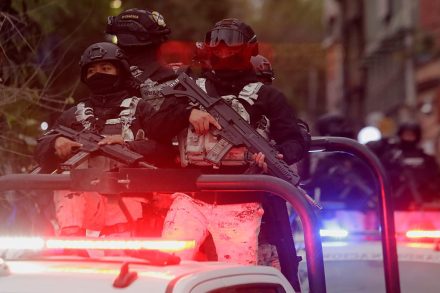
Mayhem has erupted across Mexico after security forces eliminated Nemesio Oseguera Cervantes, the drug lord widely known as El Mencho, in a gun battle in the town of Tapalpa. El Mencho was the head of one of Mexico's most violent and sadistic organizations, the Jalisco New Generation Cartel (CJNG). Henchmen forced passengers out of their cars before setting the vehicles alight, leaving them as burning roadblocks Their reaction was about as solemn and dignified as you’d expect. Henchmen forced passengers out of their cars before setting the vehicles alight, leaving them as burning roadblocks. Scorched sedans and toasted trucks lined the highway to the World Cup stadium in Guadalajara, Mexico’s second-largest city that is set to host the tournament this summer.

El Munch

My brush with El Mencho’s sadistic men

In the early hours of Sunday, Mexico’s security forces carried out a daring military operation that ended with the death of El Mencho – the sadistic leader of Cártel de Jalisco Nueva Generación (CJNG). Even as the Mexican government hailed the success of the operation, the country erupted into violence. Armed groups loyal to CJNG blocked highways with burning vehicles, attacked an airport, fought gun battles against security forces and turned villages into ghost towns. Proof that while El Mencho may be dead, the cartel he built into the most ferocious and feared crime organization in North America will not die with him I lived in Puerto Vallarta to report on CJNG recruitment and what I discovered was a narcoterrorist system that will far outlast El Mencho.

Cartel drones vs Texas lasers

Yesterday, El Paso, Texas, was placed under severe restrictions from the Federal Aviation Administration. For unspecified reasons of national security, no aircraft would be allowed in or out for ten days. Washington sources soon confirmed what many suspected: the cause was hostile drone activity from Mexico. Then there was an about turn. Within a few hours, the flight ban was lifted. What actually happened? We know that the Department of War has been working on an anti-drone system for some time, using lasers to shoot down craft. One of these laser systems was actually deployed near El Paso and officials claim a drone was indeed shot down. The FAA, concerned with possible threats to civil aviation, then imposed the ten-day flight ban.

America’s new war on drugs will be tough to win

On New Year’s Eve a few years ago, I was in Medellín, Colombia, the city that gave its name to one of the world’s most notorious drugs cartels. Our taxi driver offered us some cocaine to fuel the party we were heading to: $10 for a gram; $15 for the “luxury” product. Our group decided to splash out and get a gram of the really good stuff. I’d tried coke a couple of times in London. It was like snorting drain cleaner. Whoosh… I found that half a line of Medellín’s best was enough to keep you going until sunrise. But the next day it was difficult to be within six feet of another human being, the coke having burned up all the dopamine in my brain. Coke is evil. I imagine a lot of other people were feeling the same in Medellín that New Year.

The long history of kidnapping Latin American chieftains

One of the few benefits of being an anthropologist is the uncanny exhilaration one feels watching novel current events as re-runs from previous episodes in the history of mankind. Donald Trump’s capture of Nicolás Maduro, President of Venezuela, is no exception. Kidnapping Latin American emperors is a continental tradition. It’s simply the most practical method for breaking the chain of command in the region. It triggers succession chaos, enables the extraction of resources and keeps the rest of the hierarchy more or less intact. In earlier centuries, it was Spain and Portugal. Today, it’s the United States. In the colonial era, the objective was to secure enough gold to beat European rivals.

latin american

Jasmine Thee Senate Candidate

Congresswoman Jasmine Crockett of Texas announced her bid for the US Senate yesterday with a video in which she listens implacably while President Trump insults her. The President sarcastically brands Crockett the “new star of the Democratic party.” “Wait until she gives it back,” tweeted Representative Eric Swalwell (D-Moron). “Turning Texas blue is what I want to talk to y’all today. There are people who say ain’t no way. We tried it 50 kinds of ways,” Crockett said in yesterday’s campaign announcement speech. “Let me be clear: y’all never tried it the JC way... they have no idea what Crockett’s crew will do!” Later, on CNN, Crockett said that she doesn’t need to convert Trump’s supporters. “That’s not our goal,” she said.

The Last Westerner captures the American Southwest

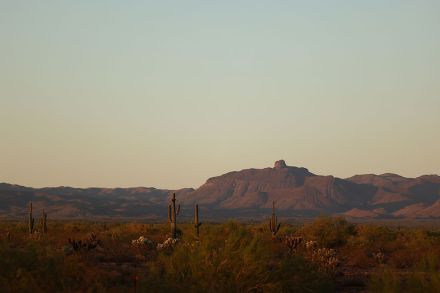
 The epigraph to this novel is from Chretien de Troyes’s Lancelot, one of the French author’s Arthurian romances. It is fitting because The Last Westerner is a medieval romance, as well as an epic set in the American Southwest in the closing years of the 20th century. The dedication is to the author’s wife and to the late Edward Abbey, a personal friend. It is equally fitting because The Last Westerner is a western novel in setting and theme and will bring to mind other western novels such as Abbey’s The Brave Cowboy (1956) and Cormac McCarthy’s All the Pretty Horses (1992). Abbey’s book is subtitled, An Old Tale in a New Time. That could be the subtitle for The Last Westerner too, and as for pretty horses, Chilton Williamson, Jr.’s novel is full of them.

horseback last westerner

The stubborn resilience of Mexico

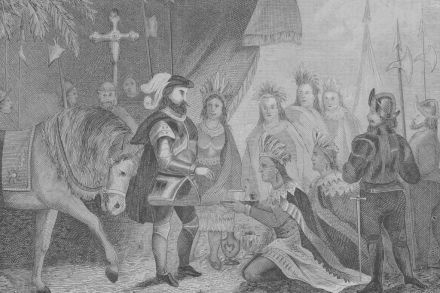
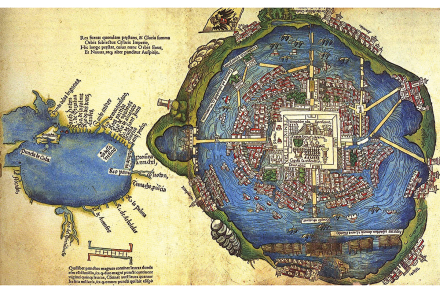
When they looked back, indigenous historians remembered how the fall of the Aztec empire to Hernán Cortés had been prefigured by terrifying omens and portents. The central valley had been plagued by comets, eclipses and supernatural storms. The previous emperor, Ahuitzótl, died after hitting his head on a lintel. A strange woman stalked the streets of Tenochtitlán, the capital, at night, crying “O my sons! We are about to perish.” But there were other signs that might have been heeded, too. The empire itself was only a few decades old when Cortés arrived in 1519. It was a patchwork of rebellious territories and city states, surrounded by yet more hostile peoples. Tenochtitlán fell after a three-month siege in 1521.

Mexico

Inside the gruesome world of the ‘human safari’

“People don’t actually do that, right?” my publisher asked nervously. “No one actually goes on a human safari, do they?” Eight years ago, I didn’t know for sure. There had certainly been rumors for years that wealthy foreigners were traveling to conflict zones to kill civilians at random. Gradually I had concluded that some people were indeed heading off to complete their bucket list of horrors. In my novel To The Lions, I placed the “human safari” in a fictional refugee camp in southern Libya. Concrete proof, however, was almost impossible to find. Several times during my years as an investigative journalist, I heard stories about nightmarish things going on in places where law and order had collapsed.

Is America at war?

President Trump’s undeclared war on Latin America’s drug smugglers escalated dramatically on Tuesday when US air strikes destroyed four more boats allegedly carrying narcotics – this time in the eastern Pacific Ocean 400 miles south of the Mexican coastal city of Acapulco.At least fourteen crew members died in the attacks, and one was rescued alive by the Mexican navy, bringing the total number killed by the US campaign in the last two months to 57.Mexico’s President Claudia Sheinbaum condemned the attacks as a violation of international law, and said Mexico’s ambassador in Washington would lodge a protest and demand an explanation from US officials.The latest strikes were personally authorized by Trump and announced by War Secretary Pete Hegseth.

Narco

How the drug cartels are ‘diversifying’ into baby-trafficking

Juárez, Mexico On the morning of September 2, in Juárez, Chihuahua, Mexican law enforcement raided a remote safehouse and uncovered one of the most grotesque cartel operations they had ever encountered. They found not just the usual drugs but rudimentary medical equipment and bloodstained tarps. The evidence confirmed what many investigators had suspected but couldn’t prove: that growing US demand has created a black market in human babies. Police arrested a brutal female gangster, Martha Alicia Mendez Aguilar, who was allegedly running an operation that procured these babies, luring in young mothers and performing illegal C-sections. On the streets they call her La Diabla: the She-Devil.

cartels

Inside Trump’s war on the cartels

To deal with big problems, the second presidency of Donald Trump adopts a three-step approach. First, the declaration of authority: in this case, the designation announced in February of multiple Mexican and South American cartels as international terror organizations, opening up new avenues for legal, intelligence and potential military responses. Next, eye-popping kinetic action: this came with SOUTHCOM’s deployment in August of eight warships to the Caribbean and Pacific Oceans, including three Aegis guided-missile destroyers parked off the coast of Venezuela along with a landing dock, amphibious assault ships and a fast-attack nuclear submarine.

cartels

WATCH: DHS tries to make ICE cool again

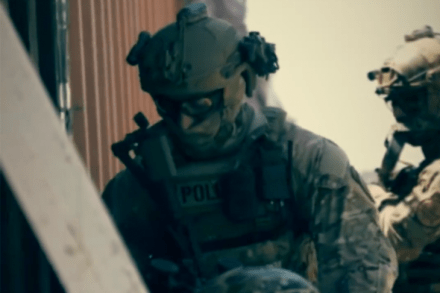
Cockburn and his colleagues are currently obsessed with the new ICE recruitment video that’s gone viral online. “Allow me to introduce myself, my name is HO HO H to the O V,” Jay-Z, who currently lives comfortably in a Tribeca penthouse with Beyonce, raps over grainy footage of camo-clad soldiers busting open shipping containers, riding rough in the backs of open trucks, and flying in helicopters. It all takes place in dark warehouses or under a dusty, cloudless skies, until the scene shifts to nighttime, and the soldiers raise their hands, getting ready to do violence while lit up in dystopian reds and blues. Denis Villeneuve, who made Sicario, couldn’t have directed it any better.  https://twitter.com/dhsgov/status/1954556388522291682?

ICE

DoGE should make ending the opioid crisis its legacy

As President Donald Trump trots the globe shopping for a new Air Force One and takes long-distance phone calls in a quest to end the “bloodbath” in Ukraine, a clear and present – and costly, in more ways than one – danger persists on his own country’s soil. A new, first-of-its-kind study from Avalere Health has found the annual average cost of each opioid use disorder (OUD) case in the US “is approximately $695,000 across all stakeholders analyzed.” Per the report’s executive summary:  The costs to the federal government, state/local government, private businesses, and society are driven by lost productivity for employers ($438 billion), employees ($248 billion), and households ($73 billion).

opioid

A mammoth 100 days of Trump’s America First foreign policy

One hundred days into the second Donald Trump presidency, his presence in the Oval Office represents the largest sea change in US foreign relations since the end of the Cold War.  Within the space of fewer than four months, Trump has forced Ukraine to deal with reality, by delivering hard truths about what ending the war will require. He has deployed J.D. Vance to shock the international system, with tough messages to our allies in Europe and Asia. Trump’s declaration of a litany of cartels as foreign terror organizations has kicked off a redirection of our relationship with Mexico, Panama and the Western hemisphere. His close relationship with Israel, a clear break with Joe Biden’s approach, has shifted expectations for the Middle East.

foreign

Donald Trump, Putin and the Concert of Arabia

For Donald Trump and Vladimir Putin, it’s a case of “Today Ukraine, tomorrow the world.” In their much-hyped phone call this week, the Russian leader didn’t seem to give much away: a step toward a sort-of ceasefire, a prisoner swap, and a few other odds and ends. But Putin knows that Trump wants much more than just an agreement on the Donbas. Settling the most significant conflict in Europe since World War Two is merely a prelude to a much bigger deal in the Holy Land — a truly historic arrangement that could fulfill Trump’s desire to be seen as a legendary peacemaker. That’s why Trump sent Steve Witkoff, his special envoy to the Middle East, to Moscow last week to pre-negotiate with Putin.

putin

Will better-than-expected inflation numbers calm the markets?

Has Donald Trump’s return to the White House triggered a second round of inflation? Not yet, according to the Bureau of Labor Statistics, which revealed this morning that the consumer price index rose to 2.8 percent in February — 0.1 percent less than markets had expected. The rise is being described as "stable," as annualized core inflation (which excludes more volatile prices like food and energy) rose to 3.1 percent — also a smaller rise than expected. While inflation on the year is ticking up slightly, it remains in the ballpark of what has been expected.

Trump on Mexican cartels: ‘You know what the only solution is’

Donald Trump’s second term has been revolutionary in many ways, particularly in his administration’s approach to foreign affairs. From the get-go, the nomination of Marco Rubio as his top diplomat and Chris Landau as Rubio’s deputy signaled a break from orthodoxy. In picking Rubio, previously the most vocal senator on hemispheric affairs, and Landau, Trump’s ambassador to Mexico in his first term, the message was clear: our neighborhood is a top priority.  In his first exclusive magazine interview of his second term, Trump met with The Spectator’s Ben Domenech in the Oval Office, where a large portion of the conversation delved into Latin-American affairs.