Mexico

Mexico has become a failed narco-state

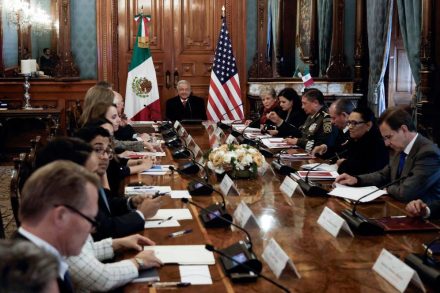
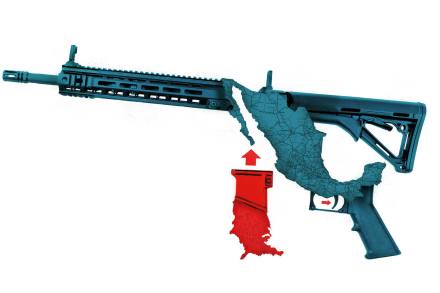
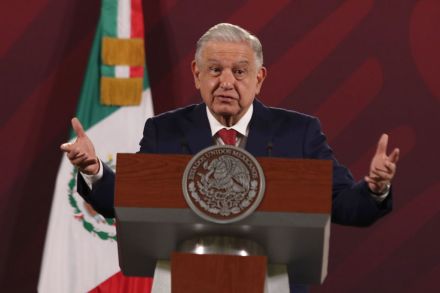
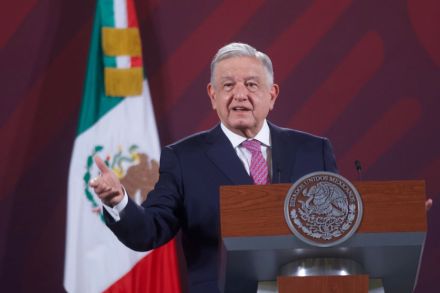
Over the past week, a security policy conversation that's been taking place behind the scenes has emerged into the open. It involves those engaged on issues related to Mexico, trafficking across the southern border, and the cartel-fueled and China-backed flow of deadly fentanyl into the United States. It's that the time has come to escalate where the Mexican government of President Andres Manuel Lopez Obrador (AMLO) will not, including through the use of military force.

Crossing the border for margaritas at La Roca

There are many different reasons to like a bar. Because it does the best cocktails. Because it is the cheapest around. Or the most expensive. Because it’s a great place to meet people for sex. Because all your mates go there. Because it is ubertrendy. The colorful, ornate, majolica-tiled, lushly colonnaded bar restaurant of La Roca, in Nogales, Mexico, isn’t really any of these things. And it certainly isn’t ultra-convenient: you must cross a border to get there from Nogales, Arizona. Why do this?

la roca

Anna Paulina Luna kneecaps the Washington Post

Anna Paulina Luna is a bad girl. Why else would the Washington Post be so eager to discipline her? Reporters Jacqueline Alemany and Alice Crites, truly a modern-day Woodward and Bernstein, appear convinced that the freshman congresswoman representing Florida’s 13th congressional district is a George Santos retread. The pair of bullies went rummaging through Luna’s panty drawer in search of skeletons. The result? A lengthy article intended to punish her — to which several corrections and clarifications have been added in the days since its publication.

state of the union anna paulina luna washington post

Three cheers for guacamole this Super Bowl Sunday

Everyone loves guacamole, even food puritans. It’s like ice cream or donuts ­— but healthy and good for you. (No need to ask about the fried tortilla chips or calories.) On Super Bowl Sunday, it is estimated that Americans will eat 120 million pounds of avocados, mostly in the form of guacamole. It’s the brownish-green fruit’s big day. Not by accident, Mexico’s avocado trade association runs elaborate ads each game. "The fruit that can change the world, alter history, and make everything better" is its 2023 Super Bowl offering promises. Avocados are a happening food item worldwide, and Mexico leads in sales. Valued at $3 billion last year, its avocado exports were greater than tequila or beer.

Biden must do more to disrupt the fentanyl supply

As 2022 comes to a close, the United States finds itself confronting myriad threats. But there is perhaps no more immediate threat to Americans’ safety and security than illicit drugs. The numbers are staggering. Illicit drugs have killed more than 1 million Americans since the turn of the century, with over 108,000 dying in last 12 months alone. One drug in particular, fentanyl, is now the leading cause of accidental death for adults between the ages of 18 and 45 — more than car accidents, violent crime, and suicide. And the flood of fentanyl into the US shows no signs of abating. In view of this rising ride, the Biden administration has embraced a range of new policies focused on harm reduction and treatment, two historically overlooked areas of American drug control efforts.

What would securing the border actually look like?

It's always easier to break something than to build it. Joe Biden broke the immigration control system that he'd inherited from Donald Trump and that had been built up over several administrations of both parties. Rebuilding it after Biden's vandalism will take time. Even if Republicans win the majority in both houses of Congress in November, it will take a change in administration before any real reconstruction can begin. With more than 2 million "encounters" with illegal border-crossers over the past year, more than any year in history, restoring order may seem like an insuperable task. But as we saw right after Trump's election and during the first months of his presidency, a simple expression of will can have a huge influence on prospective illegal aliens and their smugglers.

Why Republican governors sent those immigrant buses

Since President Joe Biden and Vice President Kamala Harris won’t come to the border, the border is coming to them. On Thursday, two buses of illegal immigrants unloaded in front of Harris’s vice presidential residence. Others have arrived in downtown New York, Chicago, and D.C., to the fury of local mayors and governors. A small planeload caused an uproar on Martha’s Vineyard when it landed on that self-proclaimed sanctuary island. More busloads are sure to come, probably in cities like Philadelphia, Boston, Minneapolis, and perhaps a beach community in Delaware. The immigrants are being transported from Republican-led border states to northern Democratic enclaves, which have long proclaimed themselves “sanctuaries” for the migrants they are now so appalled to find arriving.

America is forgetting how to make stuff

Articles about the future and “progress” have been popping up a lot lately, with conversations revolving around the inevitable advancements in technology and automation. Where we should head next is the collective theme. To the metaverse? To outer space itself? But instead of setting our sights on colonizing Mars or creating a perfect alternate reality, we should slow our roll, focus on the here and now and consider whether the frenzied “progress” we’re in such a rush to make has demonstrated any benefit to real-life people. Manufacturing is a good place to start. Let this startling reality sink in, reported in 2017 by the Organization for Economic Co-operation and Development: Between 2000 and 2010, US manufacturing experienced a nightmare.

My encounters with the Mayans

I met a traveler from an antique land...” Visiting the Mayan ruins in Yucatán, it’s hard not to think of Shelley’s immortal “Ozymandias.” Proud though it once was, little remains of that extraordinary civilization. I began my encounter with the Maya at Chichen Itza. Gazing up at the spectacular faceted pyramid which dominates the complex, I tried to imagine myself back a thousand years, negotiating the precipitous staircase that leads straight up the sheer face to the chamber at the top. I wondered at the ballpark, as big as a football field, and the domed observatory and labyrinthine temples and studied the intricate carvings which scrolled across walls and pillars and stelae.

mayan

Paradais City

The Chilean poet and novelist Roberto Bolaño passed away in 2003, but his specter still haunts the literary world. Bolaño, a singular Latin American genius beloved by the literati, left a massive vacuum after his untimely death, and publishers have been trying to fill it ever since. This has been a great boon to Spanish-language authors whose work was plucked from the provincial world of Latin American letters and now reaches a wide readership in translation. The search for Bolaño’s literary heir has also been a blessing for American readers, as brilliant contenders such as Valeria Luiselli and César Aira are now published by major American presses, adding some much-needed spice to year-end reading lists.

paradais

What’s behind the push for abortion in Latin America?

As the pro-life movement in the United States looks with optimism to the very possible overturning of Roe v. Wade by the US Supreme Court later this year, the tide seems to be flowing in a different direction down south. First came Argentina, where the Senate passed a highly contested bill in early 2021 legalizing abortion in the first fourteen weeks of pregnancy. The vote was preceded by months of protests, debate, and even a series of personal pleas from the world’s most famous Argentinean, Pope Francis. In September, Mexico’s Supreme Court struck down abortion bans in two states, effectively paving the way for decriminalization nationwide. Most recently, Colombia effectively legalized abortion in the first twenty-four weeks of pregnancy.

abortion

Political asylum? There’s an app for that

Apps are the 21st century’s answer to everything, it seems to Cockburn. Faced with a problem, sooner or later some wiseacre will show up with one that will not only provide a solution but also vastly improve the lives of all that use it. The miracles of smartphone tech are now being used to deal with the poor, huddled masses who have fetched up in one of the many refugee areas along the US-Mexico border. With tens of thousands of asylum seekers caught up in a vast tangle of bureaucratic delays and no short-term fix in sight, everyone is getting understandably vexed. Enter technology.

asylum app

How the border crisis could define Biden’s presidency

Joe Biden has spent his first couple of months in office enjoying what his predecessor never had: a presidential honeymoon. Americans have rewarded Biden with early approval ratings of 60 percent or higher. He may be benefiting from the inevitable diminishing of the coronavirus as cases decline and more states reopen. Or the public may simply be relieved to have a president who isn’t perpetually in the spotlight, even if he doesn’t always seem aware of the fact he is president. But no honeymoon can last too long, and Biden’s is coming to an end at America’s southern border, where a crisis is escalating. Eighty thousand people tried illegally to cross the border in January, double the figure of a year ago. In February, nearly 100,000 did the same.

border crisis

It’s not ‘Neanderthal’ to want to stop Democrats dissolving the border

Whew! If not now, when? As Ronald Reagan asked in another context. Maybe — as those of us closer to the situation; e.g., Texans, view it — not for a period stretching to the crack of doom. Democratic whips tell leaders of their party’s would-be juggernaut, ready to ride those vicious Republicans into the moist soil of Washington DC, that the votes just plain aren’t there. New strategies may be pursued — for instance, passing the plan in chunks, instead of as a single, sizzling dish. The trouble is that the Biden plan, whose aim is to sweep illegal immigrants and asylum into the American system with scarce thought for potential consequences, is seen as enjoying stunted appeal. Why would that be?  One obvious answer is that — like the $1.

neanderthal

When Mexico enforces its own laws, immigration drops

‘We’re holding a gun to our own heads,’ said Sen. John Cornyn in June. He was talking about President Trump’s threat to impose tariffs in order to force Mexico to crack down on illegal immigration into the Unites States. Many congressmen agreed, fearing, as establishment figures are prone to do, that Trump was risking the whole economy for some nebulous border demand. A month later, it seems Trump’s tariff gambit has worked. After Mexican officials agreed to crack down on illegal immigration to avoid US-imposed tariffs, the Department of Homeland Security reports that border apprehensions dropped from 144,278 in May to 104,344 in June — a 28 percent decrease.

mexico

Trump was right to threaten Mexico with tariffs

Let's not mince words. President Trump and his loyalists were dead right. His threat of tariffs pushed Mexico to work harder to stop the Central American caravans, and the migrants who hope to exploit immigration law loopholes in order to receive asylum in the United States. And the bipartisan, Trump-loathing political, business and media establishments were all dead wrong. They warned that his strong-arming would ignite a trade war, disrupt the thick web of supply chains linking the American and Mexican economies, and risk a recession. Equally off-base was the establishmentarians' angst that Trump's gambit would endanger the revamp of the North American Free Trade Agreement (Nafta) that he has sought and which Mexico and Canada recently signed.

donald trump mexico trade deal

Donald Trump’s one-front trade war

At 12:01 a.m. on Monday, President Donald Trump went a long way toward defusing a potential war – not with Iran, but Canada and Mexico, where Trump revoked tariffs he had imposed in the name of national security. Why the sudden bout of tariff reduction? The president is focusing on a one-front trade war with China. The restrictions began as two fronts of the same war. Trump imposed 25 percent tariffs on steel and 10 percent tariffs on aluminum imported from China last March. Then he extended those tariffs to the EU, Canada, and Mexico on June 1. But the president seems to have concluded that the US can no more fight a two-front war in trade than on the battlefield.

Donald Trump one-front trade war

If you don’t believe in borders, should you be deciding US immigration policy?

As the teeming mass of mostly male, partly criminal, humanity stews about on Mexican side of our Southern border, entertaining itself by throwing rocks at US border officials, emoting for CNN cameras, and periodically rushing the fence in an effort to break through to America, it is worth stepping back to ask a few large questions. But first, let’s step out of the rancid pool of sentimentality with which the media, in its anti-Trump frenzy, has surrounded this episode.

immigration border

The caravan of the saints

You can feel the excitement in Fox News’s reports that a DHS spokesman, backing the claims that Trump has now walked back, has confirmed that the migrant caravan that has just entered Mexico includes ‘gang members’ and people with ‘significant criminal histories’, as well as people from the Middle East. How hot and uncomfortable they must be, walking all that way in an explosive vest. You can feel the disappointment in CNN’s report that by November 6, the migrant caravan ‘could still be somewhere in the middle of Mexico’, and well short of what CNN recommends as the ‘safest route’, to San Diego via Tijuana.

migrant caravan honduras food

Donald Trump’s US-Canada-Mexico trade deal is YUGE

As Kamala Harris presents evidence that Brett Kavanaugh habitually exposed himself to several nurses upon being born and then to other females for months, nay, years afterwards, Donald Trump just secured a new trilateral trade deal between the United States, Canada, and Mexico. This, friends, is yuge, yuge! The deal replaces, or amends, the 24-year-old North American Free Trade Agreement between the three countries. From the moment he announced his candidacy, way back in 2015, until the day before yesterday, President Trump has assailed the original Nafta as ‘the worst deal ever.’ The fact that US trade with Mexico has gone from a modest surplus in the early years of Nafta to a $68 billion deficit now highlights his concern.

donald trump trade