Metropolitan Museum of Art

The contingent talent of Emily Sargent

When your brother is one of the most successful artists of his time, you might feel reluctant to pick up a paintbrush. Yet, the works of Emily Sargent, in the Metropolitan Museum of Art’s Portrait of a Family, prove that she was an artist in her own right. Sargent (1857-1936) was not in her brother’s shadow, although she was undoubtedly in his debt. John, Emily and their sister Violet were the children of FitzWilliam Sargent, a successful Philadelphia physician, and the artist Mary Newbold Sargent. By the 1850s, the Sargent family were living a nomadic existence in Europe – John and Emily were both born in Florence. Encouraged by their spirited mother, the Sargent children were instructed that no matter how many sketches were begun in a day, at least one must be finished.

The Rockefeller Wing reopens

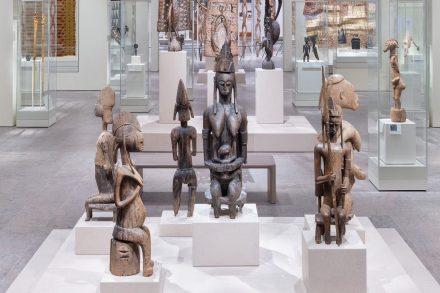
Of the 1,800 objects on display at the newly reopened Michael C. Rockefeller Wing at The Metropolitan Museum of Art, the funerary poles of the Asmat people stick out.  At 15 feet tall, they tower above the swarm of visitors and nearly touch the newly rendered, gorgeously curved ceilings. The poles, decorated with carvings of haunted-looking faces and bodies, were traditionally made to mark a violent death. Once that death was avenged, the poles were removed to the woods, where they were left to decay.  These particular poles have further meaning, though, beyond their eerie beauty and the symbolism they confer of the cycle of life. They were collected by Nelson Rockefeller’s son, Michael, on a trip to spend time with the Asmat in New Guinea in 1961.

chroma

Chroma chameleon

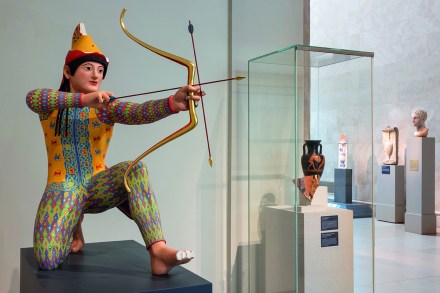
"Who knew the Greeks had such bad taste?” This comment was overheard at the preview for Chroma: Ancient Sculpture in Color, a head-turning exhibition at the Metropolitan Museum of Art. This slight wasn’t targeted at the current denizens of Greece, but, rather, their ancestors of yore. You remember the type: chiton-clad Athenians — let’s not forget the ladies in their peploi! — sauntering through the agora, pondering the nature of reality or, perhaps, the role of hoi polloi within a democratic society. They’re the folks whose aesthetic sensibilities were found wanting, at least to one denizen of twenty-first-century museum culture. What most of us know about life in antiquity is, I dare say, as broadly conceived as the above description.

Return to Comic Con

A year ago I wrote about the experience of attending New York Comic Con for the first time. This type of entertainment convention, which has its equivalents in cities all over the world, brings together fans of superheroes, science fiction, fantasy and beyond. Along with the elaborate cosplay beloved of attendees, Comic Cons also feature a great variety of visual artists. This year, it happened that the Con fell in the same week the Metropolitan Museum of Art opened its first-ever exhibition of Quattrocento Sienese painting, placing a particular emphasis on storytelling. What if there were a connection between the highbrow exhibition uptown and the popular convention downtown?

The legacy of Karl Lagerfeld at Chanel

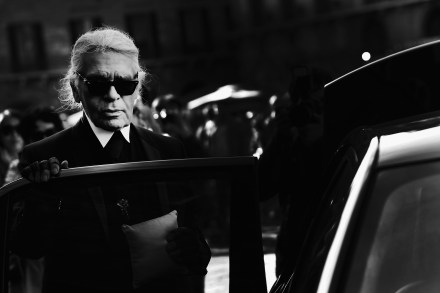
Monday night marks the fashion calendar’s most overrated, overcovered event: the Met Gala. Each year it’s the same. The outfits are underwhelming (unless they’re worn Rihanna). The publicity stunts are boring. Its political outbursts are predictable and hypocritical. Most disappointing, the theme of this ultimate costume party is either uninteresting, completely ignored or both. But Monday promises something different, or at least above average. Its theme is “Karl Lagerfeld: A Line of Beauty,” in tribute to the late fashion design icon, who revived Chanel and made it one of the greatest houses, and businesses, in Paris. An exhibition examining the work of Lagerfeld will run at the Met from May 5 to June 16.

Karl Lagerfeld chanel

Kimono Style is more than just East-meets-West fashion

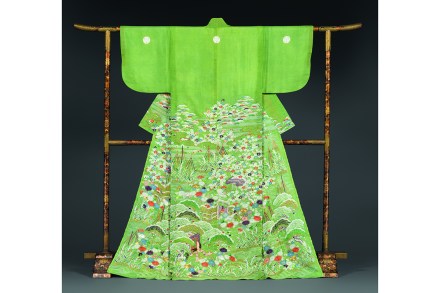
It is not easy to achieve serenity in Manhattan, but after living in a hectic part of Midtown, I have managed to find a few peaceful places dotted around the island. Central Park’s well-groomed Conservatory Garden makes the cut, as does Gramercy Park (if you can find a key), but perhaps the most tranquil destination of all is the Asian Wing at the otherwise bustling Metropolitan Museum.

kimono

Deep water Winslow

The advance buzz on Winslow Homer: Crosscurrents wasn’t good. “Woke Winslow” — that’s how observers, online and through the grapevine, pegged the Metropolitan Museum of Art’s new exhibition of paintings and watercolors by Winslow Homer (1836-1910). The stalwart purveyor of maritime adventure and manly pursuits, woke? One glance at the enlarged black-and-white photo displayed at the front end of Crosscurrents — a blurred portrait of Homer in his Maine studio — makes clear that the fusty man with the impatient glare is no one’s idea of a social-justice warrior. Looks aren’t everything, of course. Truth to tell, Homer’s art does touch upon important aspects of American history.

winslow homer

How did Walt Disney learn from Ancien Régime decoration?

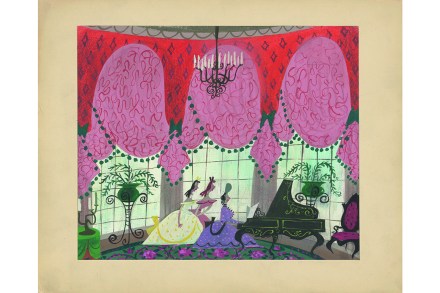
"Make it pink! Make it pink!” says the chubby fairy Flora, aiming her wand at Princess Aurora’s new ball gown in Walt Disney’s Sleeping Beauty (1959). A few magic sparks must have fallen on the walls of Disneyland’s Sleeping Beauty Castle in Anaheim, California, which have been painted (and repainted) in several shades of cotton-candy pink since the faux fortress opened in the summer of 1955, well before the film itself was completed. Two centuries earlier, in 1757, Jean Hellot, the general inspector of the porcelain factory at Sèvres, invented the slightly deeper “rose Pompadour,” a ground color named in honor of Louis XV’s chief mistress and the factory’s most important patron. This pink appears on the scallop-patterned lids of two large Sèvres vases (c.

disney

Prints of Wales and elsewhere

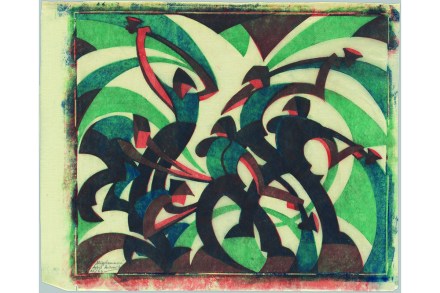
The print is a curious category in the world of art. Prints are not singular, of course — not typically at least. They are not ubiquitous, either — at least, again, not typically. They exist somewhere between art objects and art products. Printmakers often use the tools of sculpture to create works on paper. Three-dimensional carved objects become two-dimensional printed products. Think about it and you realize prints are far more curious than they let on. While art history typically does not know what to do with its curiosities, artists can sometimes make much out of the opportunities of hybrid creation.

prints
dress

A dream of a dress

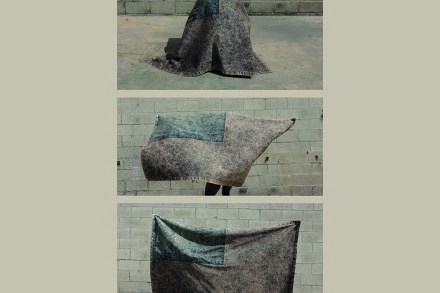
In America: A Lexicon of Fashion, now at the Metropolitan Museum’s Costume Institute, leads with a quote from Jesse Jackson: “America is... like a quilt — many patches, many pieces, many colors, many sizes, all woven and held together by a common thread.” Odd, then, that framed above the first wall panel is a drab, blank-faced suggestion of an American flag constructed from just two rectangular pieces of faded denim. Created by Sterling Ruby as a mourning garment — a model huddles under a wearable version in the exhibition poster — “Veil Flag” (2020) sits awkwardly next to the bright patchwork skirts, dresses, trousers and jackets also on display in the first room. Yet it’s the right way to open a fashion exhibition that makes you think, not swoon.

Pictures at an exhibition

Deeply learned and with a style all his own, Marco Grassi is as at home with Duccio as with Norton Simon; Bronzino as with Bernard Berenson; a painting on his desk as with a ‘Last Supper’ in Florence’s Basilica of Santa Croce. In the Kitchen of Art presents Grassi’s most memorable essays over a span of nearly 20 years. Beginning with a previously unpublished memoir of his Florentine upbringing, and continuing with in-depth critical discussions of the greats of Italian art along with recollections of the grandest collectors of the 20th century, this book shows the art world in the round.

grassi