#metoo

How I miss Auberon Waugh

From our UK edition

Every now and then one suddenly misses somebody. I miss Bron, who died 17 years ago last month. There’s an Auberon Waugh-sized hole in British satirical journalism. Listening to the radio last week — it was all about famous women, women in history, women’s suffrage, sexual harassment of women, equal pay for women at the BBC, women this and women that — I felt vaguely irritable. Not that I seriously disagreed with anything being said, or wished to rain on any suffragist’s parade, or have ever been remotely sympathetic to inappropriate male behaviour towards women … no, I’d place myself on the ‘politically correct’ side of the argument on every one of these issues. So why the urge to switch off the Today programme? How can I put this?

The Oxfam scandal is the start of the charities’ MeToo moment

From our UK edition

It would be interesting, wouldn’t it, to sit in on the meeting today between Oxfam executives and Penny Mordaunt, International Development Secretary, who has got off to a cracking start in her job by giving short shrift to the weaselly equivocations by Oxfam after the sex scandals involving its country director and other staff in Haiti and now Chad. But the intelligent money must be on a MeToo rush of individuals recalling what they’ve seen in other charities, in other countries, on exactly the same lines. My husband worked for a British charity in receipt of lots of US government money during and after the conflict in Kosovo.

Expressing an opinion about #MeToo is fraught with danger

From our UK edition

Hollywood is in an uproar. Some actresses have discovered that some actors and producers are nasty sexual predators. Oh really? Expressing an opinion about this is fraught with danger, so I shall refrain before it’s ‘off with her head’ to me. Nevertheless, if these accusations towards men continue much longer, I fear a major decline in population growth in the near future. An agent I know, who was negotiating a deal for a client, was accused by a female producer of being ‘a bully’ and warned that she was going to expose him because ‘Hollywood doesn’t like bullies’. If she really wanted to know what a bully was like, she should have dealt with super-agent Sue Mengers. A play about her was aptly named I’ll Eat You Last.

Oxfam isn’t alone: UN peacekeepers also exploit women in their care

From our UK edition

A Times investigation has uncovered the terrible fact that women and possibly young girls in Haiti have been exploited by the very people paid to keep them safe: the staff of Oxfam, which sucks up £300 million a year from us in public and private money.  It’s a shock — and it’s not. Under the cover of moral superiority, out of sight and out of the media, all manner of NGOs, charities, and the saintly UN have committed some of the most disgusting crimes against the world’s most vulnerable women and children, and got away scot free. Not even the hyper-sensitive  #MeToo movement seems to give the shadow of a damn.

High life | 8 February 2018

Gstaad For some strange reason there have been no #MeToo complaints around these parts. Some locals have grumbled about yours truly, and an interview I gave about this village to a Swiss daily, but although Harvey used to hang out here during Christmases past, no one’s come forward to claim rape. Is there something wrong with our womenfolk? No, most of them are semi-ladies who have made it big and landed some pretty big fish, so no use of crying wolf, sorry, rape. Even the mother of my children has expressed surprise. ‘I was pretty once, and men liked me, yet no one has ever jumped on me, except some silly Englishman with terrible breath who tried to kiss me while you were out on the dance floor.’ Well, all I can say is when in trouble, look for the money.

The Westminster harassment report could stop a repeat of the ugly side of #MeToo

From our UK edition

There is clearly a will in Westminster to change the culture of sexual harassment that was so horribly exposed in the autumn. Previously, there was little will and no clear way for victims to get help, despite widespread anecdotal evidence that there were quite a lot of victims out there. Today a cross-party working group of MPs, peers, staff, and trade unions published their report on how to ensure that victims don't feel ignored any more, and that there is a proper, independent process for dealing with complaints. But will the report really be a success? And how will we really know what a success looks like, when sexual harassment is, in reality, often much more complex than it first seems? One aspect of this complexity is that social mores are changing.

Sometimes men deserve to be paid more

From our UK edition

It is 100 years since women got the vote and I have been joining in the celebrations, on public transport — lightly tapping attractive women on the knee or gently massaging their lovely shoulders and saying, cheerfully, ‘Well done, babes!’ Some react with anger and irritation to my heartfelt congratulations, especially when I ask for their phone numbers so that we might discuss suffrage further — which is, I suppose, an indication they did not really want the vote in the first place. Certainly it imposes a terrible pressure upon them — they are forced, every five years, to make a clear decision.

The Spectator Podcast: Lead or go

From our UK edition

On this week’s episode we're wondering whether Theresa May can weather this latest storm, speaking to a robot expert (and a literal robot), and getting the inside story of male allyship workshops. The Prime Minister’s fortunes have ebbed and flowed since her disastrous election, but a yuletide season of relative calm has been replaced by her greatest challenge yet. 'Lead or go': that’s what James Forsyth says in this week’s cover piece, as pressure mounts on Theresa May to cobble together something resembling an agenda. He joins the podcast along with Giles Kenningham who worked at No.10 under David Cameron.

The Presidents Club was on to something

From our UK edition

There exist in the annals of salesmanship certain ideas that are both highly immoral and wickedly clever. Before P. T. Barnum attached his name to circuses, he ran Barnum’s American Museum in Manhattan. From 1841 until its destruction by fire in 1865, this received more than 38 million visitors, each paying 25c. The entry fee entitled visitors to stay all day; congestion often prevented new paying visitors from being admitted, so to hasten traffic to the exits, Barnum placed signs throughout reading ‘To The Egress’ or, according to some reports, ‘The Great Egress’. Enticed by the prospect of seeing what they imagined was some exotic bird, less literate guests followed these signs through a door and promptly found themselves locked out on the street.

MenToo

From our UK edition

These are tough times for what I call the #MeToo Men — those white, liberal, high-minded men who pride themselves on being good feminists. Disgusted with Trump and horrified by Harvey, they want to show solidarity and be good allies to the women of the #MeToo and Time’s Up movements. So they wear their feminist hearts on their sleeves and their Time’s Up pins in their lapels — and they wear them with pride. But pride comes before the fall, especially if you try to parade your feminist credentials in public. Just ask actor James Franco and comedian Aziz Ansari. After appearing at the recent Golden Globe awards, both of these #MeToo Men were spotted sporting Time’s Up pins and ended up being denounced for sexual misconduct. Poor Franco.

The new feminist war: young women vs old women

From our UK edition

The #MeToo movement began, I thought, primarily to allow women to speak out about harassment from men, which they had previously found too intimidating to declare openly. What is striking is how quickly it has turned into a row between women. Social media is crackling with barely concealed inter-generational rage between feminists of different vintages. Younger feminists are very keen on ‘calling out’ slut-shaming, victim-shaming and fat-shaming. They’re less vocal about age-shaming, though, because they’re quite often doing it themselves. The combative 78-year-old Germaine Greer, for example, has long been deemed philosophically flawed by younger feminists because of her view that trans women are not ‘real’ women.

Robert Burns’ #MeToo moment

From our UK edition

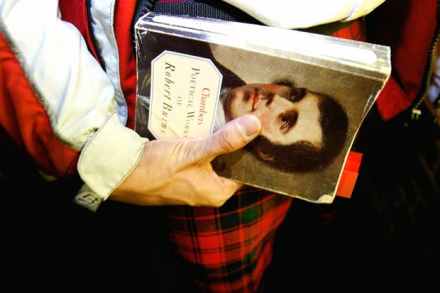
A year ago, I sang ‘Ye Banks and Braes’ by Robert Burns at the annual Scottish banquet at Manhattan’s University Club. Afterwards, my dinner partner, an American chap, asked me what it was about. Regret, I said. Just look at the last line. But my false lover stole my rose [virginity]. And ah! He left the thorn [unwanted pregnancy] with me.  The American is a feminist metropolitan, and so responded with due sensitivity. ‘Burns must have really understood women,' he said. I agreed. From Burns’ love letters, it is evident that he used his way with words to climb inside their heads and, from there, into their beds. Burns fathered a number of illegitimate children. In 18th-century Scotland, a relationship with him could be truly ruinous.

The #MeToo movement’s feminist dystopia

From our UK edition

It’s here, at last: the backlash against #MeToo. Finally people are sticking their heads above the parapet and asking if perhaps #MeToo has gone too far. They’re braving the inevitable fusillade of shaming tweets and accusations of ‘rape apologism’ to raise awkward questions about this hashtag movement. They’re wondering out loud if this movement that started life with the noble goal of exposing male abuse of women has now become too trigger-happy, too keen to demolish men on the basis of accusation alone, and too happy to go along with a view of women as fragile creatures in need of chaperoning. #MeToo’s dissenters have arrived, and about time too.

The French women who stood up to the #MeToo movement

From our UK edition

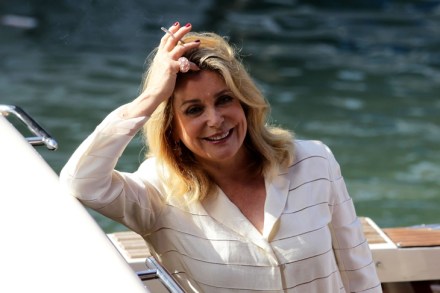
Why the big fuss about the 100 eminent Frenchwomen, including Catherine Deneuve, who have criticised the #Metoo movement as a puritan backlash? Their viewpoint, expressed in a letter to Le Monde, is little different to the one expressed by their president in November, when Emmanuel Macron spoke out against sexual violence and harassment but warned against a culture of 'denunciation' where 'each relationship between men and women is suspicious.' In reminding France that they are 'not a puritan society,' Mr. Macron was tacitly drawing comparisons with the Anglo-Saxon world, long seen by the French (and other Latin countries) as prudish in sexual relations.

In defence of Matt Damon

From our UK edition

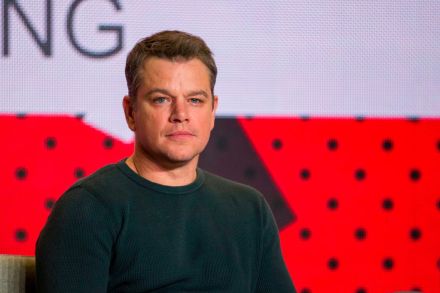
Movie star Matt Damon has tentatively, politely suggested that the #MeToo cleansing of Hollywood, this chasing of suspected perverts out of the film world, has hints of a 'culture of outrage' to it, and guess what has happened to him? Yep, he’s been consumed by the culture of outrage. He's been insulted, demonised, Twitter-raged against. 'Is Matt Damon OK?', asked one newspaper headline, because if you express an outre opinion these days, people will worry that you're ill. It feels like a grimly fitting end to 2017: someone raises concerns about outrage, and before he’s even finished explaining himself he's shut down by outrage. I've read Damon's comments, which he made in a couple of interviews, five times now, and I cannot see a single controversial thing in them.

The #MeToo movement reveals feminism’s obsession with victimhood

From our UK edition

Following a weekend crammed with ever more salacious revelations about Harvey Weinstein, hundreds of thousands of women have now taken to social media to share their own experiences of sexual harassment. This is called the ‘#MeToo’ movement, and it’s gone viral, in the way that these things do. According to Twitter, this reveals ‘the magnitude of sexual assault’. In reality, it does nothing of the sort. #MeToo tells us far more about the desire of some women to reach for victimhood status. The accusations against Weinstein include charges of rape; as such, they deserve to be taken seriously and tried in courts of law rather than by public opinion.