Mental health

The importance of the Natural Health Service

From our UK edition

Most people consider going for a walk or a run as a sort of optional leisure activity, something you get round to once you’ve been to the shops. But when the government announced its coronavirus restrictions, there it was in its own category of ‘essential activities’: daily exercise. Yes, there have been rows about whether sunbathing or sitting on a bench to eat a snack are acceptable, but by and large the message has been clear: we need to get outside to stay well. But it’s not just exercise that’s essential to our lives, it’s nature too. We have become used to thinking of nature as something we need to travel to see, a middle-class luxury along the lines of buying expensive cheese or owning a labradoodle: nice, but not the stuff of staying alive.

Time to scrap the Goldwater Rule

There are few ironclad rules in American politics. But here is one: if you are a Republican, no tactic is too disreputable to be deployed against you. I think for example, of the disgusting campaign waged to keep Judge Robert Bork from the Supreme Court in the 1980s. 'Lion of the Senate' Ted Kennedy led that charge ('in Robert Bork’s America...'), though he was aided by a young senator named Joe Biden. Journalists went through Bork’s trash and reviewed the movies he rented for incriminating evidence. Other campaigns of vilification against Republican Supreme Court nominees include the one conducted against Clarence Thomas and, most recently, the extraordinary full-court press against Brett Kavanaugh. But the calumny is directed not just against judicial nominees.

goldwater rule

I like Brassic but the reason it’s getting such glowing notices is depressing

From our UK edition

Brassic (Sky One) feels like the sort of TV comedy drama they last made about 15 years ago but would never get commissioned now, certainly not by the BBC. Almost all of the main characters — apart from love interest Michelle Keegan — are white, male and heterosexual. And it’s set in the kind of Lancashire market town surrounded by rolling sheep country where the opportunities for plausible diversity casting are really quite limited. So how come it has been getting such glowing notices from all the previewers and reviewers? You’ll be depressed when I tell you. Well, it has depressed me anyway. The main character Vinnie — played by Joe Gilgun — is bipolar.

What I’ve learned from five months sleeping on the streets

From our UK edition

Over the years, I have spent around five months sleeping rough on the streets of London, Birmingham and New York, making undercover TV programmes. Matthew, who works in my Westminster office, spent last summer involuntarily homeless after he was cheated by his business partner. I suspect we are the only people within the Palace of Westminster who have been through the unpleasant experience of sleeping rough, and we both have come to the same conclusion. Street homelessness (as opposed to the homelessness of temporary accommodation) is, for the most part, a symptom or consequence of a different problem: addiction to drink or drugs, or mental illness. If politicians want to deal with it, they must accept this. Homelessness is a popular subject in SW1.

Joe Biden isn’t ‘gaffe-prone’, he’s losing his mind

‘Gaffe?’ Who invented this nonsensical term? Its only common usage seems to be among political journalists and pundits, as a euphemistic cliché for politicians’ discrediting behavior. Do normal people, over the course of normal life, ever call it a 'gaffe' when somebody screws up? I’ve never heard a waiter accused of committing a gaffe for misstating a lunch special, or heard a corporate CEO who omits key earnings figures described as 'gaffe-prone'. The word is reserved only for faltering politicians, to place their verbal embarrassments in a special category. Pundits demonstrate their limited vocabulary and laziness when they characterize Joe Biden’s recent struggles in terms of 'gaffes.

joe biden losing mind gaffe

MAGA exposure therapy is real

Hold the MAGA hat. Feel its embroidery. Try it on. Now look at yourself in the mirror. Tell me your stress levels right now. A California mental health professional believes a presumed joke on the internet is quietly being taken very seriously by colleagues. ‘I’ve seen this a few times over the last couple years, and I finally put two and two together,’ the mental health worker told me. The source, who requested anonymity citing workplace bigotry, was scrolling through a private message board for professionals in the field and saw a therapist asking where to find ‘Trump paraphernalia to be used in sessions with patients.’ ‘I realized, oh wow, they’re doing exposure therapy to treat TDS!’ the source said.

maga exposure therapy

Hard lines

From our UK edition

As if in defiance of the BBC’s current obsession with programming designed to entice in that elusive young and modish audience, Radio 4 has set us an Easter challenge. Each afternoon over the weekend Jeremy Irons is reading a chunk from The Psalms for half an hour, without illustration (except a bit of music), explication or deviation. It’s a discomfiting listen, at times harsh, unrelenting. The supple but rigorous language of the King James Version of the Bible is both daunting and uplifting. ‘Keep me as the apple of the eye’ is one of my favourite images, and ‘hide me under the shadow of thy wings’ has helped me through many a long night.

Technology is damaging hands – not just heads

Silicon Valley parents are famously strict about their children’s screen time, even as they dish out their ‘crack cocaine’ technology to the rest of the world’s youth. Last week, however, Tucker Carlson upped the ante: he called on Congress to step and ban children from smartphones, as they do with alcohol. Researchers have demonstrated a link between hours spent in front of a screen and depression and anxiety levels in children. But screen usage damage isn’t just in our heads; increasingly, it’s also in our hands.  ‘Children are increasingly finding it hard to hold pens and pencils because of an excessive use of technology, senior pediatric doctors have warned,’ reports the Guardian.

smartphones technology

Literary therapy

From our UK edition

Is there anyone left who’d still be mortified to have it known that they’d purchased, or maybe even benefited from, a self-help book? In recent years, the genre’s gone mainstream: Jordan Peterson’s 12 Rules for Life bestrides the bestseller lists, alongside titles on the Danish, Finnish and Japanese secrets to health and happiness, and the life-changing magic of tidying up; Alain de Botton embraces the label, while most ‘big ideas’ books, from Malcolm Gladwell to Yuval Noah Harari, are at least partly self-help in disguise. This is all to the good: we shouldn’t mourn the era when the key signifier of a book’s merit was that it should be impossible to extract anything useful from it.

My drug trials

From our UK edition

Antidepressants saved my life, I am sure of that. But I am also certain they made my mental illness much worse too. It has taken just under two years from my first very dark thoughts to me feeling sane and — largely — back in control of my mind. That’s not merely because it takes time to heal, but because it took at least six months for the doctors to work out what pills to give me. My symptoms of anxiety and depression started in the spring of 2016, and the first few drugs I was prescribed didn’t work. In fact, they really did just make things worse. The GP listened to me describing my symptoms, and handed me a course of Citalopram, a very common antidepressant.

Mad about Claire Foy

From our UK edition

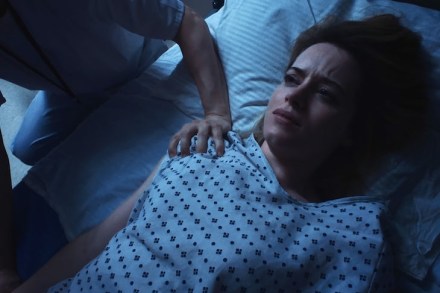
Steven Soderbergh’s latest film, Unsane, is a psychological thriller about a woman who is incarcerated in a psychiatric hospital even though she claims to be perfectly sane. But is she? It was filmed fast, on an iPhone 7, and some aspects are worryingly thoughtless — its treatment of mental-health patients, for example, is remarkably Unsensitive. And it does descend into a plainly ridiculous, sub-par farce. But it is also, in parts, deliciously schlocky and it stars the wonderful Claire Foy, whom one hopes was paid decently. So shocking that she earned less than Matt Smith for The Crown, but as a positive person who likes to look on the bright side might I suggest that we celebrate the fact men are still doing so well? And throw a party or something?

The wisdom of weirdos

From our UK edition

It was World Mental Health Day this week — and it drove me mad. I don’t have ‘mental illness’. I have bipolar disorder, and I feel as possessive about my diagnosis as Gollum did his precious ring. One term. One label. To lump the manifold terrors of the mind together under the monolithic ‘mental illness’ is an offence against the person. Failing to differentiate shifts the stigma like a bubble under a carpet. So I was horrified to discover, in my latest stint in a psychiatric hospital, that others experience exactly the same as me. Others use the same ‘maladapted coping mechanisms’. They are also their own worst critic; they replay their mistakes; they are wracked by ‘meta-worries’: being worried about being worried.

Don’t let these figures depress you, girls

From our UK edition

Are British teenagers suffering from an epidemic of mental illness? Yes, according to a ‘government-funded study’ which found that 24 per cent of 14-year-old girls are suffering from depression. This has been seized upon by critics of Conservative education policies; they see it as ‘proof’ that the increased focus on teaching children knowledge, as well as more frequent testing and the GCSE reforms, have literally driven children mad. ‘One in four girls is clinically depressed by the time they turn 14,’ reported the Guardian. I’m sceptical about this and I took a look at the research carried out by the Centre for Longitudinal Studies, which is based at UCL Institute for Education.

Seeing the light | 21 September 2017

From our UK edition

‘You can’t lie… on radio,’ says Liza Tarbuck. The Radio 2 DJ was being interviewed for the network’s birthday portrait, celebrating 50 years since it morphed from the Light Programme into its present status as the UK’s best-loved radio station — with almost 15 million listeners each week. ‘The intimacy of radio dictates you can’t lie because people can hear it.’ She’s absolutely right. As she went on to explain, when you’re driving and it’s just the radio and you, no distraction, ‘You can hear things in my voice that I don’t even know I’m giving away.

Diary – 16 March 2017

From our UK edition

In the NHS clinic where I work, adults who suspect they may have Asperger syndrome wait almost a year for a diagnosis. The clinic takes referrals from all over Cambridgeshire and Peterborough (a population of 860,000), but we have to see all of them in the hours of a single full-time doctor. And the clinic is not given funds to run a follow-up support service once someone has been diagnosed. These individuals struggle to socialise, are neurologically different, and are overlooked because their disability is invisible. Many have experienced bullying in childhood, underemployment in adulthood and exploitation because of their social naivety. Many are made to feel inferior despite their often considerable talents. No surprise that many develop depression.

Gaslighting the nation

From our UK edition

Arguably the cruellest thing you can do to human beings is to rob them of faith in their own sanity. People can endure physical torment, even torture, so long as their minds are clear. If they feel sane, they can still make sense of what is happening to them and work out how to survive. But if you undermine somebody’s mental stability, they soon unravel. In the words of John Milton’s Satan in Paradise Lost, ‘Which way I fly is hell; myself am hell;/And in the lowest deep a lower deep,/Still threatening to devour me, opens wide.’ Chipping away at a person’s mental health is known as ‘gaslighting’, after Gas Light, the Patrick Hamilton play that in 1944 became a classic Hollywood melodrama.

The Atomoxetine year

From our UK edition

Driving my son’s snake, Todd, a 3ft python wrapped in a pillowcase, to a Brighton vet in August was child’s play compared to the rest of what had gone on that summer. My son, who is 32 and has Asperger’s syndrome, had been served with an eviction notice from his rented flat, having been on what was effectively speed for the previous eight months. Since early July, when his three young carers resigned, he had been visited by the NHS mental health crisis team twice a day. This team, with great skill, calling on him in twos, had managed to get him off what — for him, and for anyone associated with him — had turned out to be a pernicious drug, Atomoxetine.

Death by television

From our UK edition

Forty years ago this month a film appeared, so prescient I wonder if its author, Paddy Chayefsky, saw the 2016 American presidential election campaign in a crystal ball. It was called Network and it foretold the rise of Donald Trump. The plot is King Lear appears on Newsnight: a newsman run mad. The protagonist is Howard Beale (Peter Finch), an anchorman at a failing network. The year is 1976, and America is embattled with inflation, depression and the end of the Vietnam war. It is not a time for American heroes, to paraphrase Chayefsky’s acolyte Aaron Sorkin writing in The West Wing. Beale’s ratings are low. He is fired. He announces that he will kill himself, live on air. ‘I just run out of bullshit,’ he says.

Words on the street

From our UK edition

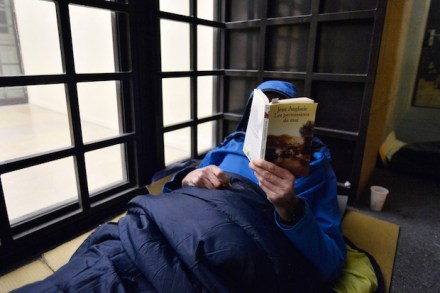
A white van pulls up outside St Giles in the Fields, an imposing 18th century church in central London, around the corner from Tottenham Court Road station, for a couple of hours every Saturday afternoon. St Giles is known as ‘The Poets’ Church’ because it has memorials to Andrew Marvell and George Chapman, but this humble van makes the nickname more fitting. It’s a library. To be homeless is to have no fixed address, which means you can’t borrow books from a public library — but it doesn’t mean you’ve no desire to read. Quaker Homeless Action set up this mobile library in 1999, making runs into London twice a week and lending books to more than a thousand homeless people a year.

My fascist moment on the ship of failures

From our UK edition

There are no roads from the Peruvian river port of Iquitos, but the rich take aeroplanes. Those who cannot pay to fly may pay the premium for the 40ft motorised express canoes that take only a day to roar to and from the upriver port of Yurimaguas with its bus station. But losers in the global race cannot afford speed. For them there are only the big, slow, hot, lumbering cargo boats: nearly four days’ journey from Iquitos to Yurimaguas. So the moment a passenger walks up the gangplank and strings their hammock between the iron rafters of the open--sided deck, we can guess he or she is not one of life’s winners. Anyone who was wouldn’t travel this way. No less than among the rich there is social stratification among the poor, and the river fast shakes people down.