Memoirs

What is going on with Amy Griffin?

Memoir, we are told, is the new growth genre within publishing. It used to be the preserve of the famous and successful, but now it has expanded to include anyone with a story to tell, whether heartwarming and inspirational or downbeat and miserable (but eventually inspirational). Many of these memoirs are New York Times bestsellers and can change the weather in the industry, helped by their prominence within such high-profile book clubs as Reese Witherspoon’s and Oprah’s. But what if the story in a memoir’s pages is exaggerated or simply fabricated?  Turning one’s life into invention may not be so much a lie as a gift for fiction, but when it comes to this area, it is deeply frowned upon from all sides.

Griffin

A walk through Geoff Dyer’s childhood

We all know we’re supposed to draw a line between the artist and the art. The veteran English essayist Geoff Dyer himself once had cause to remind me, mid-enthusiastic gabble, that his book on D.H. Lawrence was, in fact, “a conceit.” But as a reader often more interested in the lives of writers than their works, I must confess the idea of a full-blown memoir – finally! – from Dyer had me excited. I was not disappointed.

Dyer

Keith McNally’s memoir is strangely unappetizing

Harvey Weinstein has a memorable walk-on role in Keith McNally’s memoir I Regret Almost Everything. Taking a break from being New York’s most celebrated restaurateur, McNally wrote and directed a film called End of the Night that was screened at Cannes in 1990. Its auteur hoped that Weinstein, who distributed the previous year’s Palme D’Or-winning picture Sex, Lies, and Videotape, would warm to it. He was blunt: “I didn’t like your film and I’m not going to buy it.” As McNally swallows the shot, there’s a chaser. “But I’d still like to come to the after-party.” McNally admires Weinstein’s honesty, if little else. So I’m going to be straight, too. I didn’t enjoy I Regret Almost Everything. This is a shame, because the ingredients are promising.

McNally

Bill Gates’s memoir offers an oddly revealing look into the Microsoft founder’s psyche

In 2024, a Swiss company called FinalSpark claimed to have built the world’s first computer processor fired by human brain cells. To do this, the company evidently took small samples of living brain tissue, and — so the press release says — “connected them to specialized electrodes to perform computer processing and digital analog conversions to transform neural activity into digital information.” Frankenstein undertones aside, the whole FinalSpark initiative raises the issue of how far a computer can be humanized, made not only to respond with factual accuracy but with something approaching emotional intelligence.

Gates

Bill Clinton’s latest memoir sees him at his chirpiest — and most combative

In February 1974, the British prime minister Edward Heath, then facing one of his country’s cyclical economic crises, called a snap general election. The result was close; Heath’s Conservative Party won the popular vote but secured fewer parliamentary seats than the Labour opposition. After power-sharing discussions broke down, Heath resigned from office. A fifty-seven-year-old bachelor without a London home of his own, he lodged for the next several months at a small Westminster flat owned by his political secretary Timothy Kitson. The man who had served as his nation’s head of government for the previous four years was left with a typist, a single daytime detective and a part-time driver at his disposal.

Clinton
Cher

Cher should stick to what she knows best

The worst celebrity memoirists write first-person Wikipedia pages. Like Michelangelo carving a beautiful posterior out of Italian Carrara marble, the best celebrity memoirists edit their lives into tawdry yet moving epics. When they work, celebrity memoirs are the Warhols of American literature. When they fail, they’re the literary equivalent of a CVS receipt: boring and destined for the trash. Cher: The Memoir, Part One falls somewhere in between. It takes a miracle to reach Cher’s narrative peak. For more than a hundred pages, she details her childhood criss-crossing America as her mom marries and divorces man after man. I lost track of how many jerks Cher’s mother married, but according to Google, she married six different men (Cher’s heroin-addict biological father twice).

Is ‘True Gretch’ pure Michigan?

Gretchen Whitmer’s memoir, True Gretch, couldn’t have been released at a more suspect time. As the Michigan governor disavows calls for Joe Biden to step down as the Democratic nominee, the book and its subsequent national tour seem to indicate that a self-interested plot is in the works. And without any disastrous revelations about shooting her dog, it could very well work.  True Gretch hides Whitmer’s national ambitions behind the facade of a relatable working mom. The memoir is divided into self-help entitled chapters, like “Be a Happy Warrior” and “Seek to Understand,” with examples of Whitmer overflowing with the eponymous virtue in each. She's real Midwestern nice, for example, and once even sent a birthday cake to a state senator who called her “batshit crazy.

true gretch gretchen whitmer

Hillary Clinton offers unsolicited debate advice

It's that time of year again: Hillary Clinton has surfaced from her Chappaqua estate to weigh in on politics with vindictive fury. This time she’s billing herself as the expert for Thursday’s presidential debate in a New York Times op-ed. Since Clinton is the only person to have debated both candidates — Joe Biden during the 2008 Democratic primary and Donald Trump during the 2016 election — she reasons she has the unique credentials to analyze the match. Given that she failed to win both races, however, Cockburn thinks it’s a bit rich for Clinton to be offering advice. Ever the ruling class elite trying to seem relatable, Clinton began her op-ed recounting the “time of her life” she had at the Tony Awards last week.

hillary clinton

Blake Butler: ‘I don’t want this story to end as “Molly killed herself”’

A recent controversy rocked the literary world when coverage of author Blake Butler’s memoir, Molly, about his late wife, notable poet Molly Brodak, hit tabloids and spun for the worst. The coverage sparked debate over the ethics of writing about relationships, as online attackers made accusations that the widower weaponized Brodak’s private life and exploited her death for fame or revenge.   Claims gained ground that it was a “shameless cash grab,” “literary revenge porn,” or that it shouldn’t have been published due to privacy concerns, since the memoir reveals Butler’s discovery of his late wife’s affairs after her passing.

blake butler

Britney Spears’s much-anticipated memoir is a desperate cry for help

Biological differences exist between men and women. Hamas lacks a justifiable reason to kill Israelis. Joe Biden won the 2020 election fair and square. Vaccines work. These are truths which, depending on the political class you’re speaking to, you can no longer say in public. Reading Britney Spears’s memoir, The Woman in Me, I thought, “We should add ‘the Free Britney Movement was wrong’ to the unspeakable truths list.” Two years into her freedom, Spears should celebrate her memoir as her umpteenth comeback. She should be sitting down with Oprah, confessing what really led to her 2007 breakdown, and releasing a new album pegged to The Woman in Me.

britney spears

The company of hens could be the best cure for depression

From our UK edition

A friend of mine, an inspirational teacher, says that one of the best things parents can do is to allow children to believe that their dreams can come true. Arthur Parkinson met his first chicken as a toddler, growing up in a former mining town, and from that moment he longed for a brood of his own. So his father set to, building a handsome ark-shaped hen house, poring over Ad-Mag to find amusing poultry for sale, driving Arthur around country lanes at weekends in search of rare breeds.

The danger of making too many friends

From our UK edition

Elizabeth Day has found her niche as an astute, approachable social anthropologist, observing emotions and behaviour we are reluctant to discuss – such as failure – and draining them of their stigma. Her new book tackles the subject of friendship, which she points out has been far less analysed than romantic relationships. Her honesty and her ability to listen make her an endearing narrator and charming interviewer. She examines why friendship has always been so important to her. Admirers of her previous book, How to Fail, will recall that her childhood involved a stint at a Belfast boarding school where she was bullied, an experience she touches on again here.

The cut-throat business of the secondhand book trade

From our UK edition

For almost as long as there have been books, there have been books about books — writers just love to go meta. As well as all that midrash, those Biblical commentaries, the SparkNotes, the interpretations, retellings and the endless online fan fic, there are also of course plenty of guides, manuals and handbooks designed to instruct the gentleman or gentlewoman in the gentle arts of book buying, book collecting and other vaguely book-related activities. (Henry Petroski’s The Book on the Bookshelf — a book about bookshelves — being one of the all-time metabook greats.) I happen to have, by chance, a small library of books about books, including a collection of guides to book collecting.

Experiences of Eton — and the success it rewards

From our UK edition

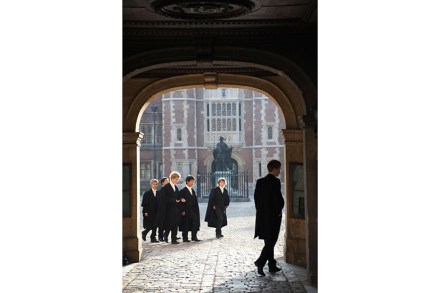
In the summer of 2019, the journalist Anita Sethi was on a train travelling across northern England when she was racially abused by another passenger. Besides using several words too offensive to quote, the man spat that Sethi should go back to where she came from. And so she did. Sethi comes from Manchester. Her first reaction to the experience was to speak out, to alert a member of staff and to ensure her abuser faced justice; her second was to start planning a trek across northern England, the landscape that was hers and where she belonged.

Russian memoirs are prone to a particular form of angst

From our UK edition

Perhaps the secret to understanding Russian history lies in its grammar: it lacks a pluperfect tense. In Latin, English and German the pluperfect describes actions completely completed at a definite point in the past... Early Russian had such a tense, but it was erased. This grammatical lack costs its speakers dear. Russian history never becomes history. Like a stubborn page in a new book, it refuses to turn over. Thus wrote the Soviet dissident and writer Igor Pomerantsev, my father, during his exile in London in the 1980s. When I returned to Russia in the 2000s I had the sense that beneath the Potemkin democratic veneer, Putin’s Russia was actually a case of history repeating, and retrod my parents’ route back to England.

James Kelman’s ‘Memoirs’ are a misnomer

From our UK edition

James Kelman doubtless remains best known for his 1994 Booker prize win for How Late It Was, How Late and the subsequent furore. The brouhaha looks painfully absurd 25 years later with the plaudits Kelman has received (when not being dismissed as akin to an ‘illiterate savage’) perhaps the greatest in post-war English literature. Here is a writer to stand alongside Zola, Beckett and Joyce.Yet since then it feels as though Kelman’s audience has grown more selective — a process perhaps aided by his move to the USA in 1998 to teach creative writing at the University of Texas at Austin. But with Kelman now in his 75th year, it’s long past time for the man himself to step forward. So we have What I Do (Memoirs), published by the small press thi wurd.

EXCLUSIVE: A sneak preview of Jim Acosta’s new book

Exclusive! * Exclusive! * Exclusive! An advance excerpt of the forthcoming tell-all memoir from the battle lines of America under siege by the world’s bravest investigative journalist, Jim Acosta. ‘Will the president tell the truth?’ I generally like to start with questions like that because, at a time when American is occupied by the spirit of Donald Trump, it always throws his spokesmen off base. It’s asking questions like that that made me Chief White House Correspondent for CNN. It’s a big job. But it’s the job I was born for. Some people have a sense of destiny. I guess I am one. I have always been known for my courageous truth-telling. It’s one reason my colleagues in the press corps idolize me.

jim acosta’s

Exclusive: the eagerly anticipated (or not) Trump-era memoirs of 2019

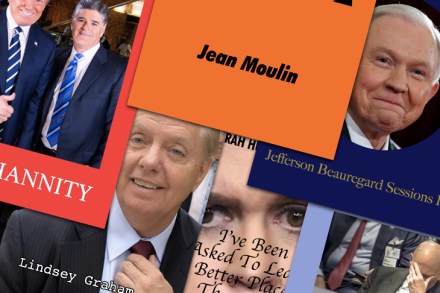
I’ve Served My Time in Hell By John F. Kelly This memoir by Trump’s resigned White House chief of staff takes its title from the Vietnam-era GI mantra: ‘When I die, I’m going straight to heaven because I’ve served my time in hell.’ The former Marine Corps general likens his tenure at the White House to ‘simultaneous waterboarding and colonoscopy.’ At one point he was so depressed that he tried to hang himself from a chandelier in the East Room, but was interrupted by a tour group. He chafes at criticism that he failed to moderate Trump’s wilder impulses.

2019 memoirs

Anthony Powell gets the superb new biography he deserves

Great novelists come in all shapes and sizes, but one thing they all share is a status of half-belonging. If they had no foot in the world at all, they could hardly understand it; if they completely belonged, they could hardly understand what was distinctive. One of the pleasures of this excellent biography is fully appreciating the peculiar, liminal, not-quite-successful position Powell wrote from, and described with great exactness. In half a dozen social and professional milieux, he was a tolerated, perhaps useful minor presence, like a spare man at dinner. From the standpoint of a rather failed editor, screenwriter, soldier, socialite, he stood by and watched the world. In each case, one suspects, the subjects hardly realized they were being observed.

anthony powell