Memoir

Alexandra Shulman’s unlikely career in fashion journalism should have made a Hollywood movie

From our UK edition

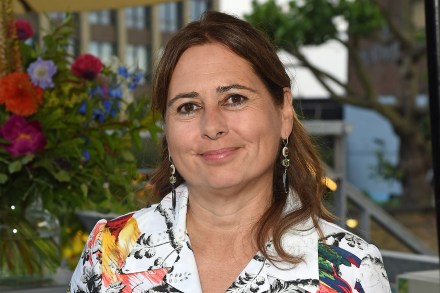
Alexandra Shulman says that she had ‘no desire to write an autobiography’ — so instead she has written about her clothes, and given us some scintillating reading. For despite having edited British Vogue for 25 years, until she retired in 2017, Shulman’s relationship with fashion at times reads less like a love affair than a marital tiff. Take, for example, the bra, which is the subject of chapter three. ‘There’s a point in most women’s lives when shopping for bras is consigned to one of those special places in hell,’ Shulman writes, revealing that, aged 17, she gave up, and didn’t wear a bra again for 20 years. (‘It wasn’t anything to do with lofty feminist ideals but simply that I hated how they felt.

Consigned to a living tomb: Aziz BineBine endures 18 years in a subterranean prison

From our UK edition

Imagine being on indefinite lockdown, imprisoned in a dark, underground, 6’ x 12’ cell, freezing in winter, boiling in summer and infested with cockroaches and scorpions. The bed is a narrow concrete ledge, where you can only sleep on your side. The toilet has no U-bend, and your cell, No. 13, at the end of a run of cells, receives all the waste and floodwater from the others. There are no windows. Aziz BineBine spent his young adult life there, 18 years from 1973 to 1991. His crime was to have participated unwittingly as a young cadet officer in an abortive 1971 coup against Hassan II of Morocco. He escaped, bewildered, from a bloodbath at the palace without having fired a shot. He turned himself in, was tried and imprisoned.

There’s nothing romantic about Cornish fishermen, whatever tales they may spin

From our UK edition

Lamorna Ash came to the fishing port of Newlyn in south-west Cornwall to write a memoir. This is not unusual. There is a tendency, as old industries die, to watch them covetously and with awe; to paint them a paradigm of all that is lost. In the 19th century, fishwives posed for the artists of the Newlyn School on the quayside. Today, journalists are found at the Star Inn, which featured in Gavin Knight’s The Swordfish and the Star, buying pints for Ben Gunn, a ‘celebrity’ fisherman, for a tale. Ash is a woman who can lose herself ‘along the simplest of paths’. She immerses herself in the real Newlyn, which is doughty, and the Newlyn of her imagination, which is mournful and filled with legends.

Annie Ernaux looks back at her teenage self – and sees a stranger

From our UK edition

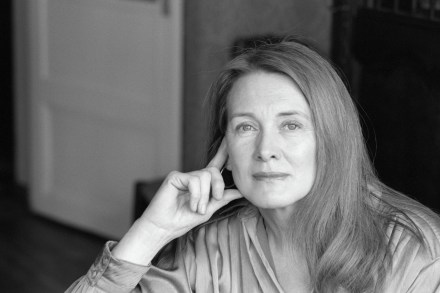
How can you recover the teenage girl you were? Not just recall the memories and recount the events — this dress worn at that party, the taste of that alcohol on this boy’s mouth — but restore the world in which these things took place, and the self who acted and was acted upon. Is it possible to be your own Orpheus and yank the Eurydice of your former self from the underworld of forgetting? This is the problem that Annie Ernaux sets herself in this slim, transfixing memoir of young adulthood and first sexual experience. It’s 2014 and Ernaux is looking at a picture. The picture was taken in 1958 and the girl in it is 17. The girl is Ernaux, and also she isn’t.

A love letter to San Francisco’s mean streets

From our UK edition

Recollections of My Non-Existence is the Rebecca Solnit book I have been waiting for. I was born four years after the American writer, and on the same continent, and much of what she describes in Recollections feels very familiar: the flamboyant gay scene of the 1980s, swiftly followed by the devastation of the Aids epidemic, the navigation through second-wave feminism, the men who constantly told us ‘what to do and be’ while they scrutinised our bodies. When Solnit was young, ‘nearly everyone who held power and made news was male’. I was fist-pumping by the time I got to: ‘We were trained to please men, and that made it hard to please ourselves. We were trained to make ourselves desirable in ways that made us reject ourselves and our desires.

Until he discovered pop music, life was all Greek to Pete Paphides

From our UK edition

Pop music has always been, to those who love it, to some degree tribal or factional; fans like to carve out their own space. If you like X you can’t like Y. Punk and post-punk sharpened the divisions. I couldn’t stand Nick Hornby’s High Fidelity for a number of reasons, but it wasn’t helped by its older-brother’s snotty dismissal of pretty much everything that came after 1977, unless it was the latest record by some dinosaur which punk’s meteorite had somehow failed to wipe out. The film was much, much better in this respect. Pete Paphides, born in 1969, had an older brother, called Aki: and Aki’s tastes are much more orthodox than young Pete’s (or Takis’s, as his family nickname was when he was younger).

Jan Morris, at 93, meditates on what it means to be old

From our UK edition

‘I’m getting rather tired of me,’ begins Jan Morris in one of the diary entries in Thinking Again, almost certainly the writer and journalist’s last book. She is only half kidding. This collection of essays and whimsical daily musings — a sequel to 2018’s In My Mind’s Eye — is both a deep dive into the charming and erudite mind of Morris, now 93, and also a moving meditation on just what it means to be old. Morris was launched to fame in 1953 when, as James Morris, she was the first journalist to report on Edmund Hillary and Tenzing Norgay reaching the summit of Mount Everest. She experienced a different type of fame altogether when in 1972 she had gender reassignment surgery in Morocco.

The inside story of working for Carmen Callil

From our UK edition

Forty-seven years ago, Virago paperbacks, with their stylish green spines and hint-of-the-transgressive colophons of a red apple with a bite out of it, revolutionised British publishing in a way that had not been seen since Allen Lane’s Penguins in the 1930s. It’s no exaggeration to say that the firm permanently altered a nation’s reading habits. Founded in 1973, three years after the Equal Pay Act and with the Sex Discrimination Act just two years away, Virago had a clear feminist objective. It wanted to produce books that gave a voice to the 52 per cent of the population under-represented in a world of mainstream publishing still largely run through the old boys’ network.

Rescued by the Goldberg Variations

From our UK edition

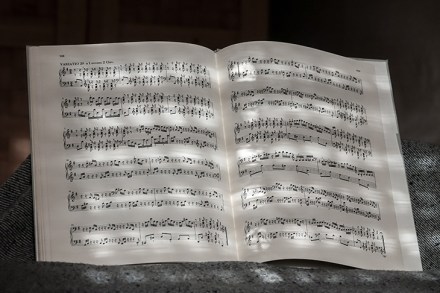
Were this a less good book than it is, it would be called How Bach Can Help You Grieve. As it is, Counterpoint serves very well, describing the American art and architecture critic Philip Kennicott’s intertwined themes: his reaction to the death of his mother, with whom he had a fractious and traumatic relationship, and his attempt to learn Bach’s Goldberg Variations, through which he considers the ability of the greatest music to ease us out of a senseless pit of grief. This is a deeply serious and often affecting book, combining the ‘grief memoir’ with the genre created by Alan Rusbridger in Play It Again, an account of an amateur pianist learning Chopin’s Ballade No. 1.

Carve his name with pride: Andrew Ziminsky rebuilds the West Country

From our UK edition

Andrew Ziminski is the man who rebuilt the West Country. For 30 years, this skilled stonemason has renovated some of Britain’s greatest buildings. Along the way, he has acquired an unparalleled understanding of this country’s stones. He got hooked as a young man when a mason asked him if he noticed that tea tasted different in different parts of the country. That was because the land’s personality had an effect on its water; and so it is with stones. It’s oolitic limestone that gives Bath its golden tint. It’s granite that gives Aberdeen its mighty, hard-as-rock profile — fizzing, incidentally, with a batsqueak of radiation.

Having a baby is like joining a cult — full of other, more capable mothers

From our UK edition

When you’re not a mother it’s hard to imagine what motherhood is like. Anyone you know who becomes one assures you that you have no idea what it’s like, and replaces you with some other woman who does, and you never see her again. The End. So then you have to tax your mother on the subject. ‘What’s it like — giving birth?’ And she says: ‘It’s fine. You just breathe,’ before snorting derisively, ‘but she had gas and air’ when an aunt later claims to have done it without any pain relief.

‘This pain, of all pains, cannot be palliated’: a doctor cares for her dying father

From our UK edition

Dear Life arrives at a time when the public appetite for the personal accounts of medical insiders shows no sign of abating, with scores of such books having been published in recent years. Their enduring popularity is often — and, arguably, best — characterised as a kind of literary fallout from a decade of austerity and the very public ire this has drawn from health professionals. Rachel Clarke’s 2017 debut, Your Life in My Hands: A Junior Doctor’s Story, was written partly as a response to the 2015 dispute between NHS junior doctors and the then health secretary Jeremy Hunt, as well as the general impact of austerity measures on the NHS.

‘We are not cattle, we’re people’: everyday hell in Stalin’s labour camps

‘No testimony from this time must ever be forgotten,’ the great Lithuanian poet Tomas Venclova says in his afterword to Dalia Grinkeviciute’s memoir. The author was 14 in 1941, when the Soviets deported her with her mother and brother from their native Kaunas, Lithuania’s second largest city. In 1949, the women escaped from Siberia and went into hiding. Grinkeviciute began writing about her ordeal, but soon, facing another arrest, she buried the unfinished manuscript in a garden. More prisons and camps followed before she eventually returned home in 1956. Found in 1991 after her death, the memoir was published and became part of the school curriculum in Lithuania.

Enduring life under Chairman Mao

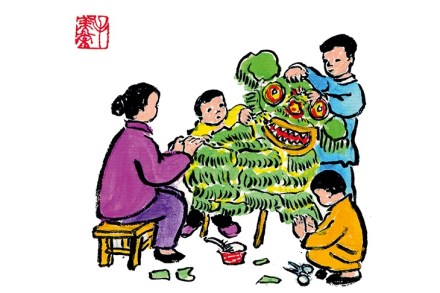
Rao Pingru is 94, and a born storyteller. His gripping graphic narrative weaves in and out of the violent, disruptive upheavals that marked China’s transition in the 20th century from an immemorial, apparently immutable imperial past to its current uneasy truce with the technology, morals and politics of the Western world. He was born in Nancheng, a city virtually unchanged in seven centuries since the end of the great Song dynasty. The first painting in this book shows Pingru himself as a small boy kneeling to knock his head on the floor in a traditional kowtow, performed at the foot of the man who had come to teach him to write. In ancient China, calligraphy embodied continuity, discipline, the accumulated wisdom of civilisation itself.

The futile gang wars of New York

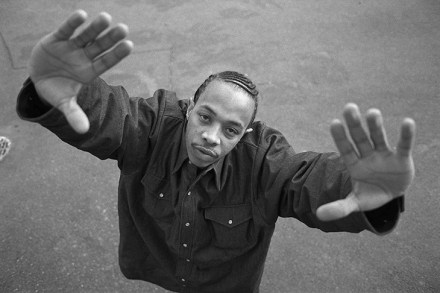
I’ve interviewed a lot of rappers over the years and always feel a little grimy when I find myself nudging them to repackage a horrendous experience as a juicy anecdote with which to promote an album. Some natural raconteurs are happy to play that game — 50 Cent can now tell the story of the day he was shot nine times with the fluency of Peter Ustinov on Parkinson — but many rappers are understandably coy, at least outside the recording studio, about sharing the gory details of their previous lives. In that respect, this memoir by one of the nine original members of the Wu-Tang Clan lives up to its title, being so brutally frank that it is hard to believe a single story remains untold.