Media

The rise of Indian cancel culture

From our UK edition

In 1975, India’s prime minister Indira Gandhi suspended democracy. The so-called 'Emergency' was largely of her own making, giving her the power to rule by decree. Hundreds of prominent writers and journalists, not to mention opposition leaders, were bundled off to jail. Remarkably, that was all it took for the rest to fall in line. Newspapers stopped printing stories that offended their ruler’s sensibilities. Shivarama Karanth, one of the doyens of the modern Indian novel, took off to ‘compose ballets with lilting music’ in the Canarese countryside. The Illustrated Weekly of India, meanwhile, began running acrostic love letters spelling the name of the premier’s balding, bovine son. How did the representative of organised media react?

Netflix’s Chappelle of hate

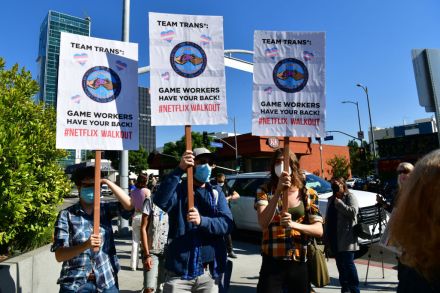
The difference between what I call accuracy and right-side norms within newsrooms is simple. Accuracy norms require journalists to get to the truth. Right-side norms require journalists to prove they’re on the “right” side of controversies. If this includes obscuring or spinning certain facts, so be it. For reasons ranging from politicization to the gutting of smaller and traditional outlets, most American journalism now adheres to right-side norms. Consider the Dave Chappelle controversy. If you don’t yet have an opinion about the jokes Chappelle makes about transgender people in his Netflix special, The Closer, watch it to get them in full context. There’s been enough bloviating about the jokes themselves.

Netflix

When it comes to Africa, the media look away

From our UK edition

Kenya We were flown around the country, hovering low over mobs using machetes to hack each other up Each time I sit in St Bride’s on Fleet Street during the memorial of another friend, I look around at the crowds they’ve been able to pull in and feel terribly envious. Riffling through the order of service and then the church’s book of correspondents to find the faces of old comrades, I’m like a man wondering if any guests will bother turning up to one’s own hastily arranged bring-a-bottle party. Our 1990s generation of Nairobi hacks has been severely depleted. While we survivors are not a distillation of complete bastards, it’s natural to feel many of the best have gone before us. Too many were killed young on the story.

Un-cancel Terry Gilliam!

From our UK edition

I am starting to wonder if the world of arts and culture is staffed, in large part if not exclusively, by massive whinging babies. What other plausible explanation is there for the frequency with which publishing houses, streaming services and theatres are going into open revolt because their employers have commissioned work by someone whose opinions they happen to find disagreeable? Terry Gilliam is the latest artist in the crosshairs. The Monty Python legend and director was due to co-direct a production of Stephen Sondheim’s Into the Woods at the Old Vic in London next year. Sondheim had expressed support for Gilliam’s vision for the show. But according to reports in the Stage, ‘staff unrest’ about his personal views has led to the show being cancelled.

Is Laura Kuenssberg leaving Westminster?

From our UK edition

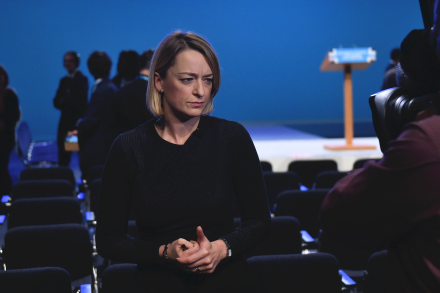
Is Laura Kuenssberg’s time as BBC political editor coming to an end? That’s the suggestion tonight after the Guardian reported she is in talks to step down from the role and move to a plum gig hosting the Today programme.  Rumours of Kuenssberg’s impending departure have been circulating around Westminster for some time now to little avail. But this time it is being talked up as part of a wider shake up of the Beeb’s lead presenters, with Jon Sopel recently announcing he is ending his US beat and returning to the UK. Rumours of Kuenssberg’s impending departure have been circulating around Westminster for some time now Kuenssberg’s time in the role has not exactly been smooth sailing.

Whipping up a crisis

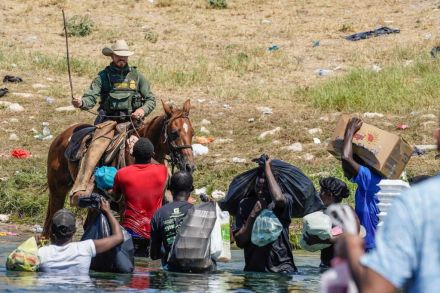
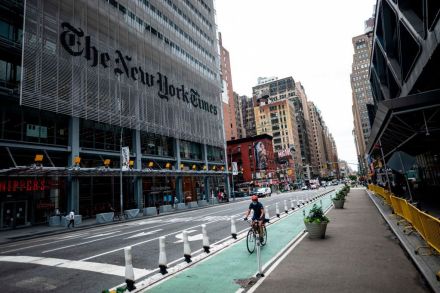
'It’s a little thing, but a big little thing.’ I’ve been using this not-exactly-eloquent phrase lately to describe a category of observation that could be written off as nitpicking, but which isn’t, really. If you notice enough big little things, you might just be able to explain how the world works. One big little thing I’ve been thinking a lot about lately comes from ‘Another Crisis at the Border’, the September 27 edition of The Daily, the blockbuster New York Times podcast. The episode was hosted by Astead Herndon and was mostly a conversation between him and his fellow Times reporter Michael Shear. They discussed the growing crisis at the US/Mexico border, and the large group of mostly Haitian migrants fleeing political and natural disaster.

border

It’s no wonder young people have ‘eco-anxiety’

From our UK edition

Is it any wonder that children and young adults are going down with ‘eco-anxiety’ , as claimed in an opinion piece in the BMJ this week? One of the pieces of evidence it cites is a survey published in 2020, which claimed that 57 per cent of child psychiatrists had dealt with patients who were feeling anxious about climate change. It would be easy to dismiss this as another case of the ‘snowflake generation’ lacking the toughness of their forebears. But even if it is true that earlier generations of children, such as those brought up during the second world war, seemed to cope much better with the genuine threat of being wiped out by the nightly bombing of British cities, I think we ought to take it seriously as a mental health issue.

Blame legacy media for spreading disinformation, not Facebook

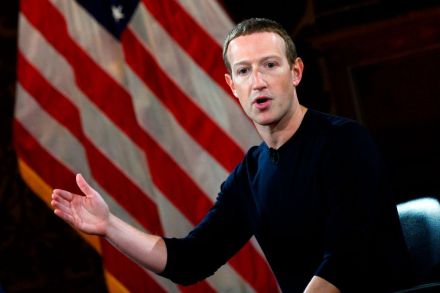
One week after the 2016 election, Hillary Clinton’s digital chief, Teddy Goff, declared Facebook the enemy of the republic and the reason why Clinton had failed to capture the presidency. His diagnosis caught on, and the media and the Democrats had found their excuse for Trump’s election. That war on Facebook continues today. Now, a whistleblower has landed on the scene, buoyed by a powerful Democratic PR firm led by former Obama alum Bill Burton. A wave of media attention has crested that's meant to once again put Facebook in the regulatory crosshairs and demand more censorship from what's deemed to be dangerous and influential 'misinformation’.

mark zuckerberg facebook

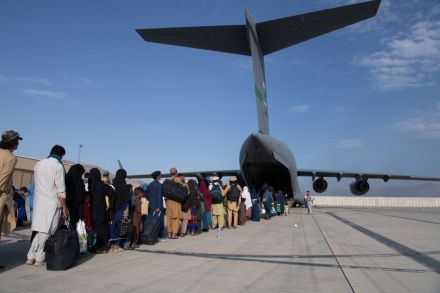
The myth of the good Afghan war

There’s a disgusting scene I can’t stop thinking about. It comes about midway through This Is What Winning Looks Like, a 2013 VICE documentary about America’s efforts in Afghanistan you can watch for free on YouTube. The film switches between the documentary footage itself and a sort of metafilm in which the filmmaker, Ben Anderson, discusses aspects of his work with Eddy Moretti of VICE, with Anderson’s footage from his time overseas frozen on a computer monitor behind them. The scene in question starts at 51:00 in the YouTube cut, was filmed around 2012, and involves a series of horrific murders. These were perpetrated not by the Taliban, but by America’s supposed allies: the country’s nascent police force.

afghanistan

A tale of two media standards for governors

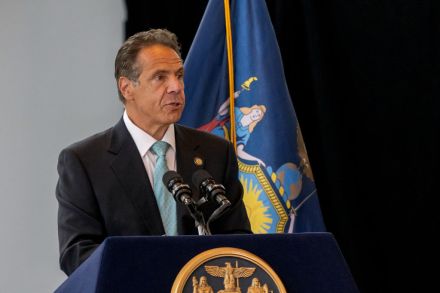
Almost no topic shows our media's complete disconnect from reality than the national coverage of governors over the past year with regard to the COVID-19 pandemic. While flooding their viewers with stories of coronavirus failures about Ron #DeathSantis in Florida and Kristi Noem in South Dakota and Greg Abbott in Texas, the press consistently praised the work of Andrew Cuomo of New York and Gavin Newsom in California. The reality on the ground could not be more different. The two most prominent faces of the Democratic response to COVID (with Gretchen Whitmer being the third) have found themselves humiliated and disgraced. Both may end up out of power thanks to their personal and professional behavior of the past year.

media governors

Substack changed the business of journalism

When a tech guy named Hamish McKenzie first reached out to me in early 2018 to see if I would try out his new newsletter platform Substack, because he thought I could make some money from it, I was skeptical. When I finally wrote him back, in May that year, I said, ‘I’m slightly leery of devoting much time to anything that won’t guarantee pay — I know that sounds somehow crude, but it’s just the reality of being a freelance writer. My book has forced me to do less freelancing than I would have otherwise, and while I’m fine for now, I do need to make sure to budget my time in a responsible way.’ A few years later, I’m exceptionally grateful that I took the plunge. I’m also a bit worried about where it’s nudging me as a writer and a thinker.

substack

Journalism’s class problem has gotten worse

It’s very unlikely that I’d be a reasonably successful journalist today if I hadn’t come from an upper-middle-class family. Fresh out of college, I got a series of non- or low-paying internships. It wasn’t until spring of the following year that I found a staff position with benefits (and a salary of $33,000, which at the time seemed like plenty to live on). Because my parents provided financial support and because I had no debt, I was able to gain the experience and connections that helped launch my career. Somewhere, surely, there is a 37-year-old who is very similar to me and who wanted to be a journalist, but who is now doing something else because it just wasn’t feasible, financially.

class

How I missed the Matt Hancock story

From our UK edition

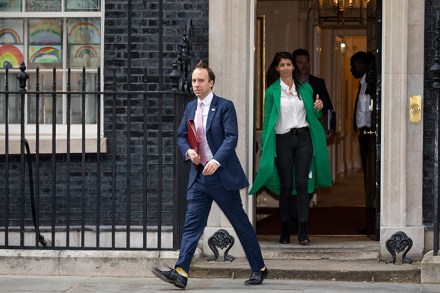
I want to apologise: I have let myself down. I let others down too, and I’m sorry. Not because, Matt Hancock-style, I breached social distancing guidelines with a steamy office affair — but because I missed the scoop. I was sent a compromising picture of the then health secretary and his mistress almost a week before the Sun newspaper sensationally revealed their relationship — and I did not believe it was him. Having never knowingly undersold my ability to break big stories, this is embarrassing to say the least.

What do Extinction Rebellion have against a free press?

From our UK edition

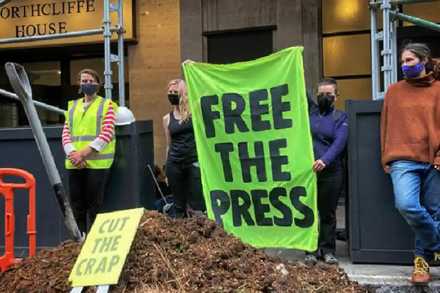
One can only hope that the profound political thinkers of Extinction Rebellion took care not to dump cow manure on the wrong steps when they descended en masse to Kensington this week. According to the group, which used the somewhat confusing ‘#Freethepress’ slogan, the target of their protest was Northcliffe House, home of the Daily Mail. Annoyingly for the eco-warriors though, the paper is based in the same building as the Independent, which unfortunately shares pretty similar beliefs to XR: that we are all doomed and will shortly be fried to a crisp by the sun, unless rising sea levels drown us all first.

What the media gets wrong on gender reassignment

Two things can be true at the same time. First, the Republican-backed state laws banning medical gender-transition treatment for youth — one has already passed in Arkansas — are a very bad idea. Second, there is a serious dearth of solid evidence in this area of medicine — and some reasons to be genuinely concerned about these treatments. If you’re a consumer of mainstream American media, you’ve likely received a heaping dose of the first message. But the second, if you’ve encountered it at all, has probably been presented to you as a deeply unscientific, bigoted talking point. This is a problem. It’s impossible to unpack what’s going on here without summarizing the recent history of youth medical transition.

trans thirteen gender

Tala Halawa and the progressive media’s anti-Semitism blindspot

From our UK edition

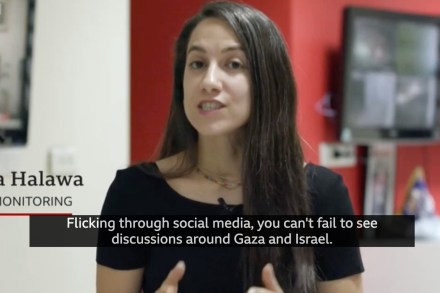
The tale of Tala Halawa has an ever-mounting horror to it: each sentence is more disturbing than the last. First we learn that this BBC journalist proclaimed during the 2014 Israel-Gaza war that ‘Israel is more Nazi than Hitler’ and that ‘Hitler was right’. Then we encounter her assertion that ‘ur media is controlled by ur zionist government’ and her sharing on Facebook the same image that saw MP Naz Shah suspended from the Labour Party in 2016, an image that advocates the ‘transportation’ of Israel to the United States to end ‘foreign interference’ in the Middle East.

Why the media is melting down

It’s 2021, and as your new Spectator media columnist I’m here to tell you that the American media is a disaster. It’s not that there aren’t still many exceptionally talented reporters and editors doing good work, against all odds — there are. It’s that the overall scene is being destroyed. Newspapers are on the verge of extinction. Newer, supposedly more agile online-only outlets are shedding staff or shuttering as well. No one has come close to developing a replacement for the funding model that kept journalism humming along nicely until the internet came along and broke everything. Of course, the destruction has birthed creation. Journalistic startups pop up frequently, though few do anything that seems worthwhile and sustainable.

Media

Who likes Kamala Harris?

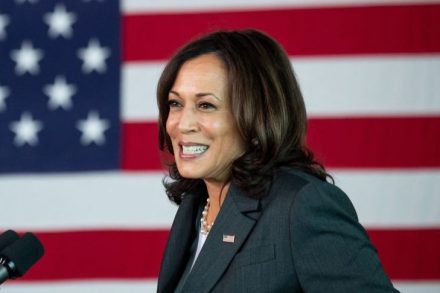
Vice President Kamala Harris is not historically very popular. Her approval rating rarely topped 40 percent during her campaign in the Democratic presidential primary. Her poll numbers sagged in her home state of California. It wasn't until Biden chose her as his running mate that Harris enjoyed consistently higher approval ratings, but even as of April of this year, her unfavorability ratings were just about as high. Despite being pretty unlikable (and as that nervous laugh suggests, awfully inauthentic), Harris has managed to maneuver herself into arguably the most powerful position in the country. If she does eventually run for president, who would be her base? Who actually likes Kamala Harris?

kamala harris

The school that made an American century

From our UK edition

New York With the Karamazovian hangover now only a weekly occurrence, the healthy life rules supreme. Well, most of the time. Up early, I go for a brisk 30-minute walk, then it’s breakfast in the park that stretches out two blocks away. I finish off with two sets of 20 push-ups on a park bench, a few kicks and punches using leaves as targets, then cross Fifth Avenue going east. (Karate is now a three-night-a-week activity, and I’ve given up Judo as it takes up too much time and needs too many partners.) I then buy the papers from a friendly Indian, get my first coffee of the day from a friendlier Greek, and return to my flat in the 1928 art-deco marvel that is my Park Avenue abode.

Teen Vogue, victimhood Top Trumps and the coming race war 

Just two weeks ago, Alexi McCammond was wheeled out as the new editor-in-chief of Teen Vogue, which uses the brand of a teenage fashion magazine to sell Bolshevism and anal sex (please don’t click that) to unmarried 30-year-old white women. Now, McCammond has been laid low before she could even begin. She fell prey to one of the sorriest Twitter cancellations on record, with enemies highlighting tweets she made a full decade ago as a college freshman. ‘Give me a 2/10 on my chem problem, cross out all of my work and don't explain what I did wrong...thanks a lot stupid Asian T.A. you're great,’ said one tweet. ‘Googling how to not wake up with swollen Asian eyes,’ said another. There were a few other archaic remarks of the ‘that’s gay’ variety, and... that’s it!

alexi mccammond