Media

Did the Wall Street Journal just prevent a war?

Zero-hour was approaching. A joint US-Israeli attack on the mullahs’ mountain fastness at Fordow seemed imminent. The B-52s were on the tarmac, the USS Nimitz had taken to sea, Ambassador Mike Huckabee was reaching for the smelling salts.  And then? A last-minute pause. “I will make my decision whether or not to go within the next two weeks,” said the President. Delays like these have now become a standard part of Trump’s box of tricks. If a drama – like the ‘Liberation Day’ tariffs of earlier this year – can be kept going for a little longer, then all the more time to extract further concessions from the opposing party. As negotiating tactics go there are certainly worse ones. But was there another reason?

Wall Street Journal

Michael Gove on how to spin a bad election

From our UK edition

12 min listen

Voters have gone to the polls today for a historic set of local elections. The polling indicates a rough night for the two main parties and a good showing for Reform, the Lib Dems and the Greens. So be prepared for a lot of election-night spin from both Labour and the Tories. To talk through the various ways in which politicians can claim victory in the face of defeat, James Heale is joined by our editor, Michael Gove – no stranger to the media round himself. They discuss the best candidates to face up to the media from both the Tories and Labour, as well as some of the greatest examples of post-election spin from history.

The unbearable smugness of the White House Correspondents’ Dinner

From our UK edition

Polls occasionally appear which reveal the extent to which people trust – or rather don’t trust – journalists. In one last year, something called the Edelman Trust Barometer found that just 31 per cent of the British public said they trust the media, a fall of 6 per cent in a year. This puts the media class at a level of trust somewhere between politicians and burglars in the public’s eyes. Still, any British hacks reading this can console themselves with one thing: at least most of our media does not cloak itself in the mantle of the utmost righteousness and hold itself out as some sort of priestly class. The same poll discovered that only 39 per cent of the American public trust journalists.

The polls are wrong (again) on Trump

“Trump has lowest 100-day approval rating in 80 years,” screamed ABC News at the start of this week. The ABC News/Washington Post poll, conducted by Ipsos to mark Trump’s 100th day in office, was one of a handful that have shown Trump’s approval rating dipping below 40 percent for the first time. There is just one problem: the pollsters who are showing the worst numbers for Trump are the ones who got the election most wrong. Take the ABC/WaPo/Ipsos poll, that showed Trump on 39 percent approval. In their final poll of the 2024 cycle, they found a three-point lead for Kamala Harris. Ipsos’s other poll for Reuters had a two-point advantage for Harris nationally. Trump ended up winning the popular vote by one and a half points.

Trump

The media must admit to covering up Biden’s decline

When it comes to the many forthcoming books about President Joe Biden’s decline, only one question matters: what role did the national news media play in assisting his White House in the cover-up? It’s a question that, if early snippets and sample releases are anything to go by, will remain largely ignored by the authors and their colleagues in media. A number of reporters are releasing volumes about Biden’s conspicuous cognitive decline, that many of them supposedly only became aware of on the debate stage last June. Many of these journalists actively worked to smear anyone who had noticed the former president’s state of mind, including right-leaning commentators and Republicans, as far back as 2021.

Biden

The Kirsty Wark Edition

From our UK edition

30 min listen

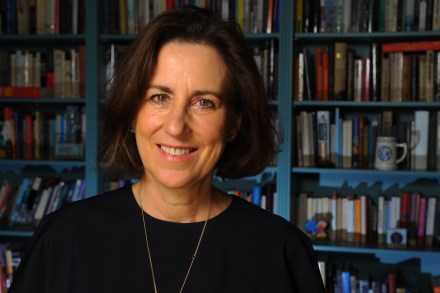
Kirsty Wark has worked for the BBC for almost 50 years and is one of the UK’s most recognisable broadcasters. In 1976 she joined BBC Radio Scotland as a graduate researcher. Having produced and presented several shows across radio including The World At One and PM, she switched to television, and went on to present shows such as Breakfast Timeand The Late Show. However, she is best known for presenting BBC Newsnight for over 30 years, which saw her interview key political and cultural leaders. Having stood down after the 2024 election, she now presents Front Row, The Reunion, and documentaries like Icons of Style.

Clooney

George Clooney’s Good Night, And Good Luck is a communal experience

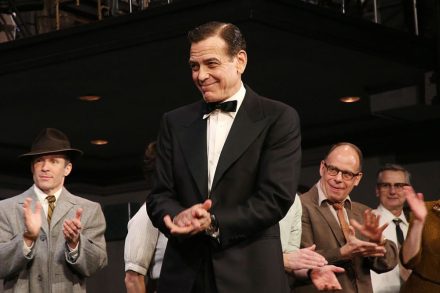
George Clooney isn’t afraid to politic. And last July he showed himself willing to speak truth to his own party’s power: by voicing the dramatic decline in Biden’s facilities in a New York Times op-ed, Clooney, a lifelong Democrat, helped force ole’ Joe out the race. Is it any surprise, then, that Clooney has chosen to make a splash on Broadway in a play that is explicitly political? Clooney’s resurrection of his critically acclaimed 2005 film Good Night, and Good Luck for the stage is timed for maximum impact. Good Night, and Good Luck dramatizes Edward R. Murrow’s historic takedowns of Joseph McCarthy on his beloved CBS show See It Now.

The Lindsey Hilsum Edition

From our UK edition

34 min listen

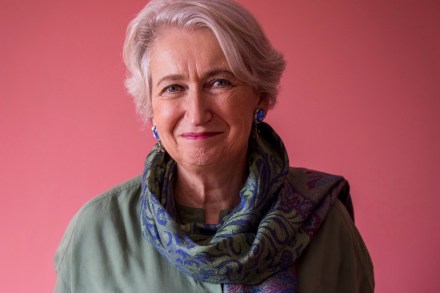
Lindsey Hilsum is the International Editor for Channel 4 News, where she has worked for over 25 years. Having started her career as an aid worker in Latin America, she transitioned to journalism, and she has now reported from six continents for over three decades. She has covered many major conflicts including Kosovo, Iraq, Syria, Ukraine and across the Middle East during the Arab Spring. Her third book I Brought the War with Me: Stories and Poems from the Front Line is out now. On the podcast Lindsey tells Katy Balls about starting out her career in Guatemala and in Kenya, what it was like being the only English-speaking journalist in Rwanda when the genocide broke out in 1994, and why she is drawn to studying human behaviour in extreme situations.

Why does Britain think it can censor Gab?

A dramatic escalation has happened in the information war between the US and Europe. Ofcom, the British media regulator that fancies itself as a global censor, has made a move. Ofcom sent a formal demand to Gab – an American social media platform with no legal presence in Britain – threatening it with ruinous fines unless it complied with the UK’s Online Safety Act. Gab’s reply to Ofcom was not polite. It was cold, clinical and lethal. Through its lawyers, Gab told Ofcom – with legal precision and unmistakable clarity – to get lost. This isn’t some polite regulatory disagreement.

gab

The ubiquitous Lara Trump

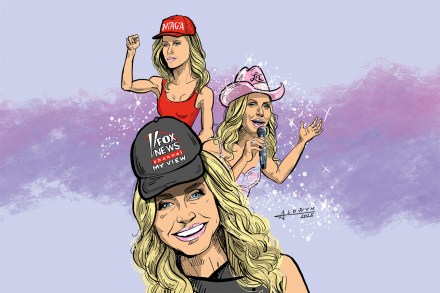
"Sorry, super busy,” replies someone from Lara Trump’s media team, after I texted to ask for an interview. "I’m working on her music stuff.” The Trumps love to multitask and, in the President’s first 100 days, King Donald’s favorite (that is, only) daughter-in-law has been showing off how hard she can work. Since the inauguration, and now free from the burdens of campaign politics, Lara has released a song called “No Days Off” with the rapper French Montana; a Saturday night show on Fox News; and an activewear collection in the color “MAGA red,” alongside her already established podcast, The Right View. Unfortunately, she has a different press person to dodge questions over each venture.

Vance

Vance Derangement Syndrome

Bret Stephens has come a long way in his estimation of Donald Trump. Back in 2016, when Trump was first running for the presidency, Stephens wrote in the Wall Street Journal that “the candidacy of Donald Trump is the open sewer of American conservatism.” As the election season progressed, Stephens mostly dropped the sewer talk, sliding into its place evocations of Trump’s “darker antipathies” and warnings that his “candidacy is manna to every Jew-hater.” A “Trump administration,” he explained,“would give respectability and power to the gutter voices of American politics.” At one point he giddily announced that Trump’s chances of victory were “next to nil.

How the fashion industry is adapting to Trump 2.0

On the night of the inauguration, as revelers filed into the Commander-in-Chief Ball to await the arrival of the new president of the United States, Fox News host Jeanine Pirro was buzzing. Donning a ballgown and speaking on air with Sean Hannity, she marveled at the elegance of Melania Trump. “She is an icon. And it’s about time America — you know the magazines, the designers — recognize she is one of the most magnificent first ladies,” Pirro said. “She’s so far past Jackie O at this point. We’ve got four years of spectacular elegance, class and a real love for fashion.

Trump

From the archives: the Kay Burley Edition

From our UK edition

20 min listen

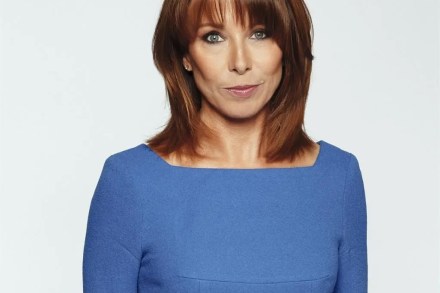
Kay Burley announced her retirement from Sky News this week, after 36 years, having presented more than a million minutes of live television news – more than any other presenter in the world. To mark the occasion, here’s a special edition of Women With Balls – from the archives – when Kay Burley joined Katy Balls in 2019 to talk about how she ‘knocked the rough edges’ off her accent, her love of Jane Fonda, and why the BBC couldn’t afford her these days.

How the legacy media became powerless

It was nearly 2 a.m. on the East Coast in the middle of election night when CNN’s Jake Tapper stood across from professional virtual-map operator John King and asked a simple question: “Are there any places where Kamala Harris overperformed from where Biden did?” Tapping away from a view of Bucks County, Pennsylvania, King zoomed out to a view of the entire United States and hit a key to show a comparison to the 2020 election. The map instantly turned a solid dark gray, without a single county highlighted. “Holy smokes,” Tapper gasped. “Literally nothing? Literally not one county?” “Literally nothing,” was King’s somber reply. The video, shared widely and instantly on X, has been viewed more than 13 million times.

media
tennis

On the front line of the tennis magazine wars

The issue appeared without fanfare at the 2017 US Open giftshop: a bright-red background offset an Impressionist yet unmistakable painting of Yannick Noah hitting a forehand, dreadlocks flaring. And with that, publisher Caitlin Thompson and editor-in-chief Dave Shaftel — an unlikely journalism pair who had met bonding over the poor state of tennis media — announced the launch of Racquet magazine, a journal that would explore the lifestyle, culture, history and zeitgeist behind modern tennis. In his first editor’s letter, Shaftel more or less laid out his and Thompson’s grand plans. “We don’t think of the game as a country club sport lumped in with golf and healthy only in the suburbs,” Shaftel wrote.

Welcome to the era of personality media

Several high-priced journalists have begun experimenting with selling themselves instead of a corporate media brand. Chris Cillizza and Mark Halperin have both started Substack ventures without having the branding back-up of CNN or Bloomberg. The pair follow in the footsteps of Megyn Kelly, who has been enormously successful in launching her own brand. Don Lemon has been confined to social media as well.Last year, Washington Post tech reporter Taylor Lorenz left corporate media behind to create her own outlet, although I would argue her audience and branding were separate from that of the Post.

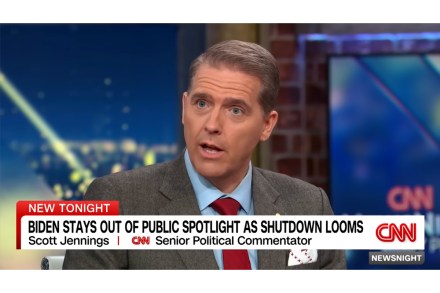
My top 2024 takeaways by Scott Jennings, CNN’s ‘Black Sheep’

New York "Black Sheep.” Not a nickname I expected, but my friends and family get a kick out of the Daily Mail’s moniker for me following a series of viral CNN moments. It’s more accurate than “Lonely Scott,” which Bill Maher applied after watching our network’s coverage of the Democratic National Convention. I am anything but lonely these days. In the wee hours following Donald Trump’s win over Kamala Harris, I impatiently wait my turn on CNN to explain what happened.

scott jennings
Karoline

Talk radio is perfect prep for being press secretary

Sometime after running for Congress in New Hampshire and before being named President-elect Trump’s White House press secretary, Karoline Leavitt was nice enough to fill in for me on The Grace Curley Show during my maternity leave. I wouldn’t claim that those three months led Karoline — whose résumé includes work for Kayleigh McEnany, Elise Stefanik and Trump — to the White House. But I would argue that hosting a talk show is great preparation for the James S. Brady Press Briefing Room. First off: she knows that if you lose your temper, you lose. Throughout summer 2023, Karoline heard from listeners about a host of issues, including the Republican primary candidates. A lot of listeners were thrilled at the prospect of former President Trump’s vying for a second term.

Has the election made Republicans love the government?

As Americans, we aren’t exactly famous for our love of the government. But how is the reelection of Donald Trump affecting our attitudes?In what they are touting as the first such poll released since the presidential election, GW’s Graduation School of Political Management and Schoen Cooperman Research are revealing “shocking findings about the state of Americans’ trust in the government and media” — namely, that nearly 40 percent of the public says they trust the government less going forward.

Democracy on the ballot

Democracy won, apparently. More than 73 million people voted for Donald J. Trump, who won 312 Electoral College votes and the popular vote, making him the 45th and 47th president of the United States. In the end, it wasn’t particularly close, and the exit polls from the night paint a pretty bleak picture for Vice President Kamala Harris and the Democratic Party. By now, you will have read most of the breakdowns — she lost ground with Hispanics, whites, blacks, married people, non-college-educated people, et cetera. In fact, the only demographic group that she gained ground with was college-educated white women — she even somehow managed to lose ground from 2016 and 2020 with black women, a stunning and impressive feat. Tim Walz lost his home district in deep-blue Minnesota.

Democracy