Matisse

London’s slump won’t last

From our UK edition

I left the Sunday Times a year ago to create a CEO reputation advisory firm. Sir Philip Green, the former retail tycoon with whom I fought a running battle, apparently rang a mutual friend and said: ‘I hear he’s going into PR – he should try adding ICK to that.’ More constructive advice came from a property entrepreneur, who told me that my emotional and financial volatility was about to be ‘massively heightened’. That turned out to be very true. When the methadone of your final PAYE payslip cuts out, reality kicks in. But winning clients, and looking after them, is amazingly rewarding. And even when you have a bad day, it’s your bad day. Newcome Advisory celebrated its first birthday last week.
‘A lost generation’: My Year in Paris with Gertrude Stein, by Deborah Levy, reviewed

From our UK edition

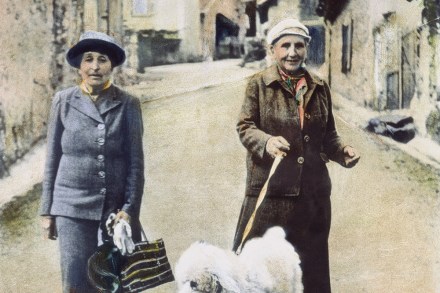
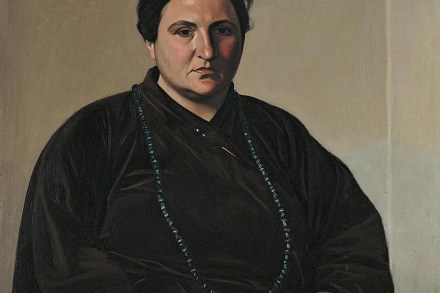
In a 2013 interview, Deborah Levy said: ‘Modernism is the soft typewriter of the womb that made me.’ But what made Modernism? My Year in Paris with Gertrude Stein is Levy’s attempt to answer the question. In this novel, an unnamed narrator from London moves to Paris to write an ‘essay’ on Stein, the American patron of the avant-garde. There she meets Eva, an enigmatic illustrator whose blue eyes make everyone go ‘Awww’, and Fanny, a fashionable finance consultant with a thriving sex life. As the three search for Eva’s missing cat (originally called It and renamed Bob by Fanny), the narrator chases after Stein’s many trails but struggles to bring her into focus.

The mystifying cult status of Gertrude Stein

From our UK edition

To most people, the salient qualities of Gertrude Stein are unreadability combined with monumental self-belief. This is the woman who once remarked that ‘the Jews have produced only three original geniuses – Christ, Spinoza and myself’. Of the reading aloud of her works, Harold Acton complained: ‘It was difficult not to fall into a trance.’ Even if you are as good a writer as Francesca Wade, it is still difficult to avoid the influence of what she herself calls Stein’s ‘haze of words’. So the first half of this impressively researched biography is cerebral rather than colourful.

The one-note wonder

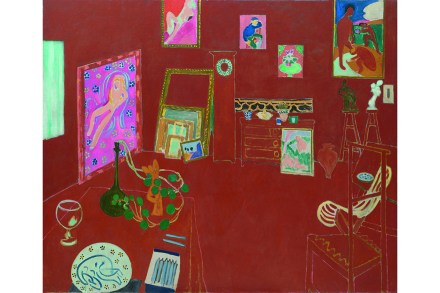
Art museums normally organize career surveys or thematic exhibitions, but this spring the Museum of Modern Art has departed from this practice to focus on a single work. Matisse: The Red Studio examines the pivotal painting of the same name that Henri Matisse (1869-1954) created in 1911. Exhibitions are normally years in the making, so while this one was in the works long before the Covid-induced lockdown, it offers a model for institutions struggling in the wake of the pandemic. Rather than expending scarce resources on an expensive blockbuster loan show, do a deep dive into something in your own collection. And what a dive this is.

matisse

Is my phobia of upmarket restaurants misplaced?

From our UK edition

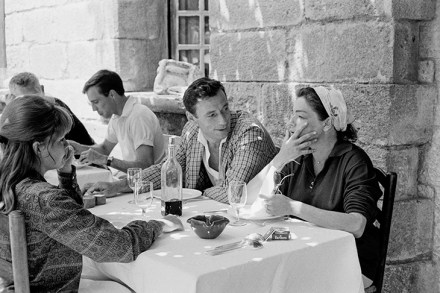
Scotching my bright idea of a stiff gin for Dutch courage in the bar across the road, Catriona bounded straight for the door of the Colombe d’Or. My restaurant phobia was fast upon me and I followed her into the bourgeois holy of holies more slowly than a nudist climbing through a barbed wire fence. We were half an hour early and directed to the bar. Here my plea for strong spirits was again denied and I had to make do with champagne. Speechless with ecstasy — this was her birthday treat — Catriona toddled off with her flute to cast her eye over the Miros, Matisses and Chagalls in the dining room. I sat alone on the windowsill in the bar where Picasso and Yves Montand and James Baldwin had once parked their famous arses and I mourned.

We’re wrong to think the impressionists were chocolate boxy

From our UK edition

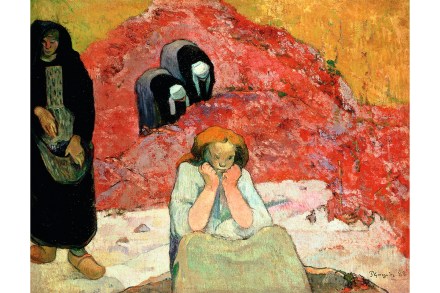
One Sunday evening in the autumn of 1888 Vincent van Gogh and Paul Gauguin went for a walk. They headed out of Arles into the countryside and when they looked back towards town they saw a sunset so splendid that each was inspired to paint a masterpiece. One of these, Gauguin’s painting bearing the timely title ‘Human Misery’, is among the star exhibits in a new exhibition at the Royal Academy. All the works in this show come from a delightful small museum in the northern suburbs of Copenhagen, housed in the early 20th-century mansion from which it takes its name, Ordrupgaard. This was the dwelling of Wilhelm Hansen (1868–1936), a mover-and-shaker in the Danish life insurance business and an avid collector of what was then modern art.