Marxism

High life | 4 October 2018

From our UK edition

To London for much too brief a visit: a marriage, lunch with Commodore Tim Hoare, and a look-see for a house. Yes, I am returning to live in London, but under one condition. It’s called Corbyn, and if he comes in, I’ll stay away. It’s rather cowardly, I know, but I did live in London during the closed shops of the early 1970s. I experienced the joys of the three-day week, the uncollected rubbish, the hospitals without electricity, and the unions exercising power over the government until a certain Margaret Thatcher put a stop to it. I find it hard to understand how people can root for Labour when the party is now openly a communist one. But its friends at the BBC and other channels, and in other parts of the media, pretend otherwise.

What happened to communism?

From our UK edition

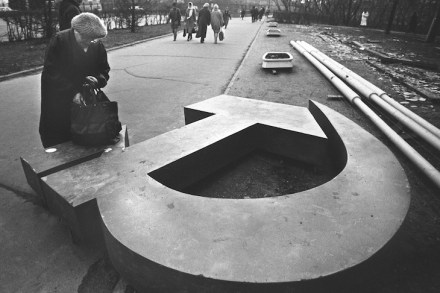
I remember the autumn day in 1990 when they came to cart away the large hammer and sickle outside my Moscow block of flats. It was about the size of a cow and made out of a gritty grey metal alloy which had, like almost everything in the USSR, never looked new or clean. Once, these objects had been all over the city. Now they were vanishing. Nobody else seemed especially interested in its departure, probably because there were — more excitingly — eggs on sale down the street. A few weeks later, I would watch the Soviet Army’s last Revolution Day parade trundle through Red Square.

The French far left’s common cause with Islamism

From our UK edition

The French have an expression to describe far-left citizens who identity more with Islam than the Republic: 'Islamo-Gauchiste', a term coined by the French philosopher Pierre-André Taguieff, who explained in 2017 that many on the far-left regard jihadism as: "...a legitimate social revolt...they look at jihadists through a distorting lens of victimhood. This compassionate approach sees Islamic terrorists only as lost children, abandoned or rejected by unwelcoming and hostile countries, victims of 'institutional' or 'systematic' racism". The symbiosis between the Western far-left and Islamism has been ongoing for decades, and stems from the left's realisation of their failure to win the hearts and minds of the white working-class.

We need ideology in politics

From our UK edition

‘Studying history at Balliol,’ writes Chris Patten, ‘I knew that the one thing which made me uneasy was a grand theory or over-arching generalisation.’ The remark comes from a Lord Patten’s latest book, First Confession. Henry Keswick wrote an unpleasant review in this magazine, and I’ve spent some time recently discouraging mutual friends from bothering to protest (‘Leave it, Jono, he isn’t worth it’). To hear Patten himself talking about this honest, engaging and very personal memoir, I went recently to see him in a packed opera house at the Buxton Festival. I count Chris, who as director of the Conservative Research Department in 1977 gave me my first job in politics, as a friend and as a politician whom I admire tremendously.

Masonic bodge

From our UK edition

Left-wing groupie Paul Mason has written a costume drama about the suppression of the Paris commune in 1871. We meet Louise Michel and her all-female gang of arsonists as they’re carted off to jail for setting fire to the Tuileries. After a harsh stint in the cells, they’re shipped out to the French colony of New Caledonia, in the eastern Pacific, where they live in an open prison. Things aren’t too bad. They mingle with the natives, enjoy the local hooch, and sing comradely songs about ‘spilling the blood impure’. Escape is on the agenda. A committee of anarchists is said to be making swift progress across the ocean in a rescue ship.

How Lenin manipulated the Russian Revolution to his own ends

From our UK edition

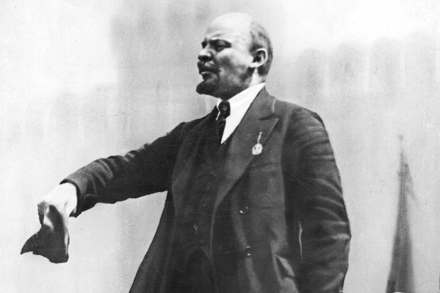
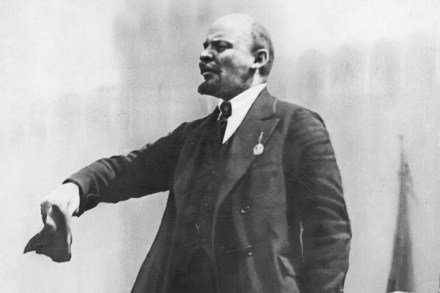
The centenary of the Russian Revolution has arrived right on time, just as the liberal democratic world is getting a taste of what it’s like to feel political gravity give way. In 2017, Lenin lives. ‘In many ways he was a thoroughly modern phenomenon,’ writes Victor Sebestyen in Lenin the Dictator, the kind of demagogue familiar to us in western democracies, as well as in dictatorships. In his quest for power, he promised people anything and everything. He offered simple solutions to complex problems. He lied unashamedly. He identified a scapegoat he could later label ‘enemies of the people’. He justified himself on the basis that winning meant everything….

The man and the moment

From our UK edition

The centenary of the Russian Revolution has arrived right on time, just as the liberal democratic world is getting a taste of what it’s like to feel political gravity give way. In 2017, Lenin lives. ‘In many ways he was a thoroughly modern phenomenon,’ writes Victor Sebestyen in Lenin the Dictator, the kind of demagogue familiar to us in western democracies, as well as in dictatorships. In his quest for power, he promised people anything and everything. He offered simple solutions to complex problems. He lied unashamedly. He identified a scapegoat he could later label ‘enemies of the people’. He justified himself on the basis that winning meant everything….

Kenneth Clark was much better at opening people’s eyes to great art than Marxist John Berger

From our UK edition

It is one of those interesting quirks of postwar cultural history that John Berger, who has died at the age of 90, could have presented Civilisation. Millions of viewers who saw that unsurpassed – unsurpassable – series when its 13 programmes were screened in 1969, or who have seen it in the years since, associate Civilisation with Kenneth Clark – Lord Clark of Civilisation, as he came to be known. But Berger might easily have got the nod. It was Clark himself who suggested to Michael Gill, Civilisation's producer, that he might find a more congenial ally in Berger, who, of course, three years later presented Ways of Seeing as a counter-argument to Clark's magisterial televisual essays. Who knows?

The Marx Memorial Library

From our UK edition

There’s a small corner of Clerkenwell where the communist dream never died. The Marx Memorial Library has been in its big, classical 1738 building — originally a school for children of Welsh artisans living in poverty — for 83 years. The library was set up in 1933, the 50th anniversary of Karl Marx’s death. British Marxism and communism have faded, but the library still has a brigade of staunch supporters. Jeremy Corbyn, whose constituency is just up the road in Islington, is a regular visitor. To tour the library is to return to the 1930s when communism was at its height — when Philby, Burgess, Maclean and Blunt were full of gleaming-eyed optimism about the wonders of Soviet Russia.

Real life | 10 November 2016

From our UK edition

A wonderful email has arrived from Airbnb entitled ‘Discrimination and Belonging — What It Means For You’. Having tried to make sense of it, I feel it can mean only one thing with any certainty. And that is that the Airbnb party is over. The web business started by a whizz kid in his New York apartment is about to feed itself to the ravening equality agenda wolves. Sadly, the once proud Airbnb corporation has decided to launch ‘a comprehensive effort to fight bias and inequality in the Airbnb community’.

Revolution was in the air

From our UK edition

The Penguin History of Europe reaches its seventh volume (out of nine) with Richard J. Evans’s thorough and wide-ranging work on the 99 years from 1815 to 1914. It comes between two formidable books by formidable scholars: his fellow Cambridge historian Tim Blanning took the story from the close of the Thirty Years’ War to Waterloo, and the Hitler authority Ian Kershaw covered 1914 to 1949. Each of those volumes is much as one would expect of the author: Blanning’s shows his background as a polymath, and his expertise in the histories of more than one major European power; Kershaw’s puts the rise of the Third Reich and its consequences at the centre of his. But Evans developed under the influence of E.H.

Strange sightings in Essex

From our UK edition

I suspect some readers might be too cool for this lovely book, partly because, despite its gothic horror set-up, it sets out unashamedly to lift the spirits; and partly because historical novels are sometimes derided as escapist, as if they’re only a fallback for authors who can’t keep up with, say, immigration or the internet. It takes place over a single year in the 1890s, in an Essex village where — if the rumours are to be believed — a monstrous sea creature skulks in the estuary, blamed for horrors from disembowelled livestock to a man’s corpse washing up on the marsh, his neck snapped. Up from London amid this panic is Cora, a wealthy amateur naturalist, liberated by the death of her abusive husband.

Profit and loss | 9 June 2016

From our UK edition

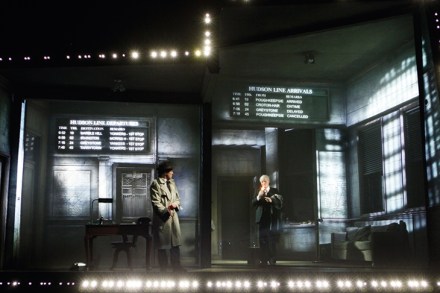
Bertolt Brecht took The Threepenny Opera  from an 18th-century script by John Gay and relocated it to Victorian London. This National Theatre version wants to straddle the contemporary and the antique. Mack the Knife, an Afghan war veteran who murders strangers, contracts a bigamous marriage with Polly Peachum, the daughter of a cross-dressing mastermind who runs begging gangs across east London. This laborious set-up takes an hour to establish and the drama gets started only when Polly’s mum vows to rub out Mack at a knocking-shop. A wise dramatist would have placed this threat in the opening scene. But Brecht isn’t a wise dramatist; he’s a preachy one and his purpose is to show that all human sin derives from the profit motive.

The Jezza effect

From our UK edition

Corbyn the Musical feels like it comes from the heart. Did the writers live through the 1970s when the hard-left was full of hope and confidence? Socialists then genuinely believed they could see off capitalism (which seemed in its death throes anyway) and replace it with a happier and more equal world. The show takes that objective seriously and attacks it with style, wit and affection. Young Jezza is portrayed as a sweet-natured bumbler entranced by an ideology he barely understands. He expresses his political dreams in terms of manhole covers and allotment vegetables. With his racy girlfriend, Diane Abbott, he sets off on a motorbike tour of East Germany, which they both regard as a communist paradise.

The tragedy of Arabia

From our UK edition

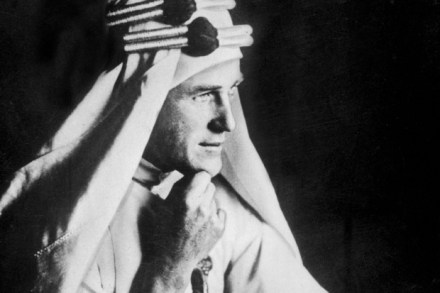
Is there anything new to be said about T.E. Lawrence? I mean, really. In the century since his stirring exploits in the Arabian desert we have had all manner of biographies, from simpering hagiography to heartless hatchet job. We have had Lawrence the colonial hero and faithful imperial servant; Lawrence the linguist, explorer and spy, pioneer of guerrilla warfare; Lawrence the Machiavellian betrayer of the Arabs; Lawrence the preening, self-mythologising sado-masochist. Each generation projects its own prejudices and visions, fears and fantasies upon this unusual man. Even now, 80 years after his death, the torrent of biographies shows little sign of abating.

Far leftists do not laugh about Mao to mock communism. They laugh to forget communism

From our UK edition

Nothing about the crisis in the Labour party makes sense until you find the honesty to admit that far leftists have taken over its leadership, and the clarity to see them for what they are. Contrary to the wishful thinking of so many Corbyn supporters, these are not decent, well-meaning men, who want to take Labour back to its roots. Nor are they pacifists and idealists you can look on with an indulgent smile and say, ‘I wish they were right, but their ideas will never work in the real world, more's the pity’. To the delight of the Conservative Party, SNP and Ukip, they are genuine extremists from a foul tradition, which has never before played a significant role in Labour Party history.

Here’s what’s wrong with the ‘public sector ethos’

From our UK edition

An infuriating benefit of readers’ online comments beneath the efforts of a columnist like me is that as you read the responses an understanding dawns of the column you ought to have written. Some readers are stupid, unpleasant or obsessive; but most are not. As you learn their reactions you see where your argument was not clear, where you were short of information, and where you were simply wrong. But more than that, you sometimes tumble for the first time to where the nub of a problem that perhaps you danced around may lie. Last Saturday I wrote for the Times about the self-righteousness of spokesmen for public services threatened by government cuts; about veiled threats by the police to stop policing, and by barristers enraged by cuts to legal aid.

These days, compassion is for hacks and Lib Dems

From our UK edition

There’s a hard, hard mood out there among the public and I don’t think our newspapers get it at all. Could it be that the general populace are now more cynical than their journalists? At Tim Farron’s closing speech to his Liberal Democrat conference in Bournemouth last week, I sat through nearly an hour of one of the biggest cartloads of sanctimonious tosh it’s been my fate to endure in decades. And who do you suppose was lapping this up as avidly as any misty-eyed Lib Dem conference-goer? The hardened hacks, the sketchwriters, analysts and reporters. The press are old-fashioned: they love this emotional stuff. But the 21st-century public have been immunised against it.

Why I left

From our UK edition

[audioplayer src="http://rss.acast.com/viewfrom22/thedeathoftheleft/media.mp3" title="Nick Cohen and Fraser Nelson discuss the death of the left" startat=32] Listen [/audioplayer]‘Tory, Tory, Tory. You’re a Tory.’ The level of hatred directed by the Corbyn left at Labour people who have fought Tories all their lives is as menacing as it is ridiculous. If you are a woman, you face misogyny. Kate Godfrey, the centrist Labour candidate in Stafford, told the Times she had received death threats and pornographic hate mail after challenging her local left. If you are a man, you are condemned in language not heard since the fall of Marxist Leninism.

A rollicking satire on the way we live now

From our UK edition

Jonathan Franzen’s latest novel, Purity, comes with great expectations. Its author’s awareness of this fact is signalled by a series of lampoons of writers expected to produce ‘big books’, writers named Jonathan and an assortment of other self-referential gags, but also the fact that its eponymous heroine, Purity Tyler, is nicknamed Pip. This Pip’s expectations are played off against those of Franzen’s readers: she won’t get what she expects, of course, any more than Dickens’s original Pip did. But to a great extent, our expectations will be met: this is a ‘big book’, a rollicking, sharply observed contemporary satire of family life and cultural politics.