Martin Amis

My Martin Amis FOMO

There’s a form of social anxiety that a lot of people suffer from — FOMO, Fear of Missing Out. “Fear” suggests something imaginary, that isn’t really happening. Not so. I don’t fear missing out, because I know I am. Friends are always asking me: are you appearing at the Hay Literary festival? No! Am I speaking at the Idler festival? No! Am I reading extracts from my book at the Cambridge Literary festival? No! “What?!” they exclaim in mock disbelief — and then ask why I’m not appearing at some small, obscure, local village literary fête, somewhere in the rectum of rural England. I’ve gotten used to the seasonal snub from the lit-festival establishment. And there are literary events all over London that I haven’t been invited to as well. OK, I’ll live.

Amis

The frustrating rise of celebrities ‘writing’ children’s books

When you are next visiting a bookstore, and find your way to the children’s section, you might be forgiven for thinking that there is no longer such a thing as a children’s author. Instead, you will be ambushed by piles of books blazoned with the names of actors, singers, comedians, DJs and people who generously exhibit themselves on social media. “Writing” a children’s book has become another string to the celebrity bow. Imagine the scene. You’ve married a prince, and opened a shop that sells vaginal eggs. What more is there to do? A-ha, thinks the celebrity, perhaps while she is sitting on a bench. All those untutored minds, eager for moi! My personal brand will bring them such joy, such self-worth! They will all feel seen!

chidren's

The sex lives of writers

A fellow writer recently asked me if I would prefer to be famous as a great writer or famous as a great lover. I said a great writer because, well... that’s what you’re meant to say, isn’t it? My friend chose great lover. Why? “There are lots of great writers,” he explained, “but men who are great in bed are rare. And besides, great writers aren’t sexy anymore.” I used to think that when male writers — and I mean novelists, critics, journalists — complain about how literature has lost its cultural significance and that no one cares about the printed word anymore, what they really mean is: no one wants to shag me. And I suspect that they’re right. The era of the Great Literary Sex God is over.

writers

Hilary Mantel — a death before her time

When the Queen died a fortnight ago, it was widely speculated that the perfect writer to describe both her death and its aftermath was Hilary Mantel, but now that will never be. Mantel died from a stroke yesterday at the age of 70, leaving behind a unique legacy in transatlantic literature not merely as someone whose weighty novels about royalty in the Tudor era have sold millions, but as an acute chronicler of our own time, too. Not for nothing is her most controversial short story, The Assassination of Margaret Thatcher, a subversive account of what might have happened if a woman she felt "boiling detestation" for had been killed in 1983.

The Greatest Living American Writer on Salman Rushdie

In the late 1990s, author Neal Pollack developed an alter-ego character, "The Greatest Living American Writer," for the McSweeneys website, to satirize a generation of pretentious authors, particularly Norman Mailer and Gore Vidal, as well as macho literary journalists. That character formed the basis of Pollack's first book, the cult classic The Neal Pollack Anthology of American Literature. The GLAW has since appeared in numerous other publications,  left- and right-wing and completely apolitical, surfacing and de-surfacing as the times demand. Now he's back in The Spectator World, until we get tired of him.  I have been the Greatest Living American Writer across eight decades of world literature and have seen many shocking acts of violence.

greatest living american writer salman rushdie

Mart and marketing

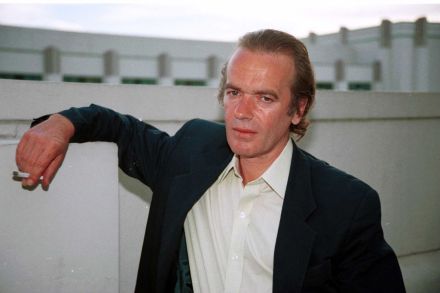
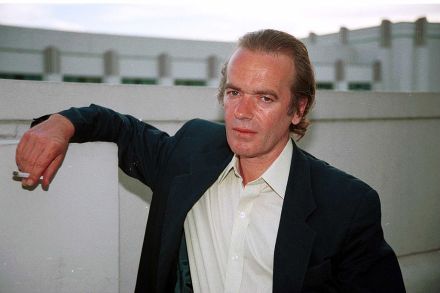
George Orwell once proposed that the specimen literary career takes the form of a parabola in which the downward curve is implied in the upward. You can see immediately how this theory might work with a major-league titan such as Thackeray (promising early sketches leading to Vanity Fair, then downhill to the trackless waste of The Virginians) or James Joyce (peaks in the early stretches of Ulysses before descending to the dream language of Finnegans Wake). But how does it apply to the 71-year-old former enfant terrible and, to borrow another useful French phrase, one-time jeune premier of English fiction, Martin Amis?

martin amis