Mark zuckerberg

How Facebook became a freedom-gobbling corporate monster

From our UK edition

Southwark Playhouse is beating the latest lockdown with a zingy new musical about social media. The performers, Francesca Forristal and Jordan Paul Clarke, remember the far-off days when Facebook was just a harmless supplement to ordinary social interactions. How did it turn into a freedom-gobbling corporate monster? We meet the Zuckerbergs, Mark and Priscilla, as they usher a TV crew into their mansion like a pair of politburo bigwigs showing tourists around a glue factory in North Korea. The down-to-earth billionaires offer bland answers to scripted questions. ‘How do you raise children when you can give them anything?’ Mark reveals that the mini-Zuckerbergs are treated like normal kids.

Mark Zuckerberg’s quest for redemption

Stung by recent criticism, and fearing major regulation, Mark Zuckerberg, founder and CEO of Facebook, has announced the establishment of a kind of ‘Supreme Court’ for his company. Selected and paid by Facebook, the members of this ‘Oversight Board’ will in theory behave as independent adjudicators capable of making rulings over content moderation and other important aspects of the business. No doubt Mr Zuckerberg is looking at the example being set by the US Supreme Court and thinking, ‘What could go wrong?’ It's hard to believe now but in 2017, it seemed plausible that Mark Zuckerberg might become president.

zuckerberg

Four main takeaways from the House’s Big Tech antitrust sideshow

Here’s a terrifying thought: Mark Zuckerberg is the only person in Silicon Valley that the political and intellectual right can trust when it comes to ‘Big Tech’. Wednesday’s ‘Antitrust’ House hearing resembled a group of Neanderthals trying to reason with Data from Star Trek. The worst of both sides was on show as Democrats and Republicans jockeyed for the news cameras, rather than getting real answers on antitrust practices or how Silicon Valley bows to the authoritarian regime in China. I watched the grueling insurance seminar so you don’t have to: here are the four big lessons.1.

big tech

Why Trumpism won’t outlive Trump

Trumpism is, according to its adherents, meant to replace Reaganism, the political doctrine that has dominated the Republican party and the conservative movement since Ronald Reagan left office. Reaganism is identified by a commitment to free market economics, internationalist foreign policy, strong national defense and an open door to immigration.But then Reaganism and its British version, Thatcherism, have also been associated with an intellectual revolution that swept the West in the 1970s and that was headed by Nobel Prize-winning economists like Friedrich Hayek and Milton Friedman, and driven by think tanks like the Heritage Foundation, the American Enterprise Institute, the Cato Institute and the Center for Policy Studies that transformed the political discourse worldwide.

trumpism

The Facebook ad boycott is a convenient virtue-signal

When the coronavirus pandemic hit, some industry pundits predicted that the ‘techlash’ — the souring of public opinion on huge technology companies like Facebook and Google — would cool off or even disappear entirely. After all, with everyone cooped up at home, surely we’d develop a newfound appreciation for the technologies that became the only way to connect with others?That was short-lived. Following extraordinary social pressure amid this summer’s heated civil unrest, an advertiser boycott of Facebook has taken hold. Under the moniker Stop Hate For Profit and backed by the Anti-Defamation League and NAACP, brands from Starbucks to Unilever to Coca-Cola have bravely pulled ads from Facebook for the month of July.

facebook

Facebook is right. Twitter is wrong

Twitter CEO Jack Dorsey opened up a Pandora’s box two days ago by dropping a fact-check on a tweet by Donald Trump regarding mail-in ballots. That raised all sorts of hell from a bombastic President, as well as more questions than answers. There are several problems with Twitter deciding to put its thumb on the scale of ‘truth’ on its social platform. The site has previously come under enormous scrutiny over widely perceived political and ideological bias. The charges against the company include its unfair and unbalanced actions in banning conservative or politically right-leaning accounts, as well as shadow-banning and limiting views and engagements on trending topics which it deems problematic.

facebook

Silicon Valley: the latest stage for political grandstanding

Silicon Valley can’t catch a break politically these days — from either party. Facebook CEO Mark Zuckerberg was grilled extensively by members of Congress this week in a hearing ostensibly about the company’s now-on-shaky-ground Libra cryptocurrency that turned into a broader scrutiny of its ethics and business practices. Democratic Rep. Alexandria Ocasio-Cortez’s questioning, predictably, went viral, with even a remix that replaces Zuckerberg with Cousin Greg from HBO’s Succession. But it’s not just Democrats — such as presidential candidate Elizabeth Warren, who’s made Zuckerberg a campaign trail bogeyman — assailing venture-backed billionaires these days. Republicans want a piece of the action, too.

Silicon Valley

Zuckerberg lays out Facebook’s free speech future

When he created Facebook, Mark Zuckerberg radically changed the world. In a speech today at Georgetown University, he seemed eager to do so again. It is my fervent hope that he is successful. In sweeping rhetoric liberally sprinkled with historical references, Zuckerberg drew a line in the sand, recognizing that ‘the ability to speak freely has been central in the fight for democracy worldwide.’ He bemoaned the fact that ‘we’re seeing people try to define more speech as dangerous’ and committed himself and Facebook to being forces for good in the fight to preserve freedom of expression.In a world increasingly intolerant of dissent, this is no small promise, and I don’t believe it’s an empty one, either.

mark zuckerberg

I always knew Mark Zuckerberg was a far-right incel

The #DeleteFacebook hashtag was been trending all yesterday on Twitter after it became known that Facebook CEO Mark Zuckerberg has been involved in talks with a few well-known conservative influencers in recent months to discuss free speech and partnerships.In a grossly misjudged attempt to keep Facebook a place for ‘balanced debate’ (also known as ‘hate speech’), and free from censorship (which as we all know is just alt-right code for ‘hate speech’), Zuckerberg has inadvertently displayed his true colors. Zuckerberg’s forays into the inner cabals of the Dark Side are a result of Donald Trump’s allegations of 'bias' against conservatives at Facebook and other major social media companies.

facebook

Facebook’s fake news problem is about more than just ads

It seems like it should be quite the scandal: one co-founder of Facebook chastising another publicly for a business decision that has, allegedly, had major social reverberations. In response to Democratic presidential contender Elizabeth Warren calling out Facebook for loosening its restrictions on political advertising, Facebook co-founder Chris Hughes took to Twitter. ‘I have a feeling that many people in tech will see Warren’s thread implying FB empowers Trump over Warren as unfair,’ Hughes wrote. ‘But Mark [Zuckerberg], by deciding to allow outright lies in political ads to travel on Facebook, is embracing the philosophy behind Trumpism and thereby tipping the scales.

facebook ads

Elon Musk’s brain game

When Elon Musk took to the stage at the California Academy of Sciences on Tuesday, he gave the world the first insight into his vision for mapping and ultimately controlling the brain. Three years ago, Musk formed Neuralink which was specifically created to respond to the threat that Musk’ believes is posed by the imminent threat of thinking machines powered by AI. Musk believes that phase of the information revolution could mark the end of humanity as robots outpace humans in intelligence and pace of evolution. His answer is to fully understand exactly how the brain works and, in the process, he believes that the new science will find the cure for many of humanity’s most deadly illnesses such as Parkinson’s, Alzheimer’s and PTSD.

elon musk brain

Facebook is the world’s worst coffee house

Spectator USA is barely a year old, but its British parent has been around since the 19th century. Indeed, The Spectator’s pedigree is even older than that, as the magazine takes its name from an earlier, 18th-century sheet produced by Joseph Addison and Richard Steele. Today The Spectator’s British website harks back to the days of Addison and Steele in the name of its daily commentary department, the ‘Coffee House,’ for in the 18th century, coffee houses were the places where things like The Spectator and other specimens of what would later evolve into magazines and newspapers were usually to be found. Before there were newsstands or bookstores with magazine racks, there were coffee houses. ​Today Facebook is like the world’s worst coffee house.

facebook

Is war with Silicon Valley a Trump 2020 strategy?

The world, or at least Twitter, awoke Saturday morning to an extraordinary series of retweets from the site’s most infamous user, @realdonaldtrump. Among those he retweeted: Paul Joseph Watson, the controversial Alex Jones adjacent; Lauren Southern, the right-wing internet celebrity and filmmaker, and for good measure, an account called ‘Deep State Exposed’ which seems most intent on exposing Islam’s quest for global dominion. https://twitter.com/PrisonPlanet/status/1124097191952441349 ‘Lmao [laugh my ass off],’ said Southern, in a missive, again, retweeted by the president of the United States.

donald trump silicon valley

Trump vs tech

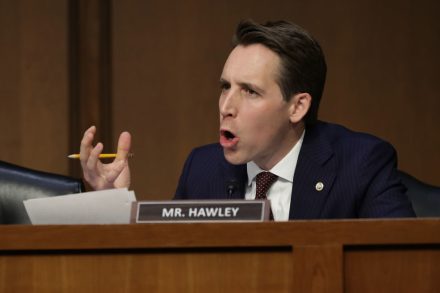
Remember when Donald Trump’s administration courted the likes of Jeff Bezos and Elon Musk? What about when the American right was still enamored with Big Tech? That seems a long time ago now. On Friday President Donald Trump tweeted: ‘I am continuing to monitor the censorship of AMERICAN CITIZENS on social media platforms. This is the United States of America — and we have what’s known as FREEDOM OF SPEECH! We are monitoring and watching, closely!!’ https://twitter.com/realDonaldTrump/status/1124447302544965634?ref_src=twsrc%5Etfw%7Ctwcamp%5Etweetembed%7Ctwterm%5E1124447302544965634 Conservatives increasingly accept that Big Tech is a problem, something that stifles creativity and ideas. But will anyone in power ever do anything about it? Sen.

josh hawley big tech

The 2020 primary’s pivot to video

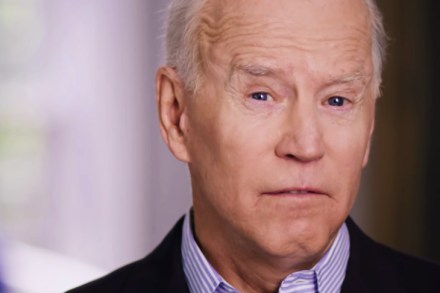
‘Charlottesville, Virginia is home to the author of one of the great documents in human history. We know it by heart,’ says a freshly sanded Joe Biden over swooping strings, in tight focus and excruciating high-definition. As the camera cuts closer, you can just about notice his watery eyes flicking from one side of the autocue to the other. The former vice president is taking up arms in ‘the battle for the soul of America’, and he’s doing it on YouTube. The build-up to elections used to center upon television air-time: CNN town halls, fierce attack ads, appearances on late-night talk shows. But the humanoid sociopaths over in Silicon Valley changed all that in the Obama era. Now the key battleground is social media, and the hunt is on for a viral moment.

biden 2020 primary pivot to video

The agonizing death of Hillary Clinton’s ‘Internet Freedom’ agenda

Has there ever been a more fitting corporate meltdown than that endured by Facebook over the last two years? After perhaps swinging an election or two in 2016, the company has been dragged bawling through the mud more times than an Medieval Estonian peasant caught stealing horses. There have been non-apologies and listening tours, rebrands and reach-outs, Senate committee hearings, slap-downs and back-pedals, faked humility and conspiracy theories, inquests and campaigns and furious denunciations, ponderous op-eds and stock-price massacres, would-be trust-busters on the make, crisis management PR operations and parade ground about-faces.

hillary clinton internet freedom

The sideways thinking of Silicon Valley

It was the tweet posted by the New York Times that caught my eye: ‘Silicon Valley is backing a novel idea: instead of charging students tuition, students go to school for free and are required to pay back a percentage of their income after graduation, but only if they get a job with a good salary.’ It is all happening at the Lambda School, a new online learning start-up that this week won millions of dollars in backing from a glittering line up of venture capitalists – including Google Ventures, Ashton Kutcher, the actor turned Shark Tanker, and Geoff Lewis, an acolyte of Peter Thiel, the co-founder of PayPal.

lambda school silicon valley

The rule of Caesar Mark Zuckerberg

Modern tyrants have always looked to antiquity for models of how to exercise and display their power. For Joseph Stalin self-improvement did not mean listening to more audiobooks or enrolling in bi-weekly meditation classes. A lifelong bookworm who kept improbably long office hours, Stalin enjoyed reading about Peter the Great and Ivan the Terrible. Yet the most heavily annotated work in his 20,000 volume library was an account of the rise and fall of the Roman Empire by his favourite historian, Robert Vipper. The terrible, godlike power of the Caesars was something he could relate to. Adolf Hitler, taking a more dilettantish route, looked to classical aesthetics in painting, sculpture and architecture to infuse German culture with his ideas about race.

mark zuckerberg

Will Mark Zuckerberg now admit that Facebook is anti-social?

Zuck speaks! He’s finally responded to the Cambridge Analytica debacle. To be honest, I could have predicted almost word-for-word this evening’s statement: It wasn’t really our fault; it was mostly their fault; we’re a little bit responsible (‘front-up’ I can imagine a comms person insisting); and here are the steps we’ve taken. In fact, we’d already taken most of these steps in 2014, when all this happened. I sensed a weariness to it. He concluded his penultimate paragraph with the phrase ‘going forward’, which is usually a sign someone’s out of ideas. Still, and I can’t quite believe I’m writing this, I almost feel sorry for Mark.