Mark zuckerberg

Good riddance to the metaverse

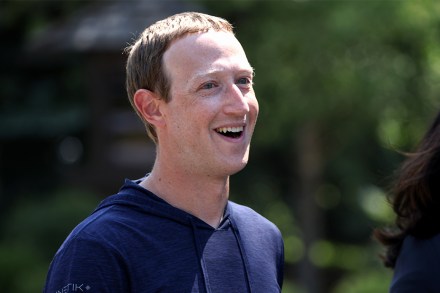
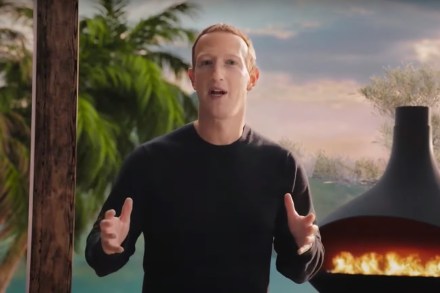
So pack it all in then. Away with the wisecracking butterfly that sits on your shoulder during work meetings. Out with the Gamorrean Guards who play Texas Hold’em with you around a floating table. The metaverse, Mark Zuckerberg’s fever dream of a virtual-reality infused world, is dead. That’s assuming it was ever alive and kicking in the first place. To assess just how “real” the metaverse ever was, we need to go back to its inception in the fall of 2021. That was when Zuckerberg released a video of himself in suspiciously Steve Jobs-esque garb — black shirt and pants, sneakers — tooling around what he called a “home space” that brimmed with holographic bric-a-brac.

metaverse

Madison Cawthorn is right about metrosexuals on social media

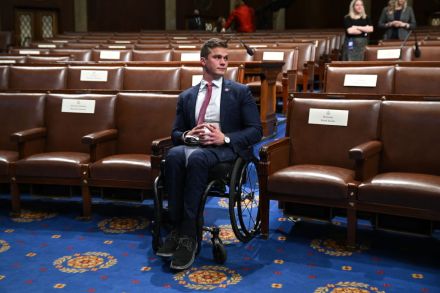
Madison Cawthorn, the one-hit-wonder congressman from North Carolina who was defeated in his primary earlier this year, used his final address on the House floor yesterday to condemn “soft metrosexuals.” In the spirit of not kicking a guy when he’s down (Cawthorn will be gone by January), let’s cut him some slack and acknowledge that, melodramatic language aside, his speech made a valid point. Social media is to blame, at least in part, for weakening American culture. “America is weak,” Cawthorn declared. “Her sons are sickly, and her daughters are decrepit. Our country now faces the consequences of enabling a participation trophy society. We’re no longer the United States. We’ve become the nanny state.

Republicans endorse Kanye as everyone else slowly backs away

If there is one celeb to not rally behind right now, it’s Kanye West. Over the past few years, the rapper's mental health has steadily declined and his outbursts have become more regular. As he becomes more unhinged, friends who used to come to his defense have realized it’s in their best interest to quiet down. Yet in spite of all that, Cockburn can't help but notice that House Republicans have embraced Kanye. A tweet, which somehow has not been deleted, was posted on Thursday by the House Republicans Twitter account. It reads, "Kanye. Elon. Trump." Not only was the tweet ratio'd within minutes — with quote tweets such as "who are three people we really don’t need to hear from ever again?

Welcome to body-camera democracy

The introduction of body cameras as a staple of the police uniform has been a transformative piece of tech. After just eight years of their use, it’s hard to argue against the impact of body cams in stemming police misconduct. According to a recent study by the University of Chicago’s Crime Lab and the Council on Criminal Justice’s Task Force on Policing, civilian complaints about police misconduct are down 17 percent since the introduction of body cams. Physical encounters, whether fatal or non-fatal, are down 10 percent. It was a struggle to get here. Many cops said that complaint statistics did not justify the indignity of policing the police taping every interaction they have with the public. A vocal minority countered: “If everything is so cool, we will see it.

body cam

The wealth explosion

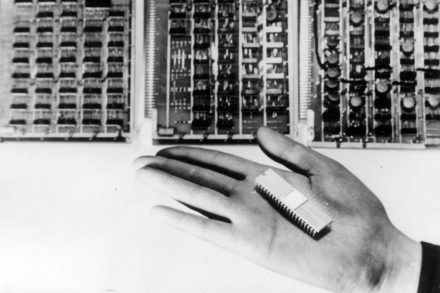
Not all inventions change the world. But some do — and they do it by greatly lowering the cost of a fundamental economic input. This inevitably causes an economic revolution that brings about a new political and social order by opening previously impossible economic opportunities,  creating vast new wealth in the process. We are in the middle of such a revolution today, thanks to the microprocessor, which first came to market in 1972 and really took off with the introduction of the personal computer in the early 1980s. The microprocessor, a dirt-cheap computer on a chip, hugely reduced the cost of storing, retrieving and manipulating information. Computing power that cost $1,000 in the 1950s today costs a fraction of a cent.

microprocessor
metaverse

Reality is enough without Zuckerberg’s metaverse

Take my hand, darling, and off we go into the metaverse. It's a whole new world...or at least it's a new world...maybe a brave new world? Enter Mark Zuckerberg, that Titanic captain of industry, who last week released a video introducing his latest plan to leave his Nike shoeprint upon reality. It's called the metaverse, and while even the savviest tech writers are grasping to explain what it is, it appears to be the fusion of our world with the virtual. Big Zuck wants what's on our screens to spill over into real life. We lived on farms, then we lived in cities, now we will live in "home spaces" with digitally rendered pterodactyls flying just outside the windows.

Joe Biden’s digital serfs

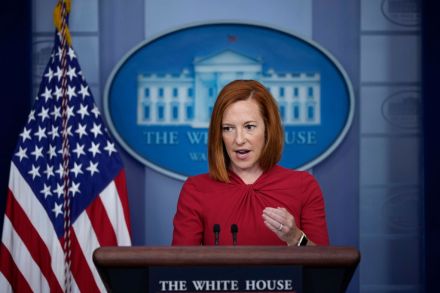
The Biden administration intends to notify Facebook about ‘problematic’ postings, such as questioning the COVID-19 vaccine. Jen Psaki, the White House spokesperson, suggests that if you’re problematic on one social-media site, you should be banned from them all. Big Tech, meet Big Sister. I suppose this is still America. If Donald Trump had said he’d use extra-legal leverage over Big Tech, most of the media would be crying ‘fascism’. Brian Stelter would decry an unprecedented assault on the First Amendment. Jeffrey Toobin would bang one out about bypassing Congress and the law. Minor academics would op-ed in the New York Times about the classically fascist ‘collusion’ between government and big business.

digital

My day at Sun Valley

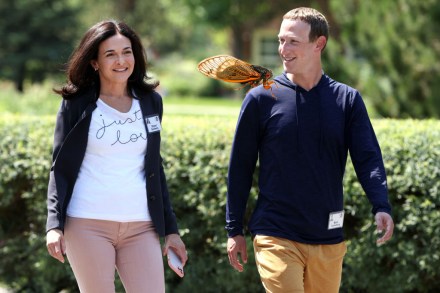
‘What would you like for dinner sir?’ ‘What do you recommend?’ ‘The grilled cicadas are very fine, sir. Or the fried cockroaches.’ ‘Sounds delicious.’ Smiling, I look around the table of the Sun Valley restaurant where billionaires from Jeff Bezos to Tim Cook have convened to talk shop in a safe environment. It is a kind of tech-based relative of Bilderberg — the annual conference at which presidents, prime ministers and assorted other elite figures quietly come together. No journalists allowed, I was told. ‘I’m not a journalist!’ ‘What are you then?’ ‘I’m a thought leader.’ ‘A what?’ ‘A public intellectual.’ ‘Eh?’ ‘I have a column in the New York Times.’ It wasn’t true but it got me in.

sun valley

Won’t someone please think of the billionaires?

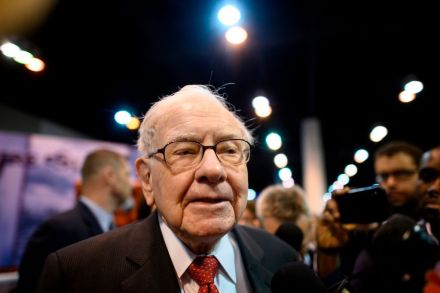
As that peerless philosopher of the 20th century Marvin Gaye once pointed out, there are three things in life of which we can all be certain: taxes, death and trouble. Cockburn has long admired the late soul legend’s lyrics, but this week, that weary little aperçu has rung somewhat hollowly in his mind. You will have no doubt read of the damning report published this week by ProPublica, investigating the murky relationship between the taxable assets and actual taxes paid by some of America’s billionaires. If so, you probably agree that it makes for thoroughly depressing reading.

buffett billionaires

Van Morrison is a sane man in a mad world

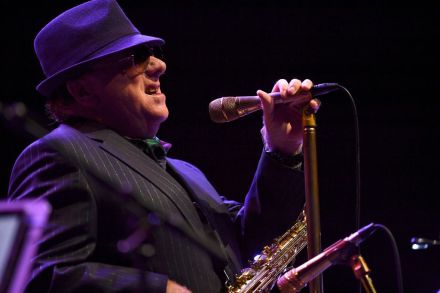
The dopes with tropes are at it again. This time, their target is Van Morrison. But Sir Ivan is, as Billy Joel would say, an innocent man. Morrison has been called a crank and anti-Semite because of the lyrics to his new single, ‘They Own the Media’. The Guardian, which really does have a problem with Jews, has called him a tinfoil milliner. The Forward, which used to be a serious Jewish paper, claims that Van’s title ‘espouses a classic anti-Semitic trope’. No, it doesn’t. What the lyrics say is that our media are owned by a small number of people. That their outlets habitually lie to our faces. That they want us to believe that ‘ignorance is bliss’, so let’s leave the decisions to the experts. And that we’ll ‘never get wise’ until we look behind the curtain.

van morrison

Mark Zuckerberg’s quest for redemption

Stung by recent criticism, and fearing major regulation, Mark Zuckerberg, founder and CEO of Facebook, has announced the establishment of a kind of ‘Supreme Court’ for his company. Selected and paid by Facebook, the members of this ‘Oversight Board’ will in theory behave as independent adjudicators capable of making rulings over content moderation and other important aspects of the business. No doubt Mr Zuckerberg is looking at the example being set by the US Supreme Court and thinking, ‘What could go wrong?’ It's hard to believe now but in 2017, it seemed plausible that Mark Zuckerberg might become president.

zuckerberg

Four main takeaways from the House’s Big Tech antitrust sideshow

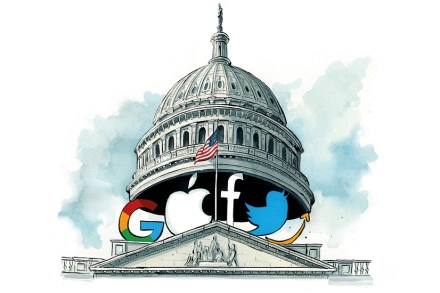
Here’s a terrifying thought: Mark Zuckerberg is the only person in Silicon Valley that the political and intellectual right can trust when it comes to ‘Big Tech’. Wednesday’s ‘Antitrust’ House hearing resembled a group of Neanderthals trying to reason with Data from Star Trek. The worst of both sides was on show as Democrats and Republicans jockeyed for the news cameras, rather than getting real answers on antitrust practices or how Silicon Valley bows to the authoritarian regime in China. I watched the grueling insurance seminar so you don’t have to: here are the four big lessons.1.

big tech

Why Trumpism won’t outlive Trump

Trumpism is, according to its adherents, meant to replace Reaganism, the political doctrine that has dominated the Republican party and the conservative movement since Ronald Reagan left office. Reaganism is identified by a commitment to free market economics, internationalist foreign policy, strong national defense and an open door to immigration.But then Reaganism and its British version, Thatcherism, have also been associated with an intellectual revolution that swept the West in the 1970s and that was headed by Nobel Prize-winning economists like Friedrich Hayek and Milton Friedman, and driven by think tanks like the Heritage Foundation, the American Enterprise Institute, the Cato Institute and the Center for Policy Studies that transformed the political discourse worldwide.

trumpism

The Facebook ad boycott is a convenient virtue-signal

When the coronavirus pandemic hit, some industry pundits predicted that the ‘techlash’ — the souring of public opinion on huge technology companies like Facebook and Google — would cool off or even disappear entirely. After all, with everyone cooped up at home, surely we’d develop a newfound appreciation for the technologies that became the only way to connect with others?That was short-lived. Following extraordinary social pressure amid this summer’s heated civil unrest, an advertiser boycott of Facebook has taken hold. Under the moniker Stop Hate For Profit and backed by the Anti-Defamation League and NAACP, brands from Starbucks to Unilever to Coca-Cola have bravely pulled ads from Facebook for the month of July.

facebook

Facebook is right. Twitter is wrong

Twitter CEO Jack Dorsey opened up a Pandora’s box two days ago by dropping a fact-check on a tweet by Donald Trump regarding mail-in ballots. That raised all sorts of hell from a bombastic President, as well as more questions than answers. There are several problems with Twitter deciding to put its thumb on the scale of ‘truth’ on its social platform. The site has previously come under enormous scrutiny over widely perceived political and ideological bias. The charges against the company include its unfair and unbalanced actions in banning conservative or politically right-leaning accounts, as well as shadow-banning and limiting views and engagements on trending topics which it deems problematic.

facebook

Silicon Valley: the latest stage for political grandstanding

Silicon Valley can’t catch a break politically these days — from either party. Facebook CEO Mark Zuckerberg was grilled extensively by members of Congress this week in a hearing ostensibly about the company’s now-on-shaky-ground Libra cryptocurrency that turned into a broader scrutiny of its ethics and business practices. Democratic Rep. Alexandria Ocasio-Cortez’s questioning, predictably, went viral, with even a remix that replaces Zuckerberg with Cousin Greg from HBO’s Succession. But it’s not just Democrats — such as presidential candidate Elizabeth Warren, who’s made Zuckerberg a campaign trail bogeyman — assailing venture-backed billionaires these days. Republicans want a piece of the action, too.

Silicon Valley

Zuckerberg lays out Facebook’s free speech future

When he created Facebook, Mark Zuckerberg radically changed the world. In a speech today at Georgetown University, he seemed eager to do so again. It is my fervent hope that he is successful. In sweeping rhetoric liberally sprinkled with historical references, Zuckerberg drew a line in the sand, recognizing that ‘the ability to speak freely has been central in the fight for democracy worldwide.’ He bemoaned the fact that ‘we’re seeing people try to define more speech as dangerous’ and committed himself and Facebook to being forces for good in the fight to preserve freedom of expression.In a world increasingly intolerant of dissent, this is no small promise, and I don’t believe it’s an empty one, either.

mark zuckerberg

I always knew Mark Zuckerberg was a far-right incel

The #DeleteFacebook hashtag was been trending all yesterday on Twitter after it became known that Facebook CEO Mark Zuckerberg has been involved in talks with a few well-known conservative influencers in recent months to discuss free speech and partnerships.In a grossly misjudged attempt to keep Facebook a place for ‘balanced debate’ (also known as ‘hate speech’), and free from censorship (which as we all know is just alt-right code for ‘hate speech’), Zuckerberg has inadvertently displayed his true colors. Zuckerberg’s forays into the inner cabals of the Dark Side are a result of Donald Trump’s allegations of 'bias' against conservatives at Facebook and other major social media companies.

facebook

Facebook’s fake news problem is about more than just ads

It seems like it should be quite the scandal: one co-founder of Facebook chastising another publicly for a business decision that has, allegedly, had major social reverberations. In response to Democratic presidential contender Elizabeth Warren calling out Facebook for loosening its restrictions on political advertising, Facebook co-founder Chris Hughes took to Twitter. ‘I have a feeling that many people in tech will see Warren’s thread implying FB empowers Trump over Warren as unfair,’ Hughes wrote. ‘But Mark [Zuckerberg], by deciding to allow outright lies in political ads to travel on Facebook, is embracing the philosophy behind Trumpism and thereby tipping the scales.

facebook ads

Elon Musk’s brain game

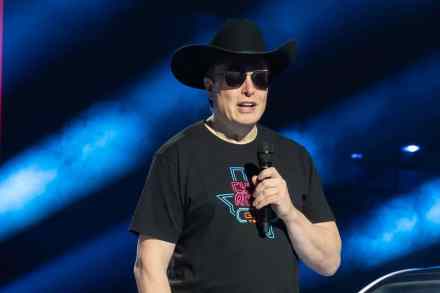
When Elon Musk took to the stage at the California Academy of Sciences on Tuesday, he gave the world the first insight into his vision for mapping and ultimately controlling the brain. Three years ago, Musk formed Neuralink which was specifically created to respond to the threat that Musk’ believes is posed by the imminent threat of thinking machines powered by AI. Musk believes that phase of the information revolution could mark the end of humanity as robots outpace humans in intelligence and pace of evolution. His answer is to fully understand exactly how the brain works and, in the process, he believes that the new science will find the cure for many of humanity’s most deadly illnesses such as Parkinson’s, Alzheimer’s and PTSD.

elon musk brain