Mark carney

Any other business: The £1 bet that built a 1,000-strong company

From our UK edition

At a charity lunch in Manchester, I meet a cheerful ‘engagement manager’ from AO.com, formerly Appliances Online, a fast-growing internet seller of fridges and washing machines headquartered at Horwich near Bolton. The job title is new to me: it turns out to mean engaging the company’s workforce in ways that help them enjoy their jobs and feel valued. Their employment package features a £4-a-month ‘healthcare cash plan’ including dentistry, days off for charity work, gym memberships and a 50 per cent subsidy for ‘any social activity our staff fancy, so long as it develops their skills and is done by more than four people’.

The Battle for Threadneedle Street

From our UK edition

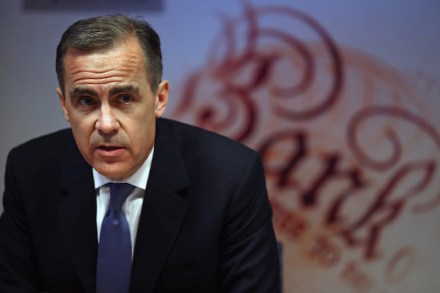
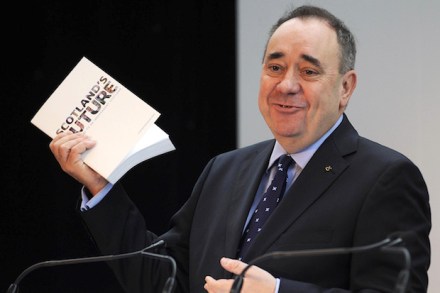
I thought it obvious that Mark Carney's trip to Scotland yesterday was a bad day for Alex Salmond and the Scottish nationalists. Sure, the governor of the Bank of England said, a currency union between Scotland the the rump UK could happen and be made to work but it would be fraught with difficulty and sacrifice too. Do you really want to do that? How lucky do you feel? Carney, being a Canadian and therefore a man crippled by politeness, did not add "punk". In response the SNP were reduced to pushing a meaningless poll which found 70% of Britons favouring a currency union after independence. That is, 70% of the 97% of people who have not thought much about this or who know nothing about it favour the status quo. Perhaps that sounds harsh or insulting; it isn't meant to be.

Alex Salmond writes a cheque – in pounds sterling – he cannot honour

From our UK edition

As I type this, Alex Salmond and Mark Carney are chowing over porridge at Bute House, the First Minister's official residence in Edinburgh. There is always the risk of exaggerating the importance of these things but this morning's meeting with the Governor of the Bank of England may be the most important encounter Alex Salmond has this year. The question is simple: will an independent Scotland be able to forge a currency union with the rump United Kingdom? The answers, for all the First Minister's bland assurances that such a union is in everyone's interests, are not so simple. Like poker players, politicians often have a "tell". When Salmond offers a kind of breezy emollience he's often holding weaker cards than he wants you to think.

Miliband’s big speech challenge isn’t Mark Carney

From our UK edition

Even though Labour is quite clearly rather peeved by George Osborne's minimum wage announcement, it is, in one way, a compliment to Ed Miliband that the Chancellor felt it strategically important to try to sabotage the Labour leader's speech on banking, which he will deliver shortly. The Conservatives are aware that even if Miliband has a knack of coming up with policies that sound potty, he also has a knack of framing them in a way that disrupts the political debate. Thus a pledge by a party leader in the autumn to control prices in a market where he has no control of worldwide wholesale markets still managed to cause significant trouble.

Britain is booming. So do we still need ultra-low interest rates?

From our UK edition

Car sales are up 11pc, making the FT splash this morning. House prices are soaring again, up 8pc last year. And the British Chamber of Commerce has this morning released its Q4 survey showing a startling surge in investment, orders and employment (graph, above). Good news for George Osborne’s plan for a ‘balanced’ recovery: manufacturers' capacity use, confidence and employment difficulties are at the highest since the survey began in 1988. The upshot, as Citi says (pdf) is that the UK economy will likely grow far faster this year than Osborne’s cautious official expectation. He will most likely have another healthy upgrade to announce in his next budget. Citi expects growth of more than 3 per cent this year.

Carney may call for the end of Help to Buy sooner than you think

From our UK edition

Mark Carney’s speech to the Economics Club of New York yesterday made clear that very low interest rates now ‘put a premium on macroprudential policies’. Translation: he's not going to hike interest rates soon, but he wants us to know that there are other levers he can pull to keep the UK economy on track. What are those levers? First, Funding for Lending. Two weeks ago Mark Carney announced that the scheme – which offers banks cheap funding if they increase lending to the real economy – would no longer be available for mortgage lending. It will only be open for loans to companies. That's a lot more than just technical tweaking: excluding mortgages was the Bank's first move to tighten lending conditions for more than six years.

The economy is booming, says the Bank of England. So why won’t it raise rates?

From our UK edition

Yet another survey suggests that Britain is booming – this time, it’s from the Bank of England’s Monetary Policy Committee. They’re the guys who kept interest rates too low for too long – creating the last boom. It sees another boom now."For the first time in a long time you don’t have to be an optimist to see the glass is half full," said Mark Carney, the new BoE Governor. "The recovery has finally taken hold." Citi has crunched latest BoE figures (pdf) and says this envisages real GDP growth of a stonking 3.4 per cent next year and 2.8 per cent the year after, which it says is one of the MPC's biggest-ever upgrades. (They had been expecting 2.7 per cent and 2.5 per cent for 2014 and 2015.) It’s also substantially above the consensus. Happy days.

Tax cuts R us! Ten points from David Cameron’s Marr interview

From our UK edition

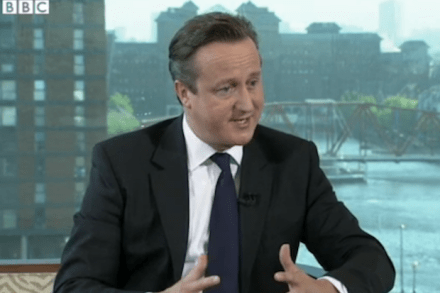
Here’s what jumped out at me from David Cameron’s interview with Andrew Marr in Manchester this morning: Tax cuts: the Tory weapon 'As this economy has started to recover, it’s very difficult for people to make ends meet. Their wages are relatively fixed, and the prices are going up. That’s why cutting people’s taxes is so important. That’s why lifting people out of the first £10,000 of income tax is so vital. That’s why freezing the council tax matters.' So Cameron acknowledges Miliband's premise, that the cost of living is an issue, then presents tax cuts as the solution. Precisely the right strategy, as tax cuts are bankable and Miliband's claim to freeze energy bills is less so.

Charm-y Carney shows his bookish side

From our UK edition

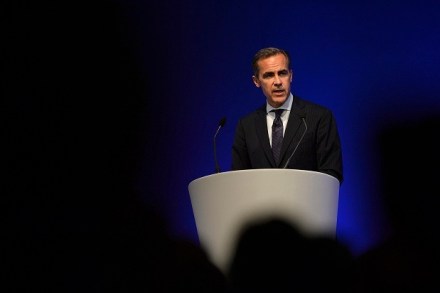
Mark Carney’s charm offensive continues. I hear that the new governor of the Bank of England was laying it on thick last week when he bumped into Faisal Islam, Channel Four’s Economics Editor, after he gave his first public speech. ‘Don’t you have a book out?’ The Canadian smoothy asked Faisal, who offered to send him a copy. ‘Well I've got an idea, how about I buy one?’ The charmer cooed. ‘I’d be honoured, governor.’ Faisal beamed. ‘Hey,’ replied the governor, ‘I said I’d buy it; I didn’t say I’d read it!

Institute of Directors trial the end of the suit

From our UK edition

Is this the end of business attire? The slow degradation of the standard issue suit has reached the Institute of Directors — the Pall Mall-based bastion of all things business. Its website says that members should ‘make the decision on what they would normally wear to do business, as long as it is not deemed indecent.’ So, what does that mean? ‘Members will be permitted to wear jeans, T-shirts, shorts and all variants of footwear. There is a very mixed view about the dress code and this will be for a trial period of 3 months.’ The trial is advanced: my mole says that there have been at least seven noted ‘incidences’ of short-wearing, which sounds positively Californian.

The creepy cult of Mark Carney

From our UK edition

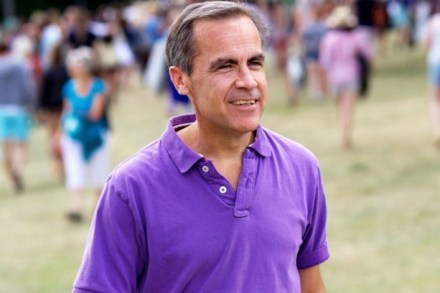
Of all the qualities one hopes for in a Bank of England Governor – a brilliant mind, the courage to tell politicians they are wrong, supernatural foresight – coolness is not among them. I don’t mean coolness under pressure; clearly that helps. I mean the ability to project a hip image. The new Bank of England Governor may well be a terrific economist. More than that, however, he is a first-rate media brand. He's more Blair than Blair. Hell, he's more Blair than Cameron. Last weekend, he went to the Wilderness Festival, aka ‘poshstock’, and the press seems to have taken that as proof that things are going to get better.

Interest rates set to stay low for the foreseeable future

From our UK edition

Mark Carney made his mark this morning. Moments ago, he opened his inflation report and issued his ‘forward guidance’, which is designed to make the markets aware of his long-term plans for interest rates. This is important because, although there are signs of life in the British economy (and Carney was cautious about them), inflation remains above the Bank of England’s target, the base interest rate remains rooted to the floor and unemployment remains high at around 8 per cent. There is also the question of Britain’s mounting debts, the answer to which will largely depend on how the bond markets react to this and other announcements. And then there is the prospect of further quantitative easing… So, what happened?

Dear Justin Welby – here’s how you can really take on Wonga

From our UK edition

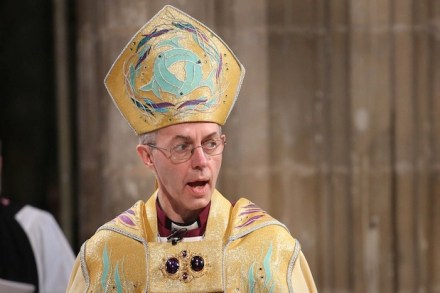
I’ve been in the pulpit again, this time to salute the centenary of the death of Charles Norris Gray, a formidable Victorian vicar of my Yorkshire town of Helmsley. Gray was a social activist with strong opinions on everything from sanitation to election candidates, and he did a great deal of good for his parish — so I’m not averse to the idea of churchmen intervening in worldly affairs, and I think Archbishop Justin Welby was right to highlight the parasitical nature of ‘payday lenders’ such as Wonga, even if he was subsequently embarrassed to discover that the Church of England was an indirect investor in it.

The View from 22 — the men from the colonies running Britain, the rise of the Death Café and male toplessness

From our UK edition

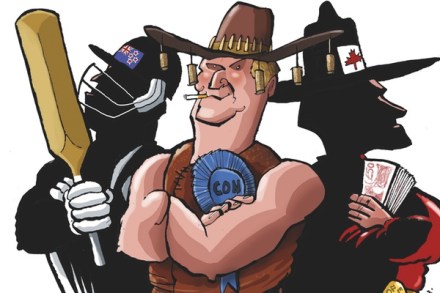
Has the British establishment been taken over by men from the Commonwealth? What with a Canadian in charge of the Bank of England, an Aussie strategy advisor for the Tories, a South African advising the Lib Dems, and — let's not forget — a Zimbabwean coaching our cricket team, it does seem as if alpha males from the former empire are in charge. In this week's podcast, James Forsyth discusses his cover essay on 'The New Colonials', and explains what makes them so successful. He’s joined by Ruth Porter from the Institute of Economic Affairs, a New Zealand citizen who is also married to a Kiwi, as they attempt to get to the bottom of the mystery. Surely, argues James, it makes sense to strengthen our bond with the ‘dominions’, rather than looking to Europe?

Colonial rule: Why Aussies, Kiwis and Canadians are running Britain

From our UK edition

Last month, David Cameron convened a meeting of his most important advisers at Chequers. The Prime Minister, the Chancellor and the Conservative party chairman were all present, but there was little doubt who was in charge. The Australian strategist Lynton Crosby was dominant, doling out orders and drawing up ‘action points’. One of those in the room recalls: ‘Lynton was fantastic. He made sure there was an agenda, that everyone stuck to it.’ It might seem odd for an Aussie to be telling the British PM what to do, especially in this most English of settings, but it’s mainly because of his nationality that the ‘Wizard of Oz’ gets to call the shots.

Don’t blame the baby boomers – they had it tough too

From our UK edition

Here’s a competition for you: ‘The most irritating discussion on Radio 4 in the past month.’ Answers in not more than 140 characters — but on a proper postcard, preferably written in fountain pen. My own choice was an edition of The Moral Maze that heaped abuse on ‘Baby Boomers’ (usually understood as those born in the decade after the second world war, including me as a happy arrival of January 1955) for ‘raiding their kids’ piggy-banks’ and other offences of ‘generational theft’. The argument — vehemently made by the former Labour policy guru Matthew Taylor, and rebutted by Melanie Phillips when she could get a word in — is that the cohort now at retirement age is, in a moral sense, disgustingly well off.

The world is better off without Marc Rich – but his heirs still control the price of almost everything

From our UK edition

Marc Rich, the godfather of global commodity trading who died last week, ‘deserves credit as one of the greatest creators and sharers of wealth in business history’, wrote James Breiding in the Financial Times in a counterblast to obituarists who had painted the secretive Swiss-based billionaire and former fugitive from US justice as ‘a flamboyant, tax-evading crook’. Bill Clinton certainly saw the better angel in Rich’s nature, granting a presidential pardon for his embargo-busting dealings with Iran against all precedent and advice.

What can we expect from Mark Carney?

From our UK edition

What the Mark Carney era may offer is a little bit more predictability on monetary policy. Under Mervyn King the main guidance came from the Bank’s quarterly Inflation Report press conferences, MPC minutes, and speeches by committee members. Under the Bank’s new remit, set by the Chancellor in the March budget, it’s likely that Carney, like Bernanke, will seek to link interest rates and monetary policy directly to growth and jobs targets There will be subtle changes but no one, as economists at HSBC have noted, is expecting ‘shock and awe’. The big question for Carney is which indicators to use as targets. The runners are unemployment (as in the US), real GDP, or the measure preferred by many economists: nominal GDP.

Is Mark Carney about to bring Osborne’s cheap debt party to a close?

From our UK edition

If free and open markets are the Wild West, inhabited by roving bands of asset managers, hedge funds, investment bankers and random traders, then the sheriffs are the central bankers. A change of sheriff makes a real difference to trading conditions. The focus of London traders and analysts has already shifted to a new sheriff with the arrival of Mark Carney at the Bank of England next week, and much anticipation of his new tool of ‘forward guidance’, which he is expected to unveil in August. Central bankers, far more than politicians, have long held sway over financial markets. That influence is at its greatest at times of economic tumult. We have been sharply reminded of this during the period after the great panic of 2008 and the subsequent great recession.