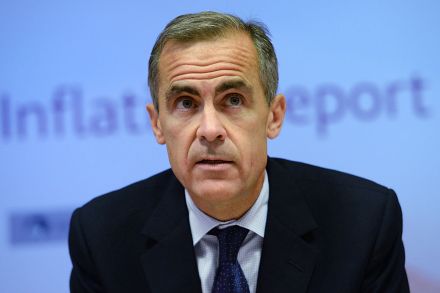
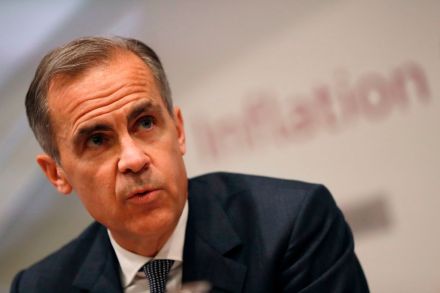
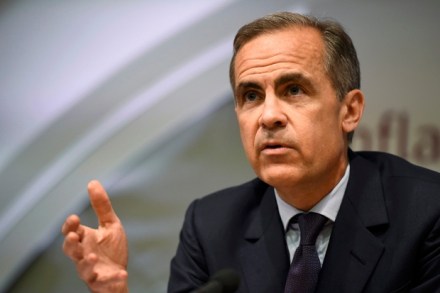
Mark carney

A rate rise in November? After years of dithering, don’t bet on it

From our UK edition

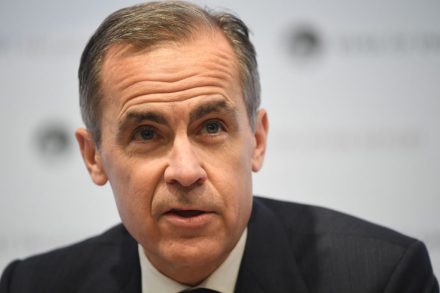
It is more than three years since Bank of England governor Mark Carney was accused by Labour MP and Treasury Select Committee member Pat McFadden of behaving like ‘an unreliable boyfriend, one day hot, one day cold’ in his hints about forthcoming interest-rate rises. And it’s more than a decade since the last time the official UK bank rate actually moved upwards: the only shift since McFadden’s remark has been a cut from 0.5 per cent to 0.25 per cent in August last year. In fact there’s a palpable sense that the Bank, in common with other central banks, has all but lost the power to deploy interest rates as a monetary tool, having left them so low for so long.

The Bank of England can’t remain in its ‘Brexit’ parallel universe forever

From our UK edition

House prices are in freefall. Unemployment is rising relentlessly. The pound is plunging on the markets, and companies are re-locating to Paris and Frankfurt in droves. In the parallel universe Mark Carney increasingly seems to live in, that is a pretty accurate description of the British economy. In this universe, however, the picture is very different. The economy is doing just fine – and that is making it increasingly hard to understand why interest rates are being held at ‘emergency’ levels to cope with the ‘catastrophe’ of leaving the European Union. At a meeting of the Monetary Policy Committee yesterday, the Bank left rates on hold at 0.25 percent, while hinting that might finally go up next month.

What the papers say: Mark Carney, Brexit & Corbyn’s silence over Venezuela

From our UK edition

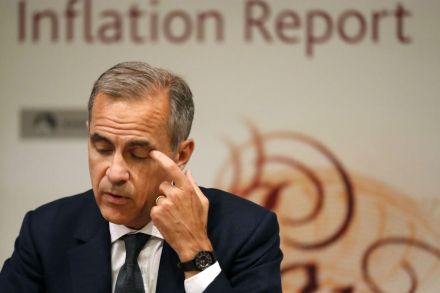
Mark Carney is often accused of being downbeat about Brexit. But the Bank of England’s quarterly inflation report is ‘more sanguine than one might expect’, says the FT. The paper points out that despite a cut in the country’s growth forecast, the Bank ‘expects stronger net trade and business investment to drive a recovery in 2019’. Yet Carney remained ‘candid’ about the damage Brexit is already doing to Britain's economy. Businesses are investing less, reports the FT, and ‘this has uncomfortable implications’. With the Bank warning that ‘the level of investment in the UK economy (will be) be 20 percentage points lower in 2020 than it forecast before the referendum’, this damage looks sure to continue.

Mark Carney’s gospel: give us an interest rate rise, Lord – but not yet

From our UK edition

Is there anything more predictable than a Mark Carney press conference? The poor sod in Groundhog Day got to enjoy more variety and suspense. Explaining why, yet again, the Bank of England had decided not to raise interest rates, Governor Carney told us that rates could rise ‘faster than markets expect’. That wouldn’t be all that hard, given that markets have pretty well given up on Carney ever shifting rates. Maybe they believed him the first time, in June 2014, when he said that a rate rise could come ‘sooner than markets expect’. Maybe they were still inclined to take a little bit of notice in July 2015 when he told us that he expected rates to rise over the next three years to reach around 2 per cent. But now Carney has become a bit of a yawn.

Fudging Ireland’s border issue can only mean Troubles ahead

From our UK edition

The question of what kind of border after Brexit will exist between Northern Ireland and the Republic will, I predict, become a very thorny one indeed as negotiations crawl into the autumn. Talk of ‘putting the border in the Irish Sea’ — somehow leaving the north inside the EU for customs and immigration purposes, but cut off from European funding — was a red herring that provoked DUP tantrums, but more significant was the weekend outburst from Taoiseach Leo Varadkar. As far as his government is concerned ‘there shouldn’t be an economic border… and we’re not going to help [the British] design some sort of border that we don’t believe should exist in the first place.

Let’s make sure our fishermen are protected against Brexit tit-for-tat

From our UK edition

I voted Remain last year for two reasons. First, however irritating I found some aspects of the EU, I could not vote for the chaos I believed would follow a Leave victory. From the accession of Theresa May to the night of the general election, that looked like an excess of pessimism; now it looks like wise foresight. The second prong was an analysis of my own and my neighbours’ economic circumstances: in what sense was EU membership actually making us worse off? In my own case, not at all; local shops, hospitality outlets and tourist attractions, likewise. Subsidised hill farmers and fatter farming cats on the flatlands? Not really, even though broader frustration with Brussels made many of them vocal Brexiteers.

The next financial crisis is coming ‘with a vengeance’, says the expert. But when?

From our UK edition

There’s a passage in Philip Larkin’s All What Jazz, the collection of his writings as the Daily Telegraph’s jazz critic, that imagines his typical readers. Husbands of ‘ageing and bitter wives they first seduced to Artie Shaw’s “Begin the Beguine”’ who take comfort from collections of ‘scratched coverless 78s in the attic’, they are ‘men whose first coronary is coming like Christmas’. The same sense of gloomy inevitability often pervades the so-called ‘dismal science’ of economic commentary, amplified by political uncertainty and traumatic events: the one thing we know for certain is that economic life is cyclical and that any run of benign signals can only ever be temporary.

Mark Carney slapped down by Andy Haldane, his own chief economist

From our UK edition

Yesterday Mark Carney – who hates it when politicians say anything about him – had a pop at Boris Johnson, ridiculing his optimistic approach to Brexit as seeking "cake and consumption”. Set aside the impropriety of the Bank of England governor making such a political swipe, Brexit was a deep psychological blow for people like Carney - but at least managed to give him an excuse to keep the economy on the drug of rock-bottom interest rates. Employment is at a record high, inflation is over the target but Carney said yesterday that he still doesn’t think it is “the time to begin that adjustment” – i.e. rate rises. The thing is, it’s not up to him.

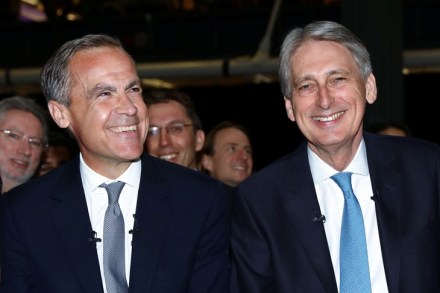
Meet the new leaders of Project Soft Brexit: Mark Carney and Philip Hammond

From our UK edition

As double acts go, it is probably not up there with Eric and Ernie, John and Paul, or even Liam and Noel. Even so, Mark and Phil, the Governor of the Bank of England Mark Carney and the Chancellor of the Exchequer Philip Hammond, certainly looked today as if they were working in tandem to try and steer the country towards a gentler version of Brexit than some of the harder men of that movement would prefer. Anyone listening to their speeches in the City this morning, postponed from last week in the wake of the Grenfell Tower tragedy, will have seen immediately what they were up to. Carney was at pains to point out that while the economy had been resilient in the immediate aftermath of the referendum vote last summer, there would still be tough times ahead.

Let’s stop blaming Brexit for higher inflation

From our UK edition

No time has been lost in blaming Brexit for today’s rise in the Consumer Prices Index (CPI) to 2.9 per cent. It wasn’t just those on the left, either. The head of Theresa May’s policy unit, George Freeman, tweeted this morning: 'This is reality of the devaluation of the £ post Brexit'. While George Freeman has always been a staunch Remainer, the fact he put this out is possibly indicative of a change in attitude at Number 10 – an attempt to reach out to those in the party who continue to believe that Brexit is a mistake. Yet the longer the rise in CPI goes on the less it looks like an adjustment to a lower pound and the more it begins to look like a consequence of excessively-loose monetary policy.

Today’s GDP data reveals one thing: Mark Carney should have kept his cool after Brexit

From our UK edition

Inflation is rising. Real wages are stagnant, and GDP is being revised downwards, putting us down there with the likes of Italy. If Theresa May had a script for the final fortnight of the election campaign it probably didn’t include figures like those. Today’s revision of the quarterly GDP number, down to a sluggish-looking 0.2 percent, from the initial 0.3 percent, will no doubt be seized upon by critics of the government, and by the increasingly battle-weary battalions of hardcore Remainers, as evidence that the wheels are finally coming off the economy, and the impact of a ‘hard Tory Brexit’ is finally being felt. In fact, however, it tells us something quite different. The UK is certainly slowing down in the first half of this year.

Mark Carney falls victim to a hoax

From our UK edition

For weeks now, an email hoaxer has been trying to catch bank officials out online. After the prankster tricked Barclays boss Jes Staley, they set their sights on a new target: the governor of the Bank of England. Claiming to be Anthony Habgood, chairman of the court of the Bank of England, the hoaxer emailed Mark Carney about reports that Jane Austen would appear on the new £10 banknote, before getting into a conversation about drinking. While Carney did suggest that he was partial to Eddie George's drinking advice (to have three martinis ...

Britain’s borrowing binge – not Brexit – should be the big worry for the Bank of England

From our UK edition

So, the Office of National Statistics has confirmed that the economy grew by 0.7 per cent in the last quarter of 2016, and by 1.8 per cent over the course of the year. Can we now please stop worrying about a post-Brexit recession and worry instead about an unsustainable consumer boom fed by interest rates which remain at panic levels. The bad news this morning is that the UK saving ratio – which is an estimate of the percentage of their income which households are saving – has fallen sharply from 5.3 per cent to 3.3 per cent. That takes it lower than it was a decade ago, just before the financial crash, and indeed is the lowest level measured in half a century. As Helen Nugent wrote here yesterday,  consumers are piling on credit card debt at the fastest rate in a decade.

Mark Carney finally gets it: the real risk is a Brexit boom

From our UK edition

It is possible that Mark Carney is not quite the last person to notice that the post-Brexit economy is positively booming. Jean-Claude Junker might be too busy working out new ways to ‘punish’ Britain to have paid attention to the statistics. Gina Miller is possibly working on some bizarre High Court action to keep us in the EU. There might even be a leader writer somewhere at the FT who is still worrying away about the collapse of the economy. But just about everyone else has woken up to the fact that ever since we voted to leave the EU, the British economy, far from falling off a cliff, seems to have got markedly better. So Carney may not be absolutely the last person to the party.

Socrates on expertise

From our UK edition

The governor of the Bank of England, Mark Carney, raises his growth forecasts and suddenly everyone believes the ‘expert’. So is it wrong to say that people ‘have had enough of experts’? Yes, totally wrong. Expertise exists: the question is, with what scope? Socrates dissected the problem. In debates in Athens’ democratic Assembly, he pointed out, topics such as building or ship construction were taken to be the business of builders and shipwrights, and anyone who, though no expert, attempted to give advice in those areas was jeered off the platform.

The Bank of England is (slowly) overcoming its Brexophobia

From our UK edition

It has been clear for some time that the pre-referendum warnings made by Bank of England governor Mark Carney were wide of the mark. Last May, he said that a vote for Brexit would pose an ‘immediate and significant threat’ to the UK economy, increasing unemployment, hitting growth, possibly to the point of recession. Today, however, the bank effectively admits that it was still being far too gloomy about the economy even last November. It upgraded its forecast for economic growth in 2017 from 1.4 per cent (as announced in the Autumn statement) to two per cent – saying that consumer spending has been stronger than expected and that the global economy as a whole has been performing better. The wonder is now why on Earth the Bank of England kept interest rates at 0.

Leak suggests EU will seek ‘special’ deal to access the City post-Brexit

From our UK edition

The Guardian has a very significant story on its front page tomorrow. It has obtained notes of a meeting that Michel Barnier, the EU’s chief negotiator, had with senior MEPs this week. These notes show that Barnier told them that he wanted a ‘special’ deal that would guarantee access for the EU firms and countries to the City of London’s financial markets. Interestingly, Barnier also said—according to The Guardian’s account—that ‘There will need to be work outside of the negotiation box … in order to avoid financial instability.” This suggests that Barnier shares Mark Carney’s view that there are financial stability risks for Europe if the EU cuts itself off from the City of London.

Mark Carney strikes a different tone on Brexit

From our UK edition

Mark Carney made himself some enemies during the referendum. It wasn’t only his gloomy prophecies that caused trouble. His willingness to speak out in the first place was enough to anger those who thought he should keep shtum on a politically-loaded topic like Brexit. Today, though, we saw a different Carney. Gone was the gloominess, and in place of his warning that the referendum was ‘the most significant’ risk to Britain’s financial stability, came the verdict that Britain was largely out of that particular storm.

Will disgruntlement prevail again in 2017? Who knows, but at least 2016 was quite fun

From our UK edition

Most of my predictions for 2016 were wrong; so let’s not revisit them. But I was right, in January, to identify as a theme of the coming year an evident gulf between ‘the reinvigorated and the demoralised’. In small business sectors and provincial towns, as well as in the attitudes of millions of citizen voters here and abroad, the divergence between optimism and disgruntlement grew as the year went on. And when it came to elections and referendums, it was the downbeat that prevailed. So here we are, fearful of the craziness of Trump, the disintegration of Italy, the triumph of Marine Le Pen and the non-resolution of the Brexit muddle. My top prediction for 2017? We won’t feel any more prosperous at the end of the year than we do at the beginning.

Mark Carney takes issue with Theresa May at Treasury select committee

From our UK edition

With Mark Carney stepping down from his role as governor of the Bank of England in 2019, it's been widely reported that relations between Carney and Theresa May are strained. As James Forsyth writes in The Spectator, the Prime Minister managed to rub Carney up the wrong way with her Conservative conference speech when she appeared to criticise central banks and citizens of the world. At today's Treasury select committee, Carney denied that May's comments played a role in his decision to extend his contract by just 12 months. He did, however, appear to take a swipe at May over her choice words.