Mark carney

Portrait of the week: Spies in Norfolk, rats in Birmingham and Denmark ditches letter deliveries

From our UK edition

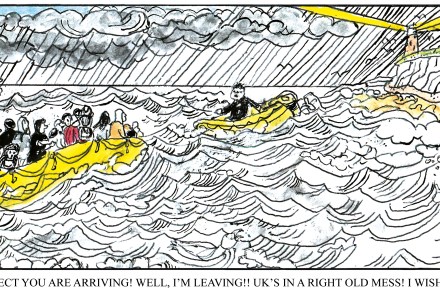
Home Three Bulgarians were found guilty of spying for Russia as part of a cell that plotted to kidnap and kill targets in Europe, under a fellow Bulgarian who lived in a former guest house in Great Yarmouth, Norfolk. The court heard that the spies reported to Austrian-born Jan Marsalek, who sought refuge in Moscow after the collapse in 2020 of Wirecard, the German payments company he helped run. Walgreens Boots Alliance, the US owner of Boots the chemist, was taken over by a private equity firm, Sycamore Partners. The government introduced the Planning and Infrastructure Bill, which will enable councils to seize land. The cost of a first-class stamp will go up 5p to £1.70 on 7 April.

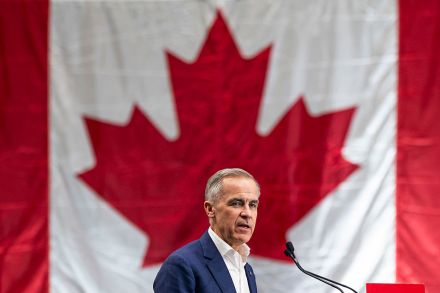
Mark Carney is Canada’s new prime minister

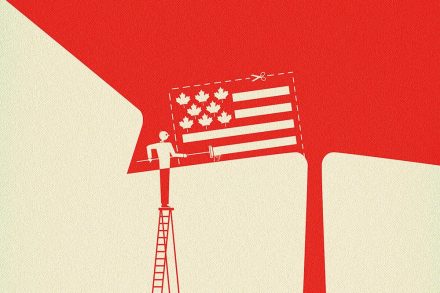
It is difficult to overstate how much Donald Trump has changed the dynamics of Canadian politics. When Justin Trudeau resigned on January 6, his Liberal party was on just 16 percent in the polls — 25 points behind Pierre Poilievre’s Conservatives. Within six weeks, that had narrowed substantially, with Nanos suggesting there was just two points between the two parties. The top issue of national concern? Donald Trump and US relations. Visiting Ottawa in January, I was struck by the remark which one Member of Parliament made to me. “We don’t see America and tariffs as foreign affairs — we see them as actually an extension of our domestic economic policies.

mark carney

Canada can do more to address the fentanyl crisis

It was a field day for the Canadian freight industry on Monday. Every truck in the country, stuffed to the gills with product, was racing the clock to the border. The few drivers still available commanded ridiculous prices — up to $12,000 higher than normal. At the stroke of midnight, the 25 percent blanket tariff kicked in. Trucks that had yet to make it across the border hit the brakes and turned around. The party was over; the coaches became pumpkins again, it was time for Cinderella to go home. The whole week before, business owners, brokers and shippers were asking each other: "Have you seen anything official on this? Anything from the Canadian government?" They hadn't.

fentanyl canada

Who’s cashing in on the climate emergency?

From our UK edition

'The climate transition presents a historic investment opportunity,' says BlackRock CEO Larry Fink. 'What the financiers, the big banks, the asset managers, private investors, venture capital are all discovering is: There’s a lot of money to be made in the creation of these new [green] jobs,' chimes in presidential climate envoy John Kerry.  Fink concedes that the economy remains 'highly dependent' on fossil fuels. He also asserts that BlackRock is 'carbon neutral today in our own operations'. It’s a claim open to challenge. 'If a company or individual says to me they are net-zero, I know it is complete crap,' tweeted Glen Peters, research director of the Oslo-based Centre for International Climate Research.

China’s rockstar-of-tech has fallen foul of Xi

From our UK edition

FTSE indices soared as the Biden Bounce met vaccine euphoria, underpinned by the Bank of England’s announcement of another £150 billion injection of quantitative easing. It was heartening to see shares in airlines, hotels and Rolls-Royce, the aero engine maker, perking up — and hardly surprising to see lockdown winners such as Ocado and Just Eat among the fallers. Across the Atlantic, even mighty Amazon shed 5 per cent on Monday. But stock markets are one thing and real life is another. What matters in the short term is whether Boris Johnson can get us out of the lockdown he clearly didn’t want before the tide of redundancies, heading towards 150,000 a month, crushes the prospects for a consumer-led recovery, even after vaccine distribution has begun.

Mark Carney’s replacement must be a Brexiteer

From our UK edition

Almost half a million a year basic. A generous housing allowance. Lots of invitations to swanky conferences, and a fantastic office right in the centre of town. And all the last guy had to do during six years in the job was tweak interest rates three times. That works out at a million per move – and that’s before expenses. Running the Bank of England is, on the surface at least, such a cushy job I might even apply myself. We never even have a decent sterling crisis to contend with any more. And yet despite that, there are already reports that the Chancellor might have trouble finding anyone to take over from Mark Carney next year. The Treasury advertised the vacancy this morning and started tweeting it out immediately, perhaps in the hope of drumming up some interest.

Mark Carney is finally right about Brexit | 13 February 2019

From our UK edition

Cripes. At this rate the CBI will be putting out reports on Brexit's potential benefits, George Osborne will be reminding us he could always see its upside, and even the FT will be running leaders saying Brexit doesn’t quite mean the end of the world. There have been plenty of twists and turns in our tortured departure from the European Union but few quite so unexpected as the apparent conversion of the Governor of the Bank of England Mark Carney to the cause. In a speech yesterday, Carney didn't opt for any of the apocalyptic stuff – no food on the shelves at Tesco, pensioners dying in hospitals because of a shortage of medicines, slight delays at the Tuscany airports – but instead he took a more measured, reasonable approach.

Mervyn King: May’s deal is a shameful betrayal of Brexit

From our UK edition

It's safe to say that Mervyn King,  former Bank of England governor, does not quite agree with Mark Carney on Brexit. In an incendiary article for Bloomberg, he says that the sight of Boris and Blair uniting against the deal shows  that "something has gone badly wrong". How wrong? Here's his argument. "The withdrawal agreement is less a carefully crafted diplomatic compromise and more the result of incompetence of a high order. I have friends who are passionate Remainers and others who are passionate Leavers. None of them believe this deal makes any sense. It is time to think again, and the first step is to reject a deal that is the worst of all worlds.

Has Mark Carney just ended the campaign for a ‘People’s Vote’? | 20 November 2018

From our UK edition

The headlines will inevitably write themselves. The Bank of England backs Theresa May. The Prime Minister's beleaguered and precarious deal is the best of all the options available and the economy may well get through the next few months largely unscathed. Following the testimony this morning from the Bank’s governor Mark Carney, most people will pick up on the support he has given to the Prime Minister and his reassurance that the economy will survive our departure. And yet there were two more significant points that emerged from his testimony. The Bank is finally willing to concede that leaving without a deal wouldn’t be so bad after all. And just at the moment when not leaving at all has become a real possibility, the Bank has given up on it.

Portrait of the Week – 6 September 2018

From our UK edition

Home Mark Carney kindly said he would stay on as governor of the Bank of England if it helped the government ‘smooth’ the Brexit transition. Lord King of Lothbury, Mervyn King, a former governor of the Bank of England, said that ‘incompetent’ preparation for Brexit had left Britain without a credible bargaining position. Paul Pester announced his resignation as chief executive of TSB after seven years, following the computing failure at the bank. Chris Evans announced on air that he would be leaving the Radio 2 breakfast show at the end of the year; he is to host Virgin Radio’s equivalent. David Watkin, the architectural historian, died aged 77. Lord Melchett , the former chairman of Greenpeace, died aged 70.

We fume at Amazon’s tax trickery as we marvel at its one-click convenience

From our UK edition

‘There has to be a level playing field so that… Amazon cannot undercut domestic booksellers by using the tax advantage of booking in Luxembourg a sale to a UK customer that is fulfilled from a UK warehouse.’ I wrote that five years ago: since then, no government anywhere has effectively addressed the issue of global tax minimisation by online giants and multinational consumer brands. As Amazon’s merchandise range has expanded, it has gone on undercutting not just our last surviving bookshops but every other business-rate-burdened local retailer. Meanwhile, as its market capitalisation soars towards $900 billion, its founder Jeff Bezos has become the richest man ever, with a $150 billion hoard. And now we learn that Amazon paid just £1.

The interest rate rise is better late than never

From our UK edition

When interest rates were lowered to an ‘emergency’ level of 0.5 per cent in 2009, the market consensus was that rates would probably rise again by the following February. I am sure that absolutely no-one would have predicted we would have to wait until 2nd August 2018. Not even Mark Carney, then still governor of the Bank of Canada. How many times has he given us ‘guidance’ on when interest rates would rise – only for it to be no guide at all? Exactly five years ago, for example, he said that rates would rise once the unemployment rate, then 7.8 per cent, fell below 7 per cent. It is now 4.2 per cent, lower than at any time in the past 45 years.

The six tricks Mark Carney used to cook up his ‘Brexit costs you £900’ figure

From our UK edition

Mr S has always been a great admirer of creative accounting: the tricks our politicians use to dress up 50p as £1. It’s not lying, per se. All the techniques need to be valid. But their effect is to mislead. Ed Balls was the great master of this dark art, George Osborne his less-subtle apprentice. Now Mark Carney is stepping in, claiming that the Brexit vote has somehow made people £900 a year worse off. How can he conjure up this figure, given that his doom-laden projections for the No vote have all been disproven? By using financial spin. A combination of language and statistical skills to "give an appearance of solidity to pure wind," as Orwell said of political language. Here's how the financial version is done. 1. Verbal alchemy: the "relative fall" trick.

Broadbent’s faux pas puts the focus on female candidates to follow Carney

From our UK edition

If Ben Broadbent’s Daily Telegraph interview last week was the launch of a bid for the governorship of the Bank of England, then it spectacularly misfired. The deputy governor’s use of ‘-menopausal’ to describe an economy past its productive peak — damned by the Guardian as ‘un-abashed misogyny’ even though his awkward metaphor, on closer inspection, was also about loss of male potency — has significantly lengthened the odds on Broadbent succeeding Mark Carney in June next year. Indeed, even though he has the golden qualification of a decade at Goldman Sachs, I hear he’s no longer the favourite even among the four current deputy governors and their immediate predecessors.

Is Carney’s growth forecast anything to get excited about?

From our UK edition

It is really worth bothering with Mark Carney’s upgrading of the Bank of England’s growth forecast for 2018 from 1.5 per cent to 1.7 per cent? Carney, you might just remember, warned before the EU referendum that the UK would most likely suffer a technical recession if Britain voted to leave. Even in August of that year, six weeks after the vote, when it was already clear that the economy was not diving into the abyss, he was predicting a sharp slowdown. Growth in 2017, he suggested, would come out at 0.8 per cent. In the event it was 1.8 per cent. We have seen enough forecasts over the past couple of years to realise that Michael Gove was absolutely right when he said during the Leave campaign that the country has had enough of economic experts who try to foretell the future.

A rate rise in November? After years of dithering, don’t bet on it

From our UK edition

It is more than three years since Bank of England governor Mark Carney was accused by Labour MP and Treasury Select Committee member Pat McFadden of behaving like ‘an unreliable boyfriend, one day hot, one day cold’ in his hints about forthcoming interest-rate rises. And it’s more than a decade since the last time the official UK bank rate actually moved upwards: the only shift since McFadden’s remark has been a cut from 0.5 per cent to 0.25 per cent in August last year. In fact there’s a palpable sense that the Bank, in common with other central banks, has all but lost the power to deploy interest rates as a monetary tool, having left them so low for so long.

The Bank of England can’t remain in its ‘Brexit’ parallel universe forever

From our UK edition

House prices are in freefall. Unemployment is rising relentlessly. The pound is plunging on the markets, and companies are re-locating to Paris and Frankfurt in droves. In the parallel universe Mark Carney increasingly seems to live in, that is a pretty accurate description of the British economy. In this universe, however, the picture is very different. The economy is doing just fine – and that is making it increasingly hard to understand why interest rates are being held at ‘emergency’ levels to cope with the ‘catastrophe’ of leaving the European Union. At a meeting of the Monetary Policy Committee yesterday, the Bank left rates on hold at 0.25 percent, while hinting that might finally go up next month.

What the papers say: Mark Carney, Brexit & Corbyn’s silence over Venezuela

From our UK edition

Mark Carney is often accused of being downbeat about Brexit. But the Bank of England’s quarterly inflation report is ‘more sanguine than one might expect’, says the FT. The paper points out that despite a cut in the country’s growth forecast, the Bank ‘expects stronger net trade and business investment to drive a recovery in 2019’. Yet Carney remained ‘candid’ about the damage Brexit is already doing to Britain's economy. Businesses are investing less, reports the FT, and ‘this has uncomfortable implications’. With the Bank warning that ‘the level of investment in the UK economy (will be) be 20 percentage points lower in 2020 than it forecast before the referendum’, this damage looks sure to continue.

Mark Carney’s gospel: give us an interest rate rise, Lord – but not yet

From our UK edition

Is there anything more predictable than a Mark Carney press conference? The poor sod in Groundhog Day got to enjoy more variety and suspense. Explaining why, yet again, the Bank of England had decided not to raise interest rates, Governor Carney told us that rates could rise ‘faster than markets expect’. That wouldn’t be all that hard, given that markets have pretty well given up on Carney ever shifting rates. Maybe they believed him the first time, in June 2014, when he said that a rate rise could come ‘sooner than markets expect’. Maybe they were still inclined to take a little bit of notice in July 2015 when he told us that he expected rates to rise over the next three years to reach around 2 per cent. But now Carney has become a bit of a yawn.

Fudging Ireland’s border issue can only mean Troubles ahead

From our UK edition

The question of what kind of border after Brexit will exist between Northern Ireland and the Republic will, I predict, become a very thorny one indeed as negotiations crawl into the autumn. Talk of ‘putting the border in the Irish Sea’ — somehow leaving the north inside the EU for customs and immigration purposes, but cut off from European funding — was a red herring that provoked DUP tantrums, but more significant was the weekend outburst from Taoiseach Leo Varadkar. As far as his government is concerned ‘there shouldn’t be an economic border… and we’re not going to help [the British] design some sort of border that we don’t believe should exist in the first place.