María Corina Machado

How far can bravado take the US?

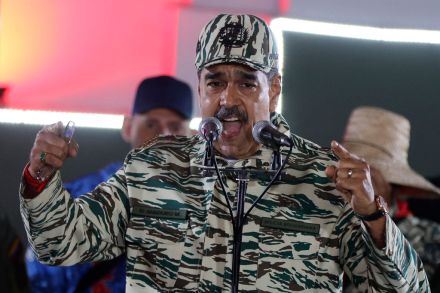
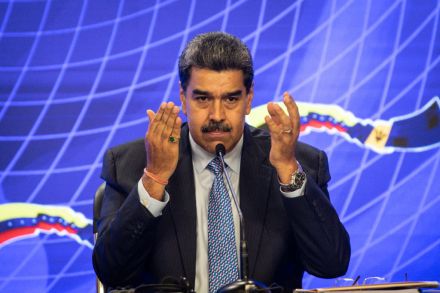
Operation Absolute Resolve, Donald Trump’s rendition of Nicolás Maduro in Venezuela, was a brilliantly executed coup. The audacious raid did not undermine international law, as many European and Democratic politicians have said. But it did expose the weakness and pomposity of the world’s multilateral bodies. Maduro traded oil for loans with China while helping Moscow avoid sanctions. He permitted the terrorist group Hezbollah and Iran to operate and build drones within his jurisdiction. He rigged elections and had opposition activists shot in the street. He allowed and enabled weapons, fentanyl and illegal migrants to flood towards America’s southern border. Yet it wasn’t the International Criminal Court that arrested Maduro to bring him to justice in a New York court.
global sheriff

Fact-checking the Venezuela war hawks 

As the US Navy remains primed for action in the Southern Caribbean, Venezuelan dictator Nicolás Maduro prepares for what could be an American attempt to remove him. And as President Trump alternates between calling Maduro on the phone and authorizing air strikes, a bevy of misinformation is being peddled by public figures with an agenda. There are so many claims and counter-claims on the air waves right now that it’s difficult to separate fact from fiction. A sizable chunk of this disinformation is of course being sold by Maduro himself, a man who has learned from his predecessor and mentor, the late Hugo Chávez, that it’s easier to blame the United States for all of your problems than own up to your own catastrophic policy errors.

Machado deserves the Nobel

I was fourteen when I clambered onto a boulder along Caracas’s Francisco Fajardo highway – what people called Piedra de la Libertad, the Liberty Rock – and spoke out about a government that had just ignored a referendum. “Tyranny” was more than a buzzword. To my astonishment, a woman I didn’t yet know – María Corina – helped me climb it. With her megaphone, I spoke of unifying, as a sea of flags from rival parties fluttered before me.Many dismissed her then. A woman who once called Chávez a “thief” to his face – too brash, too ideological, too direct for the choreography of Venezuelan politics. The old hands said she could never reach the people; she lacked the soothing tones, the feigned humility, the convenient ambiguity that defined our politicians.

Maria Corina Machado

Shutdown siestas

Nothing beats a Jet2 holiday Washington is ten days into the government shutdown, and the Republicans and Democrats remain at loggerheads. Members are accosting each other in the corridors of power – in front of a gawking media, naturally – and challenging their adversaries to debate on TV shows. The impression our leaders are trying to give us is that they are working hard to reach a solution to the impasse. The same can’t be said for admin officials: Cockburn understands a large swathe have taken the opportunity to head off on vacation – and are doing their best to ensure they don’t post any pictures. (As ever, if you’ve spotted a secretary soaking in the sunshine, let Cockburn know at cockburn@thespectator.com.

Shutdown

Venezuela prepares for clashing inaugurations

A new presidential term is set to begin officially in Venezuela on January 10. Despite the electoral commission’s failure to release the results of the July 28 election, Nicolás Maduro’s swearing-in appears inevitable. Opposition leader Edmundo González Urrutia, however, says he’ll be inaugurated as the country’s new leader. Will he return to Caracas? That’s the question Venezuelans keep asking, with González Urrutia having promised exactly that. “I am going to return to Venezuela to take the responsibility that 8 million citizens gave me,” he told Infobae five days ago after meeting with Argentinian president Javier Milei. This week he also met with President Biden, Uruguayan president Lacalle Pou and Panamanian president José Raúl Mulino.

Venezuelans topple Chávez statues as they reject Maduro victory

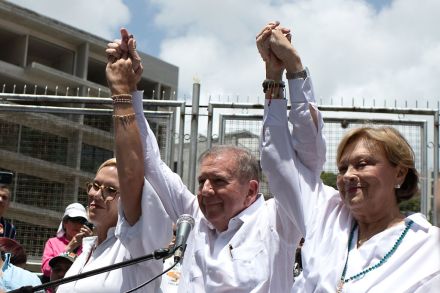
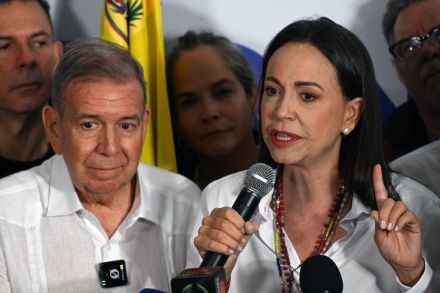
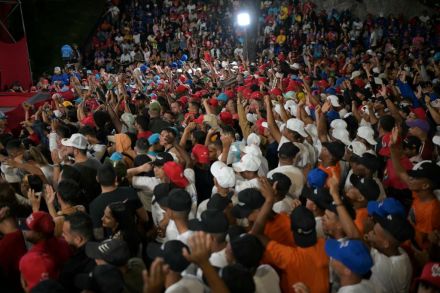
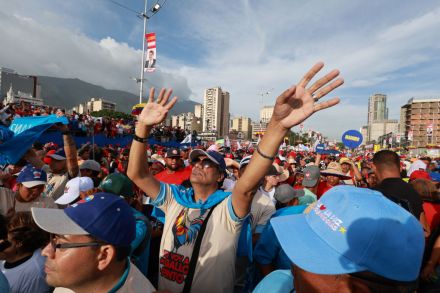
Nicolás Maduro’s rival Edmundo González and opposition leader María Corina Machado told reporters at around 6:30 p.m. Monday that with more than 70 percent of votes counted, González is more than doubling Maduro’s votes. During the press conference, both candidates emphasized peaceful protests, especially as thousands began taking to the streets the day before, when the country’s electoral council declared that Maduro had won with 51 percent of the vote. They called on voters to gather at 11 a.m. Tuesday. “I speak to you with the calmness of the truth,” González said to his cheering supporters from outside his campaign’s headquarters in Caracas. “We have in our hands the tally sheets that demonstrate our categorical and mathematically irreversible victory.

maduro

Will the US apply pressure to combat Maduro’s election fraud?

Sunday night was a long one in Venezuela. At midnight, the much anticipated yet dubious results came in for the South American country's election. The head of the National Electoral Council, Elvis Amoroso — a close ally of Venezuelan president Nicolás Maduro who has served as a deputy for his party — said that with 80 percent of ballots counted, Maduro had won with 51 percent of the vote. His rival, Maria Corina Machado’s replacement, Edmundo González, ended with 44 percent. The opposition has a different story. “Venezuela has a new president and his name is Edmundo González Urrutia. We won! And everyone knows it,” Machado said from a press conference following some silence after Maduro’s announced win.

maduro fraud

Things are about to get ugly in Venezuela

At 3:45 a.m., the sun was not yet out in the Venezuelan valley of Caracas, but Andrés, a twenty-two-year old who lives in the outskirts, woke up and with the Gloria Al Bravo Pueblo national anthem at maximum volume, roused his family too. From deep in the valley, Natalia showed up to the polls at 7 a.m. She then headed back to pick her elderly parents; “they can skip the line now,” she tells me.  Like them, thousands of others got up Sunday morning with a mission: make the Venezuelan presidential election — the most consequential one in twenty-five-years — fraud-proof. The logic: the world has to see what Venezuelans see, eyes don’t lie.  “It's 5 a.m. and we have work!,” said the face of the opposition, María Corina Machado.

venezuela

What to expect in this weekend’s Venezuelan elections

Venezuelans will gear up to vote in what has devolved into an unfair and unfree presidential election Sunday — one that nonetheless offers its citzens the best chance in a decade to get rid of the twenty-five-year-old Chavista regime that brought the oil-rich nation to its knees. Nicolás Maduro, the man who, among other things, caused a forty-two-place drop in Venezuela’s Press Freedom Index in ten years, will be facing Edmundo González. González, a little known diplomat who served in Algeria and Argentina, became the opposition’s unitary candidate after the government banned María Corina Machado from running. Though “inabilitated,” as Venezuelans put it, this election continues to be a Maduro versus Machado match.

venezuelan

Should Biden change his Venezuela approach?

Venezuela has been leading the United States on, maintaining the pretense that they will ensure that the upcoming presidential elections are free and fair. That's despite the US relieving sanctions, releasing prisoners and months of “diplomacy.” The Nicolás Maduro regime has also gone on offense, threatening to take back the Esequibo, an area now under Guyana’s jurisdiction, where American oil companies have invested billions. This Wednesday, Maduro mocked the Biden administration once again, arresting two high-level officials from opposition candidate María Corina Machado’s team and issuing arrest warrants against several others.

nicolas maduro venezuela

Biden should stop appeasing Venezuela, says Salazar

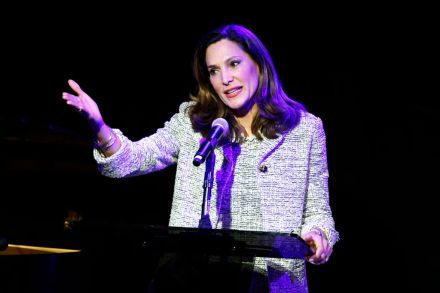
Venezuelan presidential hopeful María Corina Machado had filed a claim in December, arguing to the country’s highest court, that a ban prohibiting her from holding office was unconstitutional. The verdict came last week — and the ban was upheld. As south Florida congresswoman María Elvira Salazar told The Spectator, the conclusions reached by the “Chavista-controlled” tribunal were “unfortunate but not surprising.” The upholding of the ban comes after months of negotiations, where the Biden administration eased sectoral sanctions in pursuit of a “path to democracy.” This approach riled up Florida Republicans, a state with a vast Venezuelan-American population.

salazar