Mahatma gandhi

Rejecting the Raj: Gandhi’s acolytes in the West

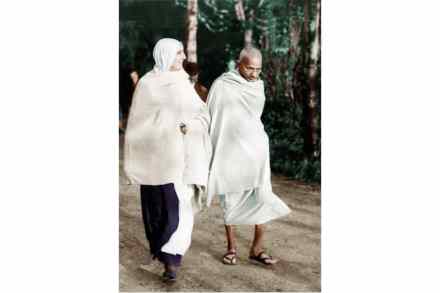
Madeleine Slade, born in 1892, was a typical upper-class Victorian daughter of empire: a childhood riding around her grand-father’s estate in Surrey was followed by years of rejecting suitors and performing Beethoven on the piano. Occasionally she would sail across the world to visit her father, the commander-in-chief of the East Indies Squadron, who was responsible for Britain’s fleet in the Indian Ocean. But in 1923, a trip to Switzerland to visit the Nobel laureate Romain Rolland in the hills of Villeneuve would change the concert pianist’s life forever. Rolland had recently written about an Indian civil rights activist called Mahatma Gandhi. ‘You have not heard about him?’ he asked in amazement. ‘He is another Christ!
Statues and limitations

From our US edition

Statues do more than monumentalize individual achievement. They embody the self-image of those who raise, cherish and preserve them. It is this common self-conception that is being upended by the wave of iconoclasm that is sweeping through American cities. The race to raze structures that have stood untouched for decades or centuries disturbs because, instead of reassessing the past, it attacks it to reorder the present. Wherever you stand on this, the ‘debate’ is limited by Western visual traditions and stunted by patchy education. In Wisconsin, the abolitionist Hans Christian Heg was yanked down. In San Francisco, Ulysses S. Grant, a president who set the US Army on the Klan, was deposed. In Washington, DC, Gandhi, once praised by W.E.B.

statues