Macbeth

Macbeth in Swahili? There might even be improvements

From our UK edition

Let’s start with some low-hanging fruit. When, in Henry V, the king inspires his army before Agincourt, the Danish translator – here, Niels Brunse – can hope for a relatively easy win: ‘Vi fa, vi muntre fa, vi flok af brodre.’ Or, in the classic Schlegel-Tieck version of Macbeth, now rooted in German literature, the cursed usurper finds that tomorrow and tomorrow ‘Kriecht so mit kleinem Schritt von Tag zu Tag’. Linguistic kinship, comparable speech rhythms, shared verse forms: sometimes the happy not-so-few, the global band of brothers (and sisters) who translate Shakespeare out of English, face a stiff but still feasible task. Even in familiar languages, though, pitfalls await in every line. Surely, Richard III’s opening soliloquy will slip smoothly into French?
Scotland offers myths, legends and bespoke textile designs

As part of the planning for a retreat I’m organizing in May, I recently visited Scotland. I spent time near Edinburgh to learn more about the work of designer and weaver Araminta Campbell, whose approach reflects the connection between nature and clothing. Her atelier, set within a fairytale castle outside the city, is renowned for its team of skilled artisan handweavers who create bespoke textile designs. It is a place I have long admired, a magical world of tartan and tweed. As a model, you become attuned to the clothes you wear – how they shape your image and how others perceive you. But it took time for me to realize that the clothes themselves also shape the world. Eleven years ago, I became interested in the environment.

‘I could turn very nasty – I was an egotistical brute’, says Anthony Hopkins

From our UK edition

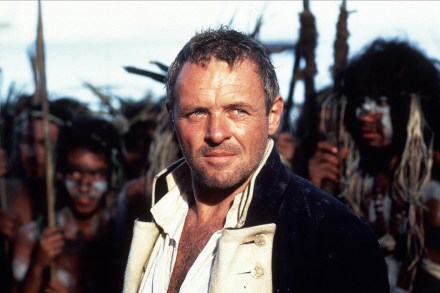
It’s a good job Anthony Hopkins is only an actor, as think what he’d be like as a dictator or grand inquisitor. ‘I could turn very nasty,’ he tells us in his memoir. Doing National Service: ‘I was beginning to enjoy the fisticuffs in my life.’ Encountering a Scotsman: ‘I felt a surge of hatred and anger. I head-butted him and smashed his nose so hard I heard it crack.’ To a director who’d annoyed him: ‘Learn some manners... or I’ll change the shape of your face.’ Mickey Rourke was told: ‘Touch me like that again and I’ll smash your face right into the back of your head.’ Hopkins is a nasty piece of work, and proud of it. He calls himself ‘a vindictive, cynical, insulting, horrible man’, adding for good measure: ‘I was an egotistical brute.

Fortitude, emotional intelligence and wit – the defining qualities of Simon Russell Beale

From our UK edition

The path to National Treasureland is no paved highway. Simon Russell Beale, the finest classical actor of his generation, was nearly lost to academia (he swerved a PhD in Victorian literature), and faced down pigeon-holing from an agent who wanted to change his name to Simon Beagle, the better to capitalise on a knack for dopily jolly comedy roles. Now – and not before time – he’s written an elegant study of Shakespeare that does double duty as a juicy actor’s autobiography. The pleasure here is in the mix of green room gossip and literary insight. There’s plenty of the former: dining next to Lauren Bacall at the chat show queen Barbara Walters’s place? Good. Watching Top Gun with Imelda Staunton and Penny Downie? Even better.

Why Shakespeare remains the great playwright

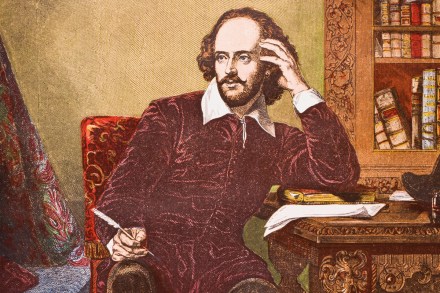
William Shakespeare’s tragedies stand apart. Their impact is profound and lasting, in cultural, artistic, emotional and psychological terms. Who could forget the ghost’s first appearance in Hamlet, or Lear bearing the dead Cordelia? No other dramatist has achieved what Shakespeare did: in subject matter, emotional heft, innovative usage of source material, character development and startling deployment of language Shakespeare is (and there is no other word for it) extraordinary. He surpasses both his predecessors (sorry, Thomas Kyd!) and those that came after him. He built on the foundations the classical playwrights established, and then, almost casually, bettered them, too.

Shakespeare

Somewhere in this production lies Shakespeare’s tragedy: Almeida’s Macbeth reviewed

From our UK edition

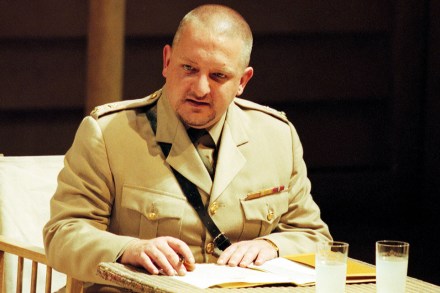
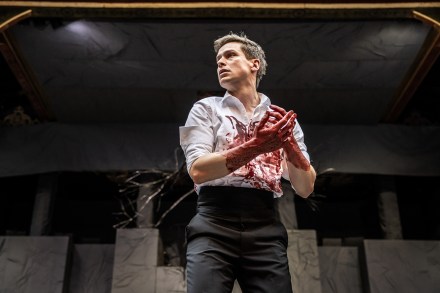
Yaël Farber’s Macbeth sets out to be a great work of art. The director crams the Almeida’s stage with suggestive props, glass panels, microphones, a wheelbarrow full of jackboots. The witches are not the usual vagrants or carbuncled mystics. These grim-looking ladies have expensive hairdos and nicely ironed shirts — like a panel of disgruntled academics at a tribunal. William Gaunt is a decrepit Duncan who looks ready to receive his telegram from the Queen. He can barely rise from his NHS wheelchair. But one wonders why this frail old chap had to be knifed to death? Much easier to smother him with a pillow and claim he expired naturally.

Think flute-playing Sir Keir will rescue opera? Look at Labour-run Wales

From our UK edition

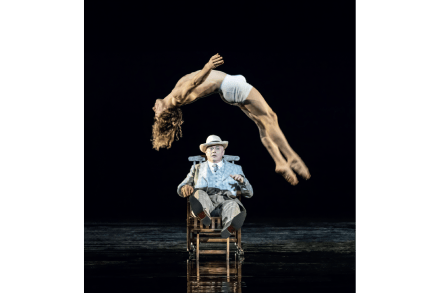
A tale of two opera companies from the Land of Song. After its distinctly gamey new Cosi fan tutte, Welsh National Opera has sprung dazzlingly back to form with a new production of Benajmin Britten’s final opera, Death in Venice. It’s directed by Olivia Fuchs, in collaboration with the circus artists of NoFit State, and in a word, it’s masterful. Fuchs’s Serenissima is a city of shadow, its landmarks glimpsed distantly in smudged, restless scraps of black and white film. The tourists and locals wear monochrome period dress; only Aschenbach (Mark Le Brocq) is in a noncommittal grey. The colour has drained from his world and from the peripheries of the stage he gazes, impotent, at the figures who dance and sport in the light, played by the acrobats and aerialists of NoFit State.

Lacks any air of mystery, foreboding or darkness: Macbeth, at the Globe, reviewed

From our UK edition

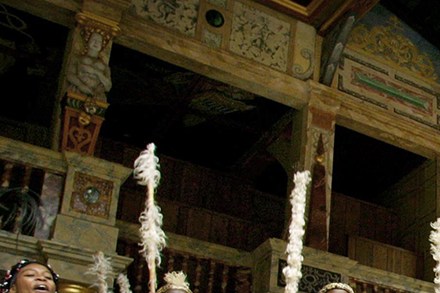
Macbeth at the Globe wants to put us at our ease and make us feel comfortable with the play’s arcane world of ghouls, hallucinations and murderous prophecies. Abigail Graham’s up-to-the-minute production offers a few nods to history, like the eagle masks worn by the three witches, but for some reason they speak in dense cockney accents and wear biohazard suits. And they’re all men. The Scottish soldiery favour black body armour like SAS recruits or Metropolitan Police officers. And King Duncan, benefitting from equality legislation, has been transformed into an alpha female: ‘Queen Duncan’, as everyone calls her. She strides on to the battlefield in the opening scene sporting a beautiful cream trouser suit and a salon-perfect ash-blonde hairdo.

The barbarism of Canada’s euthanasia regime

“After a recent experience caring for a patient receiving medical assistance in dying, I felt distressed and uncomfortable. How should I manage these emotions?” According to the website of the College of Nurses of Ontario, that’s a frequently asked question for healthcare professionals involved in euthanasia. Perhaps Canadian health science programs ought to have some mandatory classes on Shakespeare. He wrote quite a bit about coping with the pangs of conscience, particularly after having been an accessory to the unnatural death of another.

Macbeth on Broadway: a Very Modern Scottish play

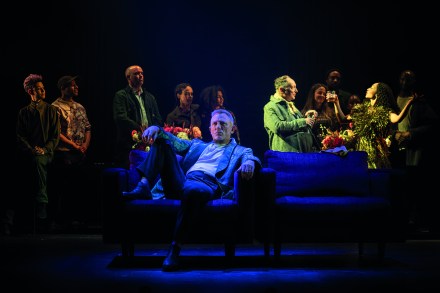
The new Macbeth on Broadway starring Daniel Craig ends up about where you’d expect: a Macbond unhinged and raving about Birnam Wood come to Dunsinane, splattering the castle walls with the gore of his enemies and pummeling Macduff mercilessly until the showstopping reveal that the latter was “of no woman born” but, in fact, “from his mother’s womb/ untimely ripped.” Omit the full-cast kumbaya circle at the end (a too-sweet cherry atop a bloody sundae), and the denouement essentially gives you Shakespearean drama at its most unimaginative — as a Hollywood action blockbuster. This isn’t to say that Shakespeare cries out for bold reimagining. Nor is there anything wrong with giving people what they came to see. It is Daniel Craig, after all.

Macbeth

Witches brew

Since its initial publication in the legendary 1623 First Folio, Shakespeare’s Macbeth — one of the Bard’s late tragedies, and among his greatest — has been reimagined in countless ways. By the late seventeenth century, it had already been updated by Sir William Davenant to meet changing tastes. It was supposedly restored (though still thoroughly altered) by David Garrick in the eighteenth; and it was further “cleaned up” by Thomas Bowdler (which gave us the term ‘bowdlerized’) for his Family Shakespeare collection in the nineteenth century, an era that also brought us Verdi’s enthralling operatic version.

Macbeth

The best Macbeths to watch online

From our UK edition

The world’s greatest playwright ought to be dynamite at the movies. But it’s notoriously hard to turn a profit from a Shakespearean adaptation because film-goers want to be entertained, not anointed with the chrism of high art. Macbeth is one of the texts that frequently attracts directors. Justin Kurzel’s 2015 version (Amazon Prime) didn’t triumph at the box office despite two fetching performances from Bamburgh Castle in Northumberland and the snow-wreathed mountains of Skye. The trailer is a marvel. Two exhilarating minutes of virile swordplay, ravishing scenery and dramatic cathedral interiors. The film itself is a cold, muddy slog. Michael Fassbender plays the thane as a gruff Celtic robo-hunk married to a skinny, nun-like beauty, Marion Cotillard.

I regret my bust-up with the Bee Gees: Clive Anderson interviewed

From our UK edition

‘The really tricky thing,’ says Clive Anderson as we discuss the topic of being recognised in public, ‘is when they say, “I love your programmes —that thing you did with Margarita Pracatan…” Do I say now that that wasn’t me? Because if you let them carry on about how they loved your Postcards From…, and the Japanese game show, and then you tell them, they get very indignant and say, “Well, why did you let me give you all that praise?”’ It’s easy to understand the mistake in the abstract — indeed The Spectator’s arts editor made it himself in his email to me: ‘Could you interview Clive James for us?’ (If I could manage that, Igor, I wouldn’t be writing for a living.