London

Blackouts and white coats

From our UK edition

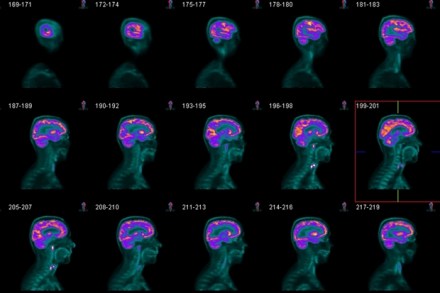
In the cult Steve Martin film The Man With Two Brains, a doctor falls in love with a surgically removed brain. The object of his desire (fizzing, if I remember rightly, in a demijohn of formaldehyde) makes for an enduring gothic comedy of the mind. On the movie’s release in the early 1980s, neuroscience was still in its infancy. Men in white coats were cutting up monkey brains and their laboratories smelled of monkey urine. In recent years, however, neuro-imaging has changed the study of the human mind completely. Rainbow-coloured images on the scanner screen reveal our most precious and mysterious organ in all its alien complexity. Computer imaging may yet fathom the mystery of epilepsy.
The cheesecake of the apocalypse

From our UK edition

Harry Morgan is a Jewish delicatessen and restaurant in the style of New York City on St John’s Wood High Street in north London. St John’s Wood is home to wealthy Muslims and Jews, who are attracted by a lone mosque, many synagogues and more cake shops than even the greediest hedge-funder could eat his swiftly receding feelings in. I am aware I sound like an estate agent. It is really a stage set for the inter-faith organisation the Imams and Rabbis Council of the United Kingdom, about which the joke is, although it isn’t very funny: the Jews pay for it all. I am also aware that I am writing about being Jewish.

The Marx Memorial Library

From our UK edition

There’s a small corner of Clerkenwell where the communist dream never died. The Marx Memorial Library has been in its big, classical 1738 building — originally a school for children of Welsh artisans living in poverty — for 83 years. The library was set up in 1933, the 50th anniversary of Karl Marx’s death. British Marxism and communism have faded, but the library still has a brigade of staunch supporters. Jeremy Corbyn, whose constituency is just up the road in Islington, is a regular visitor. To tour the library is to return to the 1930s when communism was at its height — when Philby, Burgess, Maclean and Blunt were full of gleaming-eyed optimism about the wonders of Soviet Russia.

Real life | 3 November 2016

From our UK edition

For three months after I move to the country, I am told, I am going to be in the most almighty panic. I will ask myself repeatedly what on earth I have done. I will have sleepless nights worrying that I should never have left London. I will wake in a sweat in the early hours gripped by the idea that I cannot possibly survive now I am not ten minutes’ walk from the Northcote Road. And then, magically, one day, about three months in, I will wake up in my country cottage and look out of my bedroom window at the sea of green and say, ‘This is the best decision I have ever made.’ I’m really glad a few friends who have done this move have talked me through it, because I panic at the best of times.

Looking after Leo

From our UK edition

I’ve just spent a day looking after our one-year-old vizsla and, to be blunt, I have some sympathy with Michael Heseltine’s decision to strangle his mother’s alsatian. Not that my wife is out of town. Rather, I’ve just got a new job as director of the New Schools Network, a charity that helps groups set up free schools, and Caroline argued that because I’ll now be spending so much time away from home I am morally obliged to take on the lion’s share of dog duties before I start. My responsibilities began with a walk in Gunnersbury Park. Now, to be fair, this isn’t a monumental chore. Gunnersbury Park is one of Acton’s hidden gems.

Vicar, can you spare a dime?

From our UK edition

‘I am a Messianic Jew,’ says the jittery young man at the rectory door. He is pale and drawn, with a close-shaven scalp and several days of bristles on a sharp chin. The bloodshot eyes search for me swimmingly. ‘A Jew, a Messianic Jew,’ he emphasises. I should have a clever rejoinder, but I am assessing if he has a knife so I only manage, ‘Ah yes, and how can I help?’ ‘Is this you?’ is thrown back at me, as he jabs his finger at the screen of his phone and then holds it up to my face like a mirror. I admit my identity (an image from our website), and this makes him confident of success. ‘You must pay my bus fare to-Latvia.’ Such encounters are the commonplace of the daily life of the urban vicar.

The Big Bang did more harm than good

From our UK edition

As the 30th anniversary of Big Bang loomed, I found myself back at the scene of my City demise. Ebbgate House — headquarters of BZW, the investment banking arm of Barclays where I worked until one fateful morning in 1992 — fell deservedly to the wrecking ball a decade ago. It was replaced by Riverbank House, and there I was last week, hovering above where my desk used to be, talking about ‘why no one listens to the City any more’ and reliving the P45 moment that released me into the happier world of journalism. Personal echoes apart, this was also a moment to revisit Big Bang, the Thatcherite reforms launched on 27 October 1986 that allowed banks such as Barclays to buy stock-exchange firms, create BZW and its ilk, and compete against Wall Street’s giants.

Rent increases are a problem in London – but not, really, for the rest of Britain

From our UK edition

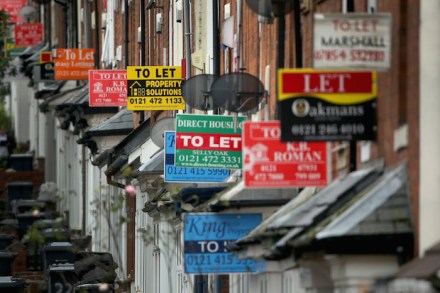
When I made my Dispatches documentary about generational inequality for Channel 4, I was struck by how many of the established facts in this debate fell apart upon scrutiny. Yes, there are many legitimate grievances – which I covered in the film. But some of the supposed ‘nationwide’ problems are, in fact, no such thing. Take the national rent crisis, which led Ed Miliband to fight an election campaign which pitted the supposedly wicked exploitative landlords against tenants. He lost that election, in part because he had allowed himself to be sucked down rabbit hole of social media – and one of Londoncentricity. There are a great many problems facing people outside of the capital, but soaring rents is not really one of them.

High life | 27 October 2016

From our UK edition

I was not on the winning side of the debate, despite giving it the old college try. Thank god for my South African friend Simon Reader, who coached me just before I went on. Mind you, my side felt a bit like Maxime Weygand, the French general who, in June 1940, was happily smoking his pipe back in Syria when he got the call to take over the French army. The Germans had already taken Holland and Belgium and had breached la Ligne Maginot, Gamelin had thrown in the towel, and Paul Reynaud had called for a fresh face to stop the mighty Wehrmacht. ‘Gee, thanks a bunch,’ said Weygand, but took it like a real Frenchman and surrendered to the German army a couple of weeks later.

Real life | 27 October 2016

From our UK edition

Coffee shops are becoming impossible. I had been standing in the queue at Caffè Nero on Battersea Rise for nearly half an hour behind a man ordering a round of coffees that were so complex, so detailed and intricate, so different from each other, so bespoke and unique, that it would have been quicker to get served if I had been standing behind a man ordering a helping of weapons-grade plutonium and a custom-made Range Rover. I had nipped in to buy a coffee and a croissant. Silly me, for wanting a coffee and a croissant.

In defence of Zac Goldsmith

From our UK edition

I’m baffled by the reaction to Zac Goldsmith’s decision to resign as the Conservative MP for Richmond Park. It is being interpreted, even by MPs on his own side, as an act of opportunism, a chance to rehabilitate himself with the metropolitan elite after his bruising defeat in the London mayoral election. Surprisingly few people seem willing to entertain the idea that he might be acting on principle. Exhibit A in the case for Zac’s defence is the fact that he’s the MP for Richmond Park in the first place. Zac could have applied to be the candidate in any number of safe Conservative seats in 2010 and, given his profile, easily have been selected. Yet he chose a seat that was held by a Lib Dem with a 3,731 majority.

No place like Rome

From our UK edition

Roma sells ancient-Roman-style food near Fenchurch Street station at the east end of the City, near Aldgate. It is, therefore, a themed restaurant in a conventional, ebbing financial district, a cursed place in need of Windolene; and this is something to applaud, at least theoretically, because it is ambitious. Who remembers ambition, which is more interesting than greed? The last themed restaurant to open in these parts was Fable, a repulsive fake library and fusion destination for lawyers on Holborn Viaduct which I hope has burnt down, or at least been sued for copyright infringement by-makers of fairy tales everywhere. It was as magical as date rape, and the fairies fled. A Roman-themed restaurant could work here now, if you want to eat metaphor; the parallels are thick and easy.

We should be flattered not threatened by France’s bid to take on the City

From our UK edition

The French are trying to seduce the British to come and work in Paris. A video hymns the delights of La Defense, the Gallic Canary Wharf. It is a healthy Brexit effect that the French now feel that they can no longer fight the City of London solely by trying to regulate it, and must try persuasion instead. The prospect of British departure reawakens the spirit of competition in a continent which had largely replaced it with bureaucracy. By leaving, Britain ought to win first-mover advantage in this contest, but even if we don’t, we will have done a service to our neighbours which we could never have managed if we had voted to stay.

How clever are ravens? I asked at the Tower

From our UK edition

On Tower Hill, by the east wall of Beauchamp Tower where Robert Dudley was imprisoned for a year, a raven called Merlin hides behind a yucca plant. I know she’s there because the Ravenmaster told me. He knows she’s there because Merlin (a female) and he are bonded and they keep tabs on each other throughout the day. As he walks across Tower Green, he whistles to her, and in reply, from the shadows, comes a low, metallic, caw. Ravens pair up for life, for the most part, and Merlin, who dislikes the other ravens, has chosen Chris, the Tower of London’s Yeoman Warder Ravenmaster, as her mate. As he draws near, a beak protrudes slowly from behind the yucca.

Some like it posh

From our UK edition

Daphne’s serves Italian food in South Kensington. (I like the name because Daphne was the name Jack Lemmon chose for his female self in Some Like It Hot, although Tony Curtis — Josephine — wanted to call him Geraldine. I know no one else called Daphne, and I do not need to. Lemmon sated me.) This district, you may recall, is currently a building site, as residents try to dream their houses bigger and their noses smaller; it is a tangle of cranes, personal trainers, tax avoidance, lipstick, adultery and Ferraris swamped with parking tickets. And so Daphne’s, which was a 1980s mini-series restaurant wrought from assorted Nigel Dempster columns and Judith Krantz novels, recently restored, now has the soothing grace of a National Trust interior.

Words on the street

From our UK edition

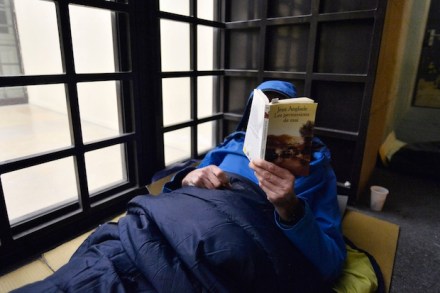
A white van pulls up outside St Giles in the Fields, an imposing 18th century church in central London, around the corner from Tottenham Court Road station, for a couple of hours every Saturday afternoon. St Giles is known as ‘The Poets’ Church’ because it has memorials to Andrew Marvell and George Chapman, but this humble van makes the nickname more fitting. It’s a library. To be homeless is to have no fixed address, which means you can’t borrow books from a public library — but it doesn’t mean you’ve no desire to read. Quaker Homeless Action set up this mobile library in 1999, making runs into London twice a week and lending books to more than a thousand homeless people a year.

Conference party round-up: Theresa’s kiss is put on hold

From our UK edition

After four days of speeches and panels at Tory conference, there is now at least a little consensus over what Brexit means Brexit means and much concern over the quality of Philip Hammond's jokes. However, while a number of conference speeches proved dry, Mr S is glad to report that the after hours soirees were free-flowing. At the Sun's conference party -- where guests were offered teetotal May Day cocktails -- tributes were paid to two men who were unable to make it to Birmingham this year. The paper's editor Tony Gallagher recalled what David Cameron and George Osborne had said to him ahead of the paper backing Brexit.

Foreign investors aren’t to blame for London’s housing crisis

From our UK edition

I hate gentrification; my area was so much cooler when there were people openly selling drugs on the high street, my neighbours' house had a mattress outside and the nice restaurants needed bouncers so the diners weren't constantly harassed by crack addicts. Now it's all just nice coffee shops, other broadsheet readers and arthouse cinemas. But don't worry, for the Mayor of London is on the case, launching an inquiry into how much London land is being bought up by overseas investors and, as the Guardian reports, 'the scale of gentrification and rising housing costs in the capital'.

Pens, sex and potatoes

From our UK edition

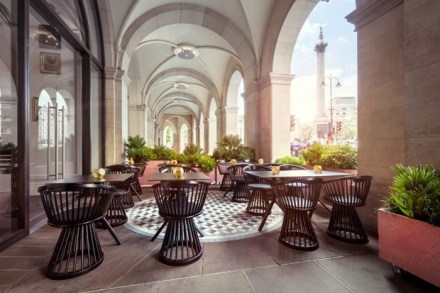
I hoped that Bronte would be filled with Victorian writers licking ink off their fingers and bitching about Mrs Gaskell being a third-rate hack; but it is not to be. (Do not think I am vulgar. My description is accurate. Wuthering Heights is a rude novel, and Jane Eyre is worse. St John Rivers, its Christian Grey, is surely a Spectator subscriber). It is, instead, a finely wrought and glossy restaurant off Trafalgar Square, designed, I suspect, for advertising executives. It used to be the Strand Dining Rooms but it died and now there’s this. It is named for Horatio Nelson, the Duke of Bronte. His title, it is believed, was borrowed by Patrick Brunty, the Irish blacksmith’s apprentice who educated himself and came to England to father a literary dynasty by mistake.

The fallen Angel

From our UK edition

Ashraf Marwan was an Egyptian-born businessman, a son-in-law to Nasser and a political high-flyer in the administration of Sadat, who fell off the balcony of his flat in Carlton House Terrace, central London, in June 2007. His death was watched with incredulity by business colleagues assembled in an office across the road, who recalled seeing two burly, possibly Middle-eastern figures framed in the tableau. Investigations were inconclusive. Marwan, then in his sixties, wasn’t well, but hadn’t seemed suicidal. On the other hand, he had been afraid, and with good reason, because plenty of people wanted him dead. Marwan had been a spy. That seems to be the most concrete element about his story.