London

A glimpse of lost London – before the yuppie invasion

From our UK edition

In a 1923 book called Echo de Paris, the writer Laurence Houseman attempted to conjure up in a very slim, elegant volume the atmosphere and especially the conversation of an afternoon a quarter century earlier that he had spent in the company of the exiled Oscar Wilde. It was a conscious act of imaginative recreation, seeking to place the reader at the same boulevard table alongside the participants. As the author explained in his introduction: The scene, as regards its setting — the outside of a Paris restaurant — is true to history; and if, toward the end, a touch of drama has been introduced, the reader will understand that it is more symbolic than actual.

How two literary magazines boosted morale during the Blitz

From our UK edition

William Loxley’s lively account of ‘Bloomsbury, the Blitz and Horizon magazine’ begins with W.H. Auden and Christopher Isherwood emigrating to the United States in January 1939 and ends with George Orwell dying in University College Hospital in January 1950. Between these two events Loxley explores the often interconnected professional and personal lives of a number of British writers, publishers and editors — principally Orwell, Leonard and Virginia Woolf, Cyril Connolly, Stephen Spender, John Lehmann and Dylan Thomas — during the second world war and its immediate aftermath.

Can London’s floods be explained by climate change?

From our UK edition

It’s climate change again, innit. It didn’t take long for Sunday’s flooding in London to be put together with Canada’s recent heatwave and the floods in Germany and China to be used as ‘evidence’ of ever-accelerating climate change – giving us even less time to save the world than previously thought. ‘More rain as Londoners call out climate change,’ screamed a headline on City A.M., alongside pictures of water pouring through Stratford DLR station and cars stuck on the North Circular.

The clever radical who led the City’s transformation

From our UK edition

It’s a vivid example of unintended consequences that the swimming-pool builders of southern England should owe so much to Sir Nicholas Goodison, the former chairman of the London Stock Exchange who has died aged 87 and whose obituaries suggested little inclination to frivolity, poolside or otherwise. Head-and-shoulders the most cerebral of the Exchange’s leading members at the turn of the 1980s, he was also one of its most far-sighted and probably, as a noted connoisseur of 18th-century clocks, its most cultured. A traditionalist majority of his peers were content with the City’s clubbable old ways.

Is London being ‘levelled down’ already?

From our UK edition

In his ‘levelling up’ speech in Coventry this week, the Prime Minister insisted time and again that this was no ‘zero sum’ game. Improving the fortunes of the poorer parts of the country would not entail levelling richer parts of the country down, he said: ‘Levelling up is not a jam-spreading operation. It's not robbing Peter to pay Paul.... It's win-win.’ Well, maybe. But there was good cause for his defensiveness. One reason advanced for the Conservatives’ dramatic defeat in last month’s Chesham and Amersham by-election was apprehension that such places would have to help pay the bill for, say, regenerating Hartlepool.

An utterly convincing dreamworld: The Ritz reviewed

From our UK edition

The Ritz is still here, and still gaudy. No grand hotel in London feels quite so complete, if pink; as if it landed like a Tardis on Green Park. There is no real life here, and there shouldn’t be. Each guest travels with their own novella. There are jewels in the window and brides on the stairs. Lady Thatcher died here, in a corner suite. Don’t ask which one. They won’t say, to discourage ghouls, party hacks and perverts. You cannot know if you are sleeping in her bed, and that is not even the oddest thing about the Ritz. The staff, who dress like toy soldiers, are charming in that way you don’t find outside Judith Krantz novels. That is, you believe them, and that is rare. The Ritz is a myth, and it is dedicated to itself.

Don’t ‘Kill the Bill’

From our UK edition

Are the rights of protesters and the rights of all other citizens fairly balanced? Think back to the Extinction Rebellion protests of April 2019, when climate activists chose to 'peacefully occupy the centres of power and shut them down', as they put it, including the heart of London. The protests, organised globally, were perhaps the most disruptive in history. A small number of people managed to stop hundreds of thousands more going about their daily lives. People could not get to work, see family and friends or go shopping, because the streets were blocked by an extensive series of roadblocks and other tactics. At one point, printing presses were blockaded, undermining the free press.

Don’t pity me for living in London

From our UK edition

Londoners have had to learn, more than ever before, to master the art of fielding pity. We’ve been on the receiving end of lots of it this year from people living in the country who care about us, which makes it worse because we’re supposed to be grateful. I’m still smarting from a few recent zingers: ‘I do feel sorry for you, being cooped up in that small house.’ ‘It must be stifling there. We’ve got a nice breeze down here.’ ‘It’s all so lovely and green. Even London must be looking quite green.

My voyage back through the landmarks of my life

From our UK edition

I was looking forward to my dinner at Daquise in South Kensington, a Polish restaurant that’s been there for ever yet feels curiously up-to-date; but that wasn’t until 7.30. I’d finished my afternoon’s work, I’d brought in the washing and written two thank-you cards, and it was still only five o’clock. I hate hanging around. By Tube to South Ken is only half an hour — so what to do? ‘Why not go the long way, on foot and by river?’ I thought. My flat is by the Thames in east London, so I could walk along the river to the Canary Wharf jetty and hope for a river bus to Chelsea.

The unfairness of London’s Remainer reputation

From our UK edition

Today marks five years since the United Kingdom voted to Leave the European Union. London, as we all know by now, voted the opposite way to the rest of England — by a margin of 60 to 40 per cent. Ever since then, the capital has been portrayed as remote and out of touch, culturally disconnected from the rest of the nation. Brexit is often explained as the victory of the long-ignored Rest of England where the ‘real people’ live. In 2019, Dominic Cummings told reporters to ‘get out of London, go and talk to people who are not rich Remainers’. But is London really so different to the rest of the nation? Let’s start with idea that those reporters would have to get out of town to meet poor Leave voters. London was home to more 2016 Leave voters (1.

A nicer side of Nero

From our UK edition

New York I haven’t felt such shirt-dripping, mind-clogging wet heat since Saigon back in 1971. The Bagel is a steam bath, with lots of very ugly people walking around in stages of undress that would once upon a time have embarrassed that famed stripper Lili St Cyr. How strange that very pretty girls do not shed their clothes as soon as the mercury hits triple figures, but less fortunate ones do even if the number is a cool 80. June is my London party month, or used to be before the city was transformed into a prison camp. And what about The Spectator party? I haven’t heard a woid, as they say over here, so I’m sending a little boid over to find out. I have ordered a brand new white suit for the occasion — if it takes place, that is.

A careful parody: Noble Rot Soho reviewed

From our UK edition

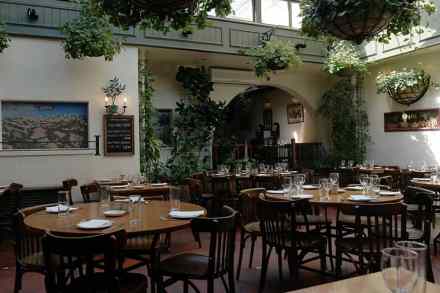
Noble Rot sits in Greek Street, Soho, on the site of the old Gay Hussar, which squatted here from 1953 like a rebuke. Some people loved this Hungarian ‘left-wing’ restaurant, with its terrible food, its library of Labour-themed political biographies, its raging cartoons and fond memories of Harold Wilson. But you can’t eat political biographies — not if you have taste. An attempt to save it by a ‘Goulash Collective’ failed, because the Gay Hussar was a themed restaurant whose theme — a sort of politicised London Dungeon — ran out. In an exquisite metaphor, it closed in 2018, at the height of Jeremy Corbyn’s self-hating — and self-thwarted — grasp for power.

The Dickensian delights of London in lockdown

From our UK edition

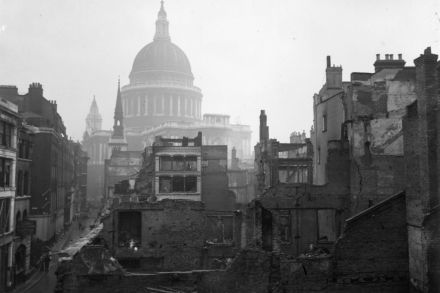
I’m blessed by the fact that I live almost smack-bang in the middle of old London, a pebble’s toe punt from St Paul’s cathedral. Being an aficionado of Charles Dickens and J.B. Priestley, I’ve been able to wander along empty streets and alleys that have been immortalised in such novels as Angel Pavement and Bleak House. When I’m walking around the yards and courts at the back of the Bank of England, I can imagine the nefarious Mr Golspie darting round a corner with an enigmatic grin of triumph on his conniving, pugnacious moosh. Kicking a stone down a street for as long as possible has been a rediscovered pleasure to me over the past year.

Bad food is back: The Roof Garden at Pantechnicon reviewed

From our UK edition

The Roof Garden is a pale, Nordic-style restaurant at the top of the glorious Pantechnicon in Belgravia — formerly a bazaar — opposite a Waitrose I didn’t know existed. (Waitrose seems too human for Belgravia. Food seems too human for Belgravia.) This thrilling building, which should be a library — it has Doric columns — is instead a collection of restaurants, shops and what I think are called ‘outlets’ (a Japanese café; something called, gnomically, ‘Kiosk’), all celebrating the ‘playful’ intersection — I mean meeting, but marketing jargon is addictive if you are an idiot — between Nordic and Japanese food. It is a wealth mall from hell, then, in the style of Terminal 5’s main street.

The lost magic of Palm Beach

Good old Helvetia. I’m quitting her for the rainy but pleasant land of England. The cows are beginning to resemble chorus girls and the village an Alpine Colditz. Too much of a good thing, said a wise man to a friend of mine who wanted to live on the French Riviera all year round. That was long ago. The South of France is a shithole these days — and a very expensive one at that. The real Riviera now lies far away from the coast, up in the hills: Saint-Paul-de-Vence and its environs. The rest of the Côte d’Azur, where Russian and Arab gangsters have bought all the great houses on the water, now reminds me of Baku, where, at the turn of the last century, the Great Game was being played between Russia, Britain and Germany, with Basil Zaharoff triple-crossing all three.

taki

I miss America’s sandwiches

When I was 16 I told my father I wanted to leave America to go to university in Scotland. His only real concern was the food: ‘I don’t think you know what you’re getting into.’ His run-in with British cuisine was in the 1970s, so little wonder. Sure enough, the food in the student halls of St Andrews was worthy of Oliver Twist. If it wasn’t slabs of fatty gammon, already cold in the tray, it was a tepid, oozing excuse for lasagna, harboring hard lumps of ground beef and grainy béchamel sauce. And then there’s haggis. I loved everything about my four years at the tiny university town on the frigid North Sea coast, except for the food. That all changed when I moved to London, and I have to hand it to them — Londoners do know how to eat well. The world’s cuisine is here.

Sandwiches

Boris’s levelling up risks leaving behind London

From our UK edition

Boris Johnson’s plan to ‘level up’ Britain sounds long overdue. It implies the creation of a less geographically unequal United Kingdom. What's not to like? The motivating theory behind ‘levelling up’ seems to go like this: London, the beating heart of this relatively affluent corner of our nation, has had plenty of investment in recent years. It is now time to listen to the needs of the newly-Conservative ‘Red Wall’ and Leave-voting ‘left behind’ communities in the north of England. These areas have been ignored for decades, and recently voiced their displeasure at the ballot box. But the reality is rather more complicated – and there is a danger that, yet again, London’s poorest get left behind.

Pretty food with a side order of pollution: 28-50 reviewed

From our UK edition

You cannot have cars and dining tables in the same dreamscape: it doesn’t work, unless you think carbon monoxide is a herb, or are wearing full Hazmat, like some teachers. London is in much denial about its air pollution; in the East End child asthmatics are choking. But we must embrace it for a few days more; others have lost more in pandemic than an attachment to the convention that if we dine outside it should be in a flower-filled garden. Perhaps there are enchanted restaurant gardens in London, but I have never found one. I conclude that, outside fiction or aristocracy, they do not exist. Instead, we have modish kerbside dining.

Sadiq Khan’s victory is good news for the Tories

From our UK edition

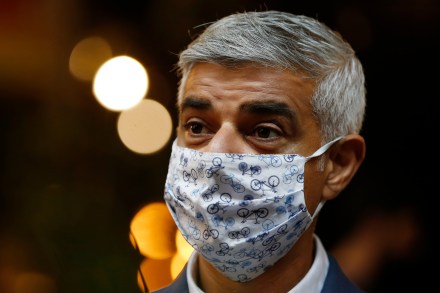
Sadiq Khan is here to stay. London's mayor has suggested he wants to stay on until 2040. But is this really good news for Labour? Or might the Tories be quietly pleased that Khan beat Shaun Bailey? In the coming years, one of Khan's tasks will be to go cap in hand to the government asking for money. Transport for London (TfL), which Khan is in charge of, is in dire financial straits. TfL is desperate for cash: its fare revenues have collapsed by 90 per cent since the pandemic took hold. Even as commuters start to return to offices, London's transport network will need money to stay afloat. But when Khan inevitably comes knocking, Boris will be able to repeat his trick from last year – and point the finger of blame at London's mayor for bungling the finances.

Boris should be ashamed of his treatment of Shaun Bailey

From our UK edition

What with all the excitement about Hartlepool and the understandable fuss about Scotland, there’s one aspect of the elections that seems to have passed everyone by, and that’s the result of the mayoral contest in London.  You may have missed it: Sadiq Khan won, with 1.2 million votes. But the Tory candidate, Shaun Bailey, did really unexpectedly well, with 977,601 votes. In some constituencies in outer London, he beat Sadiq comfortably; in other central London areas, he ran him really close, leaving the most predictably metrosexual or Corbynite areas to give Sadiq his majority. So Bailey got not far off a million votes. Just think what he might have done if Boris and the bigwigs had actually come out to support him.