Lockdowns

Why the media is pushing climate lockdown fantasies 

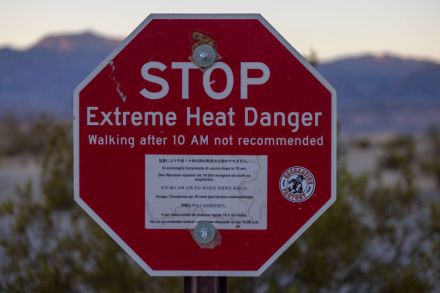
Back in February 2021, I wrote a piece here at The Spectator headlined “Are you ready for the climate lockdowns?” It concerned the predictability of where the climate alarmist movement was heading, and their eagerness to explore using the model for Covid lockdowns in Europe and the United States to address environmental issues. The movement has been inching its way toward the idea ever since. Now as heatwaves roll across the globe in the prime months of the summer season, news outlets aren’t being so subtle about the idea anymore — and neither is the Biden administration.

Cape Town after Covid: business buzzes despite power outages

Blazing sunshine. Endless traffic. Horns honking. Wine bars heaving. Trance music blasting. Street hawkers calling. Coastal wind (called the "Cape Doctor" by locals) whistling. Grit in one eye, the other looking over my shoulder. Hair flying in every direction. To explore central Cape Town is to be gut-punched: by an evolving backdrop of sublime nature and the complexity of the human condition. To visit the city’s world-class restaurants, concept stores and co-working sites is to share a street with the sick, hungry and homeless. Look up, and you’re hypnotized by the monolithic mountains beyond; a brief distraction from the painfully obvious disparity. From some angles it feels like the Mother City is being wrapped in a tight hug.

casa del sonder cape town michelle fredman

Why aren’t we more focused on cleaning up the pandemic mess?

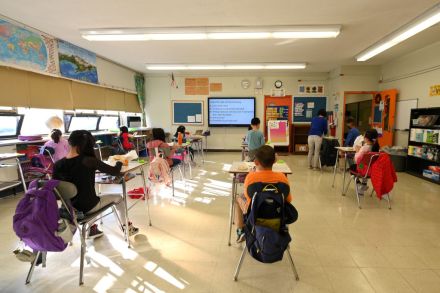
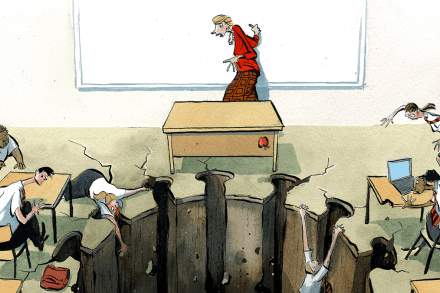
Unless you work for the White House, where the emergency declaration doesn’t expire until May, the pandemic has long been over. March marks three years since Covid upended Americans’ lives and, for all but a tiny minority, it has ceased being a day-to-day consideration. After long and bruising fights over everything from lockdowns to vaccine mandates, perhaps the only thing Americans can agree on is that the country’s response to the pandemic was a failure. From that starting consensus, arguments about what went wrong soon diverge sharply.

school education american pandemic

How DeSantis can de-program the blue states

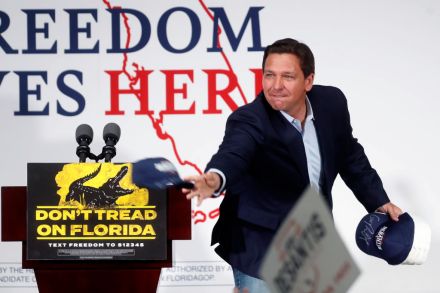
Four years ago this week, Florida Governor Ron DeSantis presciently warned in his first inaugural address that big-spending, high-taxing states were inspiring “productive citizens to flee.” DeSantis came into office with a flimsy mandate of just four tenths of one percent at a time when Florida had 257,175 more registered Democrats than Republicans. Republicans now outnumber Democrats in the state by more than 356,000 and, in the wake of his resounding twenty-point win in November, DeSantis's inaugural address last Tuesday felt like a warm-up for the 2024 presidential campaign. In his 2019 speech, DeSantis spoke to Floridians, but he seemed to be addressing all Americans, urging us to reconsider Florida as a model rather than as the butt of Florida Man jokes.

Could DeSantis actually ‘chuck’ ‘little elf’ Fauci across the Potomac?

Dr. “Saint” Anthony Fauci — credited with bringing about the “Fauci ouchie” (a vaccine that was such a “miraculous” cure that we needed several of them) and masks that made Granny look like a member of the Insane Clown Posse — is retiring. Fauci’s handling of the Covid-19 pandemic was confusing at best and contradictory at worst. Cockburn will not miss him, but there is perhaps none so eager to see Fauci depart as Florida Governor Ron DeSantis. These two have gone at each other like Marvel comic book characters — DeSantis as a self-fashioned Captain America and Fauci as his archnemesis, perhaps the “wayward psychiatrist Dr. Faustus.

China delayed its 2008 financial crisis until 2022

The year 2008 was consequential by many measures. The collapse of the US investment bank Lehman Brothers sparked a worldwide financial crisis. Yet China appeared to emerge out of it relatively unscratched after Beijing introduced a massive stimulus package in the world, about three times the size of the United States government's rescue program. Thanks to this expansionary fiscal policy and the easy credit that came with it, the Chinese economy quickly returned to its robust growth by growing 8.7 percent in 2009 and 10.4 percent in 2010. After 2008, the Chinese Communist Party leaders concluded that China "escaped" the financial crisis because of its outstanding leadership and the superiority of the Chinese political system over deeply flawed western democracies.

Jim Breuer mocks the Covid regime

“Somebody had to say it,” and apparently that somebody is comedian Jim Breuer. In a set that broke Twitter over the July 4 weekend, Breuer came right out and delivered the news: vaccinations didn’t stop Covid. Mandates are stupid. Social distancing is meaningless. The entire Covid regime under which we’ve lived, to various degrees, for the last two-plus years is a worthless and sinister form of social control. Breuer’s twelve-minute routine on The Pandemic isn’t very good. His physical comedy doesn’t hit; the depictions of the vaccine are sloppy-looking, and he accompanies them with a dumb raspberry noise. His “Broadway musical” bit could be funny except that nothing he does resembles a current Broadway musical in the slightest.

The post-Covid mental health crisis

Recent mass shootings have reminded us of just how much gun violence has surged since Covid. The record of 45,222 Americans dying from gun-related injuries in the first year of the pandemic could well be topped in 2022, with more than 12,000 fatally shot since the end of April. Many rightly condemn progressive district attorneys in cities for failing to condemn the increased bloodshed. Yet the uptick in violence has been uniform across the nation, plaguing rural counties as much as urban ones, which is why most psychological experts put the blame squarely on the emotional residue of lengthy Covid lockdowns.

moran

Lawnmowers: the real pandemic

Today’s school-aged students are in grave danger. A murderous virus is ripping through the population, leaving a tragic body count in its wake. We need aggressive preventative measures. Classes need to go online, indefinitely if necessary. The experts must be heeded. The science must be followed. This epidemic is simply too dangerous; we cannot afford to play games with our children's lives. I’m talking, of course, about the preeminent public health crisis of our time: lawnmower deaths. The threat that lawnmowers pose to our nation is no joke. According to the Consumer Product Safety Commission’s National Electronic Injury Surveillance system, 90 Americans die every year from lawnmower accidents. Over the past decade, 3.

The research is in and lockdowns don’t work

A new Johns Hopkins systematic review cuts in two the narrative that government-imposed mandates meaningfully prevent coronavirus deaths. The review looked at 34 different studies analyzing business and school closings, shelter-in-place orders, and international travel bans. It included data from US and European Covid mitigation efforts, along with endeavors in India, South Africa and China. Almost two dozen of these studies were peer-reviewed, while the other 12 were working papers. The results of this meta-analysis are striking. Lockdowns reduced Covid mortality by an average of only .02 percent. Shelter-in-place orders were slightly better at a 2.9 percent average, but nothing worth crowing about.

The end of Canadian liberty

This week, my home country of Canada implemented a slew of new travel restrictions in response to Omicron, the newest ideation of what will surely be endless Covid variants. Based on the reports, this variant is mild and nothing to panic about. But hey, why not panic, just to be safe? And by “safe,” I mean “sufficiently naive and fearful so as to ensure we continue to comply with ever-irrational regulations and restrictions, dutifully marching along dressed in useless and humiliating masks that restrict both breathing and communication, and maintaining religious devotion to vaccines that only work in that they reduce symptoms.” Some countries and states have responded to Covid humanely and rationally.

The West should rediscover Hayek and end the lockdowns

Friedrich Hayek’s The Road to Serfdom is famed as one of the most effective takedowns of the socialist planned economy. Although published in 1944, Hayek’s arguments have never been more relevant as citizens around the world forfeit their freedoms in exchange for security in the face of the COVID-19 pandemic. Hayek’s book, contrary to popular opinion, was addressed to the people of Britain rather than the socialist Soviet Union. Hayek worried the Brits would fall victim to a continued expansion of the strong federal powers enacted by the British government to fight World War Two, and hoped to wean them off their addiction to government control.

libertarians hayek