Lockdown

Treasury reveals it didn’t forecast economic impact of second lockdown

From our UK edition

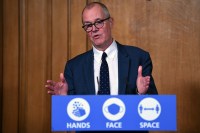
Lockdowns are designed to temporarily delay the spread of the virus – but at what cost? This was the line of questioning that kicked off yesterday’s evidence session for the Treasury Select Committee, scrutinising the work HM Treasury has conducted in relation to lockdown. Chair of the committee Mel Stride asked Clare Lombardelli, Chief Economic Adviser to the Treasury, to comment on specific economic analyses conducted around lockdown restrictions, ranging from the closure of pubs, gyms and restaurants to ‘circuit breakers’ and working from home directives. It was quickly revealed that no analysis has been done.
Homes, sweet homes

The moment lockdown restrictions eased, my wife Anna booked up trips to Europe, to visit houses and villages I thought I’d never see again, such were the initial predictions about the zombie apocalypse. I’d not been to Barenton, Normandy, for example, since last autumn, but that hadn’t stopped the plumber and the builder from sending me regular bills. It is in this decaying granite villa, stretching over four floors, that the accumulated junk from the Herefordshire Balkans has been shoved — thousands of books, crates of manuscripts and letters, the children’s toys, even the children. Oscar, the middle son, spent time here, depleting the cellar after he broke up with a girlfriend. He ran back to England terrified when a mouse leapt out of an oven glove.

homes

Letters: Wales has been betrayed by Westminster

From our UK edition

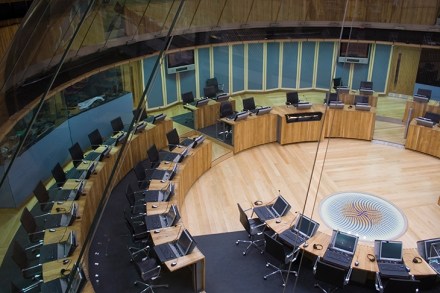
Woeful Wales Sir: Allison Pearson succinctly points out the absurdity of the so-called Welsh government and its assembly, now trying to masquerade as a parliament (‘Wales of grief’, 31 October). For those of us living in Wales it is difficult to talk of the Welsh Assembly without using the F-word: failure. For the past 20 years it has failed the Welsh people at every conceivable level, while building a conceit that it is a true government. The only irony of the current Covid-19 debacle is that for once it has been forced to actually do something instead of talking endlessly around a subject before doing nothing. I have described its failure as the Sadim effect.

Who came up with ‘lockdown’?

From our UK edition

The start of lockdown The earliest known use of ‘lockdown’ in its current sense was in a 1973 story in the Fresno Bee, a Californian newspaper, referring to prisoners being kept in their cells after a knife attack. Despite apparently giving the world the concept, not all Fresno locals seemed happy to be placed in lockdown in April. A protest in May resulted in a fight between protestors and the president of the city council. Bed cover How full of Covid patients are hospitals?

Portrait of the week: England’s lockdown, America’s meltdown and houses fall down

From our UK edition

Home The government imposed a lockdown on England to last until 2 December. On television, Boris Johnson, the Prime Minister, looking unhappy, said of Christmas: ‘It’s my sincere hope and belief that by taking tough action now we can allow families across the country to be together.’ People would have to stay at home except for work that couldn’t be done there. The furlough scheme, due to have expired at the end of October, was extended for the new lockdown period. Exercise and recreation outdoors were allowed. Households might not mix indoors or even meet one person in a private garden. Schools and universities were to stay open.

How do we stop the Lycra dads using our stable yard as a toilet?

From our UK edition

The cyclist pulled into our gateway, got off his bike and grabbed hold of the electric fencing. Installing game cameras, along with signs making clear to passers-by that they are on film, has not always deterred trespassers, but it has provided us with interesting viewing. And so it was on this occasion, as the cyclist pulled in for what cyclists pull in for. By this I don’t mean they necessarily relieve themselves swiftly against a bush. I mean sometimes they duck under the tape to go inside the field or stable yard where they make themselves at home, in a semi-seated position. Look, it’s not nice to have to describe what they do, but then it’s not nice of them to do it.

Whatever the science of this lockdown, the execution has been a disgrace

From our UK edition

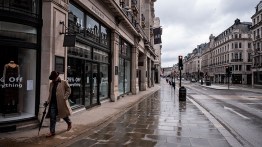
The benefit of having a lockdown announced some days in advance is the ability to savour what is about to be lost. People have been able to visit friends and family, not knowing when it will be legal to meet again. Parishioners have attended church to say their farewells, as have small groups of friends and family. Small shops stayed open until midnight on Wednesday to serve customers, restaurants were booked up. Yes, we face the return of Covid-19. But was also face a government that seems in a flap, unable to decide what to do. Boris Johnson has said that this latest lockdown will last only four weeks, and there is no doubt that he means it.

The (absent) ethics of lockdown

From our UK edition

Is it ethical to lock us down again? This is not a facetious question. Over the past eight months, we have heard a great deal about the policies used to manage the virus, but very little about the ethics. This is a mistake. We should be asking how we can critically and reasonably strike a balance between conflicting values and interests. Yet even now, with so much at stake, this basic question on the ethics of our policies is not being properly asked. When it comes to public health, the ethical balance is simply expressed: how do you achieve a certain public health goal with the fewest restrictions on individual rights? If the goal is to reduce obesity, for example, then is it justifiable to tax sugar — and if so, to what extent?

This lockdown comes at a high political cost

From our UK edition

Keir Starmer has his first attack line of the next general election campaign. He will say that England’s second lockdown was longer than it needed to be because the Prime Minister didn’t act when he had the chance. If Boris Johnson had listened to the scientists, Labour will say, we’d have had a two week ‘circuit-breaker’ and controlled the virus. As things stand, a man who set his face against lockdown was then forced to adopt one — making it longer, more painful and costing far more jobs. A couple of weeks ago, there was a clear dividing line: Labour wanted national measures; the Tories wanted regional ones. So Starmer can now claim to have won the argument. This has depressed Tory MPs.

The infantilism of locking down to ‘save Christmas’

From our UK edition

It seems, then, that this latest lockdown has been instigated simply to protect two very questionable institutions — the National Health Service and Christmas. Both have a certain historicity about them and were widely liked. Both, too, have become bloated and hideous caricatures of what they once were. There is a certain infantilism about the repeated demands to ‘save Christmas’ which conjures up the image of serious adults — Chris Whitty, for example, or Sir Patrick Vallance — hanging up their stockings on Christmas Eve and jumping up and down on the bed in excitement at five o’clock the following morning. There is no Santa Claus, Patrick. There is no sleigh and the elves have been long ago furloughed. It all comes from Argos, mate. Hark!

In defence of Emily in Paris

From our UK edition

A frothy new drama called Emily in Paris arrived on Netflix last month. Starring Lily Collins — daughter of Phil — it tells the story of a pretty social media ‘expert’ who moves from Chicago to Paris, where she manages to offend almost everybody she meets, and yet somehow triumphs. It is Eloise in Paris for the Instagram/Trump generation. The show is a croquembouche-esque fantasy of Frenchness. Anorexic-looking chicks eat croissants and pretend to enjoy them. There are pre-war apartments with parquet flooring, and windows decorated with twinkling fairy lights. The men are handsome bastards who know how to cook omelettes.

What lockdown means for families with disabled children

From our UK edition

When lockdown starts, all kinds of things stop. The first one, in March, was the worst time of my life as a parent, not because of my daughter’s severe disabilities, but because of the lack of support. Elvi is 19. She has a mental age of three, sleeps four hours a night and can’t walk. She has to be showered, dressed, fed and physically moved around our home. I have learned so much from my beautiful, funny daughter. She works incredibly hard to achieve the smallest things. We were told Elvi wouldn’t live past two and that she was unlikely to speak. In the summer she said her first five-word sentence: ‘I want crisps please, Mummy.’ Through necessity, being Elvi’s mum has made me resilient and resourceful.

The problem with the Great Barrington Declaration

From our UK edition

With England returning to a full national lockdown, calls for a different response — a so-called 'segmentation strategy' — have also reappeared. The idea behind such an approach is that a 'vulnerable' section of the population is effectively sealed off from the rest of society. Meanwhile, SARS-CoV2 is allowed to spread among the remaining population, generating herd immunity which will eventually protect the entire population. This is the core principle of the Great Barrington Declaration, which has attracted a large amount of media attention since its inception a few weeks ago.

If anything is essential, it’s worship

From our UK edition

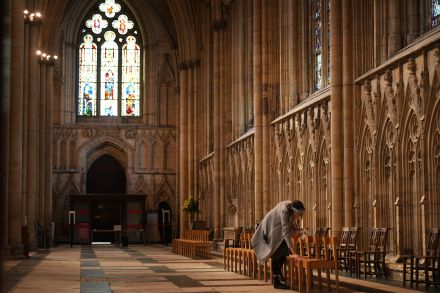
That the Church of England shall be free, and shall have all her whole Rights and Liberties inviolable. There are few clauses of Magna Carta that are still in force today. Most have been whittled away by the stultifying hands of generations of bureaucrats. But one clause still stands in its in 800-year-old majesty: that the Church of England shall be free. (I realise that my Roman Catholic readers might quibble about what was meant by the Church of England in 1217, but I ask you to bear with me). Freedom of religion is a cornerstone of a free people. It stands at the heart of every declaration and charter of rights. It should be dispensed with only under the gravest of circumstances and with the heaviest of hearts.

Why has Boris closed the churches?

From our UK edition

This morning, my son, who’s 17, was turned away from our local church. The designated spaces for people attending mass were full. He tried to book online at the church down the road - they were full too (and last week they turned my daughter away). It was too late to make an online booking for the lunchtime mass at the London Oratory, but the reservations system for the tea-time mass was still open, so he’s booked that, on a system that hilariously resembles the booking system for a commercial theatre, except that it concludes, which they don’t, with God Bless You.

Backsliding on a lockdown end-date has begun already

From our UK edition

Will England’s lockdown end on 2 December? Even before this morning’s media round there was good reason to suspect it might not. The first national lockdown - we were originally told - would be for three weeks, with the explicit aim of building more capacity in the National Health Service. But the goalposts shifted and three weeks turned into more than three months: despite daily Covid deaths peaking in April, pubs and restaurants didn’t reopen until early July. Weeks later gyms and other leisure sectors followed, and public transport guidance changed to encourage employees back to their offices.

Instead of lockdown, let’s create a National Shielding Service

From our UK edition

So what would you do? That was the question that cropped up on my Twitter timeline after I’d sent out various tweets condemning the shambolic decision by Boris Johnson to order another England-wide lockdown. I noticed the same question in the replies to an anti-lockdown tweet sent out by the Mail on Sunday’s Dan Hodges too. And it is a fair one that I think deserves an answer from commentators used to throwing rotten tomatoes at the stage but seldom willing to climb up on it. So here is mine: First, it is too late to call off the lockdown now, as preparations for another approach will take some time. So point one is that we must now go with the lockdown until December 2, but we should assert that it will end then and it will be the last one.

Sunday shows round-up: new lockdown ‘could be extended’

From our UK edition

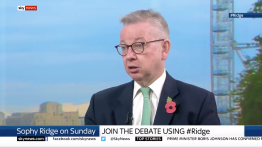
Michael Gove - New lockdown 'could be extended' Yesterday Boris Johnson announced that England would be entering another lockdown as of this Thursday, which will last for, at the very least, the entirety of November. Sophy Ridge's first guest of the day was the Cabinet Office Minister Michael Gove, who told her that the envisioned end-date of Wednesday 2nd December was subject to change if the rates of Covid infection could not be reduced: https://twitter.com/RidgeOnSunday/status/1322825323625484288?ref_src=twsrc%5Etfw SR: If the data on the whole is not looking as you are hoping, then the national lockdown could be extended? MG: We will always take a decision in the national interest, based on evidence... SR: Is that 'yes'? MG: Yes.

The long winter – why Covid restrictions could last until April

From our UK edition

Not much makes sense during a pandemic but in recent weeks the Covid puzzle has become a deeper mystery. When local lockdowns failed, the solution was to try even more of them. Manchester was put into Tier 3 restrictions when its Covid cases were falling; now there’s talk of a Tier 4. Confirmed infections are nowhere near the 50,000 a day that Boris Johnson’s scientific advisers warned about last month - but the panic now seems far greater. The fear, of course, comes from what officials think will happen next. We’re told that the Prime Minister fears a second wave larger than the first, but we’re not really told why. Decisions are made to tighten restrictions on the basis of figures, scenarios and documents that are not shared with the public.