Lockdown

Much of the Covid consensus has been proved to be tripe

From our UK edition

Three years ago this week marked my first misgivings about the government’s Covid lockdown. Sure, I was late to that particular party – my wife, for example, had been carping viciously for the previous two months. But my rational assessment of lockdown was perhaps tilted by the gentle, bucolic magic of the thing itself. I think I have never enjoyed a more pleasant time. The weather was beautiful, and out in the Kent countryside, where I then lived, one could enjoy it to its full. Wildlife was less shy than usual, perhaps a consequence of the state-imposed quietude. Occasionally city dwellers would infest our country lanes and I had great pleasure in yelling at them to return to their filthy tenements, taking their vile diseases with them.

The farming year in 18th-century Sussex

From our UK edition

You may (or may not) already know this, but researching the long 18th century in 2023 is rarely a life-affirming, paradigm-shifting conversation over wine with Plato in the groves of academe. It is seldom, even, a couple of tins of warm lager on the train home after guesting on an episode of Start the Week. It is sometimes, though, sitting in an archive transcribing the traces of long-vanished lives, conscious of the passing of time, quietly excited but still wondering if any of this actually matters, whether the partial recovery of someone else’s life really is the fullest way of living your own.

Fauci retcons the pandemic in laughable NYT interview

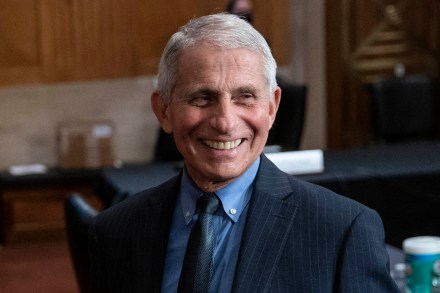
The New York Times published an extensive interview with Anthony Fauci on Tuesday, and the doc still shows little remorse. To his credit, Times reporter David Wallace-Wells did not let Fauci off easily — there was no Joe Biden treatment in this one.  Fauci, as usual, showed himself a master of illusion. Take his assertion that “only 68 percent of the country is vaccinated. If you rank us among both developed and developing countries, we do really poorly.” Really? Well that depends on what you mean by “vaccinated”. If that means you got the first shot — the only one that actually provided transmission protection — then the US actually did quite well, with 80 percent receiving at least one dose.

fauci

The importance of going to the movies

By the beginning of this decade, popular American cinema was once again in peril — just as it was in the 1950s and the Eighties. Then the threat was television and home video, respectively. Now it is streaming. There have been peaks and valleys in between, but before the pandemic, these were the major existential challenges to Hollywood and American movie theaters. The survival of theatrical exhibition after an unprecedented sixteen-month absence speaks to the power of the medium and the ineffable itch that going the movies scratches. Even Steven Spielberg looked desperate, if relieved, when he told Tom Cruise earlier this year, “You saved Hollywood’s ass and you might have saved theatrical distribution” with Top Gun: Maverick.

movies theaters

Homeschooling is having a moment

A public school teacher for three decades, my mother kept me out of them for nearly a third of that time. Her refusal to allow me to partake of the public education system that paid her bills echoed a memorable quote of G.K. Chesterton’s: “Everyone goes to the elementary schools except the few people who tell them to go there.”  If the recent numbers are any indication, more people have followed her example. In 2019, about 2.8 percent of US students were homeschooled. By 2020, that number had jumped to 5.4 percent. And in 2021, it was up to 11.1 percent. Research from Stanford and the Associated Press places the overall increase in enrollment since the beginning of the pandemic at 30 percent.  Around the country, red-state politicians are taking notice.

homeschooling

In defense of paranoia

Maybe it’s because I grew up during the “stranger danger” milk carton kid era (for those too young to know what I’m talking about, milk cartons were the original Amber Alert) or because of the burgeoning twenty-four-hour news cycle — or maybe I was just born neurotic — but I became convinced as a child that I was going to end up getting murdered by my bus driver in a schoolbus lot on the outskirts of town. Every morning, I’d ask my mom no fewer than a hundred times if she was going to be there when I got off the bus. My fear seemed irrational for a seven-year-old, but I was obsessed.

paranoia

Covid’s legacy: how will China remember the pandemic?

From our UK edition

48 min listen

Three years ago, as people across China welcomed the Year of the Rat, a new virus was taking hold in Wuhan. In London, the conversation at my family’s New Year dinner was dominated by the latest updates, how many masks and hand sanitisers we’d ordered.  Mercifully, Covid didn’t come up at all as we welcomed the Year of the Rabbit this weekend, though my family in China are still recovering from their recent infections. The zero Covid phase of the pandemic is well and truly over. So what better time to reflect on the rollercoaster of the last three years? In exchange for controlling the virus, China’s borders were shut for most of that time, while the economy has tanked and a general of children had their schooling disrupted.

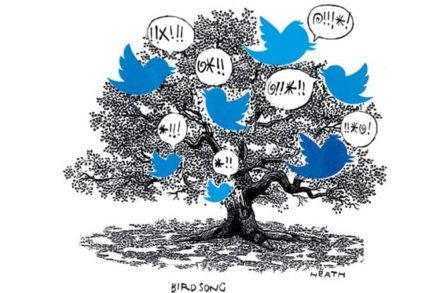
The Twitter Files reveal an unholy alliance

With the recent release of the “Twitter Files,” we’ve learned what so many of us already knew. Or I should say, strongly suspected. The government has been colluding with social media companies — in this case Twitter — to censor people and content that do not support the agenda of the Democratic Party. The primary focus of the Twitter Files thus far has been on election interference and the banishment of President Trump from the platform. Multiple government agencies — including the FBI and the Department of Homeland Security — were involved in tracking individual citizens and pressuring Twitter to de-platform them. What remains to be clearly laid out is why and how more than 11,000 people were banned for questioning Covid policy: lockdowns, masks and vaccine mandates.

anti-woke twitter

How to end the permanent pandemic

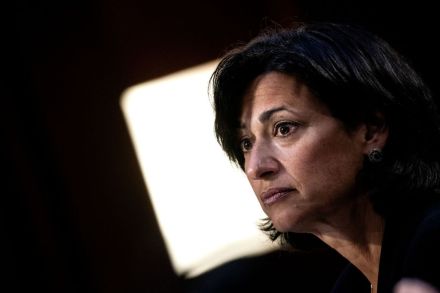
Don't call it a comeback. Prior to the 2022 midterm elections, there were signs that if Republicans had success, Covid would be roaring back with all its former aspects of fearmongering from the Democratic media complex, requiring more spending, more regulation and the return of rules Americans previously found anathema. This would serve the purpose of said complex in numerous ways: helping them push back against Republican efforts to end those supposedly "emergency" authorities and bureaucratic programs that now must find ways to sustain themselves. Everything from proxy voting to government vaccine requirements to the handwaving justification for the student loan bailout would be at risk, if the fiction that we are in the midst of constant emergency could not be maintained.

cdc rochelle walensky permanent pandemic

How I went from woke capitalist to victim of the woke mob

In February 2022 I walked away from my job as the first female global brand president of Levi’s after close to twenty-three years at the company. I’d given the better part of my adult life to Levi’s because of the product itself — I do love my 501s. (I have always preferred the button-fly on my jeans, rather than the zipper.) But while I may have chosen to work there in the beginning because of the product, I stayed because of the company culture. I believed in their mantras: “profits through principles,” “harder right over easier wrong,” “use your voice.” These refrains were rooted in the company’s heritage of rugged individualism, corporate philanthropy and populist inclusiveness.

levi's

The data is in and the cost of school closings was terrible

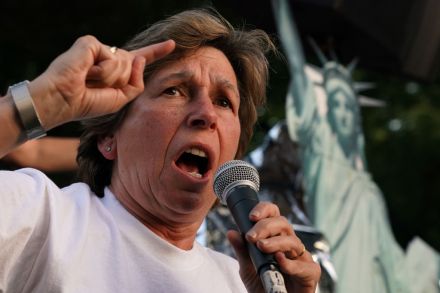
Monday's release of the nation's report card on the academic performance of schoolchildren is just the latest stunning measure of how closed schools damaged young Americans. The National Assessment of Educational Progress, which looks at the test scores of fourth and eighth graders in math and reading, is a devastating indictment of the nation's political leaders and teachers' unions, who collaborated to shut down schools and keep them shut for in-person learning long after those across most of the West had already reopened. We're only just beginning to comprehend the wreckage, which has had significant effects on school districts across the country, even after it was clear they could reopen safely. When Covid first arrived in America, its danger to young students was unclear.

randi weingarten

The last of the Covidians

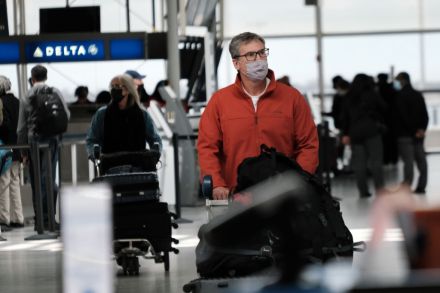
They walk among us. The last of the Covidians. We see them every day, masked while walking their dog in the park, or alone in their car. We have that friend or loved one who badgers us about vaccines and boosters like a mid-level PR executive at Pfizer. There is also the social media warrior who will never admit they got anything wrong about lockdowns, that even with our economy and education system in shambles, we should be grateful. Let’s not forget the public health officials like Holy Saint Fauci, who we recently learned had a mega-millions windfall while Americans’ purchasing power plummeted into the poorhouse. “Oh no,” they warn, “don’t get complacent now! Winter is coming!

Liz Truss can’t ignore the issue of NHS reform

From our UK edition

It’s hard to think of any Prime Minister who has entered office surrounded by such low expectations. Liz Truss was backed by just over half of Conservative party members and secured barely an eighth of MPs in the first ballot. Her critics dismiss her as a lightweight, wholly unsuited to tackling the problems now facing the country. The presumption is not just for trouble, but calamity: the fastest drop in living standards in living memory, followed by prolonged recession and worse. So if Truss manages to send inflation into reverse and makes a noticeable cut to taxes by Easter, it will be seen as quite an achievement. She has also been helped by Rishi Sunak’s somewhat wild exaggeration of the risk her tax cuts posed to the public finances.

Letters: Why we obeyed lockdown

From our UK edition

Why we allowed it Sir: In her article ‘Why didn’t more people resist lockdown?’ (3 September), Lionel Shriver partially answers her own question. Priti Patel told us it was our public duty to shop our neighbours if they had three friends to tea, and our previously invisible police force started to patrol parks and beaches with unprecedented vigour, with a threat of £1,000 fines for malfeasance. There was no eagerness, but the public were glued to the nightly broadcasts from No. 10, where the PM told us we would be little better than murderers if we didn’t obey the diktats. The fear all this created is still evident as I walk round Sainsbury’s every week and see masked shoppers disinfecting their trollies as if their life depended on it.

Vaccines disguised the errors of our lockdown policy

From our UK edition

Liz Truss’s statement that she would never authorise another lockdown and The Spectator’s interview with Rishi Sunak have triggered a new debate about whether the lockdowns of 2020 and 2021 were justified. The most widely discussed positions are that lockdown occurred too late or that there should never have been any lockdowns at all, alongside the view that what happened was about right. But there is another position here – in many ways perhaps the most obvious position – that rarely gets an airing. When lockdown was first introduced, Boris Johnson said the point was to ‘squash the sombrero’ of cases, so that the peak number of hospitalisations each week did not overwhelm the NHS.

Letters: Lockdown saved lives

From our UK edition

Lockdown saved lives Sir: Rishi Sunak presents an alarming picture of what happened during lockdown (‘The lockdown files’, 27 August) – and one echoed by lockdown sceptics who claim that Covid policy was a disaster, stoked by fear and based on questionable scientific advice. Worst of all, they cry, the trade-offs were not even discussed. But none of this is true. I know because I sat around the cabinet table as politicians, scientists, economists and epidemiologists agonised over the extent to which lockdown would devastate lives and livelihoods. It was not an easy decision for anyone. Looking back, it’s clear that the biggest mistake we made wasn’t locking down, but doing so too late.

Why didn’t more people resist lockdown?

From our UK edition

Last week’s Spectator interview with Rishi Sunak conveyed the anti-science ‘science’, the paucity of even fag-packet cost-benefit analysis and the ideological lockdown of Boris Johnson’s cabinet that brought forth calamitously extensive lockdowns of everyone else. Ever since, numerous politicians and institutions implicated in this rash experiment have had a vested interest in maintaining the myth that putting whole societies into standby mode, as if countries are mere flatscreens that can be benignly switched on and off by governmental remote, saved many millions of lives.

How science became politicised

From our UK edition

Here’s a paradox. Over the past two-and-a-half years, a cadre of senior politicians and their ‘expert’ advisers across the world have successfully promoted a series of controversial public policies by claiming they’re based on ‘the science’ rather than a particular moral or ideological vision. I’m thinking of lockdowns and net zero in particular. Yet at the same time, this group has engaged in behaviour that has undermined public confidence in science. Why appeal to the authority of science to win support for a series of politically contentious policies – and then diminish its authority? Take Anthony Fauci, for instance, who recently announced he’s stepping down as chief medical adviser to Joe Biden.

What Rishi Sunak gets wrong about lockdown

From our UK edition

Rishi Sunak presents an alarming picture of what happened during lockdown in last week’s Spectator interview – one echoed by lockdown sceptics who claim that Covid policy was a disaster, stoked by fear and based on questionable scientific advice. Worst of all, they cry, the trade-offs were not even discussed. But none of this is true – it is Covid revisionism. I know because I sat around the cabinet table as politicians, scientists, economists and epidemiologists agonised over the extent to which lockdown would devastate lives and livelihoods. It was not an easy decision for anyone. We locked down because we knew the cost of 'letting Covid rip' was far more damaging to both the health and wealth of the nation.

We’re at pandemic levels of death. Why is no one talking about it?

From our UK edition

At the peak of the lockdowns, thousands were dying every week. Newspaper front pages demanded action. But in the latest week’s data, covering the week to 12 August, some 1,082 more people than would be expected in a normal year died in the UK. These so-called ‘excess deaths’ have averaged 1,000 for 15 weeks of this year. Yet unlike Covid deaths, they are met with near silence. But it isn’t Covid that’s causing these deaths anymore. In the latest figures, published by the ONS, just 6 per cent of English and Welsh deaths had anything to do with Covid. Of nearly 10,000 weekly deaths in England, just 561 mentioned the virus on the death certificate.