Lockdown

Axios bravely points out Covid hurt Trump’s economy

Axios reporter Emily Peck isn’t afraid to state the obvious out loud and pass it off as inspired. In a hit piece published Thursday, “Why Trump supporters give him a pass on record-high unemployment,” Peck made the case that the economy suffered during Trump's last months in office due to coronavirus. Huh, who knew a global pandemic and lockdown could cause record unemployment?  “Trump's economic record is only good if you leave off what happened from March 2020 to the end of his administration,” Peck wrote, as if that were not exactly what any reasonable person would do. Prior to the pandemic, the unemployment rate fell to 3.5 percent, the poverty rate hit a sixty-year low, and the country saw the largest real household median income increase since 1967.

axios

Breakfast wine is where it’s at

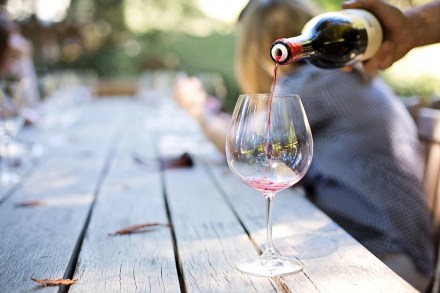
In the old days (2019), mimosas and Bloody Marys were really the only the socially acceptable forms of alcohol that could cross your lips before 12 p.m. To drink earlier would be a worrying indicator that you’re an alcoholic, or worse, a professional writer.  That benighted era is safely in our rearview.  Of all of the widespread cultural habits that have emerged post-Covid — obsessive hand-washing, a prickling fear of close-talkers, a desire to squeeze every morsel of conviviality possible out of even the dullest social exchanges — by far the best is the wholesale rejection of A.M.-drinks policing. And the biggest winner is the breakfast wine.

breakfast wine
cdc rochelle walensky permanent pandemic

How to end the permanent pandemic

Don't call it a comeback. Prior to the 2022 midterm elections, there were signs that if Republicans had success, Covid would be roaring back with all its former aspects of fearmongering from the Democratic media complex, requiring more spending, more regulation and the return of rules Americans previously found anathema. This would serve the purpose of said complex in numerous ways: helping them push back against Republican efforts to end those supposedly "emergency" authorities and bureaucratic programs that now must find ways to sustain themselves. Everything from proxy voting to government vaccine requirements to the handwaving justification for the student loan bailout would be at risk, if the fiction that we are in the midst of constant emergency could not be maintained.

Fauci retcons the pandemic in laughable NYT interview

The New York Times published an extensive interview with Anthony Fauci on Tuesday, and the doc still shows little remorse. To his credit, Times reporter David Wallace-Wells did not let Fauci off easily — there was no Joe Biden treatment in this one.  Fauci, as usual, showed himself a master of illusion. Take his assertion that “only 68 percent of the country is vaccinated. If you rank us among both developed and developing countries, we do really poorly.” Really? Well that depends on what you mean by “vaccinated”. If that means you got the first shot — the only one that actually provided transmission protection — then the US actually did quite well, with 80 percent receiving at least one dose.

fauci

The importance of going to the movies

By the beginning of this decade, popular American cinema was once again in peril — just as it was in the 1950s and the Eighties. Then the threat was television and home video, respectively. Now it is streaming. There have been peaks and valleys in between, but before the pandemic, these were the major existential challenges to Hollywood and American movie theaters. The survival of theatrical exhibition after an unprecedented sixteen-month absence speaks to the power of the medium and the ineffable itch that going the movies scratches. Even Steven Spielberg looked desperate, if relieved, when he told Tom Cruise earlier this year, “You saved Hollywood’s ass and you might have saved theatrical distribution” with Top Gun: Maverick.

movies theaters

Homeschooling is having a moment

A public school teacher for three decades, my mother kept me out of them for nearly a third of that time. Her refusal to allow me to partake of the public education system that paid her bills echoed a memorable quote of G.K. Chesterton’s: “Everyone goes to the elementary schools except the few people who tell them to go there.”  If the recent numbers are any indication, more people have followed her example. In 2019, about 2.8 percent of US students were homeschooled. By 2020, that number had jumped to 5.4 percent. And in 2021, it was up to 11.1 percent. Research from Stanford and the Associated Press places the overall increase in enrollment since the beginning of the pandemic at 30 percent.  Around the country, red-state politicians are taking notice.

homeschooling

In defense of paranoia

Maybe it’s because I grew up during the “stranger danger” milk carton kid era (for those too young to know what I’m talking about, milk cartons were the original Amber Alert) or because of the burgeoning twenty-four-hour news cycle — or maybe I was just born neurotic — but I became convinced as a child that I was going to end up getting murdered by my bus driver in a schoolbus lot on the outskirts of town. Every morning, I’d ask my mom no fewer than a hundred times if she was going to be there when I got off the bus. My fear seemed irrational for a seven-year-old, but I was obsessed.

paranoia

The Twitter Files reveal an unholy alliance

With the recent release of the “Twitter Files,” we’ve learned what so many of us already knew. Or I should say, strongly suspected. The government has been colluding with social media companies — in this case Twitter — to censor people and content that do not support the agenda of the Democratic Party. The primary focus of the Twitter Files thus far has been on election interference and the banishment of President Trump from the platform. Multiple government agencies — including the FBI and the Department of Homeland Security — were involved in tracking individual citizens and pressuring Twitter to de-platform them. What remains to be clearly laid out is why and how more than 11,000 people were banned for questioning Covid policy: lockdowns, masks and vaccine mandates.

anti-woke twitter

How I went from woke capitalist to victim of the woke mob

In February 2022 I walked away from my job as the first female global brand president of Levi’s after close to twenty-three years at the company. I’d given the better part of my adult life to Levi’s because of the product itself — I do love my 501s. (I have always preferred the button-fly on my jeans, rather than the zipper.) But while I may have chosen to work there in the beginning because of the product, I stayed because of the company culture. I believed in their mantras: “profits through principles,” “harder right over easier wrong,” “use your voice.” These refrains were rooted in the company’s heritage of rugged individualism, corporate philanthropy and populist inclusiveness.

levi's

The data is in and the cost of school closings was terrible

Monday's release of the nation's report card on the academic performance of schoolchildren is just the latest stunning measure of how closed schools damaged young Americans. The National Assessment of Educational Progress, which looks at the test scores of fourth and eighth graders in math and reading, is a devastating indictment of the nation's political leaders and teachers' unions, who collaborated to shut down schools and keep them shut for in-person learning long after those across most of the West had already reopened. We're only just beginning to comprehend the wreckage, which has had significant effects on school districts across the country, even after it was clear they could reopen safely. When Covid first arrived in America, its danger to young students was unclear.

randi weingarten

The last of the Covidians

They walk among us. The last of the Covidians. We see them every day, masked while walking their dog in the park, or alone in their car. We have that friend or loved one who badgers us about vaccines and boosters like a mid-level PR executive at Pfizer. There is also the social media warrior who will never admit they got anything wrong about lockdowns, that even with our economy and education system in shambles, we should be grateful. Let’s not forget the public health officials like Holy Saint Fauci, who we recently learned had a mega-millions windfall while Americans’ purchasing power plummeted into the poorhouse. “Oh no,” they warn, “don’t get complacent now! Winter is coming!

The lost boys of Covid

Millions of American children are about to enter their fourth year of Covid-impacted schooling. In vast swaths of the United States, a child now entering second grade has never had anything resembling a normal school experience. No child entering kindergarten has a memory of life before the pandemic. A rising junior in high school has never had a normal high school experience. Over two years into the pandemic, we know that the effects of “long Covid” are basically nonexistent in kids. Following the release of a study published in the Lancet, Alasdair Munro, a pediatric infectious disease specialist in the United Kingdom, tweeted, “A new, large study on long covid in children using Danish registry data has some very reassuring findings.

school

How to not argue at the dinner table

Family dinners, like almost every area of American life, have become a subject of fierce politicization recently. In the years following Trump’s election in 2016, readers of elite progressive outlets were treated to a long parade of thinkpieces urging Americans, in the words of a 2019 Atlantic essay from Ibram X. Kendi, “to liberate our relatives from their abusive relationship with Trump’s alternative reality.” “This Thanksgiving, It’s Time to Take on Your Conservative Relatives,” declared a headline in the Nation. Molly Jong-Fast called on readers to “Deprogram your relatives this Thanksgiving.” A 2017 GQ article was perhaps bluntest of all: “It’s Your Civic Duty to Ruin Thanksgiving by Bringing Up Trump.

family

Canceled for Covid

No one is getting canceled, we’re told. There’s no such thing as “cancel culture.” It’s just consequence culture. People say racist, sexist, mean things and so they deserve to be fired from their jobs, stripped of their standing in society, shunned by their friends. Should Hitler have been able to keep his job after publishing Mein Kampf, huh? If only life were that simple. But mob rule is, by definition, imprecise. The people who get canceled aren’t really Hitler, of course. And somehow, actual criminals find themselves forgiven far sooner than regular folk who say something out of step with the narrow set of guidelines proffered by the worst, wokest people in society. Still, there’s something different about the people canceled for their Covid views.

covid

The art of the Covid protest song

On February 14, Prime Minister Justin Trudeau issued an edict granting himself emergency powers to rule Canada by martial law with the intent of making all those trucks back up. He wants to confiscate them along with freezing truckers’ bank accounts. His soldiery is not altogether with him. Ottawa’s chief of police, Peter Sloly, abruptly resigned. Things aren’t looking bright for North America’s newest autocracy. But, OK.  Let’s back up. On December 18, 2020 a French musician known as HK (Kaddour Hadadi) and his group the Saltimbanks released on video a song titled “Danser encore” (“Dancing Again”).

protest song

End of the road for malicious lockdowns

Is a modicum of sanity about to reassert itself regarding the Wuhan Flu? Are the people finally exhausted by their panic over the Fauci-altered coronavirus? Remember those little bulletins that Mike Pence carried around, enjoining us all to to take “fifteen days to stop the spread”? I think we’re at about day 750 now. New York restaurants and many cultural emporia demand that you produce your papiers (it sounds better in German) — identification plus an image attesting to your “vaccination status” — in order to enter. Some are even requiring proof that you’ve had a “booster” jab. Pfizer likes that.

It’s the Dawn of Omicron

It’s 4 a.m. and instead of sleep, powerlessness is on my mind. It’s a concept I’m quite familiar with, being that I’m in recovery: it’s the idea one must embrace to “take the first step.” The idea is, by admitting your powerlessness over whatever behavior or substance you are abusing, you begin on the journey of liberating yourself from the bondage of addiction. It’s a paradox I had a hard time reconciling in my early days of sobering up. A great line about step one in some of the Alcoholics Anonymous literature plays on a loop as I stare at the ceiling. “Who cares to admit complete defeat. Practically no one, of course. Every natural instinct cries out against the idea of personal powerlessness.” However, the list of things I’m powerless over has grown long.

omicron

Omigod it’s the omicron

Another holiday season, another Covid strain to quintuple-mask against. This one, discovered in South Africa last week, is called omicron, and how fitting that it sounds like the codename for some evil plan that was hatched in a volcanic lair. The omicron variant feels like nothing so much as a twelfth-in-ten-years action movie sequel, derivative and exhausting, asked for by no one, with even Vin Diesel and The Rock unable to tell each other apart anymore. Omicron is the fifteenth letter of the Greek alphabet, meaning Covid has already produced a couple dozen other variants. (The WHO, which names the strains, skipped nu, the thirteenth letter, so it wouldn't be confused with "new," as well as xi, the fourteenth letter, presumably to avoid offending a certain Chinese public health hero.

omicron

The death of the phone call

Scientifically, the jury is still out on whether women are better multitaskers than men. A 2013 study suggested that women do, in fact, outperform men, while a 2019 German study found no demonstrable differences between the sexes. In my entirely unscientific opinion, I think the stereotype is real. Women are engaged in all kinds of things at the same time. At any given moment, I’m engrossed in my work while also contemplating the contents of my freezer, making a mental note to order more diapers, and simultaneously clipping my daughter’s toenails. A New York Times piece on why women do the household worrying described a woman’s mental load as a “combination of anxiety and planning that is part of parenting.

zoom
sex

Life after sex

Sex is everywhere in America, except in the bedroom — or anywhere else you’d like to have it. This has been going on so long that it’s got a name: in a 2017 article for the Atlantic, Kate Julian called it the “sex recession.” The research she cites found that “American adults had sex about nine fewer times per year in the early 2010s compared to the late 1990s.” Nine times fewer a year might not seem so bad, but every other marker of sexual activity was also down. A 2018 study in the Journal of the American Medical Association found that sexual activity had dropped among men between eighteen and thirty-five and women between twenty-four and thirty-five. Young people were having fewer sexual interactions and also fewer partners.