Lockdown

The case for sending vaccines to India

From our UK edition

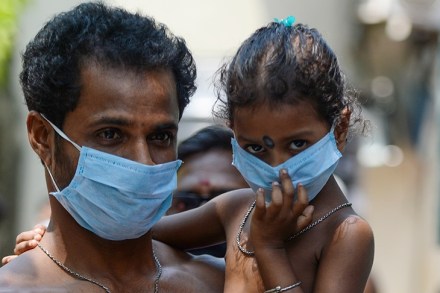
Hospitals in Delhi are openly pleading for supplies of medical oxygen, a commodity so scarce that it is now being sold on the black market for almost ten times the normal cost. Makeshift crematoria are being set up around the city to cope with the surge in the number of deaths. Richer countries are asking why India, with 20 million Covid cases now recorded, is so reluctant to lock down again. It is a good question. The answer lies in the disastrous effects of lockdown for so much of India’s population. Closing any society has serious consequences, but the results were always going to be worse in the developing world. I have been watching the pandemic unfold in India from Stanford University, where I’m a professor of medicine.
Data, not dates: there is no reason to delay a return to normal life

From our UK edition

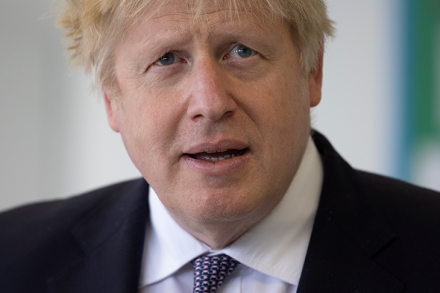
A slogan can come back to haunt you. For Boris Johnson, the words ‘data not dates’ sounded powerful at a time when Covid cases were high and hospitals full. The idea was that the government would be guided by scientific reason, would respond to the figures and would not let rigid targets dictate policy. Since the Prime Minister announced his roadmap at the end of February, however, ‘dates’ seem to have become far more important than ‘data’. How can he claim to be following the data when he will not budge from a timeline which now looks like it was designed for a different phase of the pandemic? Why were people braving the cold and rain outside restaurants on a bank holiday when there is every chance it’s safe to go inside?

A letter from Canada: we’re handling COVID worse than you

Dear Americans, We're Canadian and, yes, we're sorry. No, this time we mean it. You likely hadn't noticed, but Canada has lost one of our greatest sources of consolation during the COVID-19 pandemic: that things weren’t nearly so bad as they have been south of our border. Even the editorial board of Canada's leading national newspaper, the Globe and Mail, acknowledges that Canada is doing far worse at managing the pandemic than the US. A smug feeling of moral superiority over Americans is a regrettable part of our national character. This attitude seemed more justified than ever as we watched the apparently chaotic early American approach to COVID. None of this is to say that any sane person took pleasure in the suffering of our American neighbors and allies.

canada

The rise of the Joels

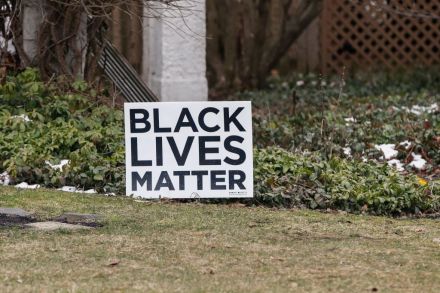
Several weeks back, I went for a run in the Del Ray neighborhood of Alexandria in Northern Virginia. It’s the sort of place where ‘Black Lives Matter’ signs cry out of security-alarmed windows and the dollar-to-fried-pickle exchange rate is instantly available upon request. I was hoofing it along when suddenly a guy leaned out of nowhere and shouted, ‘Why don’t you wear a mask if you’re going to jog on the sidewalk?!’ I told him to screw off and ran on, but my first reaction was one of pity. In Northern Virginia, the danger of getting mown down by a waif on a Lime scooter is real and ever-present; maybe he was just on edge. It was only later that I realized he may as well have just wished me dead — people have asphyxiated from wearing masks while exercising.

joel

‘I’ve seen the bare bones of London’: street painter Peter Brown interviewed

From our UK edition

‘I’ve been seeing the bare bones of London,’ explains the landscape artist Peter Brown, who is known affectionately as ‘Pete the Street’. We meet on the corner of St Martin’s Lane, where he is painting the view facing north, taking in the Coliseum, the Duke of York theatre and an Iranian restaurant called Nutshell. ‘The pandemic has been a good opportunity to paint all these West End theatre awnings.’ What has he noticed about London during the pandemic? ‘UPS vans, everywhere,’ he says. How about Deliveroo bikes? ‘I’ve spotted less of those.’ Has London changed over the past year? ‘I met a bloke on Old Compton Street who described how it feels really well to me,’ Brown says.

Made of honor: the complexities of a COVID wedding

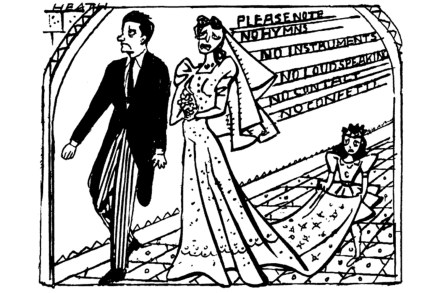
The birds are singing, the temperature is rising and I am frantically searching for a seamstress to hem three to four inches off a formal dress designed for a woman of normal height. You know what that means: it’s wedding season. This wedding season holds the uncertain distinction of being either the second under COVID or the first post-COVID, depending on your geography and luck. The pandemic was a tragedy for many couples who had planned their big day last year. According to the wedding website the Knot, less than half of couples who intended to get married in 2020 followed through with both their ceremony and reception.

wedding

When will vaccines begin boosting the economy?

From our UK edition

Britain may be about to go from one economic extreme to another. This winter the OECD calculated Britain suffered one of the highest levels of economic damage in the developed world, compared with the year before, due to its stringent lockdown. Fast forward to spring and the UK’s trajectory for economic recovery is now being revised, with forecasts only moving in one direction: up. Today alone, two heavy hitters boosted their predictions. This morning EY Item Club revised its 2021 growth forecast from 5 per cent to 6.8 per cent – which, if accurate, would see the UK grow at its fastest rate on record, recovering to pre-pandemic levels months earlier than originally anticipated.

The EU will regret suing AstraZeneca

From our UK edition

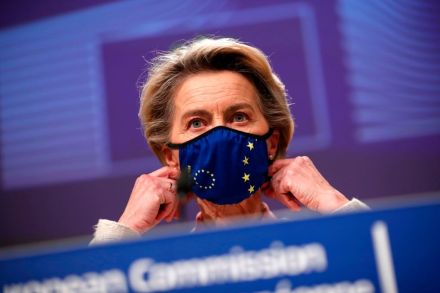
Well, that will teach them to go around manufacturing a vaccine against a global virus at cost price, and at record speed. The European Union has today said it is planning to take legal action against the pharmaceuticals conglomerate AstraZeneca for failing to deliver enough doses of the Oxford shot on time.  No doubt European Commission president Ursula von der Leyen and her team are planning to be exonerated. They will finally be able to demonstrate that the whole vaccine debacle, for which the Commission has taken so much flak, and which has already caused thousands of unnecessary deaths across continent, was all the fault of the Anglo-Swedish company. No doubt the untrustworthy British will also be implicated.

Can Cummings really hurt Teflon Boris?

From our UK edition

Seldom have so many keyboard warriors and political activists professed so much dissatisfaction towards the government of the day. For some left-wing bloggers and tweeters, the number one cause of outrage of the moment is so-called 'Tory sleaze', a subject to be added to an already formidably long list of gripes towards Boris Johnson that includes Brexit, the claim that Britain is not very racist and his alleged unforgivable bungling of the Covid crisis. On the right, there is now, if anything, an even wider array of issues igniting fury towards the Prime Minister.

Spare a thought for introverts

From our UK edition

How do you feel about 17 May, when the next major set of lockdown restrictions are due to be lifted in England? Are you looking forward to going out to dinner with friends inside an actual restaurant, or are you breathless with anticipation at the prospect of hosting your first, legal, dinner party for as long as you care to remember? Quite how you feel about any of the above will relate closely to how strongly you perceive yourself to be either an extrovert or an introvert. If you’re the former, then 17 May, followed by 21 June (when apparently lockdown will be ‘over’), will have you salivating with joy at the prospect of virtually untrammelled social contact. Bring it on. But if you’re an introvert then it’s the opposite story.

Why do theatres think audiences want Covid-related drama?

Hats off to the Orange Tree Theatre in Richmond. They’ve discovered a new form of racism. Some people say we have enough ethnic division already but in south-west London they’re gagging for more apparently. A new play, Prodigal, examines the prejudice endured by a Ugandan chap whose mother moved to London when he was a child and whose younger siblings are British. Family tensions depressed him. ‘You all made me feel ugly,’ he moans. The shifty whinger has returned home after his mother’s death in order to cheat his family out of an insurance pay-off. It’s remarkable to see a drama that reinforces a damaging stereotype but the author, Kalungi Ssebandeke, is content to put a bungling African crook on stage.

Boris should heed Blair’s advice on the Covid vaccine data

From our UK edition

We’ve known from the data from phase three trials that the Pfizer and AstraZeneca vaccines have good efficacy against symptomatic cases of Covid-19. The data also hinted at near 100 per cent efficacy against serious illness, although the limited numbers of participants made it hard to be sure.  This morning, however, comes real world data showing the vaccines have all but eliminated hospitalisations. According to figures obtained by the Daily Telegraph, 74,405 people were admitted to hospitals across the UK between September 2020 and March 2021. Of these, just 32 were people who had received a vaccine at least three weeks earlier. The figures don't reveal whether or not there were any deaths.

Need we fear a third wave after lockdown ends?

From our UK edition

When Boris Johnson revealed his roadmap out of lockdown at the end of February he promised a ‘one way road to freedom.’ Since then, it has seemed that instead of freedom we may end up with continued social distancing, perhaps Covid passports and mandatory mask-wearing. The justification offered is that the virus might come back. But does the data back up this pessimism? I’m an academic at Bristol University and have developed the Predictor Corrector Coronavirus Filter (known as PCCF) model, updated daily on The Spectator’s data hub. It confirms that we can safely return to the ‘old normal’ on 21 June with no need for extra measures. It predicts that a complete abolition of restrictions on that date will not see a third wave of any significance.

Britain is in danger of repeating its post-war mistakes

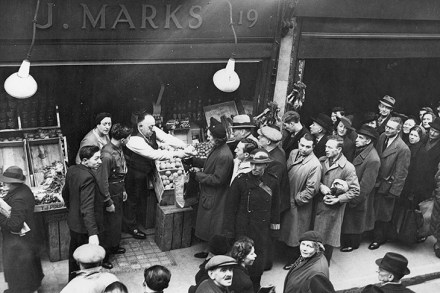
In search of wisdom about how an officious government reluctantly relaxes its grip after an emergency, I stumbled on a 1948 newsreel clip of Harold Wilson when he was president of the Board of Trade. It’s a glimpse of long-forgotten and brain-boggling complexity in the rationing system. ‘We have taken some clothing off the ration altogether,’ he boasts, posing as a munificent liberator. ‘From shoes to bathing costumes, and from oilskins to body belts and children’s raincoats. Then we’ve reduced the points on such things as women’s coats and woollen garments generally and... on men’s suits.’ Does this remind you of anything?

Dear Mary: How can we use our neighbour’s tennis court without inviting him to play?

Q. Our neighbours have a tennis court which, under the property’s previous owner, we enjoyed playing men’s fours on. The new owner is very welcoming and friendly. The problem (without sounding conceited, I hope) is that he is not up to the standard of the rest of us in the village who would like to play on his court. How do we politely say that we want to play — but not with him? — Name and address withheld A. What about one of your number inviting him to play golf? He will thereby have the opportunity to introduce the new court owner to lots of locals, or businessmen, or whatever type of person he may want to meet if new to the area.

Merkel’s radical lockdown plan could quickly backfire

From our UK edition

In its flailing response to the Covid crisis, the German government appears to have finally given up on federalism. Angela Merkel's latest idea is to introduce nationwide ‘emergency brake’ measures to combat rising case numbers, replacing a patchwork system across the 16 federal states. But will it help bring Germany's third wave under control? Legal changes to grant the federal government unprecedented power to enforce coronavirus regulations in all states have been backed by ministers. The final obstacle for the German Infection Protection Act is parliament. If Merkel's plan is approved, it will mark a big change in the way Germany is governed. It will also make it clear that Merkel is increasingly desperate for answers.

Locked-down students are paying a heavy price

From our UK edition

Students are the forgotten victims of lockdown. Having worked hard to achieve their grades, undergraduates have been consigned to their bedrooms to learn online. There's been no socialising, freshers fun or the chance to make new friends. The only thing that has been the same for the Covid class of 2021 are sky high fees. Finally, the government has announced that all university students will be able to return from the 17 May. While some undergraduates may be relieved to get some much-needed clarity, most will be deeply, deeply frustrated. Many students are asking why universities did not open again when schools did.

Covid and the lockdown effect: a look at the evidence

From our UK edition

What forces Covid into reverse? To many, the obvious answer is lockdown. Cases were surging right up until the start of the three lockdowns, we’re told. It’s often said that all else failed. The Prime Minister said on Tuesday that lockdown, far more than vaccines, explains the fall in hospitalisations, deaths and infections. But how sure are we that only lockdown caused these falls — in the first, second and third wave? Or were other interventions, plus people’s spontaneous reactions to rising cases, enough to get R below one? In a peer-reviewed paper now published in Biometrics, I find that, in all three cases, Covid-19 levels were probably falling before lockdown.

Is the UK taking advantage of its vaccine success?

From our UK edition

UK GDP ever so slightly edged up in February, growing 0.4 per cent according to today’s update from the Office for National Statistics. No surprises here: there were no changes to lockdown restrictions between January and February, which gave the economy little room for manoeuvre. The ONS has revised January’s GDP fall from 2.9 to 2.2 per cent: still a contraction, but another good indicator that businesses have significantly adapted to lockdown rules, which has meant that this winter’s lockdown didn’t plunge GDP down to record levels as it did last spring.

Why is Boris talking down Britain’s vaccine success again?

From our UK edition

A few months ago, the Prime Minister was describing the jabs as the 'scientific cavalry’ that was on its way to save us from our Covid – and lockdown – woes. But now the cavalry has arrived in the form of a vaccine rollout of unqualified success, the rhetoric has changed. The vaccine is no longer enough, according to Boris. Today we've seen another worrying shift in the PM’s words. In an interview with the BBC, Johnson broke the link between the UK's ability to reopen and its vaccination programme success: The reductions in these numbers, in hospitalisations and in deaths and in infections, has not been achieved by the vaccination programme...