Is Trussonomics really dead?
From our UK edition
16 min listen
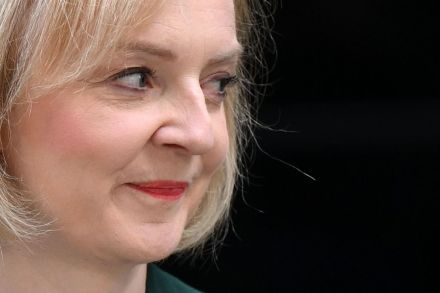
Cindy Yu talks to Katy Balls and James Heale about the former prime minister's lunch with her loyalists at Ma La Sichuan, and whether her ideas might be mounting a comeback.
From our UK edition
16 min listen
Cindy Yu talks to Katy Balls and James Heale about the former prime minister's lunch with her loyalists at Ma La Sichuan, and whether her ideas might be mounting a comeback.
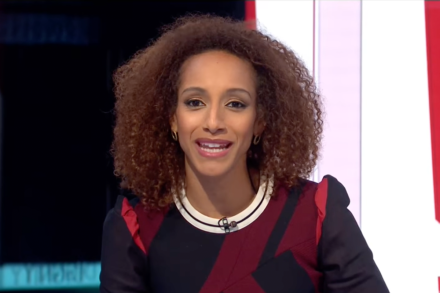
Afua Hirsch sells out Cockburn is reeling today after a heavy night, but it was the only thing he could do to make him forget the three hours of Whinge and Ginge that he had to watch at 3 a.m. The Harry & Meghan Netflix documentary wasn’t exactly enlightening: just a rehash of their previous groans of injustice. Although Meghan did go out of her way this time to make fun of Haz’s dear old granny, by doing an overexaggerated curtsy which made even her hapless husband look uncomfortable. https://twitter.com/chrisshipitv/status/1600845696751800321 There were new faces in the mix though, rather than the classic hagiographers. One of the journalists commentating was British journalist Afua Hirsch. Cockburn asked around... and it turns out that Hirsch isn’t exactly, er, well-liked.
From our UK edition
Theresa May’s premiership is now a memory. Boris Johnson’s time in office assumes the status of a rather brief, if often embarrassing, interlude. Liz Truss has gone in short order. The threat of a comeback by Johnson has been lifted. What a rollercoaster. Each of these events, in its time, took centre-stage in our politics and each prime minister became for a while the object of contempt, suspicion and rage. I called Mrs May the death star of British politics; I called Mr Johnson a moral toad; I called Liz Truss a planet-sized mass of over-confidence and ambition teetering on a pinhead of a political brain.

From our UK edition
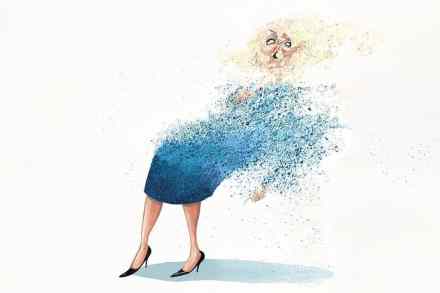
Now that the final curtain has fallen on Liz Truss’s brief and tumultuous premiership, it is time for reflection. A chance to set the record straight and also to own up to mistakes – especially for those of us who tried to advise her. What went wrong? Yes, the tipping point was Kwasi Kwarteng’s mini-Budget. But three problems were by then already brewing. First, the leadership campaign over the summer had become very focused on tax cuts. Even Rishi Sunak ended up saying he would cut the basic rate of income tax from 20 per cent to 16 per cent by the end of the next parliament, while Jeremy Hunt (now Chancellor) would not settle for cancelling the planned increase in corporation tax to 25 per cent, but instead wanted it cut to 15 per cent.
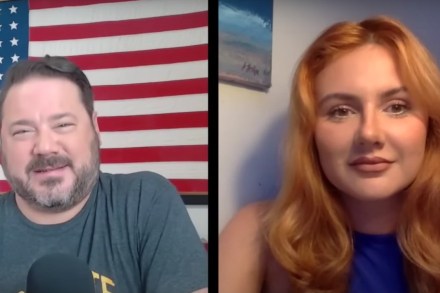
The Spectator’s Ben Domenech and Kara Kennedy sat down on the Ben Domenech Podcast on Thursday to discuss UK prime minister Liz Truss's resignation and where British politics goes from here.
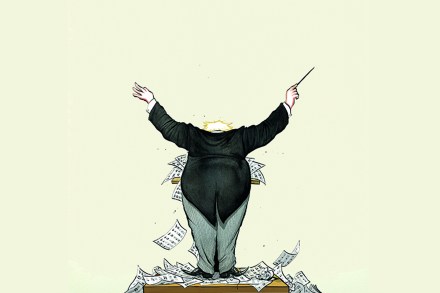
London, England When I checked the date that Boris Johnson resigned as prime minister, I thought it must have been wrong. July? The psychodrama that ensued felt as if it had been going on for years. If Boris’s tenure was the main show, Liz Truss’s stint as Britain's shortest-serving PM was the slapdash encore that no one asked for. You know, when the music restarts as you’re eyeing up a taxi home and secretly thinking the act needn’t have bothered. Boris’s downfall, the real one — not the multiple wobbles — began with Partygate. A steady drip of salacious stories for months, each one getting slightly more unforgivable, recounting incidences of Boris and members of his government breaching the strict lockdown rules he himself had set in place.
From our UK edition
Until Liz Truss, George Canning was the shortest-serving prime minister. He needn’t be forgotten by pub quizzers, general knowledge collectors and historians alike. In 1973, Richard Luckett reviewed a major biography of Canning’s life for The Spectator.

From our UK edition
The Liz Truss survival plan was, in the end, unworkable. She not only hired her enemies – Grant Shapps and Jeremy Hunt – but let them govern: tearing up her policies, while she held on in No. 10. She thought the Tory right had no candidate to replace her with and the Tory left would be happy because there had been a Cameroon restoration. So yes, it was a humiliation – but one that was supposed to keep her in post. The wheels feel off yesterday, and Truss had to accept that her game was over Could it last? Earlier this week I spoke to several MPs who could see Truss surviving in this way, as Theresa May did after the 2017 election. Staggering on, zombie-like, politically undead, waiting for her party to agree on who to succeed her.

Liz Truss has resigned after only forty-five days in office, the shortest serving prime minister in British history. She's long come off as a stubborn and prideful figure, stuffed with confidence even if she doesn't express it well. It must have taken a momentous behind-the-scenes rebellion to convince her to go — and surely that's what happened. The past couple of weeks in British politics have been nothing short of mesmerizing. We Americans now understand how the rest of the world must have felt gawking at us for five years.
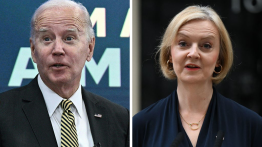
London, England Nobody in British politics really thought things could get worse than last night. Conservative MP Charles Walker told the BBC that the day was a "pitiful reflection" of the party; he added that there was "no coming back from it." Seasoned political editors described Wednesday as the most catastrophic day of their careers. The government victory on fracking — with 326 votes opposing the Labour motion to 230 backing it — was tarnished by claims of intimidation and bullying in the House of Commons. The home secretary, Suella Braverman was fired for sending official documents from her personal phone, something which is likely now a relief for her. Two other figures were said to have quit, but remained in their posts when questioned twelve hours later.
From our UK edition
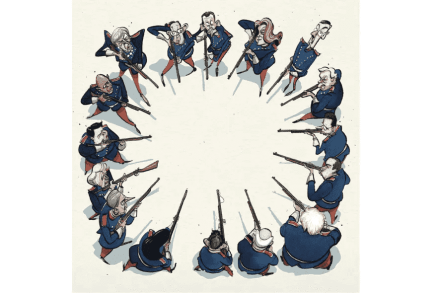
Seldom has support for a government fallen so far, so fast. Polls show that 24 per cent of the public would vote for the Conservatives if there was an election now, vs 52 per cent for Labour: figures that make 1997 look like a good result for the Tories. This is not just a one-off rogue poll, but the sustained average of six. It reflects what Tory MPs hear from voters appalled at the disgraceful shambles of the past few weeks. It won’t be forgotten in a hurry. This magazine gave its verdict on the Liz Truss agenda in August: ‘To attempt reform without a proper plan is to guarantee failure,’ we argued. She lost no time in proving this point. But others are drawing wider and deeper – and rather dangerous – conclusions.
From our UK edition
‘Governments don’t control markets,’ the new Chancellor, Jeremy Hunt, likes to say. But there are times when markets control governments. The market, or the fear of how the market might react, is now the driving force in British politics. It explains the dramatic developments of the past week and will determine the new Prime Minister’s fate. Last month’s ‘mini-Budget’ was doomed because it required that the government borrow £70 billion more than had been planned. This money would have to be raised in the gilts market, and Liz Truss and Kwasi Kwarteng assumed that the markets would be happy to continue to lend so much at such low rates. But they missed the fact that attitudes were changing.
From our UK edition
Liz Truss was spot-on in arguing that the only way in which a state can flourish is by combining low taxes with economic growth. But she failed to persuade her audience that she knew how this could be achieved. If only Dr Kwarteng, a classicist, had drawn her attention to Aristotle’s Art of Rhetoric (4th century bc), the first full analysis of the means of persuasion, the day and her career would have been saved. First, Aristotle defined two general types of persuasive proof. One he called ‘artistic’, because it depended upon human ingenuity, the other ‘non-artistic’, because it derived from pre-existing evidence, e.g. witness statements, written contracts, etc.
From our UK edition
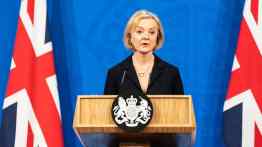
Home Liz Truss said in a BBC interview as Prime Minister that she wanted to ‘say sorry for the mistakes that have been made’. Declaring that she would lead the Conservatives into the next election, she addressed blocs of MPs: the One Nation group one day, the European Research Group the next. She watched Jeremy Hunt, the Chancellor of the Exchequer whom she had just appointed to replace Kwasi Kwarteng, deliver a statement to the Commons reversing most of the provisions of the ‘fiscal event’ of 23 September. The new Chancellor announced the end of current subsidies for domestic energy bills in April, preferring something that ‘will cost the taxpayer significantly less than planned while ensuring enough support for those in need’.
From our UK edition
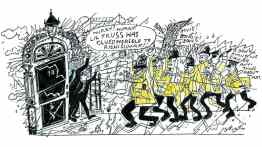
In the House of Commons on Monday, someone accused Liz Truss’s government of being ‘in office but not in power’. By chance, I was sitting in the peers’ gallery immediately behind the author of that famous phrase, Norman Lamont, who applied it to John Major’s administration in his resignation statement as chancellor in 1993. It grows ever more apt. I sometimes wonder if modern politicians positively welcome this situation. It is a general feature of the structures of the EU, where no elected politician has real power, but none seems to mind.
From our UK edition
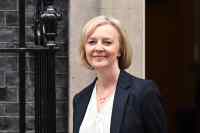
At the first stage of the Conservative leadership race, when Liz Truss was trying to win MPs’ support, her message was that she was the one who could ‘unite the right’. Now, her plan to survive in No. 10 relies on dividing the Tory left. Regicide is a messy business. ‘It’s very hard to push her out,’ says a former cabinet minister. ‘We would need to change the rules. It could be seen as an establishment stitch-up. I think she needs to do the right thing and resign.’ Everyone in the Tory party agrees that there needs to be a unity candidate when Truss goes, but there is absolutely no unity on who that should be. ‘Until we know who to replace her with, we shouldn’t move,’ says a former government member.

From our UK edition
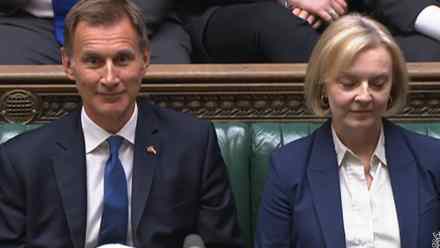
Liz Truss did not think that spending cuts would be a major part of her agenda. She and her first chancellor, Kwasi Kwarteng, were confident that markets, having lent Britain billions of pounds to cover the cost of the lockdowns, would be more than happy to do the same to transform the economy. Their argument was, as it turned out, calamitously wrong. The miscalculation cost Kwarteng his job and the Prime Minister her power. Truss’s new Chancellor, Jeremy Hunt, has dismantled almost all of her plans. ‘Trussonomics’ has been snuffed out. This temporarily calmed the markets. But abandoning tax cuts – as painful as it was – will soon prove to have been the easier part of the job.
From our UK edition
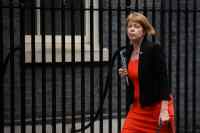
In a sign of how chaotic tonight has been for the Conservative party, I have now been told that the Chief Whip Wendy Morton and her deputy Craig Whittaker have not left the government after all. I have spoken to Northern Ireland Minister Steve Baker, who says: ‘I have just seen the deputy and he is categorical that neither he nor the chief have resigned.’ No. 10 has belatedly confirmed this too. Steve Baker seems to be the only minister trying to offer some kind of government line What seems to have happened is this. The whips instructed the party that the fracking vote would be a confidence issue this morning.
From our UK edition
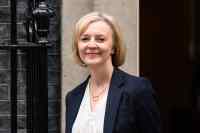
Embattled, humiliated and lampooned, Liz Truss has few public allies left. And she certainly has one less after today, following the suspension of Jason Stein, her acting director of communications in No. 10. Stein is a longtime supporter who managed much of Truss's press operations during the summer leadership campaign. But shortly before PMQs the BBC reported that Stein had been suspended and is now due to face a formal investigation by the Propriety and Ethics Team in Whitehall. It follows a briefing in last week's Sunday Times in which unnamed No. 10 sources had ridiculed the prospect of Sajid Javid replacing Kwasi Kwarteng as Chancellor.
From our UK edition
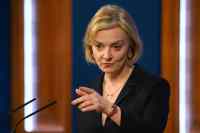
It's the age-old dilemma for a media advisor when your politician is in a jam. How do you get out of doing an interview you really don't want to do? Liz Truss's former spad Kirsty Buchanan gave us an answer to that question to this morning when she revealed to the Whitehall Sources podcast just how her minister used to evade appearances on Question Time back when she was running the Ministry of Justice: Liz Truss when I worked for her, she obviously didn't like the media so we used to spend quite a lot of time making up excuses and killing off minor members of her family so that she didn't have to go on Question Time... we ran out of excuses to go on Question Time so eventually we had to do it. I mean minor people like aunts and cousins and things.