Liz truss

What was said at the EU referendum Cabinet

From our UK edition

At Cabinet this morning, every minister spoke in strict order of Cabinet seniority. This meant that Michael Gove was the first person to make the case for Out. I’m told that his argument to Cabinet was essentially the same as the hugely powerful statement he put out afterwards, which you can read in full here. The theme of the Cabinet discussion was, broadly, the trade-off between sovereignty and access to the free market. According to one of those present, where you fell on that question determined your position in the debate. One IN supporting Cabinet minister tells me that Oliver Letwin was the most persuasive speaker for that side of the argument.
Has Liz Truss just declared her support for Cameron in the EU referendum?

From our UK edition

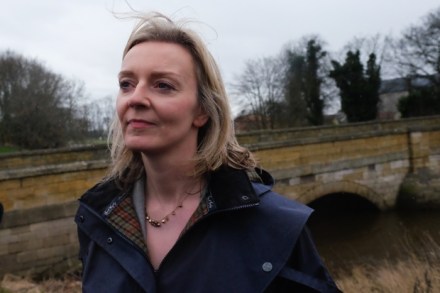
David Cameron’s declaration that ministers will be able to campaign on the opposite side from him come the EU referendum has prompted much speculation about who will take advantage of this freedom. One of those regarded as being undecided on this matter was the Environment Secretary Liz Truss. She is ideologically close to the Out camp, she founded the Free Enterprise Group of Tory MPs which is now headed by James Cleverly - an Outer - and worked closely with Vote Leave’s Dominic Cummings when she was an Education Minister, but she is also a Cameron loyalist. Her speech this morning to the Oxford Farming Conference suggests that Truss is strongly leaning towards backing Cameron come the referendum.

Cumbria’s floods can’t just be blamed on the ‘climate change bogeyman’

From our UK edition

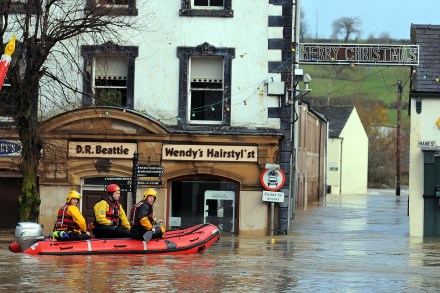
The flooding in Cumbria came at a bad time for those who make their living hyping global warming. Pretty much everyone who might have wanted to listen to their message was focused on the global climate talks in Paris and far too busy to worry about what was happening in Carlisle and Keswick. But that hasn't stopped a few people from trying to take advantage. The Met Office's chief scientist Julia Slingo was unable to resist the temptation to issue a statement linking the floods to climate change. This was handy for Liz Truss, the minister in the firing line for the failure of the flood defences, who repeated the claims yesterday. Slingo might have been expected to exercise a bit of caution here.

Liz Truss defends government spending on flood defences

From our UK edition

The flooding in Cumbria is continuing to cause misery for thousands of people and as often happens in these situations, attention has turned onto whether the government has done enough to protect people. Liz Truss, the Environment Secretary, popped up on the Today programme to defend the government’s flood defence plans. She described what has happened in Cumbria as a ‘devastating situation’, which was the result of an ‘extreme event’: 'The scale of this was absolutely extraordinary – to have half a metre more of water than we’ve seen before in any of these towns and cities in Cumbria was extraordinary'.

The spending cuts Osborne flatly refused to make

From our UK edition

[audioplayer src="http://rss.acast.com/viewfrom22/thegreatfakewar/media.mp3" title="Fraser Nelson, James Forsyth and Isabel Hardman discussing the Autumn Statement and Spending Review" startat=870] Listen [/audioplayer]The Autumn Statement on 25 November had long been circled in Downing Street diaries as the season’s defining political moment. Its importance only grew after the Lords rejected the government’s tax-credit changes and George Osborne announced that he would present his revised proposals in this statement.

Tory detox mission continues as Liz Truss speaks softly to ‘Green Blob’

From our UK edition

One of the major themes of this year’s big Tory reshuffle was the attempt to detoxify certain policy areas where a minister was involved in a stand-off with certain groups the Tory party would quite like to vote for them. Michael Gove lost his job as Education Secretary for this reason, and so too did Nick Boles find himself being moved from Planning to Skills. Owen Paterson’s departure was a bit more complicated: his aide warned in the days before the reshuffle that to move the Environment Secretary would be to leave 12 million voters in the countryside without a voice, but he was in the midst of pretty high voltage rows with animal rights and environmental groups. And he lost his job.

Meet the new anti-meat, anti-shooting, pro-badger shadow Defra secretary

From our UK edition

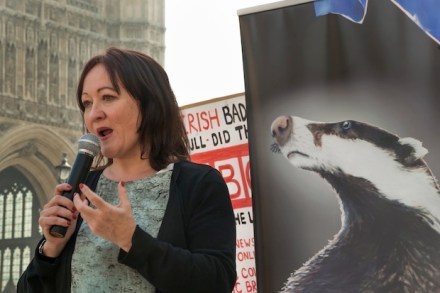
It’s no surprise that Jeremy Corbyn’s shadow cabinet appointments have rattled a few cages – and the choice of Kerry McCarthy as shadow Defra secretary is just one of many. The MP for Bristol East (a city that Anthony Whitehead described a few weeks ago as employing a ‘totalitarian brand of environmental idealism’) has made her views on both meat eating and rural pursuits clear in the past, and has a fair few critics already. It has already been pointed out elsewhere that putting a vegan in charge of representing the farming industry is slightly odd – but then again, vegetarian Hilary Benn was Defra secretary for three years. But that isn’t the only black mark against her.

David Cameron must now lead a green Conservative government

From our UK edition

Those on the left tend to think that British Conservatism is a derivative of US Republicanism. But environmental policy shows that it’s a far more pragmatic mix. The latest Conservative manifesto encompasses George W Bush’s marine conservation ambition and Obama’s selective interventions to raise the pace of clean technology innovation.  This partly reflects the fact that the environment is still a largely non-partisan issue in British politics, but also that Cameron has protected discreet space for Conservative modernisers to bring forward new green ideas. As one of them I’m pleased with the progress we’ve been able to make.

Hunting may be banned, but the fight still goes on

From our UK edition

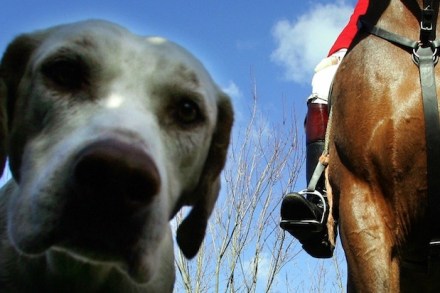
Ten years ago today, Tony Blair’s ban on hunting with dogs came into force. Rural communities had marched, Otis Ferry had stormed the Commons, but none of it made any difference, and anti-hunt campaigners rejoiced when hunting became a banned sport. But though the law has been in place for a decade, the fight for hunting still goes on. Many hunts, especially those based in more urban areas, are still plagued by hunt saboteurs, as was demonstrated just last month when Mike Lane, a Master of the Tedworth Hunt in Wiltshire, was attacked so savagely by saboteurs wielding iron bars that he was knocked out.

Gunpowder, treason and caviar – selling out in Westminster, Guido style

From our UK edition

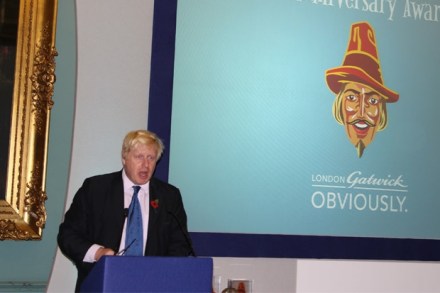
If you're going to sell out to the establishment, you might as well do so on an industrial scale. As the PM told the Guido Fawkes blog's ten -ear anniversary party at the Institute of Directors last night, via video link, 'what better way' to celebrate 'rejecting' the cosy political classes than a posh dinner of caviar and champagne in the heart of Westminster. Guy Fawkes would have been turning in his grave, as cabinet ministers including Francis Maude and Liz Truss, and mysterious billionaires such as Michael Hintze and Lord Ashcroft, along with 200 of Westminster's finest, came to pay homage to a decade of sniping from waspish troublemakers. The Mayor of London, the star turn, was in usual form, conceding that eventually all politicians end up talking to terrorists.

Conservative conference: Liz Truss and Sajid Javid hit Labour

From our UK edition

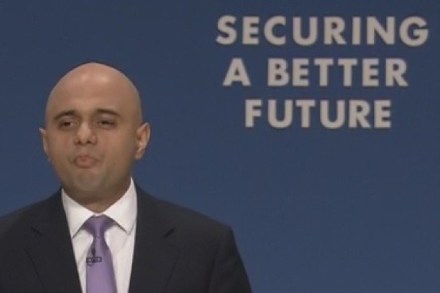
Two of the brightest rising stars in the Conservative party, Sajid Javid and Liz Truss, addressed the Tory conference. After an angry day yesterday where Grant Shapps and the PM furiously attacked Ukip and their backbench colleagues piled in to savage Mark Reckless, the pair needed to use their slow to re-focus party minds on fighting Labour in the general election. They are both well-equipped for such a task: Javid started his speech with a passage on his values as a British Tory, then moved onto attacking the snobbery he encountered from the Labour Party when he was appointed Culture Secretary, and Ken Livingstone's comments that he saw Javid as a Pakistani and a banker. Javid responded: 'well, Ken, I'm British.

British farming cannot turn its back on the EU

From our UK edition

Much has been made of the political debate at the 2014 CLA Game Fair at Blenheim Palace. The attendance of the new Environment Secretary Liz Truss, Ukip leader Nigel Farage and former Environment Secretary Owen Paterson (less than a week after the government reshuffle) has given rise to a general debate about where the rural constituency, or countryside vote, currently sits on the political map. The CLA is studiously apolitical. It is a membership organisation with more than 33,000 members who together own and manage more than half the rural land in England and Wales and represent over 300 types of rural businesses. Our priority is to represent our members’ views and concerns to all political parties at regional, national and European Union level.

Are Nigel Farage’s agricultural policies really ‘unrealistic and uncosted’?

From our UK edition

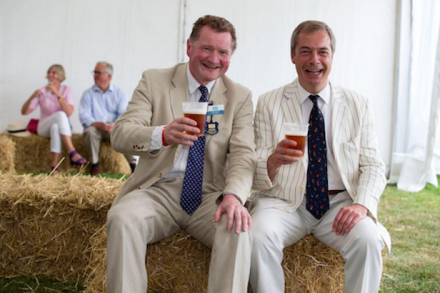
Much has been made of the reception that greeted Nigel Farage at the CLA Game Fair on Friday. The punters were far more interested in Nigel Farage than George Eustice, the incumbent Farming Minister, though perhaps things might have been different had Liz Truss turned up instead. When Farage referred to the much-loved Owen Paterson as ‘having been sacked and made a scapegoat for a failed EU policy [on flooding] which led to the flooding in Somerset’, cheers erupted from the tent. Despite the rumpus that Farage’s presence created at the Game Fair, it’s still debatable whether Britain’s presence in the EU is a good thing for the countryside and rural communities.

David Cameron’s decision to sack Owen Paterson will send rural voters flooding to Ukip

From our UK edition

During Owen Paterson's vocal conversation with David Cameron in defence of his record as Environment Minister after learning he was being sacked, Paterson reportedly said: 'this will be a kick in the teeth to 12 million countryside voters... you are making a big mistake'. There is already mounting evidence to suggest Paterson could be right. Judging by the two standing ovations that Paterson went on to receive last Friday at the Game Fair at Blenheim Palace (at the mere mention of his name), Charles Moore commented that 'you could almost see the disaffected Tory voters fleeing to Ukip across the tent'.

Podcast: a misogynistic reshuffle, punishment for ministers and why right-wing women are sexier

From our UK edition

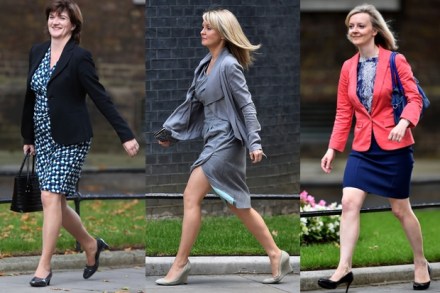
In this week’s Spectator, Melissa Kite argues that David Cameron’s reshuffle has been soured by misogyny. The PM doesn’t want the new women in his cabinet to do anything but look nice, she says. Louise Mensch begs to differ. She argues that talented women are rising to the top because they are impressive, and it’s offensive to suggest otherwise. Martha Gill discusses this with her on this week’s podcast. The reshuffle wasn’t all about women though. In his column this week, Charles Moore argues that Cameron has punished the ministers who were brave and active, and target-bombed his party’s natural supporters. He discusses this with Fraser Nelson in the podcast. Plus, are right-wing women sexier? Cosmo Landesman seems to think so.

Liz Truss is no friend of Mr Badger

From our UK edition

What some people seem to forget is that Owen Paterson wasn’t (and Liz Truss isn’t) just Environment Secretary. As well as having responsibility for the environment, the role also covers food, fisheries and rural affairs. Paterson was one of the few people in Government that many farmers thought of as being ‘on their side’. As Secretary of State at Defra, he always appeared to have the interests of the rural community and the countryside at the centre of his decisions. As Melissa Kite argues in her cover piece this week, Cameron appears to have given in to ‘the animal rights lot’. As she rightly says, ‘They wanted Owen Paterson’s head on a platter and Cameron has given it to them.

David Cameron’s misogynistic reshuffle

From our UK edition

[audioplayer src="http://traffic.libsyn.com/spectator/TheViewFrom22_17_July_2014_v4.mp3" title="Louise Mensch and Martha Gill discuss the reshuffle" startat=54] Listen [/audioplayer]Ask anyone who really knows David Cameron and they will tell you he likes a certain kind of woman. He has a very specific type, the Prime Minister. It is almost spooky the way all his women conform to it. They are all attractive, accomplished, articulate and well-dressed. But there is something else that makes certain women irresistible to Mr Cameron. While giving the appearance of being feisty and uncompromising, his sort of woman usually seems to know when to fall into line. I am not speaking of romantic conquests, but of the type of woman the Prime Minister likes to promote.

Gove, gone

From our UK edition

‘There’s no shame in a cabinet to win the next election,’ declared an exasperated senior No. 10 figure on Tuesday night. This week’s reshuffle was not one for the purists: it was designed with campaigning, not governing, in mind. With less than ten months to go to polling day, politics trumps policy. This is why Michael Gove is moving from the Department for Education to become Chief Whip. The test of this shake-up will be whether the Tories win the next election or not. This reshuffle demonstrated that Tory modernisation is not about measures anymore but men — and women.

David Cameron’s cosmetic exercise bemuses the Tories

From our UK edition

Today's reshuffle has been largely about cosmetic improvements to the Conservative party — not just through the promotion of female MPs, but also by neutralising certain policy areas such as education and planning reform that had antagonised some groups. But an important element in any changing of the guard is party management, and not just managing cross sacked ministers. So how has the Conservative party reacted to today's events? Naturally, all Tory MPs are as startled as everyone else by Michael Gove's departure. But it does make sense to them.

View from 22 podcast special: reshuffle review

From our UK edition

In this View from 22 podcast special, Fraser Nelson, James Forsyth and Isabel Hardman round up some of the key stories from the reshuffle, including Gove's shock demotion, the increased number of women in the Cabinet and whether the government has become more Eurosceptic and less green.