Live music

Meet the musicians trying to revive French-language pop 

From our UK edition

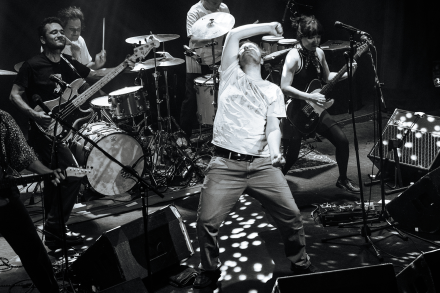
The other day, I went to see a nouveau riot-girl band called Claire Dance play in a disused factory in Bagnolet on the edge of Paris. They were great: the kind of sonic kick in the nuts I’d been waiting more than a decade for an all-female band to deliver. I half-wondered whether it was just my own imperfect command of French that left me clueless as to their message. ‘C’était tout een eenglish,’ came the response from the guitarist afterwards. How come they never considered accompanying such emotionally charged music with lyrics in their mother tongue? ‘It’s considered cringe,’ she replied. ‘We only like English music.

Nickelback may not be cool but they are very good at what they do

From our UK edition

In May 2013, Rolling Stone polled its readers in an attempt to discover which band might be crowned the worst of the 1990s. The winners – or losers, depending on how you look at it – were Creed, trailed in second place by Nickelback. Eleven years on and Creed appear to have turned that status around, in America at least – Vanity Fair, Vice and Slate have noticed that they have, whisper it, become cool. And Nickelback? Well, no one’s claiming coolness for them: last year they released a documentary called Hate to Love: Nickelback, a recognition of the fact that, outside their fanbase, they are usually mentioned only as a punchline.

The unstoppable rise of country music

From our UK edition

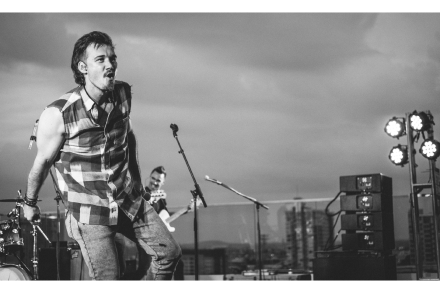
When a major artist releases a new album, the first thing to follow is the onslaught of think pieces. And when Beyoncé released Cowboy Carter earlier this year, the tone of these think pieces – especially on this side of the Atlantic – was one of slightly baffled congratulation. Here, at last, was a pioneer who might drag this hidebound genre – of sequins and satin, of lachrymose, middle-aged songs about drink and divorce – into the modern age. ‘Modern country is like punk for the Hannah Montana generation’ The only problem is that Beyoncé was not leading; she was following. Beyoncé pivoted to country not to make it cool, but because it’s become cool – and more of a commercial powerhouse than it has been for years.

Lovely slice of Cosmic Scouse: Michael Head & the Red Elastic, at EartH, reviewed

From our UK edition

One of the more bizarre but recurring tales about how the music of Liverpool has been shaped over these past 45 years concerns Courtney Love, the American musician famed, music aside, for being married to Kurt Cobain, and for being wildly unpredictable. This story claims the 17-year-old Love, who had travelled across the Atlantic to be near the bands she loved, introduced Liverpudlian musicians to LSD, setting in train a decades-long phenomenon known as ‘Cosmic Scouse’.

Adrianne Lenker is a treasure for the ages 

From our UK edition

You could very well sum up their differing approaches to American roots music from how they were dressed. Both wore cowboy hats and both wore trousers, but Adrianne Lenker’s were faded denim, while Lainey Wilson went with shiny brown leather. Lenker, looking austere and speaking and singing softly, played music plucked from eternity, demanding you concentrate on her stillness. Wilson, on the other hand, was here to make the crowd feel good; a little melancholy on the big ballads, sure, but she’s an entertainer in the grand tradition of country music.

Why garage punk is plainly the apogee of human achievement

From our UK edition

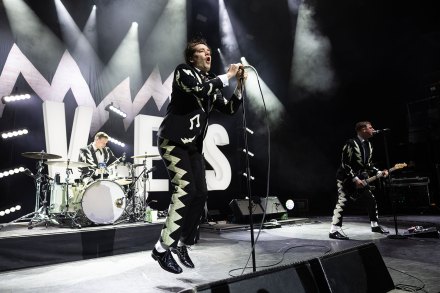
How is it that a group that sounds like the Hives are selling out the Apollo? In a world configured according to expectation, the highlight of their year would be an appearance at the Rebellion punk festival in Blackpool, probably high up the bill on the second stage. They’d headline their own shows at places like the Dome in Tufnell Park to an audience made up of three-quarters old blokes and a quarter skinny young kids, suited and booted like it’s 1966 and Antonioni’s about to shout ‘Action!’. Afterwards, a DJ would play the Sonics and the Electric Prunes and the Chocolate Watchband.

Never admit that your band is prog – it’s the kiss of death

From our UK edition

Sensible prog-rock bands try to ensure no one ever realises they play prog. What happens when you are deemed a prog band is that you are condemned to the margins – little radio airtime, few TV appearances, barely any coverage in the mainstream press – because it has been decided you exist solely for the delectation of a tribe that baffles the rest of the world. Once non-proggers have decided you are prog, that’s it. There is no way back for you. Just collect your Campaign for Real Ale membership card, go home and practise your drum solos. Once non-proggers have decided you are prog, that’s it. There is no way back for you Hence Radiohead – absolutely, indubitably a prog band, right down to the tricksy time signatures – don’t bang on about Tales From Topographic Oceans.

New Order’s oldies still sound like the future

From our UK edition

The intimate acoustic show can denote many things for an established artist. One is that, in the infamous euphemism coined by Spinal Tap, their audience has become more ‘selective’. Attempting to make the best of a bad job, the artist shifts down a gear while aiming upmarket, much in the manner of a balding man cultivating a fancy moustache. The cosy concert is also favoured by pop stars craving some old fashioned string-and-wire authenticity. Occasionally, the urge is a creative one, propelled by the sense that the material being promoted lends itself to a less triumphalist approach.

Uneasy listening: Kathryn Joseph, at Summerhall, reviewed

From our UK edition

I have always been fascinated by artists who bounce between tonal extremes when performing, particularly the ones who serve their songs sad and their stagecraft salty. Adele, for example, fills the space between each plushily upholstered soul-baring ballad by transforming into a saucy end-of-pier variety act, coo-cooing at the crowd and cursing like a squaddie. John Lennon gurned and clowned his way through the Beatles’ concerts, subverting the naked suicidal plea of ‘Help!’ in the process. John Martyn would belch and joust in mock-Cockney at the conclusion of a particularly sensitive piece. Jackie Leven punctuated songs of immense pain and sadness with eye-watering stories of defecating in alleyways and getting blootered with the Dalai Lama’s bodyguard.

A giddy delight: Regina Spektor, at the Royal Festival Hall reviewed

From our UK edition

We’ll get on to the brilliance of Regina Spektor in a moment. But first a question: why are pop music fans treated so abysmally? The afternoon of Spektor’s second sold-out show at the Royal Festival Hall, the venue tweeted that she would be on stage at 7.30 p.m. She actually took to the stage a few minutes past 8 o’clock. Spektor was absolutely magnificent once she did come on. She filled the room with charisma, charm and wit If that were a one-off, so be it. But anyone who goes to a lot of shows is familiar with how malleable the concept of stage-time is in pop music. Lana Del Rey had her Glastonbury set cut short because she was so late coming on – apparently she was having her hair done. It’s maddening. Why can they not meet their call times?

Intoxicating: Bruce Springsteen, at BST Hyde Park, reviewed

From our UK edition

Seven years ago, I asked Bruce Springsteen what he meant when he talked of the covenant between himself and his audience. It was a long, thoughtful and thorough answer, and when I transcribed it, I realised he would have won Just a Minute, so clear was his reply. Part of what he said was this: ‘I have built up the skills to be able to provide, under the right conditions, a certain transcendent evening, hopefully an evening you’ll remember when you go home. Not that you’ll just remember it was a good concert, but you’ll remember the possibilities the evening laid out in front of you, as far as where you could take your life, or how you’re thinking about your friends, or your wife, or your girlfriend, or your best pal, or your job, your work, what you want to do with your life.

Why aren’t Spoon filling stadiums?

From our UK edition

Here’s a mystery for you. Why were Spoon, one of the most dynamic, sharpest rock bands in the world, playing a single night in a north London town hall (capacity 890) while Arctic Monkeys were playing three nights at Arsenal’s ground (capacity 59,000) as part of a UK tour that encompassed eight other stadiums in the UK, plus one arena, one park and Glastonbury? It’s not that Arctic Monkeys aren’t good – no one gets that kind of critical unanimity without being good. It’s just that Spoon are better, and better than almost everyone else. Onstage in London, aided by a genius sound engineer, Spoon were perfection So why aren’t Spoon filling stadiums? First, they rarely come to the UK.

Dazzling – if you ignore the music: Beyoncé, at Murrayfield Stadium, reviewed

From our UK edition

Scheduling open-air concerts in mid-May in northern Europe is a triumph of hope over experience. I last spent time with Beyoncé – I’m sure she remembers it fondly and well – in 2016, in a football stadium in Sunderland on a damp, drizzly, early-summer English evening of the type that even strutting soul divas struggle to enliven. I don’t think it was merely the weather which left me underwhelmed by her brutalist attack, the sheer choreographed drill of the show, the lack of engagement, of spontaneity, of joy. By then, Beyoncé was no longer seeking to be regarded as a mere pop star. She had recently taken on the unearthly qualities of an alien presence, entirely unrelatable, tilting for something far more culturally significant than a spot in the charts.

In praise of goths – the most enduring of pop subcultures

From our UK edition

More than 40 years on, every town still has them, wandering the streets with pale skin, more make-up than you can find in Superdrug, swathed in acres of black fabric. Goths, rather unexpectedly, have turned out to be the great survivors among pop subcultures. Others have risen and faded, but the goths – laughed at, ignored, dismissed – have endured, seeing their style and their musical tastes slowly incorporated by everyone else (there’s even a goth version of hip-hop, known as ‘horrorcore’). Goth was a fitting name for the music: overbearing and foreboding; delivering ecstasy through the building and releasing of tension rather than through major chords and primary colours; drawing on punk, Bowie, the Doors and the Stooges.

London’s best jazz bars

From our UK edition

When jazz music arrived on our shores in 1919, with the first British tour of the Original Dixieland Jazz Band, it received a frosty welcome from many. Other performers tried to get the group kicked off theatre bills, and the tour ended abruptly – with the Original Dixielanders being chased to Southampton docks by a lord who had just found out the lead singer had been trying to seduce his daughter. Happily, in the subsequent 100 years or so, jazz has gone on to earn a firm place in our hearts and record collections. With the return of London Jazz Festival, which runs from today until 20 November, we hunted down the capital’s best jazz bars where you can dine and dance the night away.

Only traces of their eerie early spirit remain: Kings of Leon, at OVO Hydro, reviewed

From our UK edition

A few years ago, I spoke to Mick Jagger and asked him which of the (relatively) new crop of rock groups he rated. It was a short list, I recall, and not hugely inspiring, but Kings of Leon made the cut. ‘They have a kind of Texas weirdness that you don’t find in a lot of modern rock bands,’ he reckoned. ‘I like their quirkiness, and the fact that you can hear the countryish and blues thing behind them, but it’s not that obvious.’ Aside from the fact that they are from Tennessee, not Texas, it felt like a reasonably astute summation of Kings of Leon’s appeal when they first broke through in the mid-2000s.

The subtleties of her songbook were lost in this enormodome: Diana Ross at the O2 reviewed

From our UK edition

When Motown first packaged up a roster of artists and songs that could be embraced by a non-black audience, no new act – not Smokey Robinson or Marvin Gaye or Little Stevie Wonder or Martha and the Vandellas or the Temptations – crossed over into the bosom of Middle America as easefully as the Supremes. Or Diana Ross and the Supremes, as with many internal ructions they were later rebranded, Ross being the one with shimmering star quality who stood in the middle and sang the lead. They were signed to Motown 60 years ago and given songs by Holland-Dozier-Holland to sell in floor-length gowns. Those songs have seeped into the marrow of us all and, while the world marvels at the longevity of Sirs Paul, Mick, Rod and Elton, it’s time to hear it for the girls.

I’m not sure they ever reached a fourth chord: Spiritualized, at the Roundhouse, reviewed

From our UK edition

Every so often, Jason Pierce drifts into focus. It happened at the end of the 1980s, when his then group Spacemen 3 (motto: ‘Taking drugs to make music to take drugs to’) suddenly and briefly went from being those weirdos from Rugby to one of the defining groups of English alternative rock thanks to their album Sound of Confusion (there’s a whole strain of American psychedelia that is explicitly indebted to their two-chord drone). It happened again a decade or so later, when Spiritualized’s album Ladies and Gentlemen We Are Floating in Space became a big hit, and a staple of Greatest Albums lists. He’s in one of his partial-focus phases at the moment: he’s not going to be popping up on The One Show, but people are taking notice.

A joy – mostly: Nick Mason’s Saucerful of Secrets, at Usher Hall, reviewed

From our UK edition

Drummers are patient chaps, in the main. Think of Ringo in Peter Jackson’s recent Beatles docuseries, Get Back. Lolling around peaceably for days on end as Lennon and McCartney bash about, looking for clues. Drummers twiddle their thumbs behind their kit while the musos fret over chords and key changes, waiting for the moment when they will be called upon to hit skins with sticks and make a song worth hearing. In 2018, admirably urbane Pink Floyd drummer Nick Mason finally lost patience. The band has effectively been finished since 1994, and following the death of keyboardist Rick Wright in 2008, Mason was caught between Roger Waters and David Gilmour, the two rutting stags of the group’s legacy.

The perfect pop star: Dua Lipa at the O2 Arena reviewed

From our UK edition

Dua Lipa’s second album, Future Nostalgia, was released at the least promising moment possible: 27 March 2020, the day after the first lockdown came into force in the UK. Just as a pandemic swept the world, she was releasing a maximalist pop album that, surely, was designed for the communal experiences no one was having. But something about it connected: Future Nostalgia was a worldwide hit, the first British album released in 2020 to go platinum, the tenth bestselling record in the world that year. It turned out to be the right album for a wretched year. No wonder her show at the O2 was centred on it – every track was heard, which would normally be overegging the promotional pudding, but, given its consistent excellence, was entirely justifiable.