Live music

I think I’ve found the new Van Morrison

From our UK edition

Young male singers won the right to be sensitive in 1963, when The Freewheelin’ Bob Dylan was released. And in the 63 years since, being young and vulnerable and questing has been one of the great default settings. I’d say you can’t go far wrong singing sadly about your feelings, but of course you can, as the great mountain of discarded troubadours proves. Yet the size of that rejects mountain also tells us how alluring the prospect of baring one’s feelings to strangers can be. Zach Condon, who works as Beirut, and Dove Ellis are at different points on the sensitive young man spectrum. Condon is 39 for a start, so the young bit doesn’t even hold true.

Divorce are the best young British band I’ve seen in an age

From our UK edition

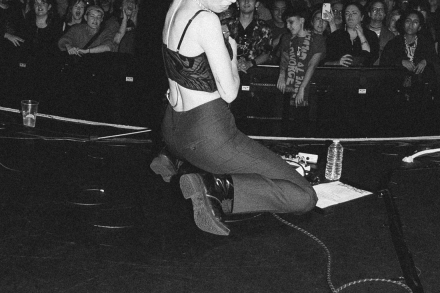
Can we talk business for a moment? When reviewers like me go to big arenas, we get the best seats in the house, with fantastic sightlines and excellent sound (a PR who used to work for U2 told me she would routinely reassign press into even better seats than the already splendid ones they had originally been given; you do anything you can to get an extra 1 per cent more enthusiasm into the review). When we go to standing venues, though, we are as prone to the vagaries of geography as anyone else. And because we go to a lot of shows, we tend to arrive only five minutes before the turn we want to see goes on stage, which means we rarely find great positions.

Metal for people who don’t understand metal: The Darkness at Wembley reviewed

From our UK edition

Midway through their thoroughly entertaining show at Wembley Arena, the Darkness played a song from a decade ago called ‘Barbarian’, about Ivar the Boneless and the Viking conquest of Britain. ‘Barbarian’ exists in a long tradition of men with long hair, tight trousers and loud guitars singing about our Danish friends. Led Zeppelin did it on ‘The Immigrant Song’: ‘The hammer of the gods/ Will drive our ships to new lands/ …Valhalla, I am coming!’ Iron Maiden did it on ‘Invaders’: ‘The smell of death and burning flesh, the battle-weary fight to the end/ The Saxons have been overpowered, victims of the mighty Norsemen.’ Scores of others you are less likely to be familiar with have, too. The Viking anthem is a rite of passage in hard rock.

Shades of Berlin Bowie and Ian Curtis: Hamish Hawk, at Usher Hall, reviewed

From our UK edition

I am a regular attendee at the Usher Hall, Edinburgh’s most ornate and venerable concert venue. On more than one occasion recently I have seen Hamish Hawk here – albeit each time he was showing the audience to our seats. Hawk has graduated from Grand Circle stair duty to centre-stage spotlight, the kind of local-boy-made-good dramatic arc that positively begs for the Richard Curtis treatment. Making his debut headlining the 2,200-capacity venue, Hawk had the good grace to allude to his change in circumstances halfway through his set: ‘Please, be kind to the ushers…’ Everyone loves a hometown hero, but the pressure to deliver as a returning prodigal must be oppressive.

Lauren Mayberry is terrific – but it’s not music for middle-aged men

From our UK edition

There are nights when one realises quite how much effort the business end of showbusiness must be. On a bitterly cold Monday night in Philadelphia, Lauren Mayberry – over from Glasgow, and halfway through a month of criss-crossing the USA – took to the stage to survey a crowd of maybe 500 people, in a venue that holds 1,200. A good proportion of those 500 people were just like me: middle-aged men. We have every right to be there, of course, and one suspects Mayberry was glad they bought tickets. But I bet she was disappointed some of the remaining 700 or so tickets had not been bought by young women, for this is who this show is for.

Kneecap are basic but thrilling

From our UK edition

It was Irish week in London, with one group from the north and one from the south. Guinness was sold in unusual amounts; green football shirts were plentiful; and so, at both shows, was a genuinesense of joyful triumph – these were the biggest London venues either group had headlined. The Irishness was much more visible onstage at Kneecap, not least because, as a proudly Republican group, they can’t really not make a big deal of being from west Belfast. Their statements have prompted the inevitable fury from some quarters: Kemi Badenoch (as business secretary) refused them a £15,000 grant to help them tour, on the grounds that the British state should not be aiding those who despise it.

What a remarkably bad electric guitar player Bob Dylan is

From our UK edition

Finally, a taste of the authentic Bob Dylan live experience. On the two previous occasions that I’ve seen Dylan, in the early 2000s and again two years ago, he was disappointingly well-behaved for a man with a reputation for operating a scorched-earth policy towards his catalogue. Once upon a time, seeing Dylan live was a high-wire activity. Those days are long gone, but on the second night of two shows in Edinburgh, some little wildness crept back in. During the opening pair of songs, which were gradually revealed to be on nodding terms with ‘All Along the Watchtower’ and ‘It Ain’t Me, Babe’, it was like watching an old bar band warming up after a long break from the trenches. There were missed notes, dropped beats, rogue chords, halting rhythms.

Perfectly imperfect: Evan Dando, at Islington Assembly Hall, reviewed

From our UK edition

‘Can I have a photo with you, please?’ It’s the most embarrassing question you can ask of someone you’re interviewing. But I had to. Not only because Evan Dando is one of my favourite songwriters. But also – vainly – because years of on-off drug addiction (mostly on) mean Dando is no longer quite the beautiful young man he was when he became famous in the early 1990s. Back then, I’d have looked like a troll standing next to him. Now, not so much. It was a night of beautiful imperfection – the kind that feels truer than a thousand arena shows He still, however, looks better than he has any right to, and in the evening he proved that he sounded better than I had dared to hope. Better still, he was fully present – not just physically, but mentally and emotionally.

An audacious and daredevil band: the Surfrajettes reviewed

From our UK edition

For most people – once Brian Wilson had turned his back on the sea and started off down the lonely road to genius – surf music means either (or both) of two things: the Surfaris' 'Wipeout' or Dick Dale’s 'Misirlou'. Punchy, propulsive tunes, in other words, that make you feel like you’re on your way to the toughest party in town, or at least very much on your way to something – always driving forward, fast. The Surfrajettes are like that; their version of the Spice Girls' 'Spice Up Your Life' is a revelation, turning an inoffensive (if admittedly banging) global dancefloor-filler into something that could plausibly soundtrack a rumble in a pool hall.

Terrifically good value: Nick Cave & the Bad Seeds reviewed

From our UK edition

A few years ago, I received an early morning phone call from Nick Cave’s former PR, berating me for not crediting his band the Bad Seeds in an album review. She was quite right. As Cave says, with a hint of paternal pride, during this powerhouse Glasgow show: ‘This band can do anything.’ It’s not just that the Bad Seeds’s task ranges from delicately enhancing the most nakedly exposed ballads to unleashing a raging firestorm of noise. It’s that supporting a performer as mercurial as Cave takes oodles of nous and empathy. He’s a wild thing, but they never once lose him.

Nick Cave’s right-hand man Warren Ellis on AI, Gorecki and staying young

From our UK edition

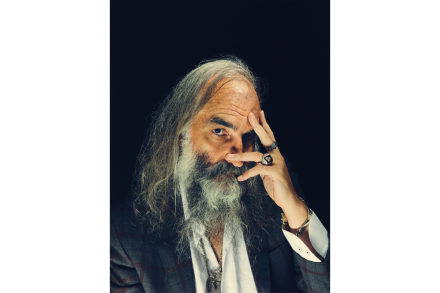
In the next few days Nick Cave and the Bad Seeds play Leeds, Glasgow, Manchester and London. There are still some tickets left. The price is reasonable but the price doesn’t matter when the band are unequivocally one of the finest of live acts. By whatever means you can, go. When you get there, enjoy Nick Cave himself, of course. Prepare to be awed by ‘Tupelo’, converted by ‘Into My Arms’. Prepare to cry to ‘Girl in Amber’ and dance to ‘Stagger Lee’. Get ready to experience an assault on every one of your orifices by the impossibly loud and dark ‘Jubilee Street’. ‘I think you feel like you’re a young person until you accept that you’re old. And I don’t want to do that’ But also watch Warren Ellis.

Chrissie Hynde remains outstanding: the Pretenders, at Usher Hall, reviewed

From our UK edition

A few hours before the doors opened for the Pretenders’ Edinburgh concert, Chrissie Hynde posted a message on her social media channels. The gist being that, while she appreciated the support of the band’s most devoted fans – the ones who travel from city to city and country to country to attend multiple concerts – she was, to be frank, getting sick of seeing the usual suspects plonked six feet in front of her at every damn gig. She was therefore formally asking her hardy but apparently increasingly tiresome acolytes to cede the front row to ‘local faces’. This would, she said, help keep ‘it new’ for the band each night. Hynde has always been pretty punchy, but this seemed a bit much, even by her standards; not so much biting the hand that feeds as gnawing it clean off.

I agree with pop’s war on iPhones – but King Canute might want a word

From our UK edition

Before each show on the recent The The tour – reviewed in these pages last week – the pre-recorded voice of singer Matt Johnson politely asked the audience to refrain from using mobile phones when the band was performing. In Edinburgh, while Johnson was speaking, the chap next to me was preoccupied filming an empty stage. A sea of screens can be priceless in a genuine emergency but that’s about it As it happens, most of the crowd complied most of the time, but proscribing phone use at concerts is increasingly challenging. A few artists are up for the fight.

At Las Vegas’s Sphere I saw the future of live arts

From our UK edition

Does Elon Musk have a good eye for the aesthetic? Earlier this month, the Tesla magnate took a break from his incessant political posting to praise something he described as a ‘work of art’ – the Las Vegas Sphere. He then treated his 200 million Twitter followers to a video of an awed crowd, desperately angling their phones to capture the supposed majesty of the Sphere. Admittedly, it was hardly the first time that the Sphere has gone viral on social media. Since its grand opening last autumn, this very modern monument has had a knack for conquering the internet, with videos of its optical illusions prompting both awe and disgust. Its occasional surreal turns (like when it turned into a giant cartoon emoji, side-eyeing the Las Vegas skyline) have made headlines in their own right.

The world is on fire – yet navel-gazing still reigns in pop

From our UK edition

There is no better cultural weather vane than pop. It’s not that pop singers possess incredible analytical skills – they don’t. It’s more that it’s in their interests to reflect some prevailing mood. And what people call a vibe shift can often be gleaned by comparing two artists. Take those featured this week: one very much au courant, the other regarded as a searing commentator on 1980s Britain. It’s a very good album, one for sitting down and listening to rather than standing in a vast shed to hear Over the past couple of years, Raye – a 26-year-old Londoner – has become rather a star. You may remember that she had a bunch of hit singles early on, but her label showed no interest in releasing an album.

How some of the most derided bands of all time are making a comeback

From our UK edition

The fate of the pop musician – at least the pop musician below the top tier of stardom – has historically been to fall from fashion. At some point in their rise they will be of the moment, the spirit of the age, and then they won’t be. At best, they’ll have a slow but perfectly lucrative fade, as their fanbase dwindles to the zealots. At worst they’ll become a punch line, a raised eyebrow: ‘What were we thinking?’ Every hit, every sold-out show, is just another step closer to irrelevance. ‘There’d be 800 teenagers in a club in Minneapolis, which felt absurd: we’re old enough to be their parents’ It may be that the single greatest artistic effect of the Covid pandemic has been to change that.

The Ava Gardner of the ketamine age: Lana Del Rey, at Leeds Festival, reviewed

From our UK edition

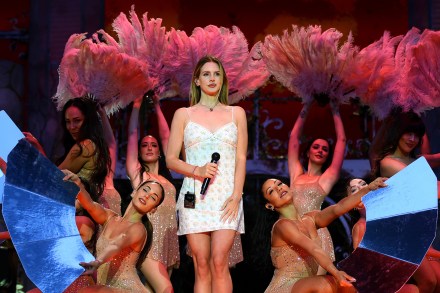
As the American superstar starts singing another slow, sad, rather beautiful song, my mind begins to drift. I’m thinking that our appreciation of music is so much about the who, the when and perhaps most crucially the where; the significance of place is an under-examined element in our relationship with what we’re hearing at any given moment. I’m also thinking that a massive over-reliance on concert revenue to sustain artists’ livelihoods means that nowadays bigger is almost always seen as better – even when ‘bigger’ comes at the obvious detriment of the music. And I’m thinking that an act’s popularity – and indeed their excellence – isn’t necessarily proportionate to their ability to successfully perform at the top end of the bill at a major music festival.

Triumphant: Big Thief, at Green Man, reviewed

From our UK edition

One of the first things I learned after seeing Big Thief triumph at Green Man is that some long-time fans are worried about them. There’s an extra percussionist; the bassist has been replaced; and the singer is now front and centre. Have they just become a conventional rock band, people mutter. Have they lost the intimacy they once had? I’d never seen Big Thief before, which is something of an error on my part. Not least because I can’t answer those questions: I have nothing to compare Saturday night’s performance with. I can only say that without caring about what they were in the past, they are extraordinary in the present: both grand and welcoming.

Fantastic – and genuinely indie: Personal Trainer, at the Shacklewell Arms, reviewed

From our UK edition

Remember when we all knew what indie meant? Indie was what John Peel played. It was music that was recorded, manufactured and distributed independent of the major labels. In practice, that tended to be music played by young white people, usually more in hope than expectation of either competence or success. As the years passed it came to be applied particularly to a kind of whey-faced, solipsistic music, played on guitars by people who were either too clever by half or too wimpy by half. By dusk, what had not long before looked like the seventh circle of hell had transformed These days, though, indie means whatever you want it to mean. Entirely mainstream soft pop acts with massive worldwide hits on major labels – such as Glass Animals – are classed as indie.

Charismatic, powerful and raw: Patti Smith, at Somerset House, reviewed

From our UK edition

There are certain long-established rules for describing Patti Smith. Google her name and the words ‘shaman’ and ‘priestess’ and you’ll see what I mean. For the best part of 50 years she’s been treated as though she’s a mystical object, a human convergence of ley lines, as much as a rock singer. In the courtyard at Somerset House, she didn’t exactly discourage the clichés. There was a long lecture on the power of the full ‘buck’ moon, which was hidden by clouds but still prompted the people in front of me to pull out their phones to check astronomy apps. There was a lengthy hymn to William Blake that concluded: ‘And then the children, the chimney sweeps, remembered him.