Lithium

Trump’s big Bolivia opportunity

From our US edition

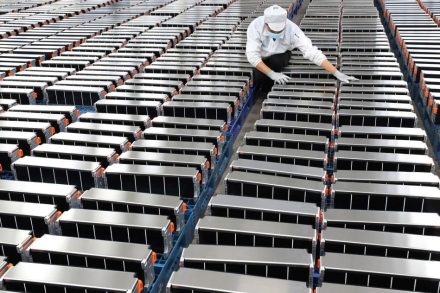
After nearly two decades of reign over Bolivia, the Movement Toward Socialism (MAS) party was banished at the ballot box on August 17. Its fall is a dramatic political realignment to the right for Bolivians, and a rare opportunity for the United States to reform relations with a geopolitically critical nation. As one expert, Leonardo Coutinho, told us, “The Trump administration can not only contribute to the restoration of democracy but also play a central role in dismantling a fully functioning narco-state.” Despite its 25 percent inflation rate and a 93 percent debt-to-GDP ratio, Bolivia is rich in natural resources, boasting some of the world’s largest lithium reserves, making it an attractive target for both American and Chinese grand strategies.

China’s Great Game in Afghanistan

China greeted America’s chaotic retreat from Afghanistan and the Taliban seizure of power with a mixture of glee and trepidation. Its well-oiled propaganda machine has revelled in the fall of Kabul, but Beijing is fretting over the threat of instability on its doorstep – and there is a very real possibility that China will become next power sucked into the ‘graveyard of empires’. The humbling of the United States in Afghanistan fits nicely into the Chinese narrative of American decline, but Beijing has also used the withdrawal to pile pressure on Taiwan, warning the self-governing democratic island that Washington is an unreliable ally. ‘Afghanistan today, Taiwan tomorrow,’ ran a headline in the Global Times, a communist party tabloid.

Biden’s supply chain plan is a step in the right direction

From our US edition

Before the Industrial Revolution, all manufacturing was local as transportation costs were prohibitively high, unless the goods could be shipped by water. Every town had its own cobbler to make shoes, for instance. With the coming of the railroads in the mid-19th century, national markets could develop. A shoe factory in Worcester, Massachusetts, could now be competitive everywhere. This led to vast economies of scale, bringing down the price of goods and thus increasing the demand for them. After World War Two, global trade increased by orders of magnitude, thanks to both the great lowering of tariffs and other trade restrictions and to the invention of the shipping container.

lithium supply chain