Liberal democrats

Some numbers to encourage both halves of the coalition

Yesterday's YouGov poll for the Sunday Times had a few interesting nuggets buried beneath the top line (Lab 40, Con 39, as it happens). Here are some of the most topical findings: 1) Clegg’s tax proposals are very popular. 83 per cent support the Lib Dems’ policy of increasing the personal allowance to £10,000. This might explain the 12-point jump in Nick Clegg’s net approval rating since last week. And there’s strong support for the ‘mansion tax’ that Vince Cable’s been pushing since 2009. 66 per cent back ‘a new tax upon people with houses worth more than £2 million’ — something Clegg called for again last week — and 50 per cent support taxing those with houses worth over £1 million.

A matter of honour

Condemnation’s coming from all sides for the £963,000 bonus awarded to RBS’s Stephen Hester, on top of his £1.2 million salary. The most prominent denunciation came from Lib Dem Foreign Office minister Jeremy Browne on last night's Question Time: ‘I think there’s a sort of question of honour. Even if there is a contractual opportunity for him to have a bonus, it doesn’t mean he has to accept it. He’s already being paid more than £1 million a year. His total package now, means he gets paid in about three days what a soldier risking his life in Afghanistan gets paid in a whole year. And I think he should reflect on that.

Clegg echoes Obama’s message

Nick Clegg, this morning, advocating closing loopholes for the rich to pay for raising the income tax threshold: ‘Right now, because of loopholes and shelters in the tax code, a quarter of all millionaires pay lower tax rates than millions of middle-class households. Right now, Warren Buffett pays a lower tax rate than his secretary.’ Oh, all right, that wasn't Clegg. That was Barack Obama, in his State of the Union address on Tuesday night. But it's remarkably similar to what Clegg just said in his speech at the Resolution Foundation this morning.

A Lib Dem demand that the Tories should get behind

Remember those Lib Dem calls for a mansion tax at the weekend? I said at the time that, ‘the Lib Dems appear to be drawing more attention to which of their own policies they are fighting for within government, whether those policies make it to the statute books or not.’ Well, now they're at it again. Nick Clegg is giving a speech this morning in which he'll urge George Osborne to go ‘further and faster’ in raising the income tax threshold to £10,000 a year. It was the stand-out policy of the Lib Dem manifesto, so it's hardly controversial that Clegg should want to see it enacted ASAP. But it's still striking that he's making this appeal in public. A year ago, he'd have emphasised what the coalition was already doing to raise the threshhold.

A defeat that delights the Tories

Rarely can a government have been so pleased to have been defeated. The Tories are, privately, delighted that the Lords have voted to water down the benefit cap, removing child benefit from it. The longer this attempt to cap benefit for non-working households at £26,000 stays in the news, the better it is for the government. It demonstrates to the electorate that they are trying to do something about the injustices of the something for nothing culture. The matter will now returns to the Commons where the coalition is confident it can be reversed. I understand that Nick Clegg remains solid on the issue, despite the fact that Ashdown and Shirley Williams led the Lib Dem rebellion in the Lords on this amendment.

Bringing the squeeze into focus

The ‘word of the year’ for 2011 is already featuring prominently in 2012. Yep, the ‘squeezed middle’ is the focus of the Resolution Foundation's latest report, which they launched in central London earlier today. It’s a fascinating and nicely presented study, and I’d recommend you read it in full: this think tank really is very good at choosing the most revealing metrics to bring some clarity to an often vague debate. But, in the meantime, here are some of the things that stood out to me from today’s event:   1. The squeeze started long before the recession.

Cable teaches Umunna a lesson about the past

If you were in a particularly soggy mood, you'd almost feel sorry for Chuka Umunna. He'd managed to force Vince Cable into the House this afternoon, to announce the coalition's plans for curbing executive pay a day earlier than planned, and he must have been feeling pretty swell about it. This was, on paper, the initiative seized; a chance to prise open the Business Secretary's differences with his Tory colleagues. But, in practice, it was something completely different. In practice, Cable dispatched his opponent with ruthless ease. You might even have found yourself in the unthinkable position of cheering him on. A large part of it was Umunna's petty, needling set of questions.

Benefitting the Tories

The longer the row over the benefit cap goes on, the better it will be for the Tories. The cap chimes with the public’s sense of fairness. Polls show massive public support for capping benefits at £26,000 a year for non-working households (the cap won’t apply to the disabled or war widows), and if Labour oppose it, they’ll be handing the Tories a stick with which to beat them. Chris Grayling has already declared that tonight’s vote in the Lords is ‘a test of Ed Miliband’s leadership’. Those who argue that the cap isn’t fair because it will force people to move out of their house are missing the point.

Lib-Dem-a-rama

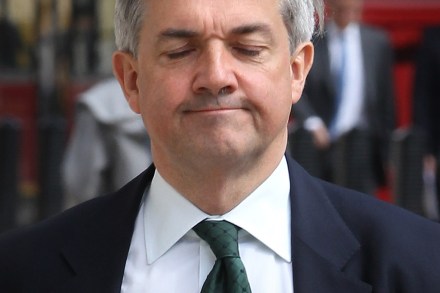
There are Lib Dems everywhere today, CoffeeHousers, and they're differentiating like crazy. We had Nick Clegg himself on the Andrew Marr show earlier, waxing lukewarm about Boris Island, and there have been moments of assertiveness from his party colleagues as well. Here's a quick round-up: 1) Chris Huhne. The embattled energy minister hasn't taken to the airwaves today, but he is omnipresent nonetheless. A good portion of Clegg's Marr appearance was devoted to him, with the Deputy Prime Minister stressing that ‘he has been crystal clear that he denies any wrong doing’ — but not quashing the idea that Huhne would lose his job if those denials turn out to be false.

Lansley’s headache becomes a migraine

Now that the three party leaders have each pronounced on capitalism, domestic politics is returning to its familiar battlegrounds. And there are few more familiar battlegrounds, for this government, than the NHS. Earlier this week a couple of unions came out completely against Andrew Lansley's health reforms, despite his previous efforts to accommodate their concerns. And now we learn that the Commons health select committee, chaired by the former Tory Health Secretary Stephen Dorrell, is set to criticise those reforms as well. According to the Observer, a report that they're publishing this week will raise a common complaint: that it's tricky for the NHS to both reorganise and find efficiencies at the same time.

Will Huhne survive this?

What odds, this morning, on Chris Huhne retaining his ‘Survivor of the Year’ crown at this year's Spectator Parliamentarian Awards? I only ask because The Sunday Times has dropped its challenge to hang on to its emails with his former wife, Vicky Pryce, about those speeding points. They'll now be handed over to the police, and shuffled into their evidence folders for this case. The Prime Minister's spokesman has said that Cameron still ‘has confidence’ in Huhne — but all this does at least raise the prospect of a reshuffle. If the Energy Secretary is found guilty, and had to depart his ministership, then he's likely to be replaced by another Lib Dem. The Evening Standard mentioned Ed Davey, Jeremy Browne and David Laws earlier this week.

Lansley’s health problems return

Another day, another exercise in obstructionism from the unions. Only this time it's not Ed Miliband that they're complaining about. It's Andrew Lansley and the government's health reforms. The Royal College of Nursing and the Royal College of Midwives have said that the entire Health Bill should be dropped. They have shifted, as they put it rather dramatically, to ‘outright opposition’. Which must be annoying for Lansley, given how he took time to ‘pause, listen and engage’ last summer, and adjusted his Bill accordingly. That whole process was meant to anaethetise this sort of disagreement, but the tensions clearly persist and could indeed get worse from here.

The Lib Dems’ differentiation strategy, pictured

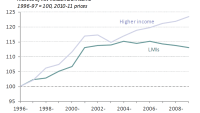
As revealed in Rachel Sylvester's Times column (£) today: “Richard Reeves, Mr Clegg’s political adviser, draws a graph that plots ‘Government unity and strength’ against ‘Lib Dem identity’ as two lines, one going down and the other up, between 2010 and 2015. The lines cross in 2012. ‘Every minute of every day between now and the election we will turn up the dial on differentiation,’ says a strategist.” So I've pasted my own version of the Reeves graph above to, erm, get it on paper, as it were. Of course, it's not surprising that the Lib Dems — or, indeed, the Tories — would do more to distinguish themselves as the election approaches.

Gove’s Royal yacht proposal in full

This morning’s Guardian scoop about Michael Gove’s suggestion that the nation should present the Queen with a new Royal yacht for the Jubilee is the talk of Westminster. But the full correspondence indicates that Gove was not proposing any taxpayer funding for a new Britannia.   Gove refers to ‘David Willetts’s excellent suggestion for a Royal Yacht’. This proposal was made in a letter from Willetts to the Prime Minister on the 5th September, which was copied to various colleagues. Willetts writes that Rear Admiral Bawtree sees The Future Ship Project for the 21st Century ‘as a potential replacement for the Royal Yacht Britannia’.

Clegg versus vested interests (and the Tories)

‘Another week, another speech about the evils of capitalism.’ So joked Nick Clegg at the start of his speech to Mansion House earlier, and there was some truth in this particular jest. All three parties are jostling to be seen as the harbingers of a new economy at the moment — one that doesn't reward failure; that benefits everyone ‘fairly’; that won't seize up as the old one did; that etc, etc. Ed Miliband sketched out his rather insipid vision for this economy last week; David Cameron will hope to do a better job later this week. Today, though, was the Deputy Prime Minister's turn. So what did Clegg say?

Simon Hughes speaks out against the benefit cap

In the Cameroon effort to redefine the politics of fairness, the benefit cap of £26,000 a year is key. When George Osborne announced it in his 2010 conference speech, he explained it – rightly – as a matter of fairness that ‘no family on out-of-work benefits will get more than the average family gets by going out to work’.   The Tories were also aware of just how potent a wedge issue it would be. If Labour opposed the cap, they would be in favour of some households in which no one is working receiving more from the state than the average salary people achieve by working. This is, to put it mildly, not a position that would go down well on the doorsteps.   But the cap has hit a snag: Simon Hughes.

Uncivil service

Political cultures differ. In Iran, for example, hyperbole is expected in all political conversations. So slogans always call for ‘Death to the US’, and nothing less. In Britain, of course, the use of language is more even-tempered, but other rules apply. Blaming the civil service for failure is considered OK, but charging an individual official, even a Permanent Secretary, for the same is considered off-limits. If a minister were to try it, then he'd be accused of trying to pass the buck on towards defenceless officials. But, as Camilla Cavendish points out in today's Times (£), failure is often also the fault of senior officials who, despite problems in the past, move seamlessly from job to job and from Department to Department.