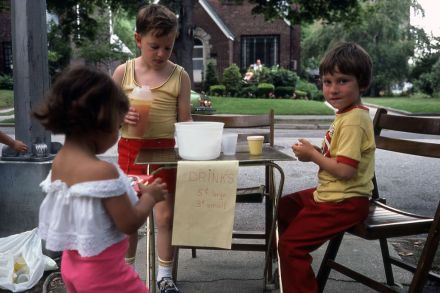
The meaning of the lemonade stand
From our US edition
It’s a big week in my household. My London-born, New York City-raised eight-year-old is taking an initial tentative step into the glorious, promise-filled world of American capitalism: she’s setting up her first lemonade stand. If you’re not American, or you haven’t spent much time here, you may be wondering why I’m announcing this with the fanfare of an Ivy League acceptance letter. And sure, perhaps it’s evidence that I’m slowly morphing into the Type A Manhattan parent I so like to mock. But also: the lemonade stand occupies a somewhat mythical space in American culture. As well as a way for children to earn a few dollars during the summer holidays, it’s a rite of passage.